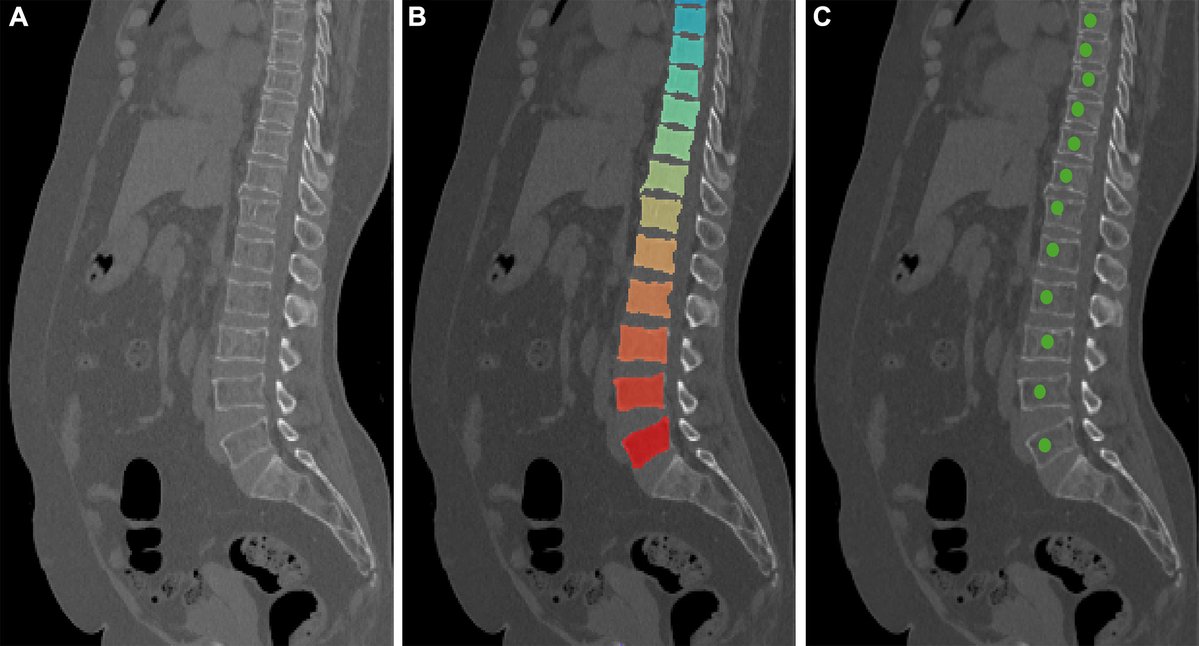
@gmoonis@WillyRontgen@pranavrajpurkar open source tools already do this well for routine anatomy (https://t.co/uFt10lHWM1). i know visage labels CT levels for nyu's osteoporosis opportunistic screening. i think would be a little work but pretty straightforward for them to label spines for everyone
@WillyRontgen@pranavrajpurkar fixing powerscribe dictation errors is probably cumulatively the biggest waste of my time each day (prob followed by dealing w/ hanging protocols). extra sad because there are definitely open source speech to text models out there that are better than PS
@akiffpremjee worked with a radiology AI startup for the last 2+ years, although recently stepped away since fellowship and having a baby don't leave too much time! luckily lots of opportunities to work on innovation in my department with our PACS vendor, siemens, etc
@francisdeng@HeyEpic Nice! A couple of the faculty here also have access to an initial EPIC pilot of EHR summarization for exam indication (above my pay grade). Needs work but obviously better than what we're provided
@northwoods1980@WillyRontgen@francisdeng@benwhitemd@DrBruggeman Yup, always thought it doesn’t make sense for independent groups. There’s argument for health systems who will generate visits, diagnostic tests, etc, some flowing to rads. Or academic places that can make their own AI workflow without paying $$$. Completely agree with you
@WillyRontgen@northwoods1980@francisdeng@benwhitemd@DrBruggeman That’s been the problem in practice, manually measuring L1 HU sucks when you have 100 studies to read. I do think AI helps here, but it needs to be designed well and at minimum you should verify segmentation, which is still nonzero time. Tough to incentivize in real world
@francisdeng One of the great things about these tools is that you don’t need technical expertise to build - but invited presentations highlighting workflows often are given by technically inclined people and tend to skew toward more technical applications IMO
@francisdeng I’ve seen scattered lectures on using AI in narrow roles like as a program director, SIIM-CAIMI this year has an “AI builder showcase,” more webinars these days some of which talk about building workflows with AI, but all relatively limited in scope
There’s more information in every CT scan. Opportunistic screening can extract biomarkers such as bone density, body composition and vascular calcification from existing imaging, expanding radiology’s role in proactive patient care. @SidDograMD@NYUImaging https://t.co/DEotMtlvUp
@francisdeng It also adds tasks to my task manager throughout the day based on emails I get (personal gmail). Of course I don't NEED this, but pretty handy. Plus small stuff like monitoring flights to/from RSNA, asking questions about stuff in my inbox instead of me digging through it, etc
@francisdeng I also used Claude to collate daily radiology/AI newsletters that I otherwise never read, while also generating potential research ideas based on new developments. Muse now sends me a daily 7 AM briefing based on my calendar, app tasks, newsletter summaries, and research ideas