🚨🎙️ Luis Suárez: “I’ve played with some of the greatest players in football, but there is something different about Liverpool.
Anfield doesn’t just support you, it becomes part of you.
I joined Barcelona, returned with Messi and Coutinho...
... we watched Liverpool turn a 3-0 deficit into football immortality.
That’s when I realised; some nights, ANFIELD doesn’t follow the rules.” 😭
#LFC’s greatest number 15 🔥
A stranger joins the conversation and your wit just evaporates. Two seconds ago you were fine. The part of your brain that fires off quick, funny replies, the prefrontal cortex, just got pulled onto a second task: monitoring how you're coming across.
Quick humor runs on working memory, the small mental workspace you use to juggle a few thoughts at once. Psychologists Sian Beilock and Thomas Carr found that feeling watched fills that workspace with self-monitoring, and the quickest people pay the steepest price. In their experiments, the students with the most mental room to spare lost the most under pressure. It's the same drop that makes strong students blank on easy tests and good golfers miss short putts when the stakes climb.
Your body reads the new arrival as a mild threat. Reviewing 208 lab experiments, Sally Dickerson and Margaret Kemeny found that the surest way to spike cortisol, your main stress hormone, is to put someone in front of an audience that might judge their performance. An unfamiliar evaluator does it more reliably than physical strain or exhaustion. A new face in the group nudges a low setting of that same switch, which is why your mouth dries and your thoughts feel a half-step behind.
Most of the watching you're bracing for never happens. In a 2000 study, researchers at Cornell sent students into a room wearing a shirt they had rated as embarrassing. The wearers were sure about half the room had noticed. Around a quarter actually had. Everyone else was too busy managing their own impression to track someone else's.
The version of you that froze probably went over better than it felt. After a conversation with someone new, people consistently underestimate how much the other person liked them, a misread first documented in 2018 across lab strangers, first-year roommates, and workshop partners. The bias shows up in kids by age five and runs strongest with people who are still new to you. The freeze is real, but the audience in your head is harsher than the one in the room.
🚨 Carlo Ancelotti on why he did not celebrate wildly after Gabriel Martinelli’s late winner for Brazil against Japan:
🗣️ “People asked me why I didn’t celebrate, but football is also about respect. Yes, we were happy to win, but I looked across and saw a Japanese team that had given absolutely everything. They fought with incredible courage, and I know exactly how painful a defeat like that can be.”
“Of course I celebrated inside because my responsibility is to Brazil and qualifying was our objective. But I’ve been in football for many years, and I’ve experienced both victory and heartbreak. Sometimes the best way to respect your opponent is to remain humble in your biggest moments.”
“Japan made us suffer for ninety-five minutes. They deserved our respect, not exaggerated celebrations. Brazil are through, but we know we must improve. Tonight we celebrate the qualification, but tomorrow we go back to work because the World Cup only gets more difficult from here.”
{@FoxNews }
@DilTee_@HarryRo40162630 This is why nobody likes them.
1 major trophy in 22 years and suddenly they think they’re bigger than the biggest English club
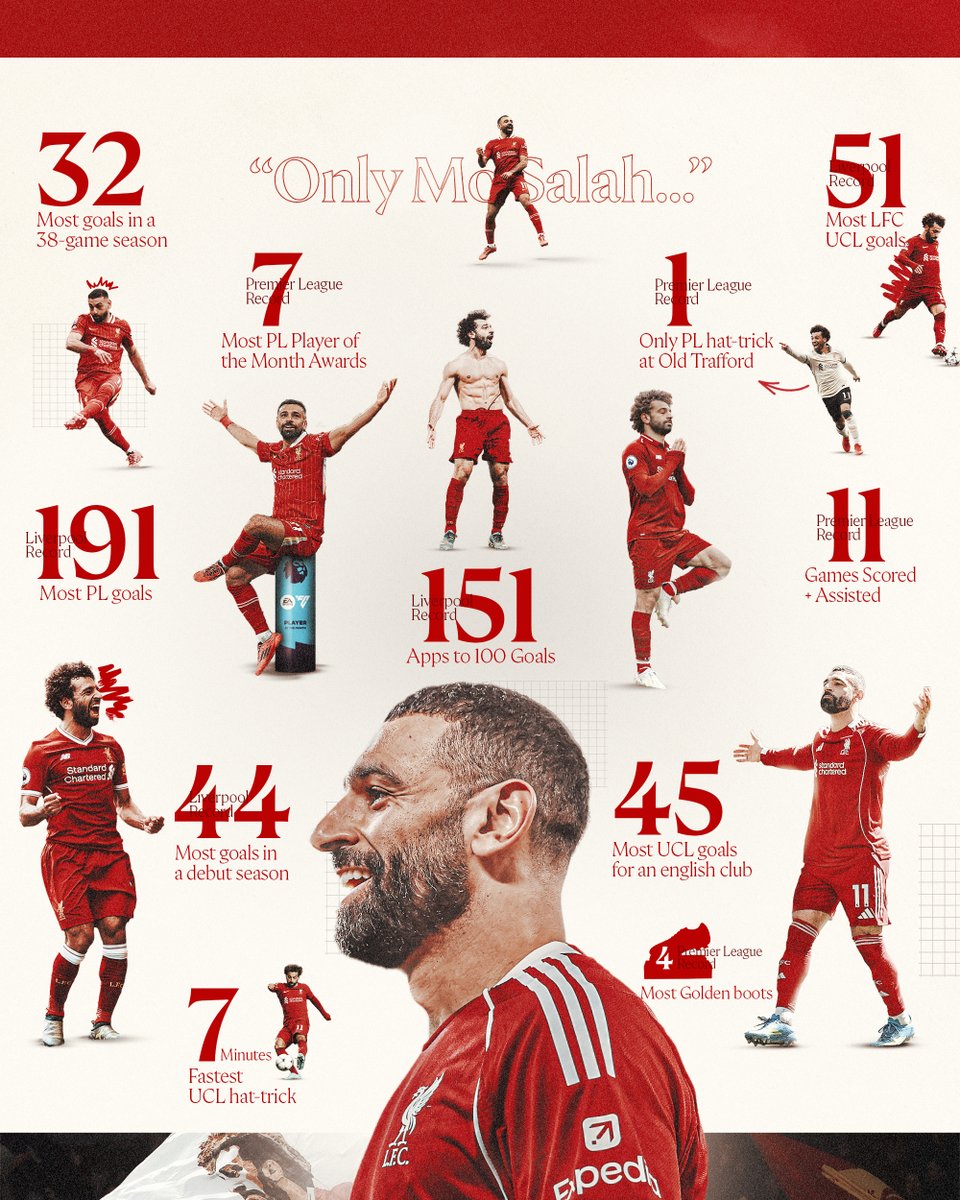
Greatest PL player of all time and comfortably top 3 of his generation. The only thing that ever held him back wasn’t football ability... it was nationality and narrative. He’s genuinely the most lied about footballer in modern history.
Richard Feynman ganó el Nobel de Física y dijo algo que dejó huella:
"La mayoría de personas saben muchas cosas. Pero no saben pensar."
Feynman dio una clase magistral de 1 hora sobre física e imaginación.
Sus 12 lecciones de vida:
1. La imaginación le gana al conocimiento
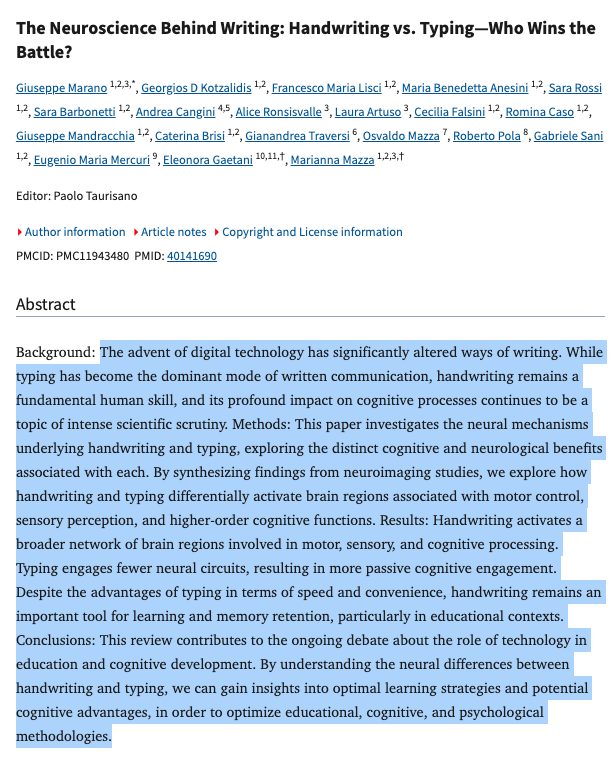
Your brain physically rewrites itself every time you pick up a pen.
Neuroscientists at Norwegian University scanned students' brains while they handwrote letters versus typing the same letters on a keyboard.
The results shattered decades of assumptions about how we process information.
Handwriting activated massive networks in the sensorimotor cortex, the visual processing centers, and the hippocampus simultaneously. Complex neural symphonies lit up across multiple brain regions, creating rich interconnected pathways between motor control, visual recognition, and memory formation.
Typing the same letters? The brain activity looked like someone had dimmed the lights across entire cognitive districts. The neural networks that flourished during handwriting simply went dark.
The difference?
When you form letters by hand, your brain constructs elaborate spatial maps of each character. The motor cortex learns the precise pressure, angle, and trajectory needed to create an 'A' versus a 'B.' Your visual system tracks the ink flowing from pen to paper in real time. Your parietal lobe integrates hand position with eye movement. Your hippocampus encodes not just what you wrote, but how the writing felt, where you paused, which words required more pressure.
Typing activates almost none of that circuitry. You press a key, a letter appears. The motor movement is binary. The visual feedback is uniform. The spatial relationship between thought and symbol gets mediated by a machine that standardizes every character into identical fonts and spacing.
Your brain treats these as fundamentally different cognitive tasks.
The evolutionary context makes this obvious once you see it. Human hands developed for manipulation, creation, and fine motor control over millions of years. We painted on cave walls, carved bone tools, and shaped clay vessels long before we invented written language. When writing emerged 5,000 years ago, it built on top of existing neural infrastructure that already connected hand movement with symbolic thinking.
Keyboards appeared 150 years ago. Touchscreen typing maybe 20 years ago. From an evolutionary timeline perspective, we started using them approximately yesterday. Our brains are still running ancient software that expects physical engagement with symbols.
That software produces dramatically different learning outcomes.
Students who take handwritten notes consistently outperform students who type the same information on memory tests, comprehension assessments, and creative applications of the material. The difference persists even when researchers account for typing speed, note length, and time spent studying.
The act of forming letters by hand forces deeper processing at the moment of information encounter. You cannot handwrite as fast as someone speaks, so your brain must actively filter, summarize, and prioritize information in real time. The motor effort required to form each word creates additional memory traces that typing does not generate.
Children who learn to write letters by hand develop reading skills faster than children who learn letters primarily through typing or screen interaction. The sensorimotor experience of creating letterforms helps their brains recognize those same letterforms when they encounter them in text.
Adults who handwrite shopping lists, daily schedules, or meeting notes remember the information better than adults who type identical lists into phones or computers. The spatial memory of where you wrote something on a page provides retrieval cues that digital text does not offer.
These findings collide directly with how education and work environments have evolved over the past two decades. Schools replaced handwriting instruction with typing classes. Offices converted from paper systems to fully digital workflows. Students take notes on laptops. Professionals draft documents on screens.
We optimized for speed and efficiency while accidentally severing the neural pathways that evolution spent millions of years developing.
The implications reach beyond memory and learning into fundamental questions about human cognition. If the physical act of forming symbols changes how your brain processes ideas, what happens to thinking itself when you remove the physical component?
Digital text is infinitely searchable, instantly editable, and perfectly shareable. But it may be creating brains that process information more superficially, store memories less durably, and connect ideas more weakly than brains that regularly engage in handwriting.
The neuroscience suggests we traded cognitive depth for technological convenience without realizing what we were giving up.
Some of the most innovative thinkers across history were obsessive handwriters. Darwin kept detailed handwritten journals. Einstein worked through complex theories in handwritten notebooks. Virginia Woolf wrote her novels by hand before transcribing them. Steve Jobs famously took handwritten notes during Apple meetings even as he was building the most advanced computers on Earth.
Perhaps they intuited something about the relationship between hand, brain, and insight that we measured in brain scanners but somehow forgot in practice.
Your pen is literally a cognitive enhancement device that activates neural networks digital keyboards cannot reach.
Winston Churchill fought his depression with bricks. He'd lay them for hours at his country home in Kent. He joined the bricklayers' union. And in 1921 he wrote about why it worked. It took psychology another 75 years to catch up.
He called his depression the "Black Dog." It followed him for decades. His method for fighting it back was as basic as it sounds: laying brick after brick, hour after hour.
Churchill spelled out his theory in a long essay for The Strand Magazine. People who think for a living, he wrote, can't fix a tired brain just by resting it. They have to use a different part of themselves. The part that moves the eyes and the hands. Woodworking, chemistry, bookbinding, bricklaying, painting. Anything that drags the body into a problem the mind can't solve by itself.
Modern psychology now calls this behavioral activation. It's one of the most-studied depression treatments out there. Depression sets a behavior trap. You feel bad, so you stop doing things, and doing less means less to feel good about. Feeling worse makes you do even less. The loop tightens until you can't breathe inside it.
Behavioral activation breaks the loop from the action side. You schedule the activity first, even when every part of you doesn't want to. Doing it produces small rewards: a wall gets straighter, a painting fills in, a messy room gets clean. Those small rewards slowly rewire the brain. Action comes first, and the feeling follows.
Researchers at the University of Washington put this to the test in 2006. They studied 241 adults with major depression and compared three treatments: behavioral activation, regular talk therapy, and antidepressants. For the people who were most severely depressed, behavioral activation matched the drugs. It beat the talk therapy. A 2014 review of more than 1,500 patients across 26 trials backed up the result.
Physical work like bricklaying does something extra on top of this. It crowds out rumination, the looping bad thoughts that grind people down during the worst stretches of depression. Bricklaying needs both hands and gives feedback brick by brick: each one is straight or crooked. After an hour you can see exactly how much wall you built. No room left for the mental chewing.
The line George Mack used in his post, "depression hates a moving target," is good poetry. The science behind it is sharper. Depression hates a brain that has somewhere else to be.
If you want a rare life, you have to be delusional. Doubt can enter your mind, and it can sound reasonable, but if you entertain it too much it will slowly drag you down into stagnation. I'd rather reap the lesson from massive failure than do nothing because it's not "realistic."