Yes, it's true.
TVs (via ads or content) can emit near-ultrasonic beacons (around 18-20 kHz, inaudible to most humans) that phone microphones detect. Apps then log the signal for cross-device ad tracking, linking what you watched to your phone profile.
Used by firms like SilverPush; researched and flagged by the FTC. Google has used similar tech for Chromecast pairing. Privacy settings and mic permissions limit it.
After DOGE, Elon came to a conclusion most people missed.
He tried to reform the state from the inside. He failed. And he said it plainly: the government can't fix its own deficit. Nobody in power actually wants to cut. The machine protects itself.
So he drew the only logical conclusion. If the state can't be reformed, there are only two ways this ends.
Either global bankruptcy. Debt keeps compounding, interest payments eat the budget, and the system collapses under its own weight.
Or robots. AI and robotics grow the economy so fast that the debt becomes manageable, and abundance makes the old fights over scarcity irrelevant.
Here's the part almost nobody sees.
For two centuries, capitalism has had a marketing problem. Its gains are real but slow and invisible. 2% growth a year doesn't feel like anything. Your life gets better over 30 years and you never connect it to the system that did it. Meanwhile, the left's promises feel immediate and concrete: a check, a subsidy, a benefit. That's why the left wins on promises even when it can't deliver them. Capitalism produces the wealth, socialism takes the credit.
Robots break that asymmetry.
When productivity doubles in a few years instead of a few decades, people will see it. Things get cheaper, services get better, opportunities appear, in real time. For the first time in history, people will connect capitalism and their rising standard of living directly, almost instantly. The causal chain becomes visible.
And that changes everything politically.
So there are two scenarios.
Scenario one: we stay in the current inertia. No breakthrough, or a breakthrough we regulate to death. The debt wins. Living standards stagnate, then fall. A frustrated electorate turns to whoever promises the most, and that pushes toward a hard collectivist left. But collectivism fails, as it always does. And when it fails, the most organized, most disciplined collectivist force left standing isn't the old left. It's radical Islamism. Bankruptcy, then communism, then something worse.
Scenario two: robots win. Abundance arrives, and it arrives visibly. The link between free enterprise and prosperity becomes obvious to everyone. And this is the key point: it becomes obvious to everyone, including the minorities the left was counting on. Because their long-term incentive is the same as everyone else's. A kid in the suburbs gains infinitely more from a booming, abundant West than from a bankrupt state handing out promises it can't keep. Abundance is the most powerful integration machine ever built.
That's the Western renaissance.
The West doesn't need to win the culture war by arguing. It needs to win it by delivering. And for the first time, it has the technology to deliver fast enough for people to notice.
The race isn't left vs right anymore. It's robots vs bankruptcy.
Our engineers recently visited one of our speech restoration study participants for a 72-hour hackathon.
The goal: rapidly prototype as many features as possible to enhance the experience of using Neuralink to communicate with thought.
Here are some of the things we built 🧵
Hey so I had similar issues. I 1 shot my ads about 90% of the time now.
If its speaking, you need to generate the voice in eleven (or record it) separately. Then layer on the actual text/script of the voice in the prompt like I have in the prompt below.
THEN make sure it stick to it and doesnt try to ad/adjust movements. The audio must be locked over all or SD will try ad stuff/or adjust it to make up for body movements etc.
Hope that helps (youll find how I did the script part in the dialogue section and you can see how I site the audio below)
[Generation Goal]
A photoreal selfie video, 3:4, 22 mm, in the look of a low-quality impromptu phone selfie video: the man from @Image1 filming himself with the camera in his own hand while he walks through the kitchen in @Image2, talking to the viewer the whole way, lip-syncing to @Audio1, his facial expressions driven by @Video1 and kept small and natural. Around the 8-second mark he steps over to a laptop open on the counter showing the ad account from @Image4, turns the camera onto it and points at it briefly, then goes back to walking and filming around the kitchen. Amateur quality, the camera held a little above his head, looking around the room occasionally, slight camera sway and shifting angles. Soft, slightly blurry, not HD, not polished. No flashes, no flicker, no sudden brightness changes at any point.
[No Words On Screen]
No captions, no subtitles, no titles, no lower thirds, no watermarks, no logos, no UI, no timecode, no text overlaid on the video of any kind. The only words anywhere in the picture are the ones physically displayed on the laptop's own screen from @Image4, seen as part of the room when the camera is on it.
[Reference Material Roles]
@Image1 defines the man: his identity, face, hair, build, wardrobe and tattoos, carried identically. @Image2 defines the location: the kitchen's materials, layout, window, daylight and palette, used as the real place he is walking through, not a backdrop behind him. @Image4 defines what is on the laptop screen: the ad account dashboard, shown on the laptop's display exactly as pictured — the same layout, the same numbers, the same words — as the laptop's own screen content, not an overlay on the video and not a backdrop; it is seen only on that screen. @Video1 defines his facial expression and the way his face and head move while he talks — the eyes, brow, small smirks, glances, head turns, the energy of his delivery — used as the driver for his face, taken at the small, natural scale of real conversation and never amplified; it does not define the character, the camera, the location, his body or his route, and it carries no audio. @Audio1 defines the voice and the complete dialogue. The dialogue is reused from @Audio1 verbatim — the same words, the same number of words, in the same order, at the same timing — and it is the only speech in the video. He lip-syncs to it in English; his mouth follows @Audio1, his expression follows @Video1. The camera is held by him; it is never seen.
[Dialogue]
In natural conversational English, the man says, word for word as recorded in @Audio1: "If you run Meta ads, upgrading your pixel to AI Swarm data is one of the easiest ways to boost your ad ROI 15 to 25% literally overnight. And if you give me five seconds, I'll show you where in your account to do this. It takes a couple of minutes just for those improved results. The average result we see when swapping in this pixel data is a huge drop in the cost to get a customer from ads. The account usually grows about 10 to 15% right away, and this is just because it makes the AI targeting on the platform so much better. Here's where it is in your account, and here's how to upgrade it without any changes to your ads. FYI, this isn't theory. We've done this for massive brands with huge growth in their ads.". This text and @Audio1 are the same dialogue; @Audio1 supplies the voice and the timing. No words are added, removed or changed. He keeps talking through the laptop moment without a pause in the dialogue. After the last word of @Audio1 he keeps his lips naturally closed without speaking further and stays in the shot, still moving a little, until the video ends.
[Subjects and Relationships]
One man, the man from @Image1, alone in the kitchen from @Image2, holding the camera loosely out in front of and a little above himself and talking into it like he's sending a quick video to a friend. He walks through the kitchen naturally as he talks — an easy wander, turning as he goes, looking around the room now and then, sometimes swinging the camera to show it, then back to his face — with the kitchen passing and changing behind him. An ordinary laptop sits open on the counter, its screen lit and showing the ad account from @Image4; he goes to it once, shows it and points at it, and leaves it where it is. Nobody else in the shot.
[Scale and Proportion]
He is a full-height adult standing and walking in a large room with a high ceiling: his head, shoulders, arms and body in the same proportions as @Image1, at natural human scale against the kitchen in @Image2 — never shortened, compressed or shrunk to fit the picture, never bent or hunched; the room is big and he is a normal-sized man inside it. The laptop is normal laptop size on the counter, small against the room.
[Camera]
Selfie video held in his own hand, mostly a little above his head and tilted down so he's looking slightly up into it, his face and shoulders in the picture with room around him, the top of his arm sometimes entering at the bottom edge. The angle keeps shifting the way a real selfie does: the camera drifting higher, dropping to chest height, swinging out to the side when he looks around the room and coming back, a slight constant sway. At the laptop he turns the camera around onto the screen so the screen fills most of the picture, slightly angled, his pointing hand entering from the side, then swings it back onto his face. The picture bobs with each step, tilts, drifts off him and re-centres late, exposure easing slowly and smoothly as he passes the window. Amateur and natural: not smooth, not gliding, no stabilised glide, no zoom, no cut, single continuous take. No phone, no camera, no screen other than the laptop's, no second person ever visible.
[Picture Quality]
The whole video looks like a quick low-quality front-camera phone selfie, not a production: soft and slightly out of focus throughout, fine detail mushy, mild noise and grain over everything and heavier in the shadows, colours a little washed and flat, highlights clipping softly, the window gently blown out when it's behind him, focus occasionally hunting and settling late, motion smear when the camera swings. Small-sensor look: the background a bit blurry and smeared behind him, softer than he is, with his face the only thing close to sharp and even that only just. When the camera is on the laptop, the screen reads as a real lit screen filmed by a phone — a little soft, slightly glowing, the dashboard from @Image4 still recognisable and its layout and numbers intact. Low resolution feel, slight compression softness, a touch of smearing on edges, nothing crisp. Not HD, not sharp, not clean, no commercial polish, no cinematic look, no studio look. Brightness stays steady and continuous from first frame to last: no flashes, no strobing, no flicker, no light bursts, no white or bright pops, no sudden jumps in exposure, no glints or reflections that flare up, the laptop screen a steady even glow, every change in brightness slow and gradual.
[Lighting]
The kitchen's own light from @Image2 is the only light: broad, soft, cool, steady overcast daylight from the big window, with a faint neutral fill from the room; the light never flashes, pulses or flickers. It hits him the way it hits the room — soft and even, cool, no warm cast — and shifts slowly and naturally on his face as he moves and turns: brighter and flatter when the window is behind the camera, a soft edge on his hair and shoulder when the window is behind him. The laptop screen adds only a faint steady glow on his hand when he points at it. Rendered at low phone-video quality: flat, slightly noisy, soft, auto-exposure catching up gradually. His face always readable through the softness, skin natural and unpolished, no sheen.
[Performance]
Relaxed, casual, talking to a friend, his face understated the whole way: his eyes stay at their natural relaxed openness as in @Image1 and are never opened wide — no wide-eyed moments, no staring, no bug-eyed emphasis; his brows stay low and relaxed, never raised high; his expressions are small and real — a slight smirk at most, a small nod, a glance — never exaggerated, never a big smile, never a big reaction, never theatrical, nothing larger than a person actually does when chatting to a friend. His expression, eye movement and head movement follow @Video1 at that small natural scale. Natural eye contact with the camera most of the time, looking away to glance around the room as he walks and turns, breathing normally, blinking naturally, small head movements and free-hand gestures with his other hand, mouth movements matching @Audio1 exactly without over-articulating. At the laptop the point is quick and offhand — a loose finger toward the screen for a moment, still talking — not a presentation. Casual, slightly amateur energy, never posed, never presenting, never stiff.
[Event Script]
He's already walking and mid-sentence as it opens, the camera a little above him, the kitchen moving behind him. He wanders through the room as he talks, glancing around it now and then and letting the camera swing to catch the window and the rest of the kitchen before bringing it back to himself, the angle drifting as he goes. Around 8 seconds in, still talking, he steps over to the laptop open on the counter, turns the camera around onto its screen showing the ad account from @Image4 and points at the screen briefly with his free hand, the point lasting only a moment, then swings the camera back onto his face, pushes off the counter and goes back to wandering and filming around the kitchen as before. By the last words he's slowed to a natural stop, still looking up into the camera; the last word lands, his lips close, he keeps the camera on himself with a small natural shift of weight until the end.
[Audio]
Audio is @Audio1 passed through unchanged, at its original speed and full length; no generated speech, no added or removed words, no narration, no music, no other voices. Under it, the natural sound of the room: his footsteps on the hard floor, soft room tone, the faint handling sound of a camera held in a moving hand, a small tap when he points at the screen, all quiet beneath his voice.
[Maintain Consistency]
The same man from @Image1 throughout — face, hair, wardrobe, tattoos unchanged for the full scene, his eyes at the same natural openness and his expressions small and understated from first frame to last. The same kitchen from @Image2 throughout — its materials, window, daylight and palette consistent from every angle he turns to. The laptop screen shows the ad account from @Image4 and only that, the same before, during and after he points at it. One continuous take, no cuts, no transitions, no second camera. The low-quality phone selfie look held for the full length: soft, noisy, slightly blurry, never sharpening up into HD or a polished look. Brightness continuous and steady the whole way through: no flashes, no flicker, no pops of light at any point.
What if your character could finally say it themselves? With Chimera they can.
Chimera pairs two of the world’s leading models, Eleven v4 and Seedance 2.5, to create realistic video with rich, emotional voices.
In ElevenCreative, create or upload a character, write their line, and pick a voice or design one to match. Direct the performance with audio tags like [whispers], [laughs] and [yells] to control the timing and mood of every word.
Eleven v4 puts the emotion in the voice. Seedance 2.5 carries it onto the face.
How to avoid bad PSA results:
1. Never send a large submission. Spread your risk across different graders.
2. Never submit multiple of the same card in the same submission unless you’re following rule three on purpose.
3. Place your poorer cards at the front of your order.
[Generation Goal]
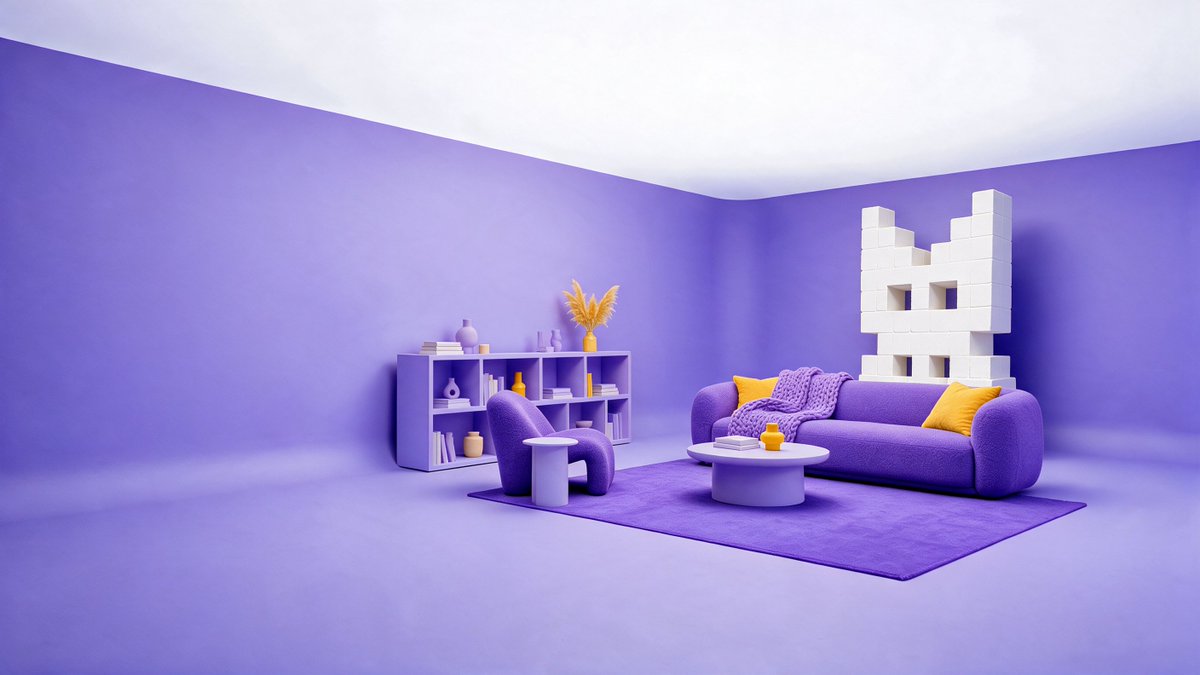
One continuous 14-second shot, no cuts, in 3:4 vertical format (taller than wide). A man sits at the center of a desk in a vivid lavender studio and talks straight to the viewer like a relaxed podcast host. Bright, poppy, commercial look with rich saturated color. Real-time, photorealistic.
[Reference Material Roles]
@Image1 defines the man: his face, hair, facial hair, tattoos, cap, clothing and jewelry, exactly as shown.
@Image2 defines the scene: the room, desk, podcast mic, laptop, shelf, rug, crystal statue, colors and light. The man is placed inside this room, not in front of a picture of it. @Image2 is a wide image; the video is 3:4 vertical, so the room is recomposed for the taller format around the man and the desk.
In shot camera is close enough that only the top of desk is visible, his feet are not showing.
@Vs4tiq46NBvTeeDVaywT o1 is a silent clip used only as a guide for facial expression and natural face movement while talking. It does not define the character, his look, his gaze, or the audio.
@Audio1 defines the voice and the complete dialogue. The dialogue is reused from @Audio1 verbatim — the same words, the same number of words, in the same order, at the same timing — and it is the only speech in the video. Lip-syncs to it in English.
[Subjects and Relationships]
The man from @Image1 sits in a simple chair behind the desk from @Image2, at the exact center of the desk, with equal desk on both sides of him, chest facing the viewer. He is centered in the 3:4 picture. The podcast mic stands on the desk directly in front of him, low enough that his mouth is always fully visible. The laptop is pushed off to his left side of the desk. The room from @Image2 sits behind him, with the shelf and crystal statue visible in the background.
The viewer is directly in front of the desk on its centerline, at his eye height, looking straight at him. He is seen from the desk up, with the desktop, mic and laptop in view.
[Dialogue]
In natural conversational English, the man says, word for word as recorded in @Audio1: "If you run meta ads, upgrading your pixel to AI swarm data is one of the easiest ways to boost your ad ROI fifteen to twenty five percent literally overnight. And if you give me five seconds, I'll show you where in your account to do this. It takes a couple of minutes just for those improved results. FYI, this isn't theory. We've done this for massive brands with huge growth in their ads, like-"
This text and @Audio1 are the same dialogue; @Audio1 supplies the voice and the timing. No words are added, removed, or changed.
[Event Script]
He is already seated and settled at the center of the desk as the video opens, and begins speaking with @Audio1. Eyes forward toward the viewer throughout. He talks in an easy, unhurried podcast manner: relaxed shoulders, small natural hand gestures over the desk that follow what he is saying, slight head movement, a casual lean toward the mic now and then, natural blinking. Facial expression follows the feel of @Video1. His hands never cover his mouth. He stays seated in the center the whole time. The view stays steady and straight on.
After the last word of @Audio1, he keeps his lips naturally closed without speaking further and holds a relaxed, engaged look toward the viewer until the video ends.
[Lighting and Color]
Vivid, poppy commercial lighting and color, using the bright, even light already in @Image2. Purples and yellows are rich and saturated.
bright, soft, clean, vivid commercial light across the whole scene and on him alike. His face is fully and evenly lit, warm and natural, with no harsh shadows and no shine.
Skin
Natural non shiny or oily or harsh skin, skin is balanced like @NmNa1UopjW4oipZgO3Hh
[On-Screen Graphics]
None. No text, subtitles, captions, logos or graphics anywhere at any point.
[Audio]
Audio is @Audio1 passed through unchanged, at its original speed and full length; no generated speech, no added or removed words, no narration, no music, no other voices.
[Maintain Consistency]
3:4 vertical format from start to finish. The man matches @Image1 exactly: backwards black cap, black tee, tattoos, ring, facial hair. He stays seated at the center of the desk and centered in the picture. The room, desk, mic, laptop and colors match @Image2 and stay in the same place the whole time. One continuous shot, same straight-on view, same light throughout.
This is a weird post but read until the end
If you are an individual willing to take risks you should play different according to your current bankroll
- let me give you an example saying you want to turn $100k into $1M
Me personally I take it slow from $100k until I can get to about $250/300k - this one is a long journey a lot of small trades very tight stops you will get tired but stay consistent
Once you reach $250/300k wait patiently for a big gamble/lay up opportunity in the market - at this point you want to reach about half way at $450/500k
Find a trade that sets you back about $100k but can also get you to that half a million mark - if you lose go back to the slow grind same as before
Now if you make it - you also go back to the slow grind you cant keep taking big gambles all the way do some smaller trades tight stops again until you reach about low $700k
This is when you take another big gamble - same way you did when you got to $250k the first time
This final gamble should be able to take you to $1M or set you back to the middle level - if you lose reset again and go back to the small trades then try again for the same gamble that will take you to $1M
This is my personal strategy I just find it easier if you adjust it between periods of slow consistency and finding that big gamble that levels you up.
Good luck
in this era of public wallets
the best way to avoid being farmed is to understand the different types of doxxed wallets
only 3 reasons to track popular wallets:
1. frontrunning future tweets
-if a KOL regularly posts about coins they are in
-front run future demand generated by future tweets
risk: they don't tweet/they sell
2. finding good coins early
-if a wallet regularly buys coins early (before consensus)
-quickly research what they bought
-decide if good or bad
risk: these wallets lose more than they win, the wins are just very big
3. dormant/outlier activity
-if a profitable, inactive wallet buys something
-higher likelihood of ceiling breaking/outlier outcome
risk: they are gambling/have no alpha
for every wallet you track, ask which category they fall into. each has it's own risks. hope this helps.