Research Spotlight: A top-down approach to measuring methane emissions in PA shows that levels from natural gas are 5x higher than EPA estimates.
By @sidquan at @AGU_Eos#AGU100#greenhousegas @NASA_Langley @KenDavisMeteo @PSUEMS@psumeteo@NACP_Carbon
https://t.co/FQpiS4rPRd
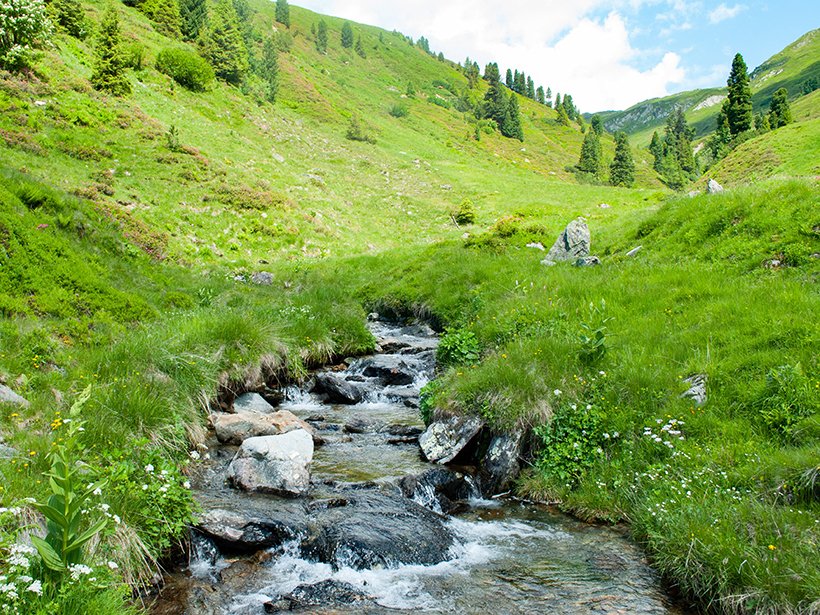
Research Spotlight: Large stones in streams provide crucial habitat for fish. Modeling the boulders and streamflow offers fresh insights into how water engineering projects alter aquatic habitats.
By @sidquan, #hydrology@niayifar @sber_epfl #AGU100
https://t.co/fqL58Xzk0O
Research Spotlight: Knowing how soil moisture and latent heat are connected is vital for modeling how the land and atmosphere interact. A new study looks at how to improve our ability to measure it remotely. By @sidquan@USDA_ARS#soil#climate#AGU100
https://t.co/8yaYpeVIcb
Research Spotlight: Carbonate mudstones are a #seawater archive and source of petroleum. New techniques reassess how the #rocks are made. @trowerlab
By @sidquan
https://t.co/zFRpsFmj0l
Research Spotlight: Using nitrogen-based fertilizers in your summer garden? Soil wet spots play a key role in releasing harmful nitrogen gas into the atmosphere.
By @sidquan, @stevenjh#AGU100#nitrogen#climatechange#biogeo#farming
https://t.co/mNiGyy0OKO
Research Spotlight: Size matters--The size of particulate matter in the atmosphere determines how it deposits in the body & leads to different health challenges. From @AGU_Eos
By @sidquan, #aerosols#geohealth#airpolution
https://t.co/eaaDSOllRr
Research Spotlight: Tree ring chronologies fill in gaps in the historical record and offer insights into the natural flow of China’s Yellow River.
By @sidquan, @HKUgeography#YellowRiver#hydrology
https://t.co/JyCnb3rUtU
Research Spotlight: No two solar cycles are alike, and the current one is weaker than normal. How is this one affecting Earth’s upper atmosphere?
By @sidquan, #sun#solarcycle#atmosphere#ISS
https://t.co/ccBllRSkoU
Research Spotlight: Knowing how soil moisture & latent heat are connected is vital for modeling how land and atmosphere interact. A new study looks to improve our ability to measure it remotely. By @sidquan at @AGU_Eos@USDA_ARS#soil#climate#AGU100
https://t.co/NEOHvYDwRK
How many water-bearing asteroids exist in near-Earth space? The answer matters to scientists and space prospectors. @asrivkin@JHUAPL#AGU100 https://t.co/sRS4W4LfX9
“Strange” is not an adjective commonly applied to floods and other natural disasters, but in some cases, it might be the best description. #AGU100@sidquan https://t.co/OIyWOFdgt7