International Business developer, Agile Communities for Greening the Economy, Downstream Space Leader, Technology Transfer expert, IPR expert, Innovation Financ
How PwC is involved in the #space and #defence sectors? Curious to learn more about it?
Visit our booth at the 2023 GOVSATCOM Conference, taking place today here in #Luxembourg!
@PwC Luxembourg is proud to sponsor the 2023 GOVSATCOM Conference, dedicated to International SATCOM.
Don't hesitate to come by to our booth, to learn and discuss about how PwC is involved in the space and defence areas!
@GOVSAT#defence#space#government#Luxembourg
My mum (82) from Germany, married my British dad in 1965 & became a UK national. She has a UK passport & has lived in UK since the 80s. Yesterday she got a letter saying she has to apply for settled status or will lose nhs & pension & right to stay. This can't be? She's in bits!
That's the way it 'worked' in the past, for millennia, prior the pre-vaccination/antibiotic era. This does obviously not mean we should not do all we can to avoid getting back to that age. Though, sadly enough, this is what is happening right now in large parts of the world.
What is the @EU_Commission doing to help tackle the #COVID2019 outbreak? Information in 24 languages on:
• medical info and healthcare🩺
• mobility🚚
• mitigating the economic impact💶
• stats from @ECDC_EU📊
Visit: https://t.co/z2CBoVzNc6
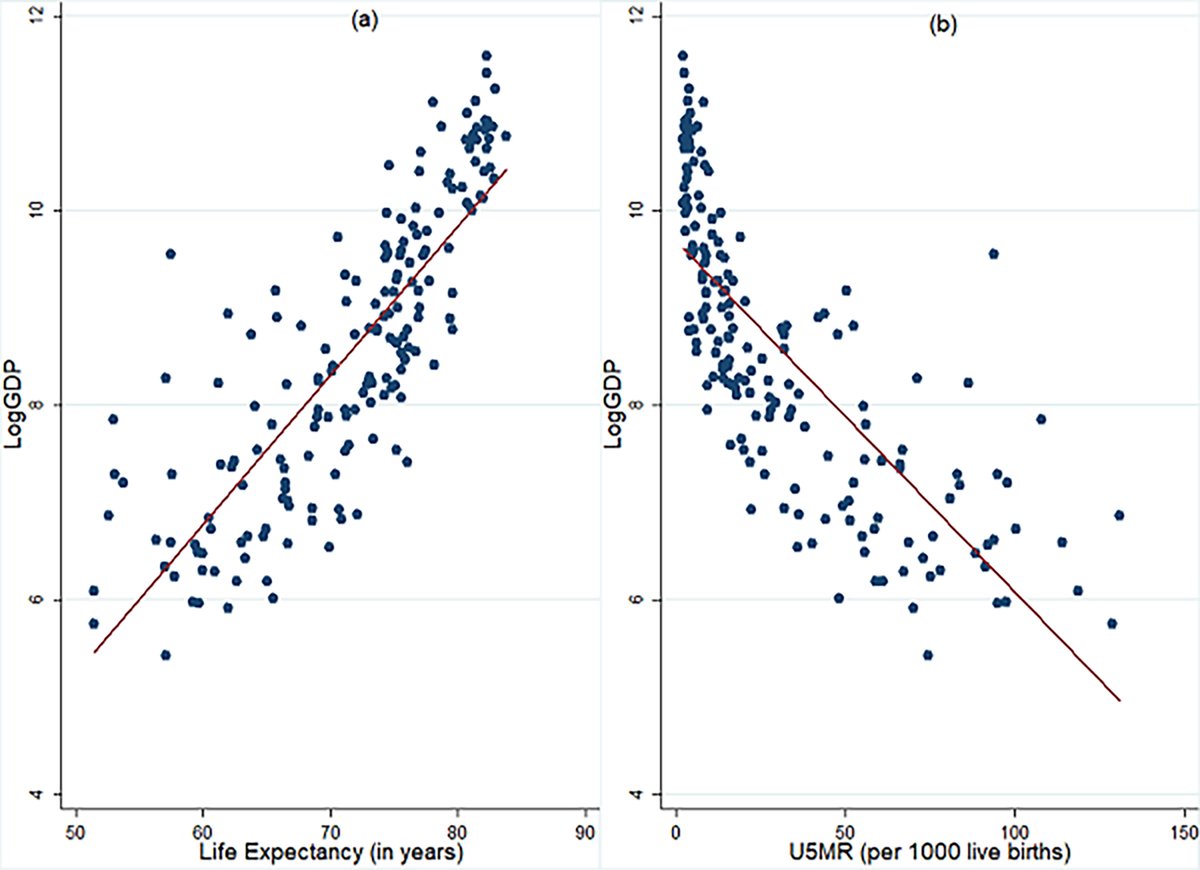
Health and the economy are closely linked. The correlation between per-capita GDP and health (life expectancy) is essentially perfect. If the covid-19 pandemic leads to a global economy collapse, many more lives will be lost than covid-19 would ever be able to claim. (12/12)
The covid-19 pandemic is not just an epidemiological problem. It is a ‘Global Health’ problem, that can only be tackled with an integrated and global approach. For example, there is no such thing as a choice between managing the pandemic vs. protecting the economy. (11/12)
The covid-19 pandemic is an extremely challenging problem and there are still many unknowns. There is no simple fix, and poorly thought-out interventions could make the situation even worse, massively so. (10/12)
Short-lived immunisation would defeat both ‘flattening the curve’ and ‘herd immunity’ approaches. Devising an effective strategy would be even more challenging under low seasonal forcing. It would also considerably complicate effective vaccination campaigns. (8/12)
How long immunity lasts for following covid-19 infection is the biggest unknown. Comparison with other Coronaviridae suggests it may be relatively short-lived (i.e. months). If this were to be confirmed, it would add to the challenge of managing the pandemic. (7/12)
Seasonality is difficult to predict without time-series. Comparison between regions for the covid-19 pandemic suggests some seasonality, but likely less than for influenza. This would be roughly in line with other Coronaviridae (common cold and MERS). (6/12)
Predictions from any model are only as good as the data that parametrised it. There are two major unknowns at this stage. (1) We don't know to what extent covid-19 transmission will be seasonal. (2) We don’t know if covid-19 infection induces long-lasting immunity. (5/12)
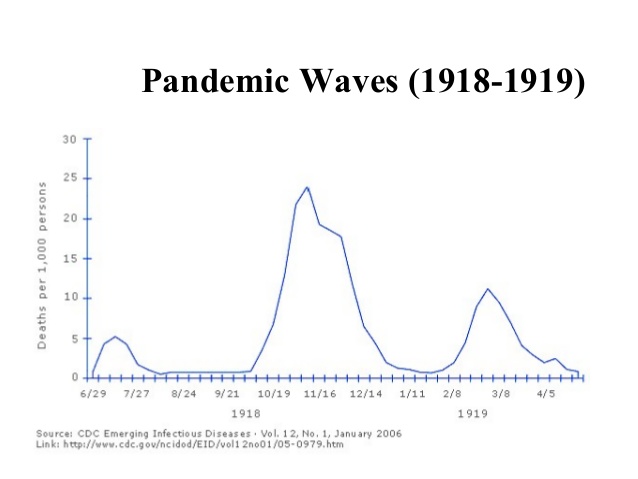
The most plausible scenario to me is for the covid-19 pandemic to wane in the late spring (in the Northern hemisphere), and come back as a second wave in the winter, which I expect could be even worse than what we're facing now. Pic below is what happened in 1918/19. (4/12)
I believe that the covid-19 pandemic is the most serious global public health threat humanity faced since the 1918/19 influenza pandemic. There are major differences between the two events but I suspect there will also be similarities that may emerge once we look back. (3/12)
After having spent considerable time thinking how to mitigate and manage this pandemic, and analysing the available data. I failed to identify the best course of action. Even worse, I'm not sure there is such a thing as an acceptable solution to the problem we are facing. (2/12)
I should be qualified to comment on the covid-19 pandemic. I'm a computational/system biologist working on infectious diseases and have spent five years in a world class 'pandemic response modelling' unit. In this thread, I will summarise what I believe I (don't) know. (1/12)
EARCS agrees to promote the new Copernicus MOOC at the panel on networking in the European Space Week #GAHelsinki#EUSW2019 @CopernicusEU. The Copernicus MOOC will be open to all and free of charge. More information: write an email to [email protected]