Fraud rarely happens at sign-up. It happens at the payout.
The question isn't "is this customer verified?" It's "does this payout fit this customer?" #FraudAwarenessWeek
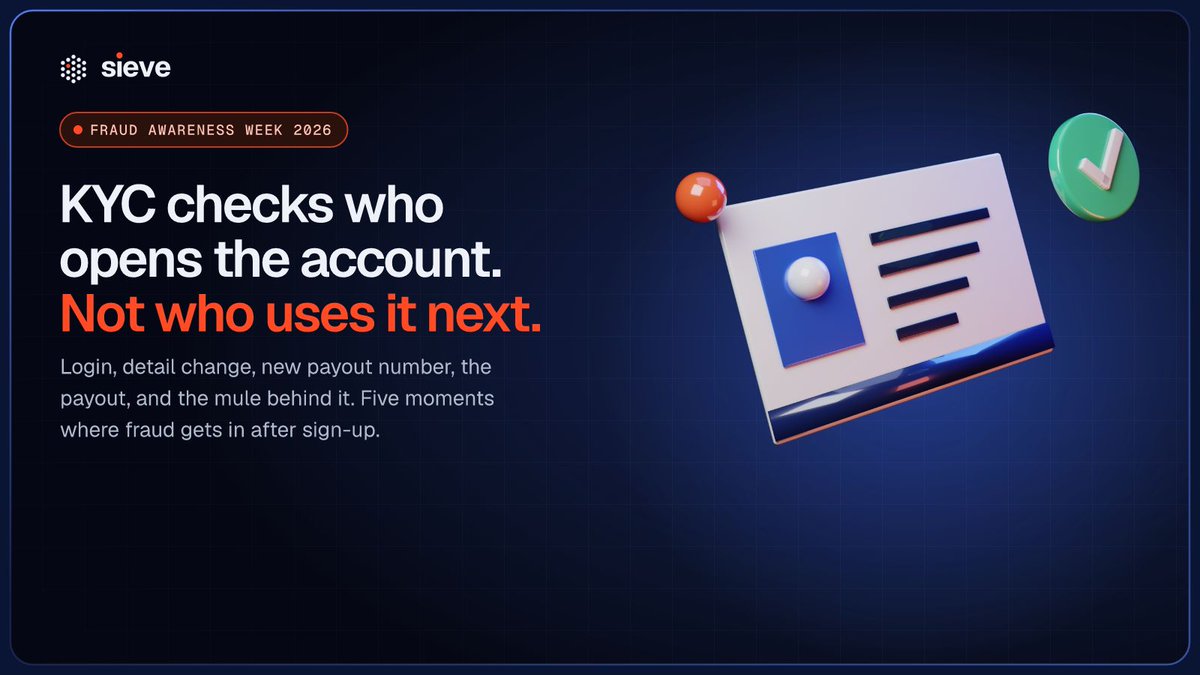
KYC checks who opens the account. Not who uses it next.
Five moments fraud gets in after sign-up: the login, the detail change, the new payout number, the payout, and the mule behind it. #FraudAwarenessWeek
Fraud in 2025, in numbers:
Nigeria: N25.85bn lost to digital payment fraud (NIBSS)
Kenya: banks lost a record Sh1.9bn (CBK data)
Kenya: SIM-swap fraud up 327% (INTERPOL)
One fraud pattern a day this week. #FraudWeek
It's #FraudAwarenessWeek.
Kenyan banks recovered 6.25% of the money exposed to fraud in 2025, down from 18.8% in 2024.
Once it leaves, it rarely comes back. Stop it before it moves.
(Central Bank of Kenya data, reported Nov 2026)
Passing KYC doesn't make an account safe.
Account 3 hours old. Phone number changed. Payout to a destination added today. 96% of the balance out.
That order is the signal.
No SIM-swap API from your operator yet? Watch the proxies:
- a new device and a PIN reset close together
- failed OTP attempts, then a success
- OTP delivery failing on a number that used to work
- a customer saying their phone has "no network"
Theft to loss in a SIM swap is often under an hour.
Our free SIM-Swap Fraud Playbook: the six signals, starting thresholds, and a runbook for the first hour.
https://t.co/xhdxjF3o2U
Credential stuffing works because the last attempt is correct.
Five failed logins, a success from a new device, money out four minutes later. Score the journey, not the password.
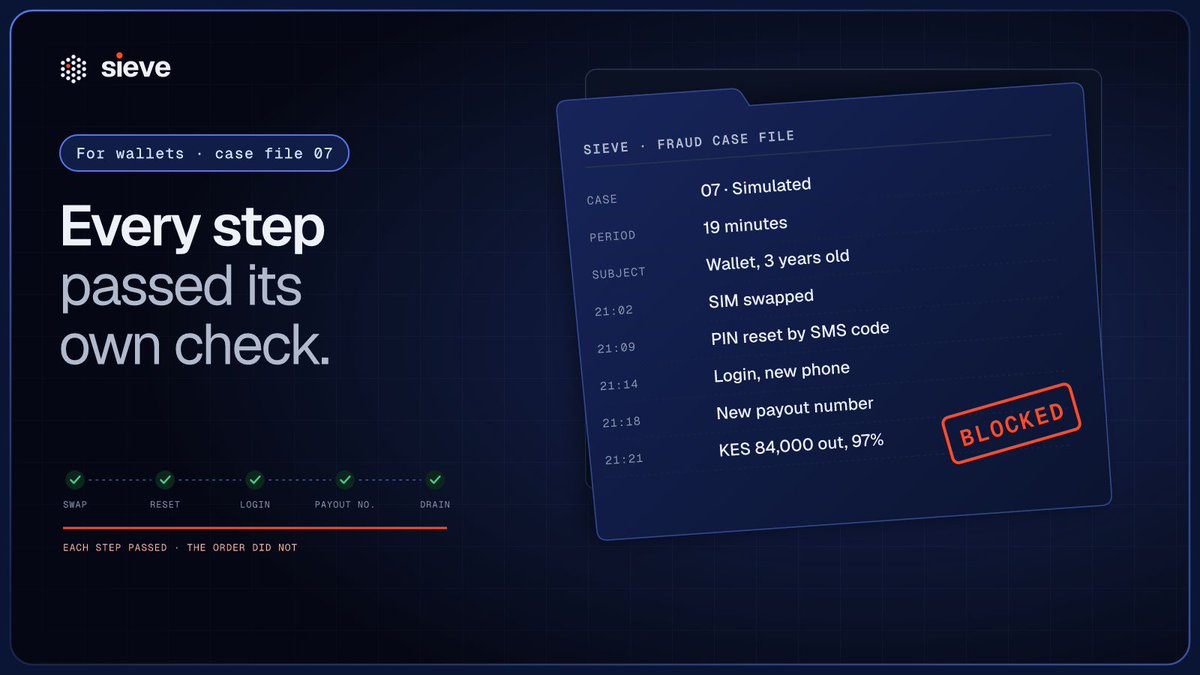
Fraud case file 07 (simulated)
21:02 SIM swapped
21:09 PIN reset by SMS code
21:14 login from a new phone
21:18 new payout number added
21:21 withdrawal of 97% of the balance
Every step passed its own check. Verdict: block.
Kenyan mobile wallets lost an estimated KES 491.6 million to SIM-swap fraud in 2025. SIM-swap fraud rose 327% in the year.
(INTERPOL, African Cyberthreat Assessment Report 2026)
The right PIN doesn't mean the right person.
After a SIM swap, the one-time codes go to the fraudster. Check what happened before the payout: the swap, the reset, the new phone, the new payout number.
This week we're writing about mobile wallets: SIM swaps, takeovers and accounts opened to be emptied.
Wallet teams: what's the fraud pattern you see most?
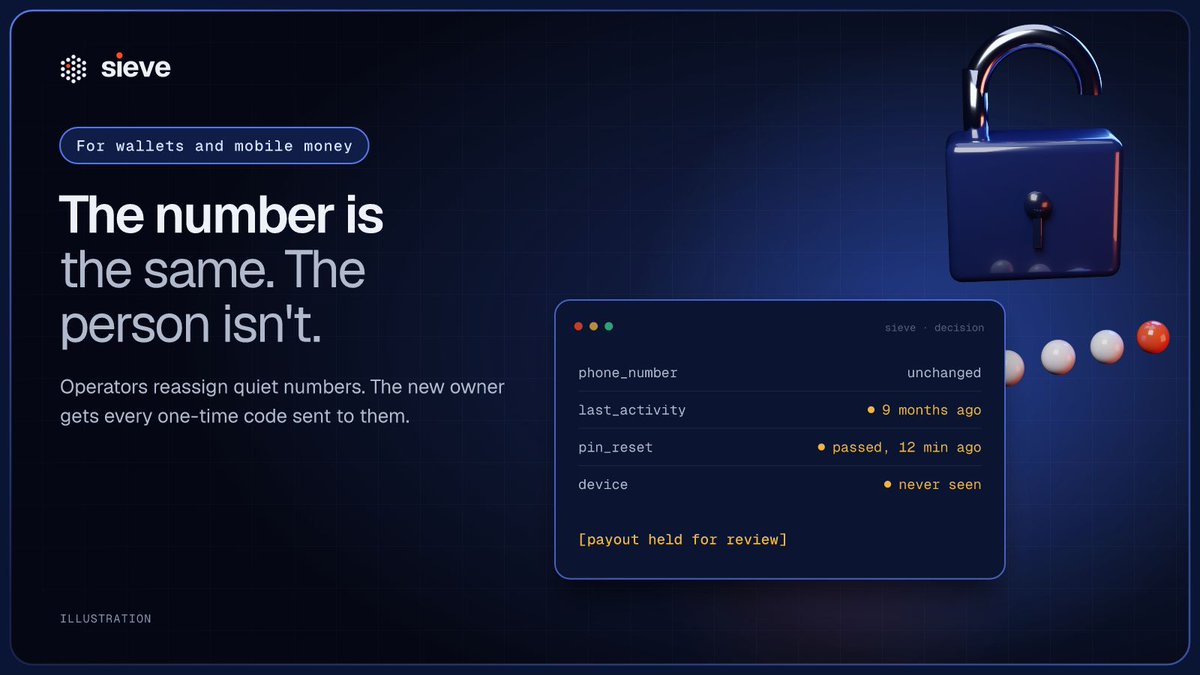
Operators reassign numbers that have gone quiet. The new owner gets every OTP sent to it, including codes for a wallet nobody closed.
In mobile money, the phone number is the account.