Son, Husband, Father. Passionate about Godly governance, not politicking. Isaiah 61 and Joshua 24:15
“ but as for me and my house, we will serve the Lord.” #RSA
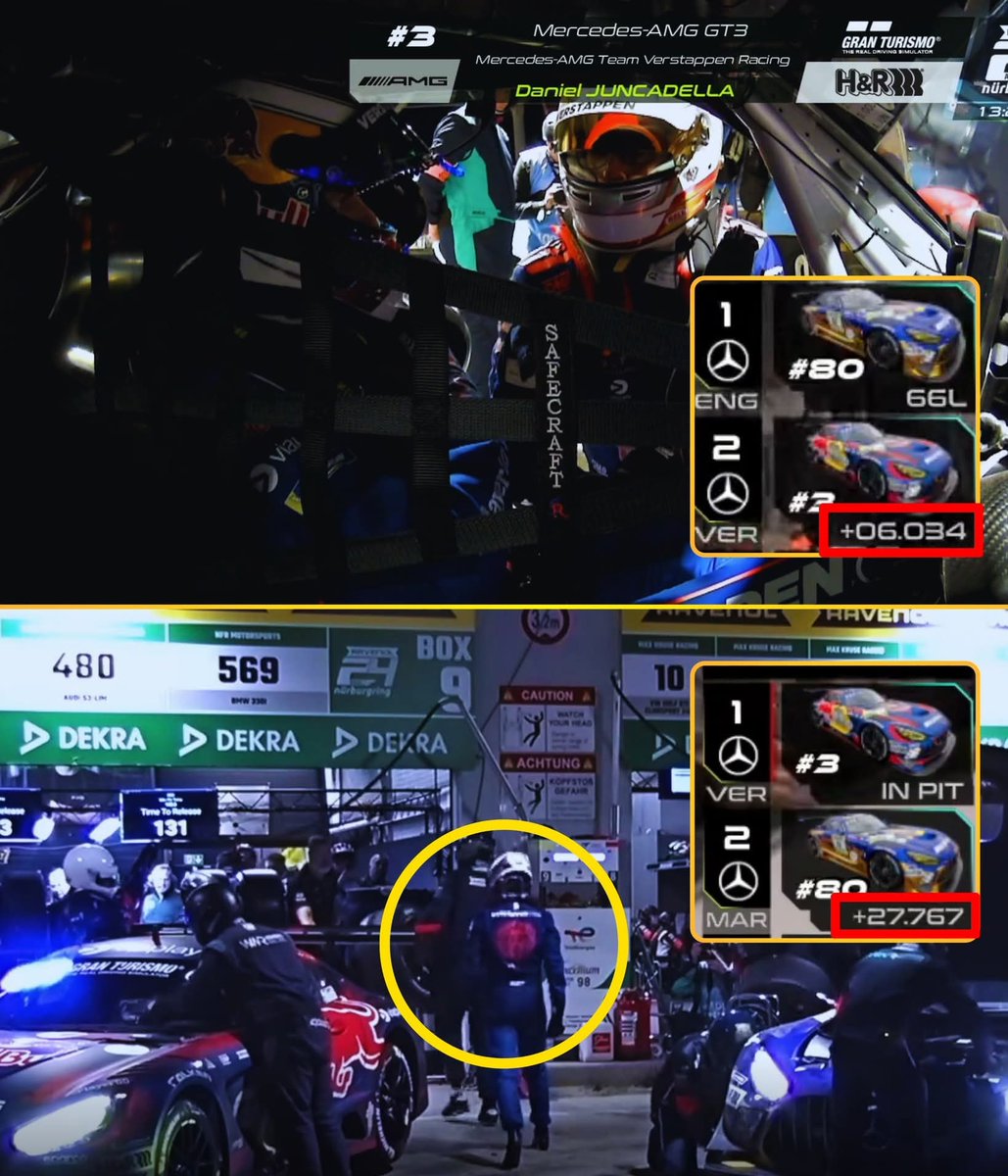
Max se subió al auto en su último stint en la P2 a 6 segundos del líder y dejo a su equipo puntero con casi 28 segundos de diferencia.
Todo esto con tráfico y en la noche...
Termine como termine, si después de lo de hoy seguís dudando del talento de este tipo, sos un burro que no entiende absolutamente nada de este deporte.
El mejor de todos, lejos.
#24hNürburgring #Verstappen #24hNBR
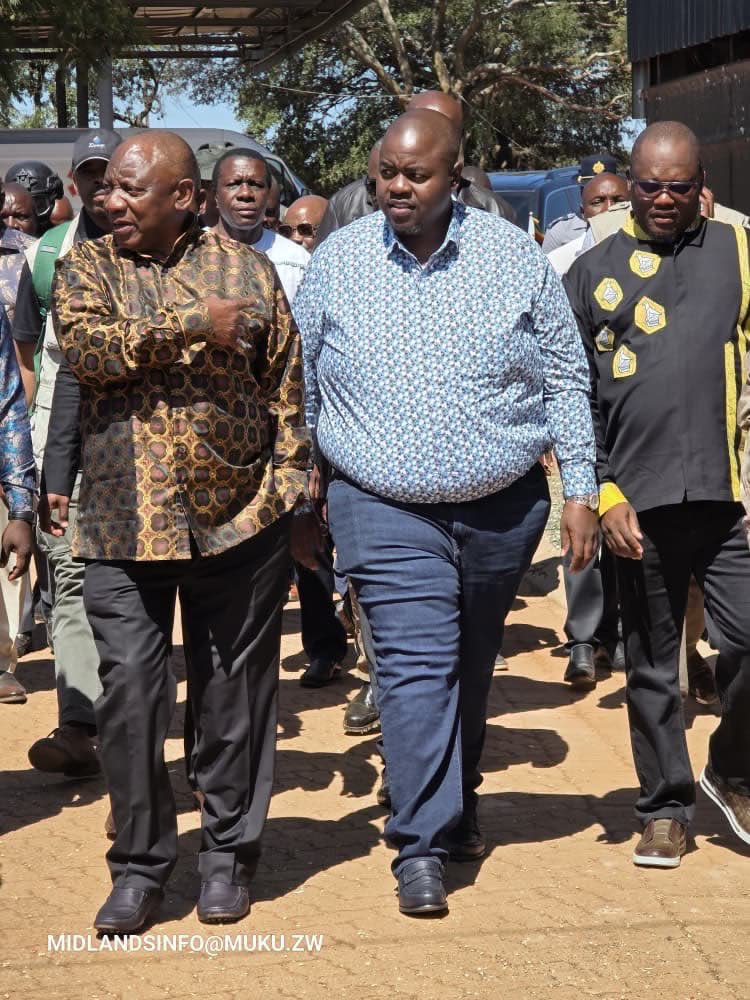
Today, President @CyrilRamaphosa visited Zimbabwe and was photographed with Wicknell Chivayo, a man currently under investigation by South Africa's own FIC for allegedly laundering over R800 million in Zimbabwean public funds.
South Africa's Financial Intelligence Centre found that over R1.1 billion from Zimbabwe's Ministry of Finance @ZimTreasury flowed into a South African printing company, with more than R800 million rapidly transferred into accounts belonging to Chivayo-linked companies.
The Hawks, SARS and SAPS are all involved. A South African High Court has already frozen Chivayo's bank accounts at FNB, Absa and Standard Bank and grounded his private jet in a case brought by his estranged wife Louise Sonja Madzikanda.
But it gets worse.
Wicknell's younger brother, Joachim 'G6' Chivayo, was arrested in November 2024 by the Hawks' Serious Organised Crime Unit in Brakpan for possession of six gold bars worth approximately R15 million. He was granted bail of R20,000 with strict conditions; he could not leave Gauteng or South Africa. He then failed to appear in court, and a warrant of arrest was issued against him on March 11, 2025.
He jumped the border and never came back.
Joachim Chivayo was subsequently appointed ZANU-PF's deputy secretary for information and publicity in Harare province in September 2025, a fugitive from South African justice, rewarded with a political position.
So here is the full picture: South Africa's FIC is actively investigating the elder Chivayo. South Africa's Hawks have an outstanding warrant for the younger Chivayo. A South African court has frozen the family's assets. And Ramaphosa flew to Zimbabwe and posed for photographs with the man at the centre of all of it.
What does this say about South Africa's rule of law?
When a sitting president shares a frame with someone his own country's financial intelligence unit is investigating for money laundering and whose fugitive brother is sheltered by the very government hosting that visit, the message sent to criminals everywhere is clear: connections trump consequences.
You genuinely cannot make this up. 🇿🇦🇿🇼 @Leon_Schreib@Sophie_Mokoena
This is Eskom's Wilge Residential Village. Nine apartment blocks, 336 units, built with public money. Close to a biillion rand for a place that was never lived in... #CarteBlanche@LourensaEckard
Firearm Law First, Facts Later? A Policy Problem
Government has pushed ahead with new firearm laws, but now admits it has not yet established whether the real problem is the law or its failure to enforce it.
With thousands of police firearms lost and weak enforcement systems, the issue may lie in implementation, not legislation.
Policy without proper diagnosis risks making a bad situation worse.
Read the full analysis in The Common Sense.
#TheCommonSense #SouthAfrica #Crime #Firearms #Policy
https://t.co/4o0TFtvMCW
In a parliamentary reply to my question, SAPS confirmed several deeply concerning facts about recovered firearms in South Africa.
I asked how many recovered firearms with legible serial numbers were found not to be recorded on the Central Firearms Registry, especially given the number of firearms used by gangs that appear never to have been legally registered.
SAPS’s answer was blunt: records of recovered firearms with legible serial numbers that are not on the Enhanced Firearm Registration System are not available.
That is a serious problem.
If a firearm is recovered with a legible serial number, but SAPS cannot tell Parliament whether it appears on the national firearms system, then our tracing and intelligence capability is not where it should be.
SAPS also stated that only 6 unregistered firearms were recovered in the Western Cape during the reporting period. That figure needs interrogation, particularly in a province where gang violence and firearm-related murders remain a daily reality.
More concerning is SAPS’s answer on tracing.
SAPS says it has a tracing protocol and uses INTERPOL’s iARMS system to trace firearms internationally. That is positive on paper.
But when asked how many firearms had their full chain of custody successfully established, SAPS answered that no statistics have been gathered to complete a national picture of all traces conducted during investigations.
That is the heart of the problem.
You cannot claim to be serious about illegal firearms if you cannot measure how many recovered firearms are being traced from manufacturer, to dealer, to lawful owner, to point of loss, theft, diversion or criminal recovery.
Firearm tracing is not a paperwork exercise. It is how we identify leakage points, corrupt officials, negligent institutions, trafficking routes, rogue dealers and criminal networks.
The reply also confirms that 154 recovered firearms were positively identified as originally belonging to SAPS, and 205 recovered firearms were identified as belonging to private security companies.
That should worry every South African.
The debate must be honest. Law-abiding firearm owners are not the central threat. The central threat is the failure to stop firearms leaking from state, institutional and criminal channels into the hands of gangs and violent offenders.
SAPS must now correct the reporting period in this reply, provide proper national tracing statistics, and explain what consequence management follows when SAPS-owned or private security firearms end up recovered from criminal circulation.
South Africa does not need symbolic attacks on lawful self-defence.
We need intelligence-led policing, proper firearms tracing, prosecution-led investigations, and real accountability for every firearm that moves from lawful control into criminal hands.
IC
The Firearms Control Amendment Bill cannot be steamrolled through Parliament.
In the Portfolio Committee on Police, I raised a serious concern with the Civilian Secretariat for Police Service.
On slide 9 of their presentation, the Secretariat referred to the review of the Firearms Control Amendment Bill and used the words “to ensure enactment.”
That wording matters.
It suggests that the outcome has already been decided: push the Bill through, and treat Parliament and public participation as process boxes to tick afterwards.
I asked the Secretariat directly whether they intend to advance the Bill in its current form, or whether they are prepared to substantially reconsider it based on actual evidence and stakeholder input.
Because right now, the approach does not line up with the serious concerns raised by stakeholders, the slow Nedlac process, and the failures we already see in the current firearm control system.
My question was simple:
Why is the Department prioritising further legislative restriction before demonstrating measurable improvements in:
-the Central Firearms Registry;
-SAPS’s own firearm losses;
-illegal firearm recovery;
-firearm tracing;
-ballistic capacity; and
-actual enforcement against criminal possession of firearms?
I also made it clear: the Portfolio Committee on Police is not a rubber stamp.
The Secretariat then made an important concession.
They accepted that the word “enactment” may need to be revised.
More importantly, they confirmed that they have commissioned research into whether the current firearm legislation is actually being fully implemented, and what the failures in implementation are.
The most important line from the response was this:
“We can’t rush to the amendment of legislation if, for instance, it’s the failures of the implementation of the current legislation.”
That is exactly the point.
Marco van Niekerk captured this well in his article. The concern is that government appears to be moving towards new restrictions before properly diagnosing the real problem. He also points out that the failures are not theoretical: CFR dysfunction, state firearm losses, weak tracing capability, and limited enforcement against criminal possession of illegal firearms are all part of the problem. (Here is Marco’s article on @CommonSense_ZA: https://t.co/D0SV5ZiEaH)
And to add insult to injury, this past week the SANDF confirmed that military weapons were stolen from Tek Base in Lyttelton.
Reports state that three R4 assault rifles and a grenade launcher were stolen after a break-in was discovered on 27 April. Access was suspected to have been gained by cutting a hole in the perimeter fence, and a burglar door was forced open.
That raises obvious questions.
Where were the controls?
Was there functioning CCTV?
Were there alarm systems?
Were there access logs?
Were there armed patrols?
Were inventories being audited?
How can military-grade weapons be stolen from a base while government wants to tell law-abiding citizens that the problem is that they are not regulated enough?
This is the contradiction.
The State loses firearms.
The State fails to secure military weapons.
The State struggles with tracing and ballistics.
The CFR remains dysfunctional.
Criminals continue to possess illegal firearms.
But the policy answer is apparently more restriction on lawful firearm owners.
That is not good enough.
South Africa does not need symbolic legislation. We need enforcement. We need working systems. We need accountability. We need functioning ballistics. We need a competent CFR. We need state-owned firearms secured. We need illegal firearms recovered. We need criminals prosecuted.
Any revised Firearms Control Amendment Bill must be evidence-based, transparent and properly consulted on.
No steamrolling.
No predetermined enactment.
No rubber-stamping.
Fix the State’s failures first.