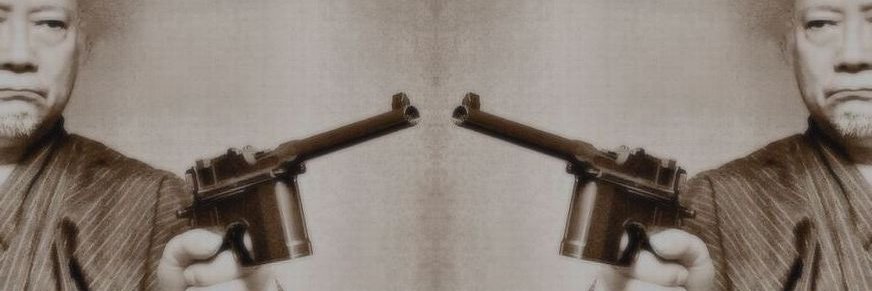
Mel Brooks on the only condition George Lucas imposed on Brooks before allowing him to make the satire on "Star Wars" (1977): "Spaceballs" (1987):
"The same way I called Alfred Hitchcock to get his blessings on 'High Anxiety' (1977), I sent the 'Spaceballs' script to 'Star Wars' (1977) creator George Lucas. If not to get his blessing, then certainly to give him a heads-up on what I was doing vis-à-vis Star Wars. He was kind enough to read it and respond.
He said he had seen 'Blazing Saddles' (1974) and 'Young Frankenstein' (1974) and was a big fan. He enjoyed the script, and only had one real caveat for me: no action figures. He explained that if I made toys of my Spaceballs characters they would look a lot like Star Wars action figures. And that would be a no-no for his lawyers and his studio’s business affairs department. So he gave his blessing to make my funny satiric takeoff of Star Wars as long as I promised that we would not sell any action figures.
I said, “You’re absolutely right.” And that was one of the rules we didn’t break.
So even though in the movie itself we have Dark Helmet playing with action figures… we never sold any.
The exchange with George Lucas also triggered a beloved comedy scene in which a character that I played, Yogurt, a takeoff on Yoda, responds to Lone Starr’s question of “What is this place? What is it that you do here?” with a whole exposé of the movie business.
So even though we didn’t actually do any commercial merchandising, we still had a lot of fun with the scene. And over the years Spaceballs movie fans have sent me more than one mockup of “Spaceballs: The Breakfast Cereal.”"
("Mel Brooks on the Making of Spaceballs", Mel Brooks, Literary Hub, 2021)
A computer scientist won the Turing Award at 36 and then walked away from almost every other project for the next 50 years to write one book that he has still not finished at age 88, and it may be the most important book in his field.
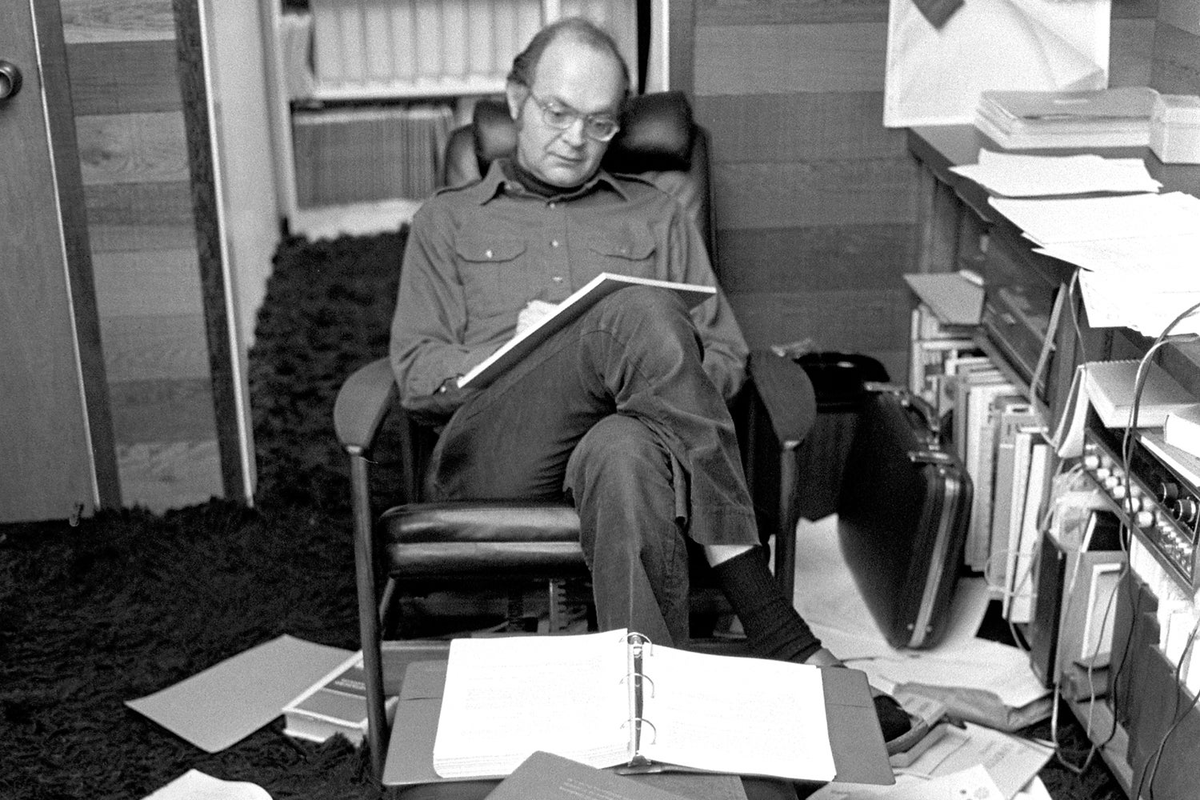
His name is Donald Knuth. He won the Turing Award in 1974, which is the closest thing computer science has to a Nobel Prize.
He was 36 years old. He had already written volumes one, two, and three of a book series called The Art of Computer Programming. He was the youngest person ever to receive the award at that point in its history.
Almost anyone else would have ridden that moment for the rest of their career. Founded a company. Sat on boards. Gone on speaking tours. Knuth did the opposite. He went back to his desk and kept writing.
He started the book in 1962. He was 24 years old. His publisher had asked him to write a short paperback on compilers. He sat down to outline it and discovered that to explain compilers properly he would have to explain the deeper algorithms underneath them first.
The short paperback became a draft outline of 12 chapters. The 12 chapters became a planned 7-volume series. The 7-volume series became the project he is still working on 63 years later.
Volume 1 came out in 1968. Volume 2 in 1969. Volume 3 in 1973. He was producing books faster than most academics produce papers. Then everything stopped.
In 1977 he received the printed proofs of the second edition of Volume 2. He looked at the pages and was so disgusted by how the publisher had typeset his mathematical notation that he could not bring himself to release the book.
The equations looked ugly. The fonts looked wrong. The spacing was off. He decided he could not in good conscience publish another volume of TAOCP until the typesetting problem was solved.
So he paused the book.
He stopped writing TAOCP and spent the next 8 years inventing TeX from scratch.
TeX is the typesetting system that every academic paper, every math textbook, every physics journal on earth now uses. Every PhD thesis in the sciences is set in TeX. Every paper on arxiv. Every equation in every paper Anthropic, OpenAI, and DeepMind have ever published. The system that the entire scientific publishing world runs on exists because one man refused to compromise on how the second edition of Volume 2 looked.
He gave the entire TeX system away for free. He never tried to commercialize it. He went back to writing TAOCP.
In 1992 he retired from Stanford at the age of 54. Most professors retire to slow down. Knuth retired to speed up. He explicitly said he was leaving teaching because he needed every remaining hour of his life to keep writing the book. He stopped using email on January 1, 1990.
He answers no calls. He takes paper mail only. He is on a personal mission to finish a multi-volume series that nobody is forcing him to write, on a deadline that only exists in his own head.
Volume 4A came out in 2011. Volume 4B in 2022. He is currently working on Volume 4C. Volumes 4D, 4E, 4F, 5, 6, and 7 are still ahead of him. He is 88 years old. He will almost certainly die before he finishes.
The thing that should haunt anyone reading this is the math of his choice.
Every modern incentive structure tells you to optimize for speed. Ship the imperfect version. Get it out the door. Iterate later. Move on to the next thing.
Knuth has spent 63 years doing the exact opposite. He pays a $2.56 reward in hexadecimal dollars to anyone who finds an error in his published books. Real checks, until check fraud made him switch to certificates of deposit. He treats every single error in every single volume as a personal failure. He revises. He rewrites. He goes back to fix issues that nobody else could have spotted.
He could have written 30 books in 63 years. He chose to write one.
The reason is the one almost nobody understands the first time they hear it. There is a category of work that loses all its value when it is done quickly.
A reference book that engineers will rely on for the next 200 years is not the same kind of object as a blog post that has to ship today. The slow project and the fast project look like the same activity from the outside. They are completely different games.
Bill Gates once said in an interview that if you can read the whole of TAOCP, you should send him your resume. He meant it. He was not joking. The man who founded Microsoft was telling the world that the rarest skill on earth is being able to finish a book that one man has spent his entire adult life writing for an audience that mostly does not have the patience to read it.
The book may never be finished.
The man writing it knows this and keeps writing anyway.
The work outlives the worker. That is the entire point.
In 1921, the USS R-14 left Pearl Harbor on a straightforward mission: find a missing tugboat somewhere in the vast Pacific Ocean.
About 100 miles out, the submarine ran out of fuel.
The diesel engines shut down. The batteries began draining. Radio communication went silent. The vessel sat in open ocean with limited food, no mechanical power, and no realistic prospect of anyone knowing exactly where to look for them.
Most crews in that situation would have done one thing: wait and hope.
The crew of the R-14 decided to try something else.
They looked at what they had. Mattress covers. Blankets. Spare canvas from the boat's interior. Poles. The periscope supports mounted on the deck. None of it was designed for what they were about to attempt. None of it needed to be. They were not building something elegant. They were building something that worked.
They fashioned makeshift sails from the fabric, mounted them onto poles and rigged them to the periscope supports, and turned a vessel specifically engineered to operate underwater using mechanical propulsion into something that had not existed before and has not existed since: a sailing submarine.
The wind caught the sails.
The R-14 began to move.
It was not fast. It was not graceful. A submarine is not built with hydrodynamics in mind for surface sailing, and the improvised rigging would not have impressed anyone who knew anything about seamanship. But it moved. Slowly, steadily, in the right direction.
The crew took turns managing the sails and navigating their course back toward Hawaii. They did this for five days. Five days of coaxing a submarine across the Pacific using nothing but wind, ingenuity, and the stubborn refusal to accept that they were stuck.
On the fifth day, the USS R-14 returned to Pearl Harbor under sail power.
The mission to find the missing tugboat had not been completed. But every man on board had come home, and they had done it using mattress covers and determination in roughly equal measure.
The incident was logged, reported, and largely forgotten outside of naval history circles, which is a shame, because it contains something worth remembering. The R-14 was a machine built for a specific purpose, operating in conditions it was never designed for, crewed by people who looked at what they had available and asked not whether it was adequate but whether it was enough.
Mattress covers are not sails. Periscope supports are not masts. A submarine is not a sailboat.
But 100 miles from Hawaii, with the engines dead and the radio silent and the ocean stretching out in every direction, close enough turned out to be exactly enough.
They sailed home.
Five days. One improvised rig. No fuel required.
The USS R-14 remains, by any reasonable measure, the only submarine in the history of naval warfare to return to port under sail. It is unlikely to be surpassed.
Upscaled and enhanced F-14 Tomcat footage of VF-2 "Bounty Hunters" off the deck of the USS Enterprise(CVN-65) from March 1975. Later that month, preparing to head home from the Philippines, she was diverted to Vietnam for the extraction of Americans and allied Cambodians.🤘