A gorilla with terminal cancer had given up, until her last wish showed up across the glass.
At a sanctuary, staff rushed in after a female gorilla suddenly collapsed inside her enclosure and stopped responding.
At first, no one knew what was wrong. She was moved to a medical facility, examined by specialists, and given scans that revealed the heartbreaking truth.
She had terminal brain cancer.
Doctors said there wasn’t much they could do. The disease had spread too far, and the gorilla was placed in a quiet recovery space where staff could keep her comfortable for whatever time she had left. But as the weeks passed, something changed.
She stopped eating as much. She stopped reacting to her caretakers. Most days, she just sat by the glass with her head down, like she already knew she was fading.
Then a rescued bear cub was brought into the room across from her. The gorilla noticed him immediately.
Staff said she pressed her head against the glass and watched him for hours, calmer than they had seen her in weeks. That’s when they realized she wasn’t just sick. She was lonely.
So one day, while the bear cub’s space was being cleaned, staff took a careful risk and let the cub sit near her under close supervision.
The gorilla gently pulled him close, held him like something fragile, and for the first time in months, looked peaceful.
The cub became her little roommate in her final weeks, and staff said he brought something back into her that medicine couldn’t reach. She lived a little longer than expected.
When she passed, caretakers said they would never forget the way she spent her last days holding a creature that needed comfort too.
Baobab, a prehistoric species which predates both mankind and splitting of continents over 200 million years ago. Baobabs (Adansonia) are distinctive trees with incredibly large trunks. They can store tremendous amounts of water, as their trunks noticeably swell during the rainy season.
Tree is native to African savannah, where climate is extremely dry and arid, it is a symbol of life and positivity in a landscape where little else can thrive. African baobab (A. digitata) has a vast range throughout the arid parts of Africa; six additional species are native to the Indian Ocean island of Madagascar, off south-east Africa; and an eighth species is native to north-west Australia. The largest known living baobab is the Sagole Big Tree, a specimen of A. digitata located in Masisi, Vhembe, South Africa, near the border with Zimbabwe. Based on its most recent measurements, Sagole has an extremely large base that covers 60.6m², a height of 19.8m and a total wood and bark volume of 414m³. Its aboveground dry mass is estimated to be 54 tonnes.
Baobab trees grow in 32 African countries. Tree known for its longevity and some specimens in Africa have been dated to between 1100-2500 years old and reach up to 30m high and up to an enormous 50m in circumference. Baobab trees can provide shelter, food and water for animals and humans, many savannah communities made their homes near Baobab trees. Baobab also looms among ancient mounds and remains scattered around them are invariably early medieval or Portuguese.
Until 2018, the largest living baobab was sacred Tsitakakoike Baobab, a specimen of the endangered species Adansonia grandidieri, which grew near Andombiro in the Ambiky Forest of south-west Madagascar. The incredibly stout and compact tree had a cylindrical trunk with a base that covered 59.6 m², a height of 14.6m and a total volume of 455 m³ - 380 m³ of which was trunk and 75 m³ of which was canopy. It partially broke and collapsed in February 2018 leaving about 40% of the tree still standing, but this was expected to also collapse soon after.
An even larger African baobab tree (A. digitata) alive during 21st Century was the Platland/Sunland Tree of Modjadjiskloof, South Africa, with a base of 67.9 m², height of 18.9m and a total wood and bark volume of 448 m³. Unfortunately, a large portion of the Platland Tree collapsed and died in 2016, leaving the Sagole Big Tree to claim the top spot.
Baobabs have among the lightest wood for any tree. Balsa wood is well known to model aeroplane makers as one of the lightest and softest woods, with a wood density that averages around 0.15 g/cm³, yet baobab wood is even lighter, averaging 0.13 g/cm³. As a result, the aboveground dry mass of the Platland baobab was estimated at only 58 tonnes and about 59 tonnes for Tsitakakoike. In terms of mass, giant gum trees (Eucalyptus) of Australia are the largest hardwood trees.
#archaeohistories
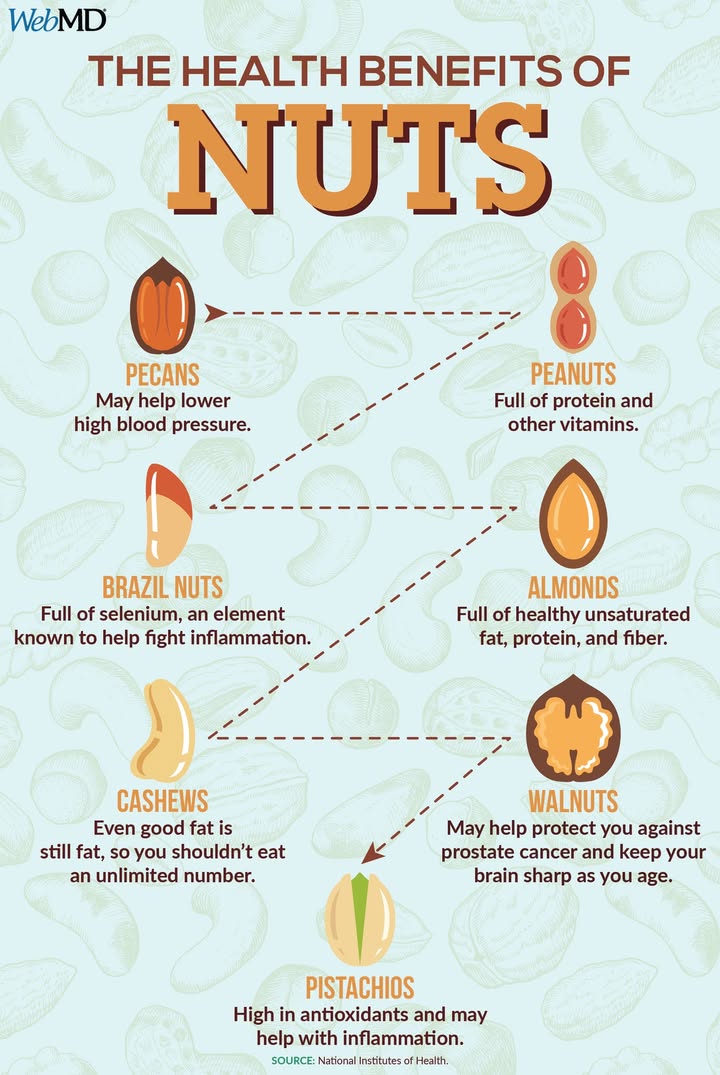
Nuts are good for you in all forms. Adding them to your diet lowers your chances of getting heart disease, and they help improve your cholesterol, among other things. More health benefits: https://t.co/Hmb8P6TGzk
A beautiful film of the Normandy coast in c. 1899. Ladies in sweeping dresses and wide hats, gentlemen in boaters, and their children all enjoy a day at the seaside.
Does the weather affect your asthma? Find out how heat, cold and thunderstorms can make it hard to breathe -- and what you can do about it. https://t.co/uDAIyWB5a7
💍 A new royal chapter begins!
Peter Phillips and Harriet Sperling are officially husband and wife
From their first public appearances to this special moment, their love story has captured the attention of royal watchers everywhere.
What do you think of the couple?
#royalwedding