There is a lot of noise at the Global Foundries Dresden today.
Cranes are hissing, beams are up, and concrete is being poured.
5,000 m2 of new, much-needed European cleanroom space is being built.
GlobalFoundries EMEA GlobalFoundries
https://t.co/wb8MqbyWNG
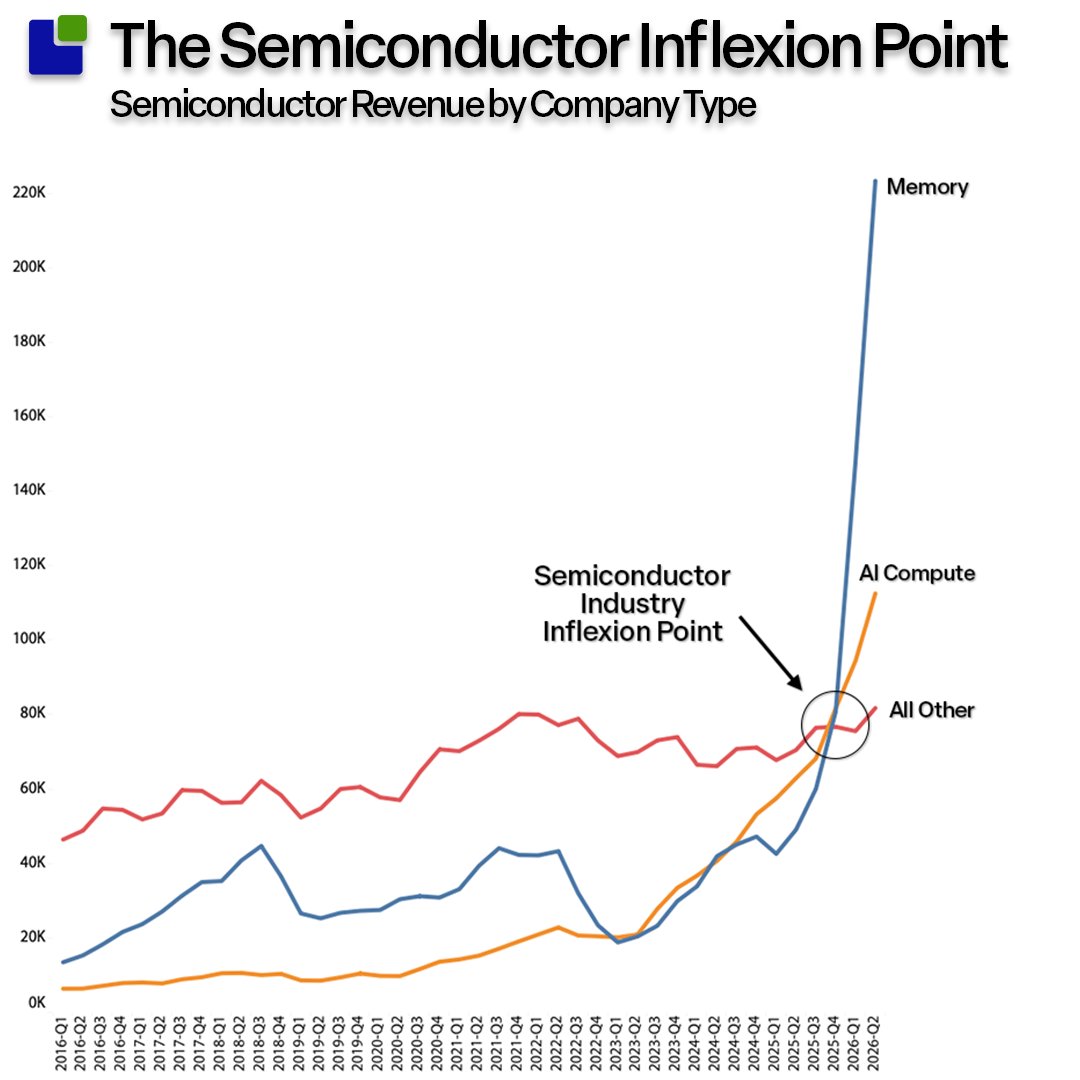
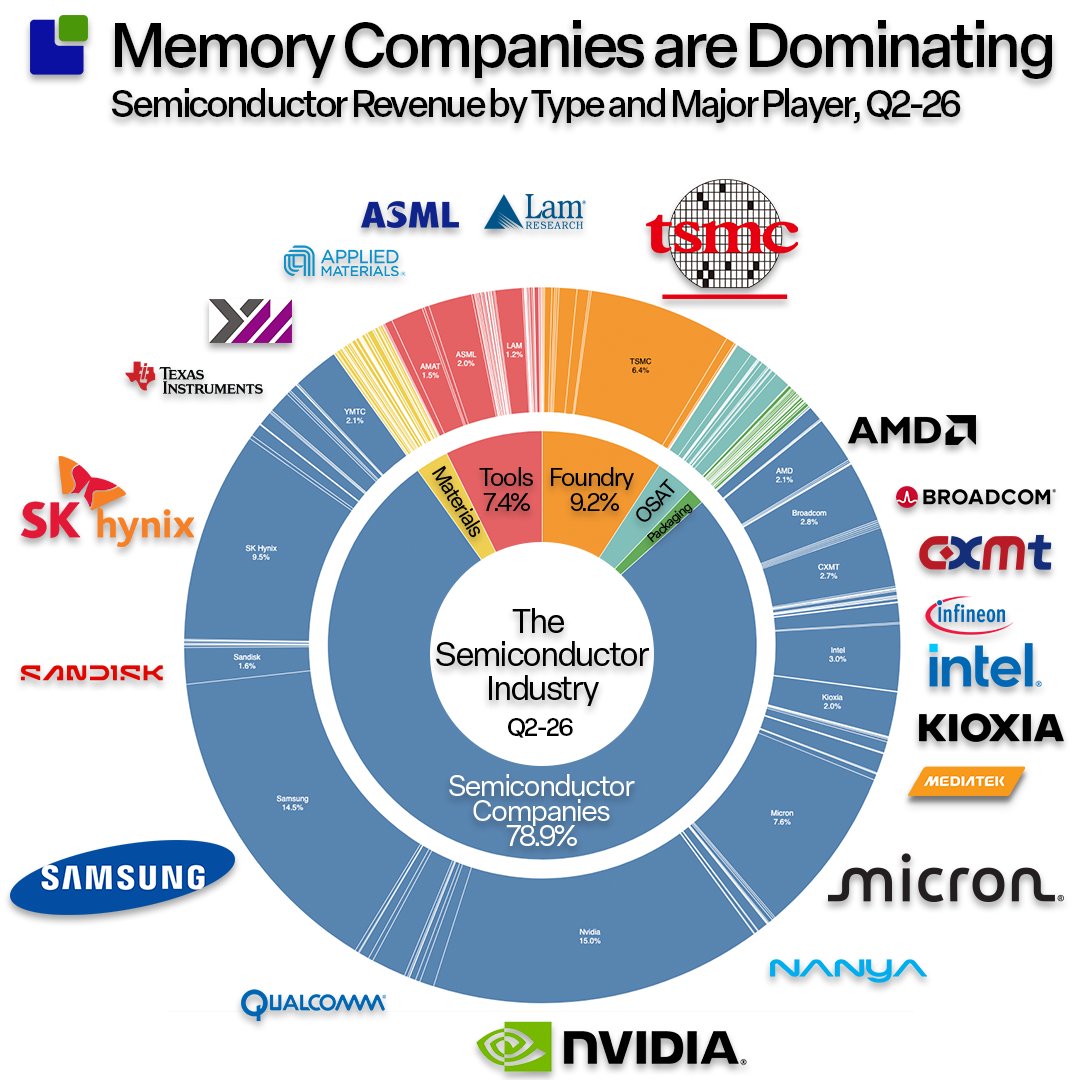
A couple of quarters ago, the Semiconductor industry reached an inflexion point when the revenue of AI compute companies, memory companies, and other semiconductor companies reached the same level.
https://t.co/jqHIpncHNF
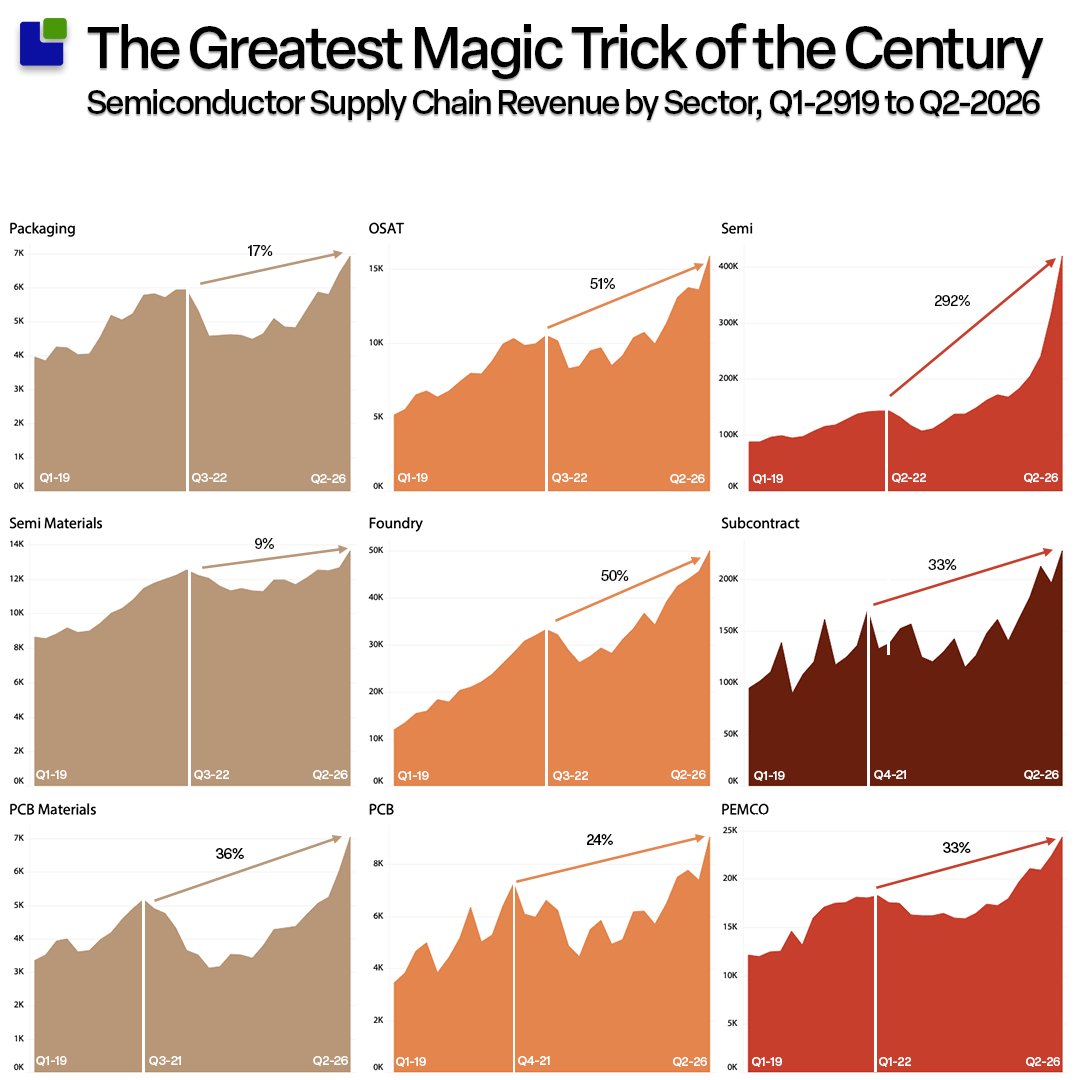
The Semiconductor market is now 292% above the last peak four years ago, while all other sectors of the supply chain are experiencing much lower growth.
You can read my full Q2-26 semiconductor supply chain update at Evertiq https://t.co/jqHIpnc9Y7
More than 90% of operating profits in the semiconductor market are now generated by AI Compute and memory companies.
Deep below the surface, the semiconductor supply network has only felt ripples from the violent changes above, but that may change soon.
https://t.co/RjpUCacNlB
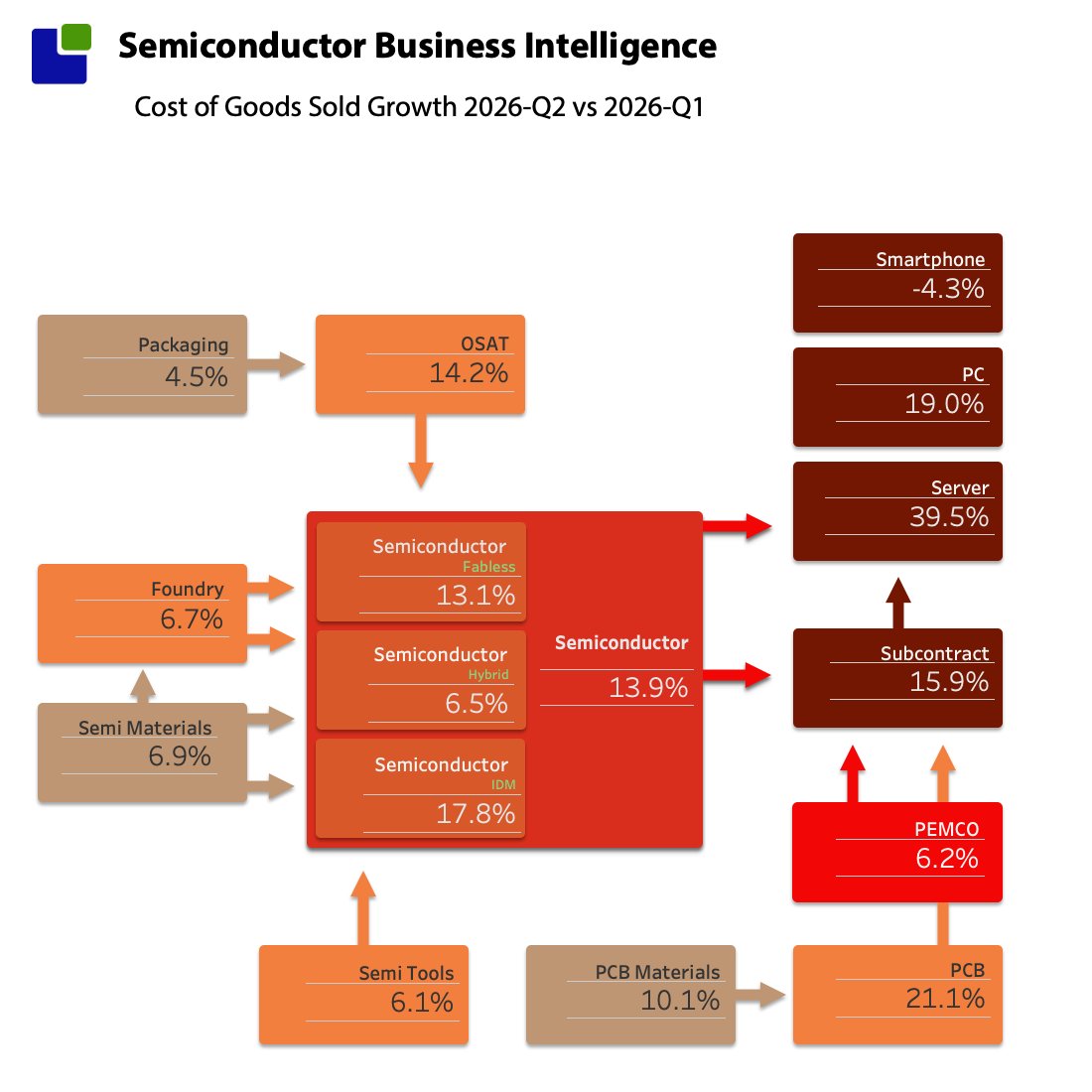
To understand the flow of materials in the semiconductor supply chain, it is more useful to examine the Cost of Goods Sold than Revenue.
https://t.co/jqHIpnc9Y7
Where chips are made is no longer irrelevant.
This makes GlobalFoundries' EUR 1.1B investment in expanding its Dresden site with new cleanroom and laboratory space vital to a resilient European supply chain.
https://t.co/wb8MqbyoY8
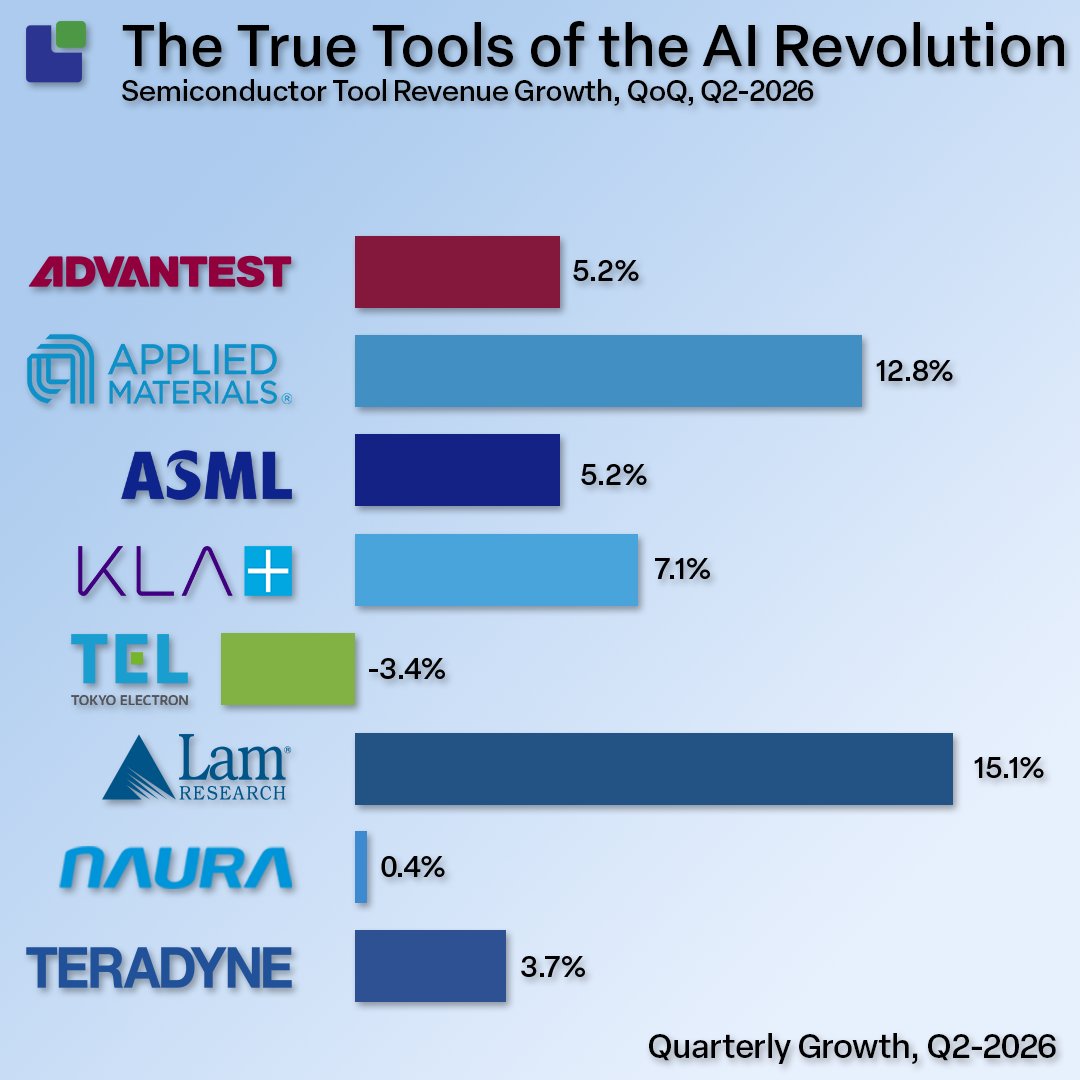
Despite the fanfare, the actual revenue from semiconductor tools has been growing at a modest rate of 23% YoY. In the same period, the semiconductor market grew by 130%
https://t.co/k4j94E221M
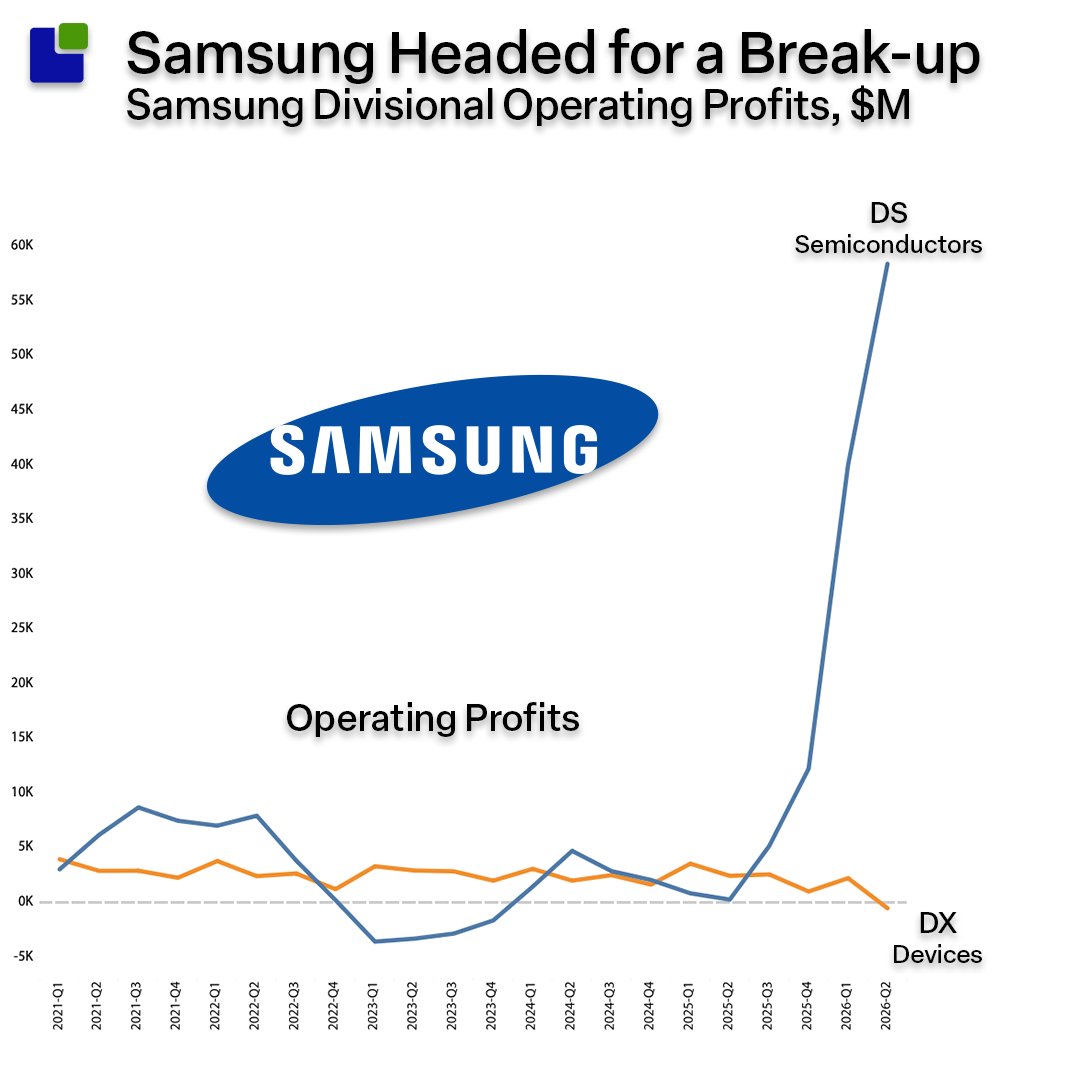
Samsung's semiconductor division strike will go down in history as the most successful union strike ever.
So far, the bonus model tied to divisional operating profits has yielded 17B$ in accumulated value and will likely exceed $25B in 2026.
https://t.co/t8Y1iXKKOA
With just four device companies having reported Q3 results, the next Semiconductor market record is well underway.
The numbers are staggering. The four giants reported 19% QoQ and 196% YoY revenue growth.
https://t.co/0pRbk8aYVJ
Long before I realised they had a role in the AI Infrastructure supply chain, I used Ajinomoto products in my kitchen. The inventor of umami in powder form should have a place in every serious spice cabinet.
https://t.co/0pRbk8aYVJ
On the surface, the Oracle result was very strong from a cash-flow perspective, but the bride was not entirely dressed in white.
You can read more about the changes in strategy of the large hyperscalers here: https://t.co/Hg9LgRe65o
While the DX division has lost the power battle, its employees have lost the bonus battle and must live on one-tenth of DS employees' bonuses.
When the people begin to dislike each other and the power struggle is over, the hacksaw comes out.
https://t.co/t8Y1iXKcZ2
The entire semiconductor industry recorded its first half-a-trillion-dollar quarter in the second quarter of 2026. Revenue grew by more than $100B QoQ to $545B, or 22.7% growth. Of the total, $75B was driven by memory growth https://t.co/0pRbk8aYVJ
ASML has revealed its Q2-25 results, and as usual, the most interesting aspect is the tool revenue by country.
With pricing reaching up to $400M, Semiconductor tool revenue is inherently lumpy. However, to achieve industry supremacy, a significant number of leading-edge tools must be acquired, and the US is not currently leading the way.
With Intel and Samsung discussing organisational structures, the US semiconductor leadership is in the hands of the Taiwanese, as usual.
However, US fabs are expensive, so even though TSMC plans to build eight fabs in the US, the silicon wizards offset the cost with 15 new fabs at home. They will also be slightly more advanced than the US fabs, but no need to advertise that.
Despite the increasing embargos, the Chinese are still carrying 27% of ASML's tools through the front door. Where all the tools are going is still a mystery, but eventually they will surface.
If you are dependent on the semiconductor industry, you can sign up to my blog here: https://t.co/cBRtmNHw6w
While the cradle of semiconductors was in the US, the kid grew up and left home, building fabs in Europe and starting calculator wars in Japan. Memories spread to Japan and on to Korea, and logic settled in Taiwan with a flourishing supply chain.
The semiconductor industry in which I grew up was international, and it is still global today.
It has always been important where a company is incorporated, but the Chip Wars made this essential. Semiconductor companies needed to get a nationality and a passport.
While this is happening all over the world, it is most apparent in the US, where the Chips Act subsidies and associated trade policies have prompted CEOs to promote their companies as American.
Pat Gelsinger of Intel topped all by stating: "Intel never left the US".
From a headcount perspective, things are more complicated and although Intel is the most American semiconductor company, with regards to headcount, close to half of the Intel employees are working abroad.
This can shift significantly with the current HR programs at Intel. Together with Intel, Nvidia is the only large semiconductor company with more than half its employees in the US.
While it is possible to build fabs and fill them with expensive Dutch toys, it is much more challenging to fill them with people, and fabs are full of all sorts of evil problems that even an evil AI will struggle to solve.
Read more about my colleagues in the Semiconductor industry in this article made in collaboration with Evertiq - Global https://t.co/XxEhTQSsNj
A couple of years ago, my friends outside the semiconductor industry had never heard about Nvidia and TSMC, and now even my daughters are asking me if it is a good time to buy them.
Soon, people will be asking me about the Orange Butterfly from Korea. Is now the time to buy SK Hynix?
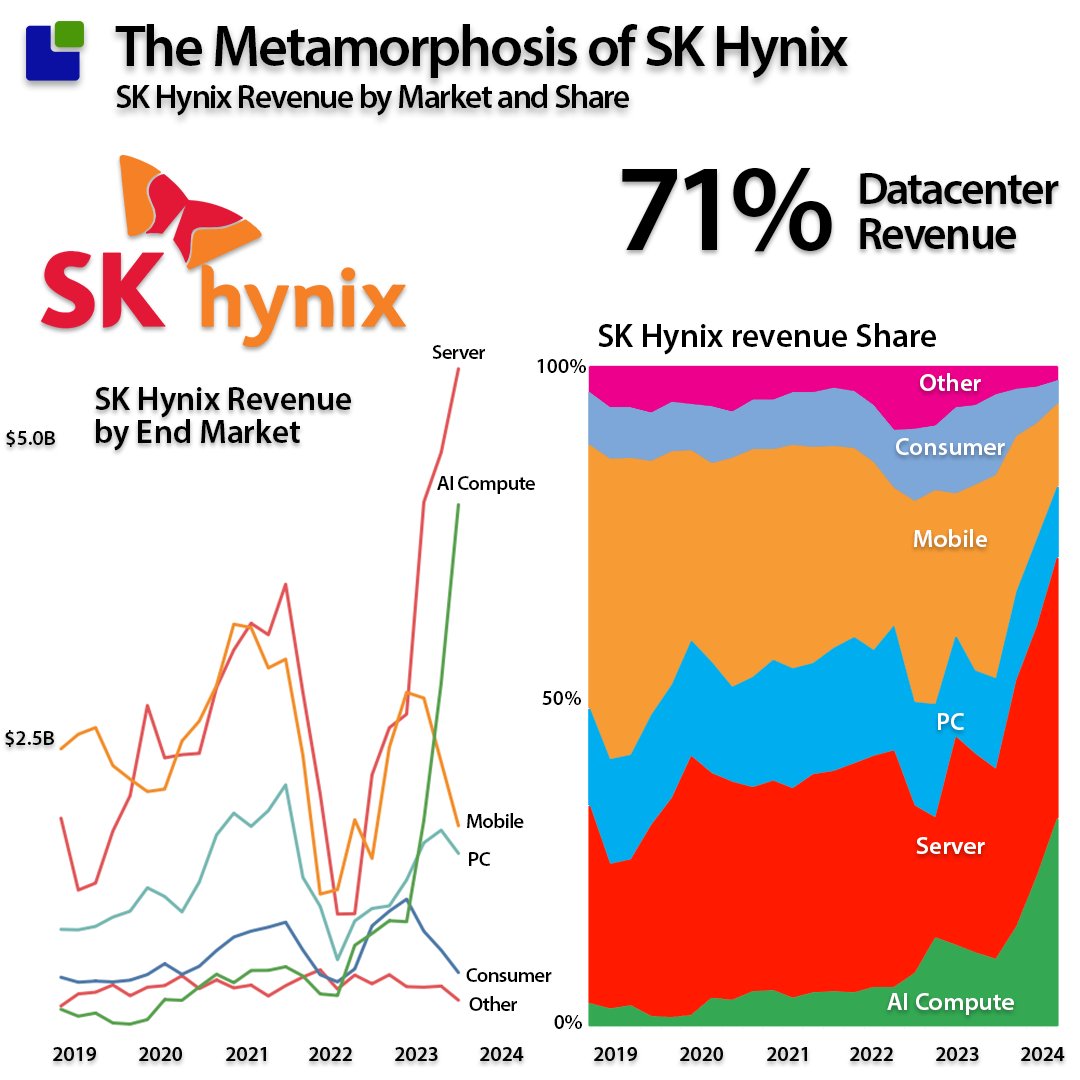
The company is in complete transformation into a Server-focused company. Server revenue now accounts for more than 71% of the total; three quarters ago, it was 39%.
As server revenue is based on a long-term contract with pre-determined pricing, SK Hynix has the foundation for abandoning the Memory roller coaster business model and leaving the rest to fight it out at the bottom of the pricing pit with Chinese newcomers. It is planning to do so.
Read more about SK Hynix here: https://t.co/Qbckurmjqh
During the SK Hynix investor call, it became apparent that management plans to exit the memory rollercoaster business model. However, that does not mean SK Hynix is exiting any major memory categories; rather, it is going after selective high-value nuggets.
The most important is the High Bandwidth Memories, sold almost exclusively to Nvidia, a key enabler of the AI revolution.
Like its key customer, SK Hynix aims to form a moat around its business, ensuring it wins the lucrative long-term AI contracts with fixed pricing terms rather than fighting at the bottom of the pit at negative gross margins as it did a few quarters ago.
SK Hynix is already dominating the HBM3E-8 but is also planning to lead the next generations with an aggressive launch schedule.
They will not get away easily as all three memory giants are formidable companies used to working in headwinds.
Read more about SK Hynix and what was uncovered during the Investor call here: https://t.co/Qbckurmjqh
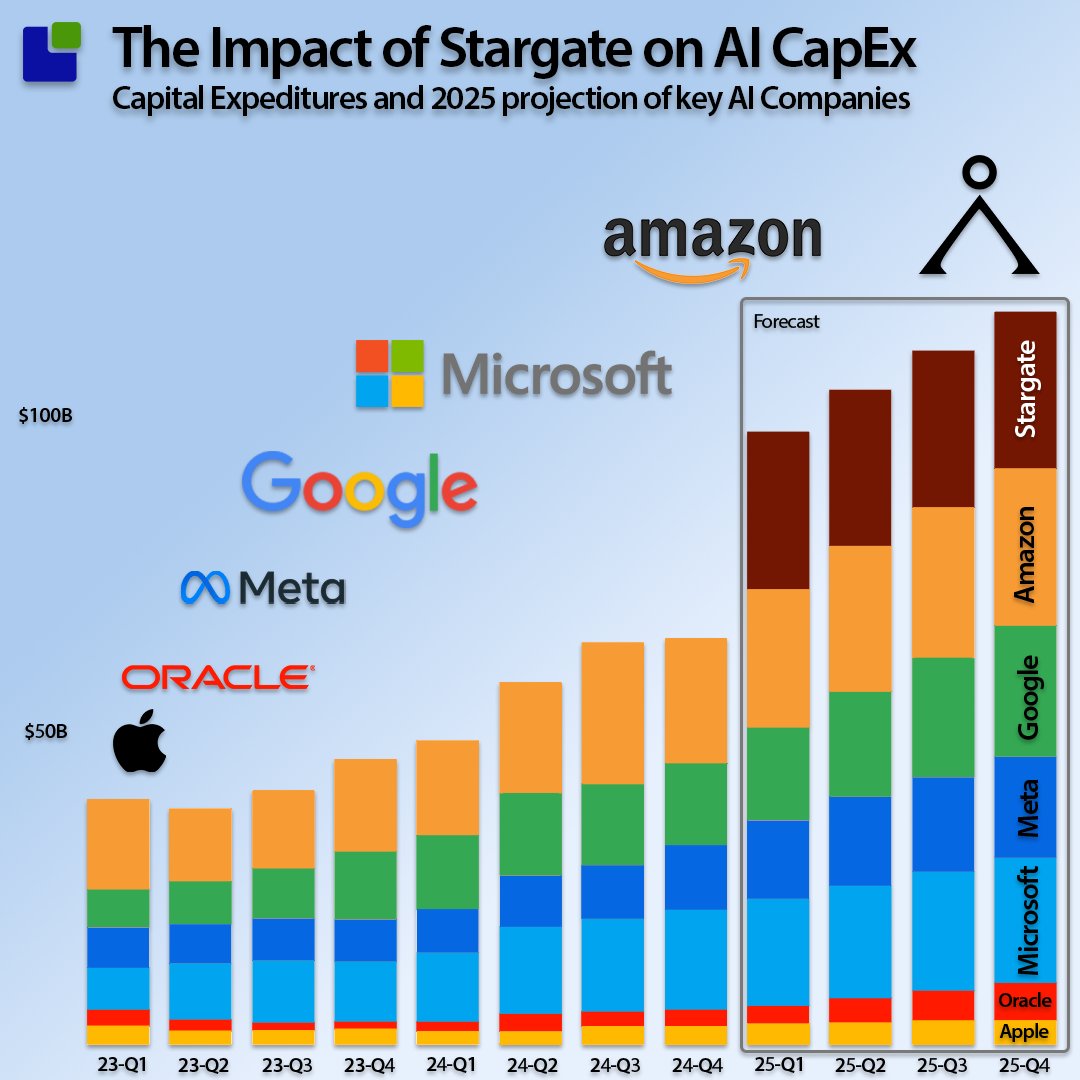
Assuming the founding partners of Stargate can find an initial $100B in their combined cookie jars and that the investment is immediate, as indicated (according to rumours, it is already underway), this is the Capital Expenditures of the Top AI Companies.
The six largest companies driving AI investments are expected to have Capital Expenditures of $330B in 2025, representing 41% growth over 2024.
Adding Stargate to the equation increases the 2025 capex by 30%, representing a CapEx growth of 84% over 2024.
While the AI demand is considered insatiable, eventually, there has to be some method to the madness. Japanese and Arab banks are not investing in US sovereign AI for philanthropic reasons. There needs to be a ROI and, with that, a business model.
I cannot remember when a 100B$ corporate investment was announced without a business model.
Read more here: https://t.co/ZKaWAv9dkk
The typical semiconductor upcycle is initiated due to demand rising above capacity, but this semiconductor cycle is different.
Even though TSMC increased revenue by 14% in Q4, the utilisation rate stayed flat, suggesting that the added 2%- 2.5% capacity in the quarter was sufficient to generate revenue growth.
While there are other bottlenecks in the Semiconductor Supply chain, the investments focus on leading-edge logic fabs that are not currently needed and might not be required in 2025 or 2026.
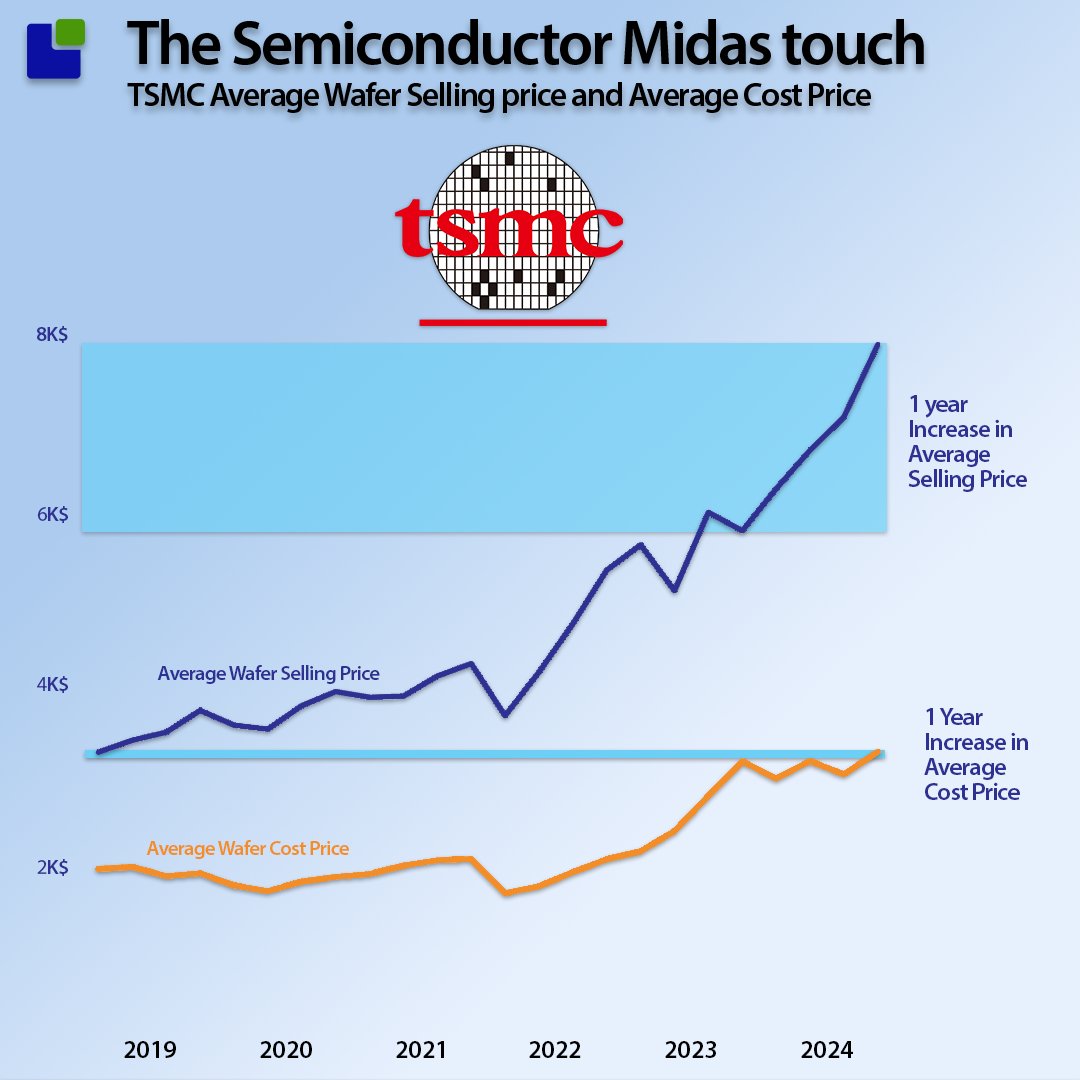
Despite record revenue in 2024, TSMC ships fewer 12-inch equivalent wafers than in 2021 and 2022 and only slightly more than in 2023.
It is a new kind of Semiconductor upturn.
https://t.co/pEaRMuNOYH
During the year, the increase in 3nm has had a profound impact on TSMC's overall business.
In four quarters, the average Selling price per wafer has grown by 37%, while the average cost price per wafer has grown by only 3.5%. In the last quarter alone, the ASP increased by 12%.
The 3nm wafers are now worth more than their weight in gold.
It does not require a lot of 3nm wafers to make a significant impact on revenue. TSMC's 14% increase in Q4-24 revenue was delivered without an increase in capacity utilisation that stayed flat at 73%.
In other words, the capacity increase in Q4-24 matched the extra capacity needed.
Rumours suggest some US semiconductor companies are in Mar-a-Lago, discussing how to share the pride of US Semiconductor manufacturing. However, they might share an excess capacity liability.
Read more about TSMC here:
https://t.co/pEaRMuNOYH