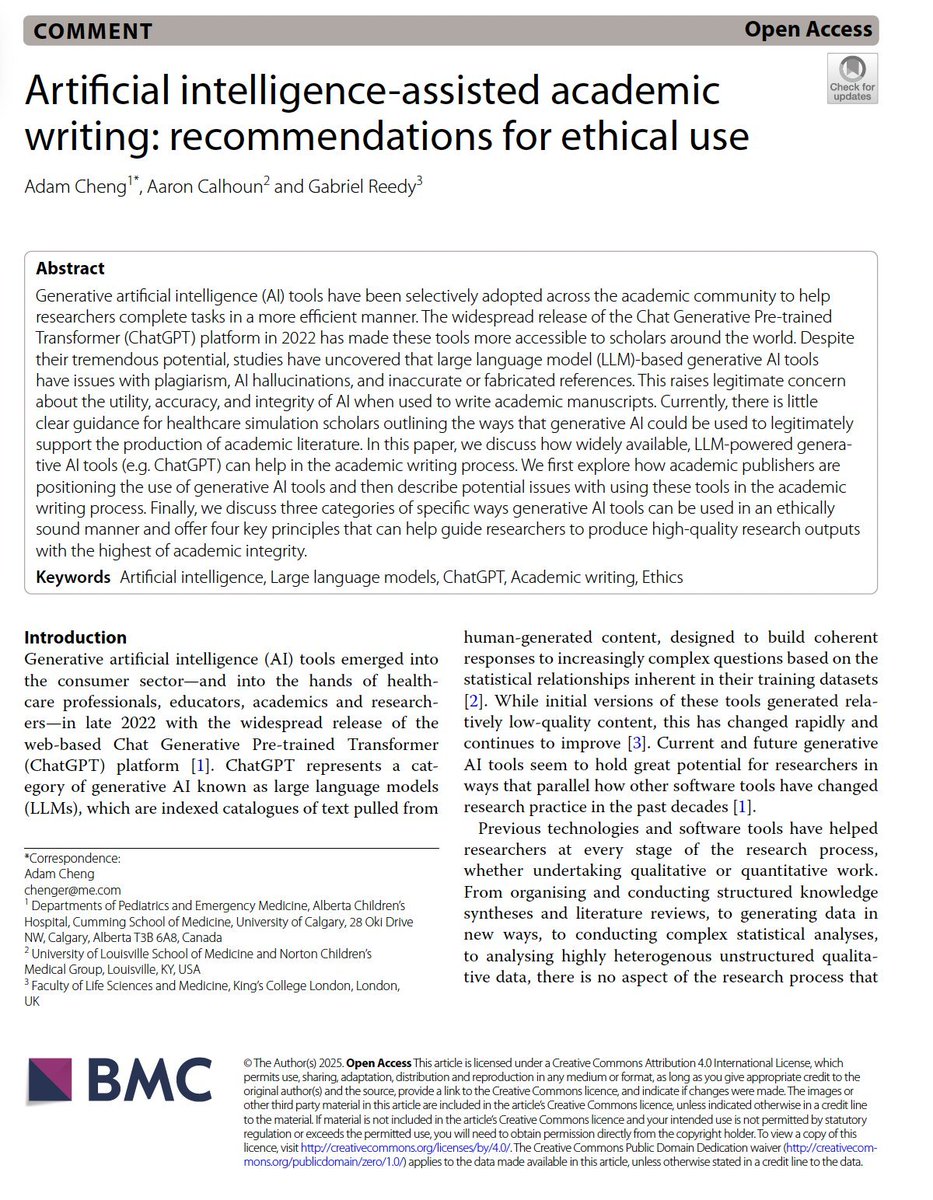
3-tier approach that help you maintain integrity when using AI for research ⤵️
(Retweet 𝘵𝘰 𝘱𝘳𝘰𝘮𝘰𝘵𝘦 𝘦𝘵𝘩𝘪𝘤𝘢𝘭 𝘈𝘐 𝘶𝘴𝘦)
— TIER 1 (Safe):
Grammar checks, readability improvements, language translation
— TIER 2 (Careful):
Outlining from YOUR content, summarizing YOUR ideas, improving clarity of YOUR drafts
— TIER 3 (Avoid):
Writing de novo text, generating references, data interpretation
Remember: AI should help polish YOUR ideas, not create them!
The biggest lesson? Ask yourself 4 questions before using AI in research:
— Are the primary ideas, insights and analysis still mine?
— Am I maintaining my core research skills?
— Have I verified all content is accurate and bias-free?
— Have I disclosed exactly how AI was used?
If you answer "no" to any of these, rethink your approach.
1/5
The reality? Doing a PhD means picking up an unreal range of skills.
Yes, it’s chaotic.
Yes, it often feels like you’re juggling flaming torches while riding a unicycle through a thunderstorm.
These skills? They transfer.
Whether you stay in academia or leap into industry, government, or startups — those hats will go with you. And they’ll serve you well.
And here’s the twist: that’s the part of the PhD nobody warned me about. I didn’t just become a specialist in my niche — I became a puzzle solver, trained to think deeply, strategically, and creatively, all at once.
Doing a PhD is exactly like solving a mystery.
There’s a strange phenomenon. An unanswered question. A data point that doesn’t behave the way you expected.
So you dig.
You ask “why” until your brain hurts.
You look for clues in obscure papers.
You re-run your analysis a dozen times hoping something clicks.
And then — when it all comes together — the joy is unreal.
That “aha!” moment is pure magic.
The most interesting part of your PhD research isn’t just your conclusions—it’s how you got there. Share the failures, and show how you became an expert through trial and error.
It's easy to hide your mistakes, but including them in your thesis shows you're critical & adaptable. Research isn't about being perfect—it's about learning from failure.
#PhDTips#FailureIsGrowth
Don’t be afraid to include failures in your thesis. Research is messy and full of bumps! Your failures show growth and help make your work authentic.
#PhDJourney#ResearchTips
Never forget that the goal of a PhD is to contribute new knowledge to your field! Quality research should always come before the rush to publish.
#PhDJourney#QualityOverQuantity
The "publish or perish" mantra is holding PhD students back! Quality research leads to top-tier publications, not the other way around. Let’s get it right!
#ResearchFirst#Academia
During your PhD, reviews can seem like a test. But post-PhD, you’ll see they’re about working together to enhance your research, so appreciate your reviewers and the feedback they provide
#AcademicJourney#PhDLife
Your PhD is a serious commitment. While you can forge strong bonds with your supervisor, keep the primary goal - your research - front and center. Professionalism + Passion = Your Path to successfully completing your PhD!
#PhDJourney#AcademicSuccess
To PhD students studying abroad in a foreign country. Your supervisor might feel like family, but remember, they're your work guide. Keep the professional line clear and let your passion drive your success!
#PhDStudent#AcademicJourney
Your PhD is a passion project, but your advisor is still your work supervisor. Balance professionalism with friendship, and keep your research goals in sight. You’re here to shine, not just to fit in!
#PhDJourney#ResearchLife