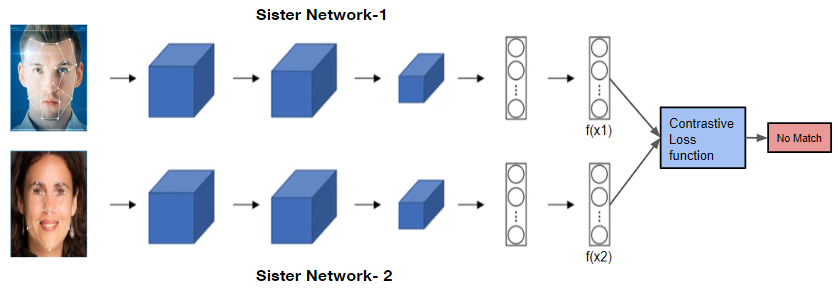
One-shot learning works best when examples are rare:
– Siamese networks - used for FaceID, signature matching etc.
– Few-shot image classifiers (like Matching Networks or Prototypical Networks)
Heard of zero-shot or one-shot learning but never quite nailed the difference?
🔹 Zero-shot = the model handles a task it’s never explicitly seen
🔹 One-shot = it sees one example and learns from it
Here’s a few very popular examples 👇
Zero-shot in action:
– CLIP → finds images from text prompts without training on the categories
– Segment Anything (SAM) → segments objects from just a point or box
– GPT/LLMs → solve logic puzzles without training examples
The key: no task-specific fine-tuning.
What’s next?
Gaussian Splatting is already being adapted for shading, ray tracing, and animation.
It’s fast and practical. But this field moves quickly.
I wonder if splats the new standard, or just a stepping stone to something better?
Hard to say. But the momentum is real 🧑🏻🚀
NeRFs were a major breakthrough in 3D reconstruction.
But volumetric rendering is slow. Tracing rays through a field isn’t ideal for real-time use.
3D Gaussian Splatting changed that by switching to rasterization. No rays, just points, rendered fast.
Why Gaussian Splatting is a big deal:
1. Real-time rendering (it runs directly on GPUs)
2. No neural net at inference - the scene is baked into point data
3. Easy editing & compositing. Splats behave like graphics primitives.
It’s efficient, simple, and surprisingly sharp.
What is Latent Diffusion?
Instead of generating images pixel by pixel, the model works in a compressed “latent” space — like sketching the idea first, then decoding it.
But here are 5 things about it that blew my mind 👇
#AI#LatentDiffusion
🔧 Try it yourself:
→ GitHub: https://t.co/3cmPKDQKtI
→ Pretrained weights ✅
→ Simple command line run
Precision upscaling, creator-ready.
Follow for more tools from #CVPR2025.
📈 Want control over how AI upscales your images?
PiSA‑SR was dropped during #CVPR2025 a diffusion model that lets you balance pixel-level sharpness & high-level structure.
One-step. Fast. With code.👇
#SuperResolution#AI
Most upscalers split pixel & semantic detail into separate models or stages.
PiSA‑SR skips the complexity. It uses Classifier Score Distillation (CSD) to guide the semantic LoRA—no extra model, less memory, cleaner output.
Smart signal > stitched hacks.
The future of generative video isn’t just better quality.
It’s speed.
It’s scalability.
And it’s models that finally understand:
“A cat jumps onto a table and looks around.”
Link: https://t.co/i1COONmE1L
Follow for more breakthroughs from #CVPR2025.
(thread 🧵)
🎬 Ever typed a sentence and got a video back in seconds?
That's text-to-video generation.
But until now, it’s been slow, clunky, and limited to a few seconds.
Here’s why that’s changing – and what “linear” models are doing to speed things up.
#CVPR2025#AI
Why this matters:
🎥 Longer, smoother videos
💻 Lower hardware costs
🧪 Real-time applications (think: AI filmmaking, XR avatars)
Linear text-to-video is a building block. Not perfect, but the direction is clear.