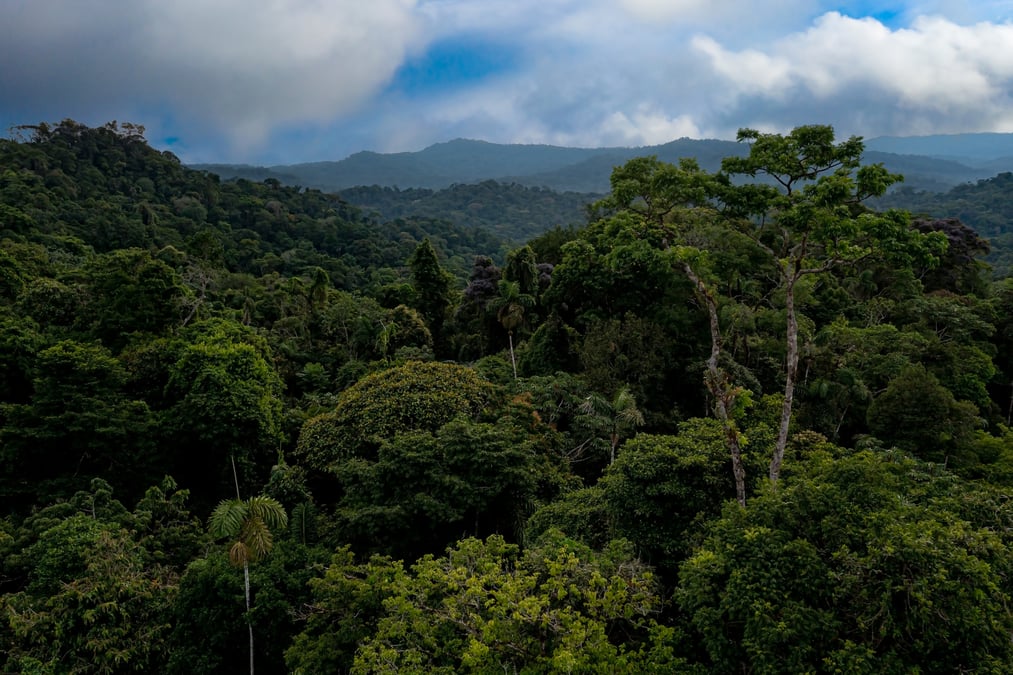
Please be the first amongst the thousands to like, comment and repost this message if you believe that our remaining forest in the Amazon and in the Congo basin must be protected for climate action and environmental sustainability. No to deforestation and ecocide.
Climate change is making our atmosphere hotter and wetter, leading to more intense rainfall and damaging storms.
Our hearts are with all those affected right now by the climate impacts unfolding in Sri Lanka, Thailand, Indonesia, and Malaysia 🧡
Over 8 billion humans on Earth
have no place for other species
Orangutans left to starve as humans destroy their home and world only cares about more economic growth and development
How a single tree affects an entire forest
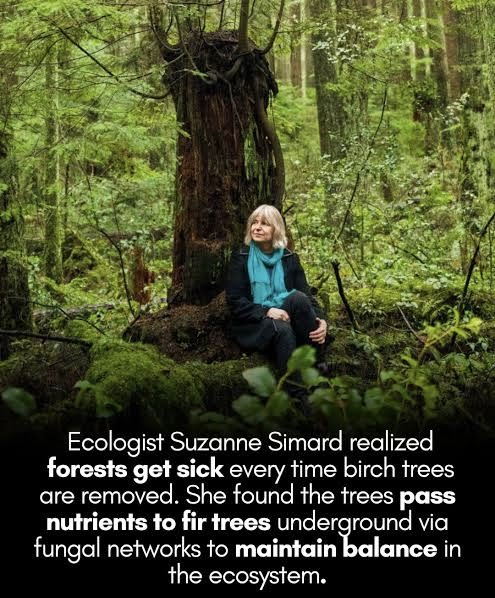
Suzanne Simard has fundamentally reshaped how we understand forests.
Through decades of field research, she demonstrated that trees are linked by vast underground networks of mycorrhizal fungi. These symbiotic partnerships allow trees to exchange carbon, nutrients, water, and chemical signals—sometimes over great distances and across species lines.
Her landmark 1997 paper in Nature provided the first clear evidence that paper birch and Douglas-fir seedlings transfer carbon to one another through fungal connections, with the flow shifting depending on which tree is shaded and needs resources most. This directly challenged the prevailing view of forests as arenas of relentless competition.
Instead, Simard’s work revealed cooperative dynamics: older, hub-like trees—what she calls “Mother Trees”—are the most highly connected nodes in the network. They recognize their genetic kin, allocate more resources to their own seedlings, and even bolster unrelated young trees, enhancing overall forest resilience.
The scientific community now widely refers to these fungal linkages as the “Wood Wide Web.”
Today, her work has inspired everything from Avatar to the Pulitzer Prize-winning novel "The Overstory." Her memoir,
"Finding the Mother Tree," became a global bestseller and is now being adapted into a film starring Amy Adams.
On the ground in British Columbia, Simard partners with Indigenous communities to design logging practices that spare Mother Trees and old-growth networks. Early results show these areas store more carbon, retain more biodiversity, and regenerate decades faster than conventionally clear-cut sites.
Some researchers caution against terms like “mother” or “communication,” preferring strictly neutral language. Simard maintains that the underlying phenomena—resource sharing, kin recognition, and chemical alarm signals—are rigorously documented, and evocative words help people care about forests they might otherwise see only as timber.
In her words: “These forests can recover their complexity and strength, but only if we start managing them as living, connected systems”
#DidYouKnow 🤔?
When a Crow feels sick, it goes to an Ant nest and deliberately disturbs it. This is called 'anting'. The Ants get angry and start climbing on the Crow. But the Crow doesn't move. It stays still with its wings open. The Ants then spray formic acid on the Crow. This acid helps remove germs and fungi, like a natural medicine.
After this, the crow feels better. So Smart! 🐦⬛
What happens when cows are allowed to raise their calves?
While the dairy industry likes you to believe otherwise, cows are wonderful mothers, if given the chance and the right environment.
Watch Hanni be the most loving mommy to her two sons 💙🐮👇
#dairytruth
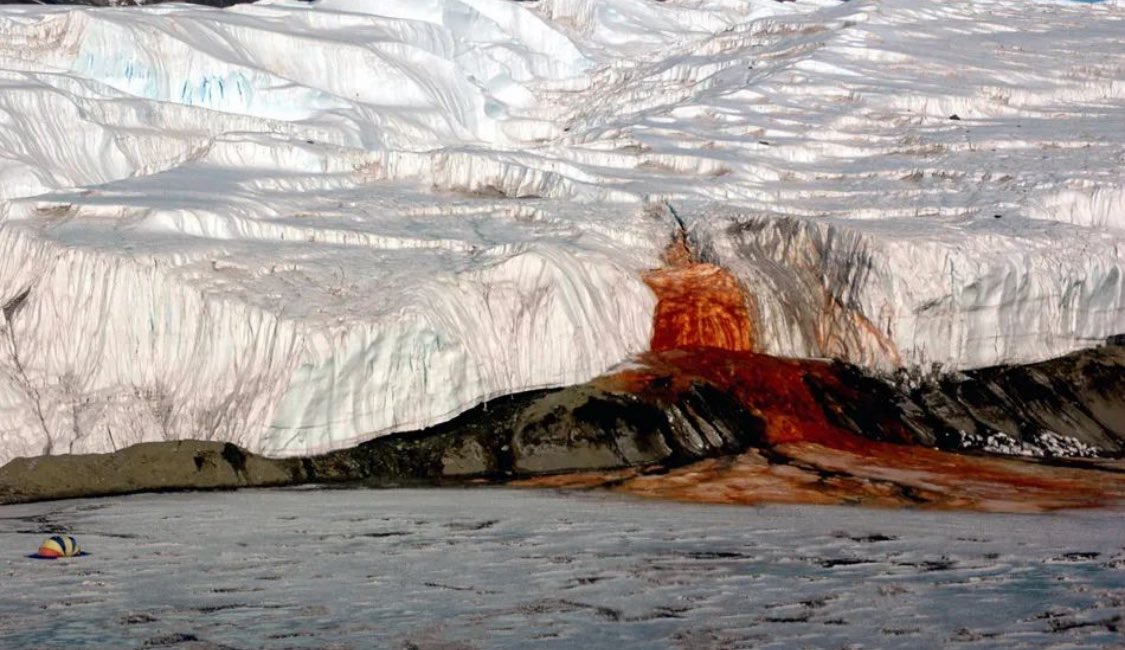
A mountain in Antarctica is fighting climate change.
Not through any human intervention. Not through technology. Through geology.
Scientists just found iron concentrations 10x higher than anything previously recorded on the continent. That iron is slowly travelling to the sea, a journey that takes up to 100,000 years, where it fertilises phytoplankton that pull carbon from the atmosphere.
A mountain becomes a lung.
What struck me is that the iron reaching Antarctic waters today began its journey when woolly mammoths walked the Earth. We talk about climate solutions like they're things we need to invent, but the planet has been running carbon capture systems for billions of years. The iron mountains. The whale pump. Kelp forests. Seagrass meadows.
They're still working. The question is whether we'll protect them long enough to let them continue.
Read my latest Ocean Rising piece exploring what Antarctica's hidden iron peaks teach us about the ocean's quiet, patient machinery of repair: via Luke Mc Millan https://t.co/6efBDgx70N
🌱 Join the tree-planting revolution! A single forest can trap millions of tons of CO2 & boost biodiversity. Let’s reforest for a thriving Earth! ���🌳 #Reforestation #SaveThePlanet
They adopted three thousand dogs and two hundred cats—what a wonderful couple! #China needs to improve its animal welfare system so that private rescuers no longer have to bear all the pressure alone.
SETTING: SOMETIME IN THE FUTURE: We were hurtling towards climate chaos which ended up really hurting the economy. More info here: https://t.co/x7G4sp3ZUK