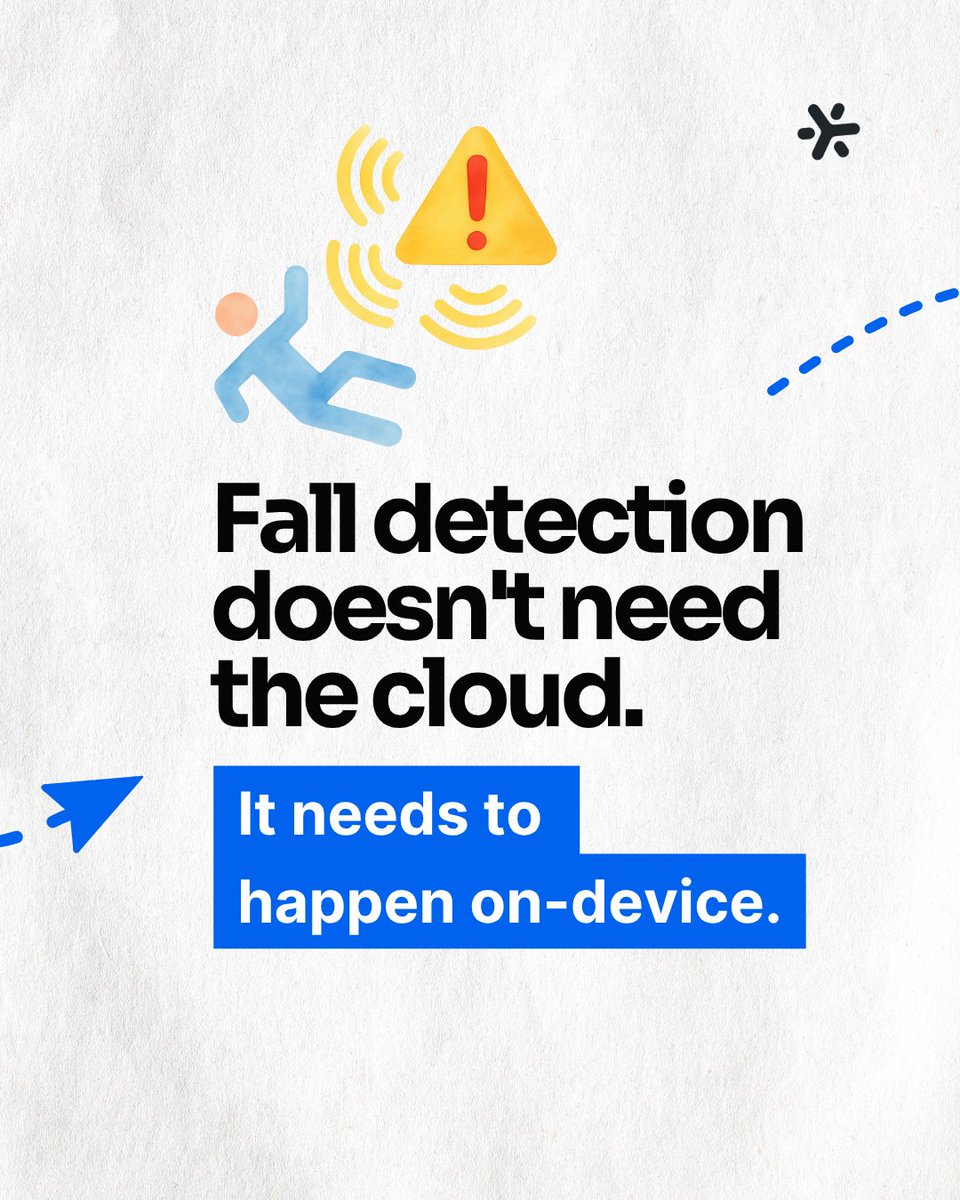
Most wearables don't die from sensing too much. They die from calling the cloud too often.
AKD1500 runs fall detection on-device instead. Link below.
https://t.co/avEqpKcGOS
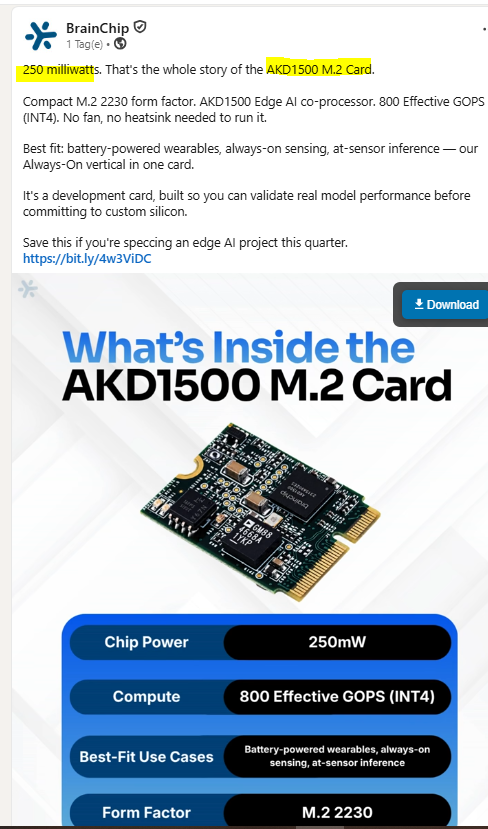
250 milliwatts. That's the whole story of the AKD1500 M.2 Card.
Compact M.2 2230 form factor.
AKD1500 Edge AI co-processor.
800 Effective GOPS (INT4).
No fan, no heatsink needed to run it.
https://t.co/A3RErN7f6k
@BrainChip_inc#Akida
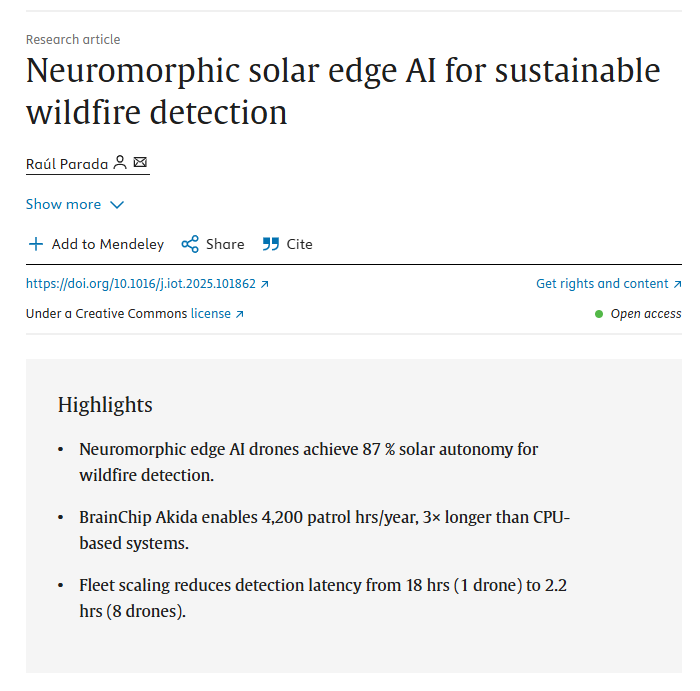
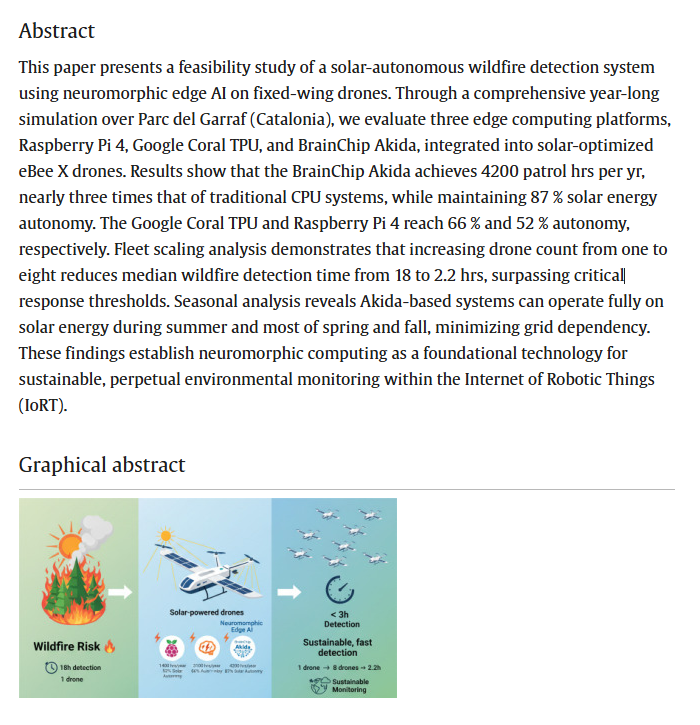
Neuromorphic solar edge AI for sustainable wildfire detection
https://t.co/wZmOPLH9yj
"BrainChip Akida enables 4,200 patrol hrs/year, 3× longer than CPU-based systems"
These days, this topic is more relevant than ever!
@BrainChip_inc
Another important article I wrote earlier in July that I'm making available on X, the PDF is also linked at the bottom of the article for download if you prefer that format. https://t.co/J4SLh1MVGk
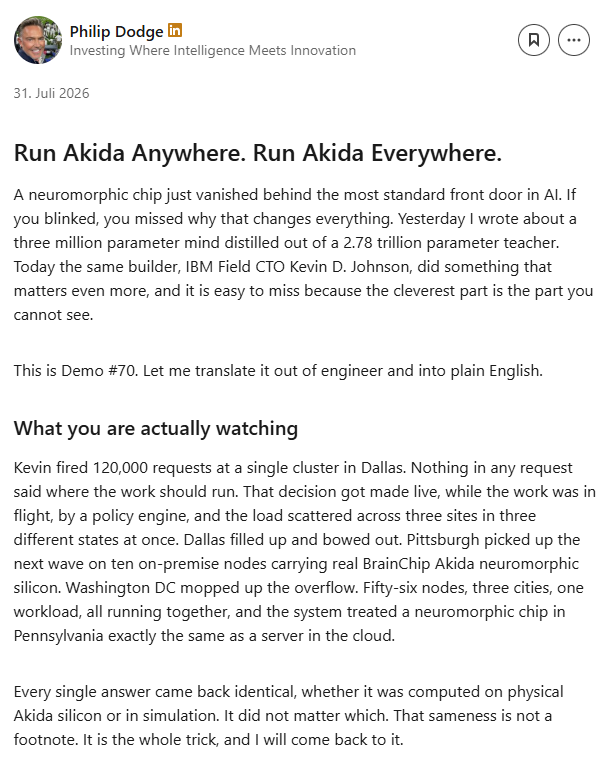
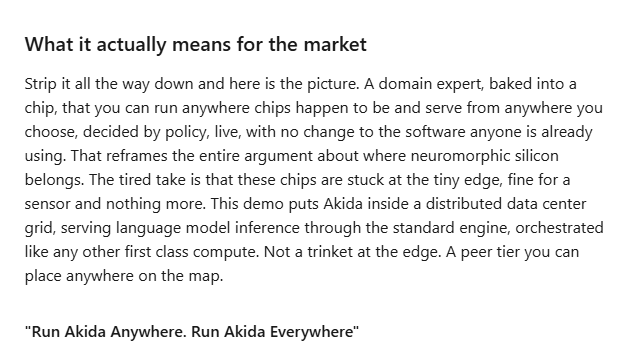
They said neuromorphic was stuck at the edge. This put it in the data center.
https://t.co/islqJa3VEq
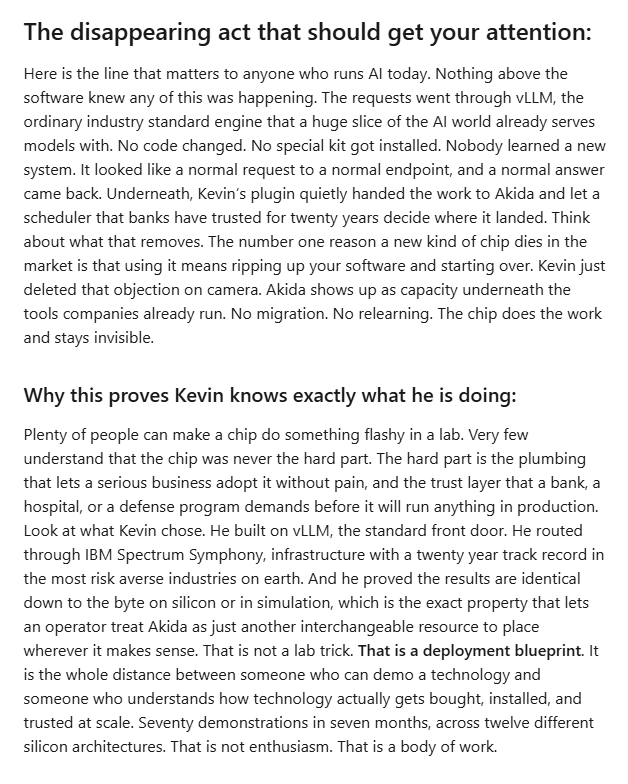
Seventy demonstrations in seven months, across twelve different silicon architectures.That is not enthusiasm.That is a body of work! @computeontology@BrainChip_inc#Akida#IBM
AKD1500 is now discoverable and design-ready inside Supplyframe's schematic workflow. What that means for eval time is worth a read.
https://t.co/zXi9XDUhEW
Demo #70, Akida via vLLM, Supersized. IBM Spectrum Symphony, GPFS, and Akida chips (and sims) work over Dallas, Pittsburgh, and DC. Policy defines where the workload runs, IBM Cloud or on-prem. Dallas fills→spills to Pittsburgh's 10 BrainChip Akida chips→then to DC.
I think it would be fun to do more time-related demos, Symphony and TENNS-PLEIADES with GPFS and Akida. For now, I just mess around with ESP32 S3 V4 firmware on occasion when I have a free moment. @geerlingguy thought you might like this.
Akida learns a new class from one example. I built the shared learning substrate with an FPGA. 1,024 spikes on the train, zero on 1,679 empty frames.The fabric knows when. The chip knows what. Add more chips → different questions on the same event. One record. No merging.
The power of this may not be immediately obvious. 50,000 facts is a substantial share of a field's working reference knowledge, answered in 131 ms on sub-watt chips. K3 doesn't know your data. It knows your field.
Every piece already runs: the Akida vLLM plugin, a Symphony semantic router, extractive RAG over your own corpus, content routed through the chips. All from previous demos I've done. What's left is wiring them together, your data and the field's data joined, going to the cloud only on the rare occasions neither can answer. That's Sovereign AI.
And 50,000 isn't a ceiling. The number came from early experimentation, what might conceivably fit on one chip. Symphony scales horizontally, so sharding across more chips takes it much higher. Domain knowledge gets very deep, very wide, or both.
Hey, everyone. Most of my demos and writing are on my website or on LinkedIn, but I've decided to add X to make my work more accessible to a wider audience. So, here we go. Feel free to follow and I'll likely follow in return.
https://t.co/GXhgy12mus