Held from 4–19 July 2026, our first Hindi batch of the #AtmiyataCourse equipped 14 participants with skills to identify distress, offer peer support, and refer people to appropriate care, strengthening community mental healthcare. #CMHLPIndia
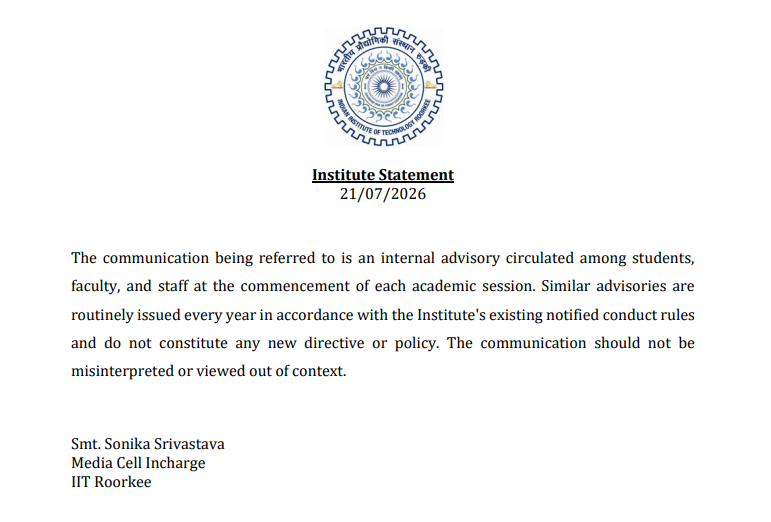
The mail of @iitroorkee warning students about social media posts isnt isolated. Legal threat is now a pattern. Increasingly, academic institutions are using threats of legal action to silence criticism. Even NTA is talking legal action against students. I have two specific instances:
1. Recently, an IIT threatened legal action against @Careers360 for reporting on an event. We had insider information and mails from students including audio recordings. When a legal threat followed, we settled to avoid exposing the students who were insiders.
2. I have done a video on one of the IITs falling placements, based on official filings. That IIT threatened to sue us. When bullied with a legal case, we responded
"If you still think the matter can only be solved in court, we will respect your views and let the judiciary take up the matter".
They fell silent.
The fact that these institutions have a thin skin while teaching critical thinking to students is dangerous for the country. Every question or opinion cannot be met with legal or administrative threat.
आज सुबह पहली बार प्रदर्शनकारियों की ओर से सरकार के साथ बातचीत करने का प्रस्ताव आया और सुबह 11:50 AM से ही हमारी बातचीत जारी है।
सौहार्दपूर्ण वातावरण में मुलाकात हुई। उनके डेलीगेशन के साथ विस्तार से पहले मौखिक चर्चा हुई और उनके द्वारा लगभग 4 बजे मुझे लिखित याचिका दी गई।
मैंने सभी प्रदर्शनकारियों से अनुरोध किया कि वे अपने धरने को समाप्त करें और सामान्य स्थिति बहाल करने में प्रशासन की मदद करें।
This summer, some households in Delhi decided to record what heat actually does to their lives, loss of income, missed work, dehydration cases, reduced mobility, water access, and more. Not with just ambient temperature, but through their own lived experiences.
They recorded sleepless nights. They documented how rising temperatures increased stress, frustration, and conflict at home. They wrote about losing work and income because it became impossible to work outdoors. They described children struggling to study or complete homework in unbearably hot homes. They kept record of increasing electricity bills, medical expenses, and the many invisible impacts of heat that rarely appear in research papers or policy discussions.
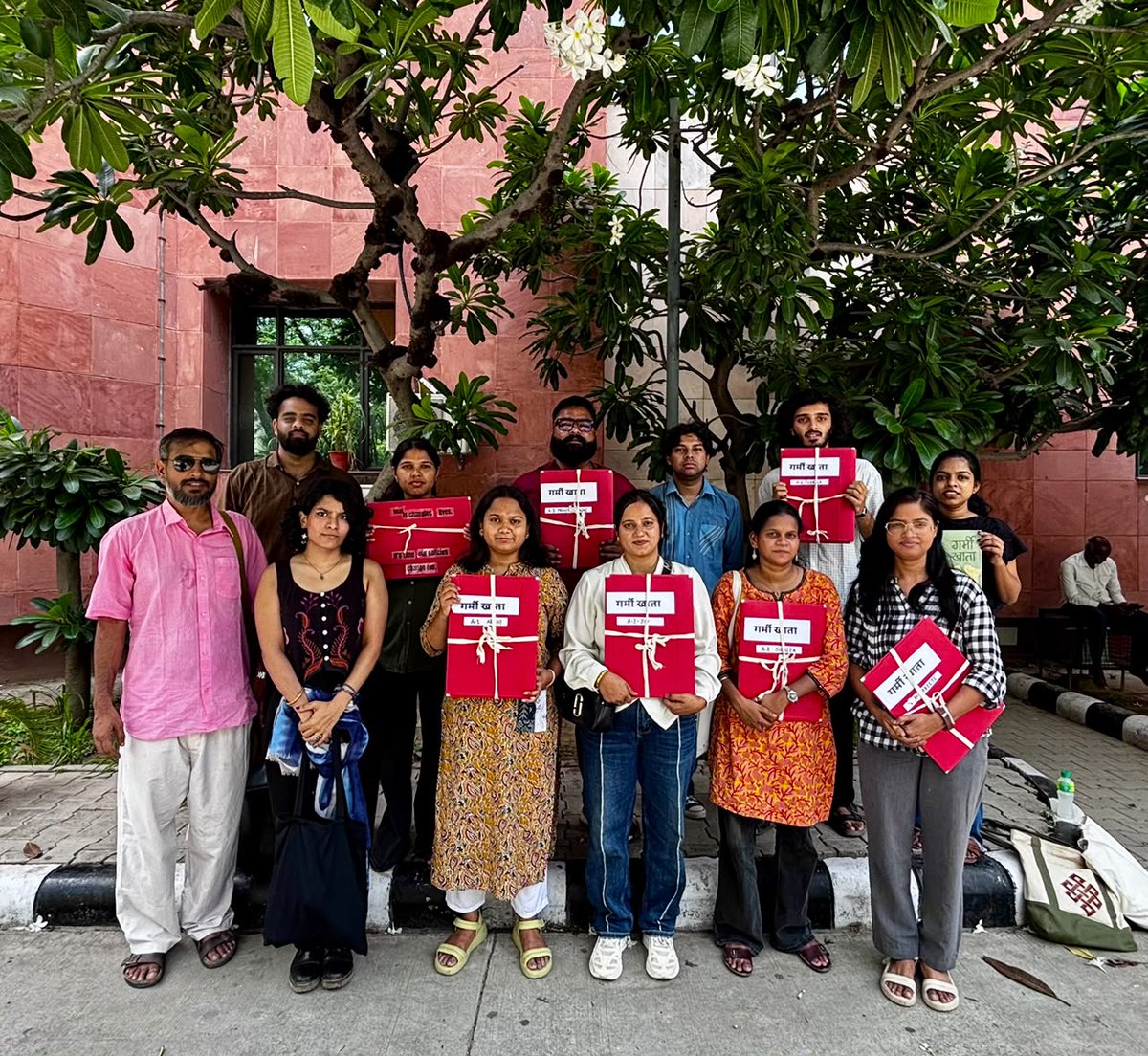
These stories, testimonies, and records became Garmi Khata, a community led people’s registry that aims to translate lived experience into evidence. What makes it powerful is its ownership. It is not a survey conducted from outside. It is a community maintained record that turns everyday experience into documented climate evidence.
Yesterday, these households submitted their Garmi Khata to the NHRC, calling on it to acknowledge the human rights impacts of extreme heat and to recognise heat as a human rights issue that demands urgent action.
I feel this opens up a larger discourse on how climate impacts are measured, whose data counts, and how communities are already building their own systems of accountability when official frameworks fall short.
Males think they're brave enough to fight a gorilla but in reality they’re not even brave enough to tell their friend to stop making women uncomfortable.