"The Hotel told us if we don't get back by 10:45 we don't get to eat, so we need to get the hell out of here"
-Denver coach David Carle
#GoPios#MFrozenFour
4000+ shows gigging with Night Ranger and my 62 Strat, I’m still getting that rush the second we step on stage.
Every single day I wake up amazed & greatful.🙏
Where have YOU seen us?
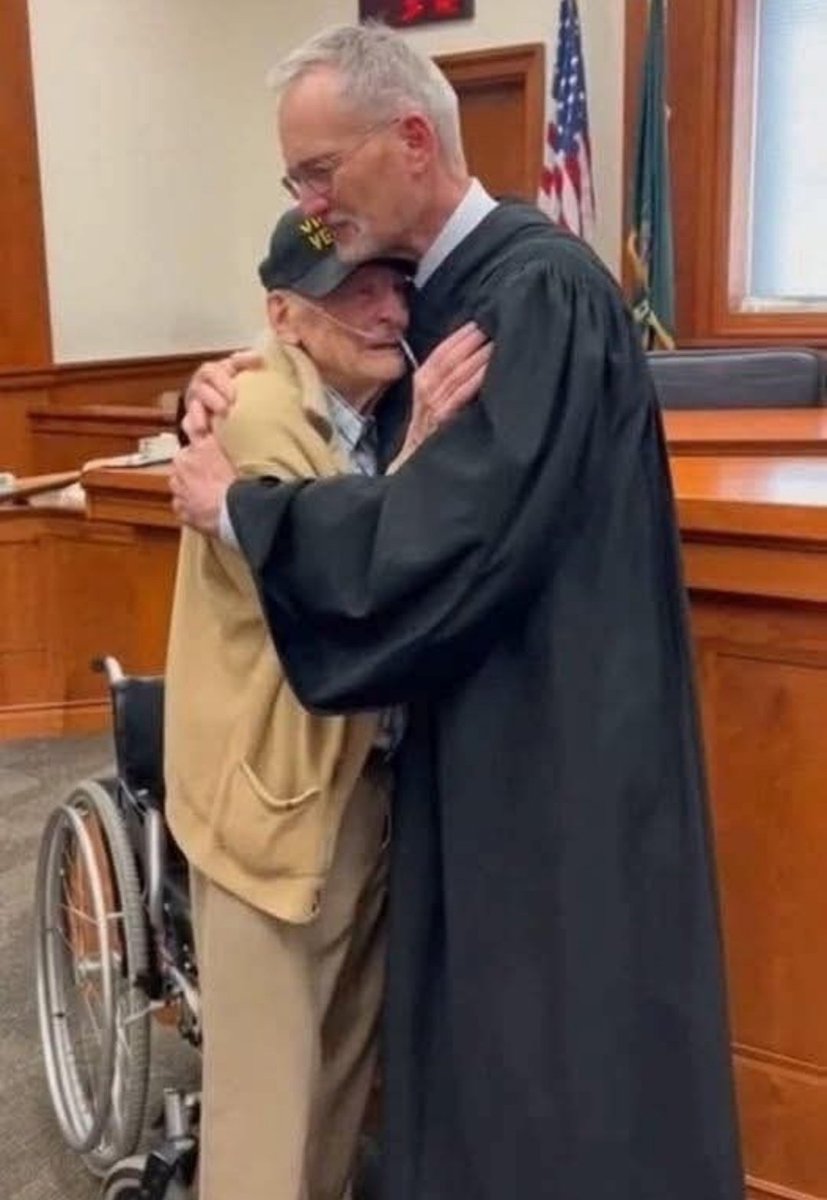
Arthur, an 88-year-old Vietnam veteran, sat in his wheelchair in the back of the courtroom. His wife was gone, he had no children, and his small house was falling apart. He'd been cited for code violations he couldn't afford to fix—a broken porch, peeling paint, and a leaking roof.
The judge, a 65-year-old man known for his stern, "by-the-book" rulings, called his case.
Arthur listened, his hands trembling, as the city attorney listed the violations and the thousands in fines. When the attorney formally requested the court's permission to condemn the property if the fines weren't paid, the finality of it hit him. This was it. He was losing his home.
The judge began to speak. "Mr. Harris, the city is asking for... "
He stopped. He just looked at the frail old man, who had now buried his face in his hands, his shoulders shaking in a silent, heartbreaking sob.
The courtroom went quiet. The judge, his own face tightening with emotion, looked conflicted. "We will take a 15-minute recess," he announced abruptly, banging his gavel.
When he returned, the courtroom was buzzing. The judge looked not at the attorneys, but directly at Arthur.
"Mr. Harris," the judge said, his voice softer now. "I spent my recess on the phone. I have spoken with the director of the local VFW, who is a friend of mine, and with our county's Veterans' fund. All fines are hereby dismissed."
Arthur looked up, his face a mask of stunned disbelief.
"Furthermore," the judge continued, "a local contractor's union has already pledged to do all the repairs, pro bono, starting next week."
This second wave of kindness was too much. Arthur, who had been crying from despair, now broke down in tears of overwhelming relief.
The judge then did something no one had ever seen. He stepped down from his high bench, walked directly to the wheelchair, and pulled the old soldier into a full, strong hug.
As Arthur wept into the judge's robe, he whispered, his voice trembling, "I... I didn't think anybody cared anymore."
The judge held him tighter and whispered back, his voice thick: "We do. I do. You served us. We don't forget that."
Credit to the rightful owner
Robert Duvall, about as iconic of an actor as his generation produced, has passed away at age 95. To be in the Godfather movies, and Apocalypse Now alone sets him in elite status, & that doesn’t even cover his other iconic roles.
Always remembered, never forgotten.
RIP, legend
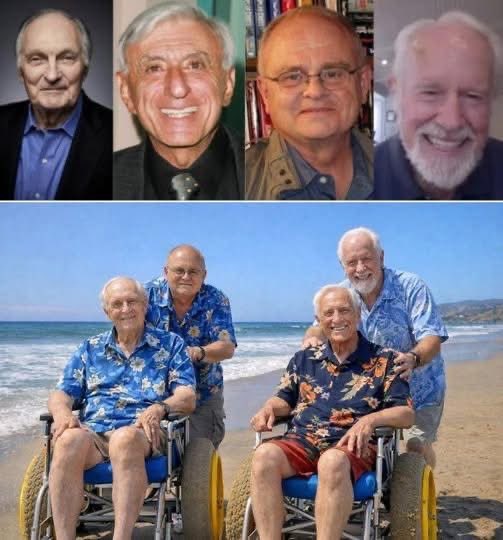
Four Old Men. Two Wheelchairs. One Beach. Alan Alda’s 90th Birthday
January 28, 2026.
Alan Alda turned 90.
His family planned a safe celebration at home.
Cake. Balloons. Grandkids.
Alan said no.
“I don’t want a party,” he said.
His daughter frowned.
“Dad… you’re turning ninety. This is a big deal.”
“I know,” Alan said.
“But I don’t want to celebrate here.”
“Then where?”
Alan didn’t hesitate.
“I want to go to the beach.”
The room went still.
“The beach?”
“Dad, you’re in a wheelchair.”
“You can barely stand.”
Alan smiled.
That smile.
The Hawkeye Pierce smile — the one that always meant something stubborn was coming.
“So?”
By that afternoon, he had already decided who was coming.
“The four of us,” he said.
“The last four.”
Gary Burghoff.
Jamie Farr.
Mike Farrell.
And himself.
The final survivors of the 4077th.
“No cameras. No interviews. No speeches,” Alan said.
“Just us.”
The phone calls began.
Gary answered first.
“Happy birthday, old man! Ninety!”
“Thanks. I need you to drive.”
“Drive where?”
“To the beach.”
A pause.
“Alan… you’re in a wheelchair.”
“So are facts. They don’t stop me either.”
Gary laughed.
That Radar laugh Alan had known for over fifty years.
“Fine. But I’m not pushing you through sand.”
“I’ll crawl if I have to.”
“You’re insane.”
“I’m Hawkeye. Same thing.”
Jamie Farr was next.
“The beach?” Jamie said.
“I’m ninety-one and in a wheelchair.”
“Then we’ll have two wheelchairs at the beach.”
“Like a parade?”
“Like a victory lap.”
Jamie laughed until his voice cracked.
“You haven’t changed since 1972.”
“And you’re still Klinger.”
“Fine. I’m in.”
Mike Farrell sighed the moment he answered.
“Let me guess,” he said.
“You want me to push your wheelchair.”
“Yes.”
“I’m eighty-six. I use a cane.”
“BJ Hunnicutt once saved a man with dental floss,” Alan said.
“You’ll manage.”
Long pause.
“…Fine.”
January 28. 6:00 a.m.
Gary arrived in a rented van.
Two wheelchair spaces.
He was wearing a Hawaiian shirt.
At Alan’s house, his daughter hovered.
“Dad, are you sure?”
“I’ve never been more sure of anything.”
“What if something happens?”
“Something is always about to happen at ninety,” Alan said.
“Might as well happen at the beach.”
Jamie was waiting outside his house.
Wheelchair. Sunglasses.
Hawaiian shirt.
“You coordinated outfits?” Gary asked.
“It’s tradition,” Jamie said.
“The 4077th always matched.”
Mike showed up next.
Also in a Hawaiian shirt.
Four old men.
One van.
Heading west.
On the drive, memories filled the air.
Harry driving too fast.
Larry bringing his own wine.
Radar making everyone cry.
Klinger never sleeping.
When the MASH* theme song came on, no one spoke.
After it ended, Alan said quietly,
“That song used to annoy me.”
“Now?”
“Now it just reminds me how lucky we were.”
At Malibu, reality hit.
Wheelchairs don’t work on sand.
Jamie grumbled.
Mike rubbed his back.
Alan stared at the ocean.
Gary disappeared.
Fifteen minutes later, he returned with two lifeguards and two beach wheelchairs.
One lifeguard whispered,
“My grandmother watched MASH* every night.”
It took time.
Transfers were slow.
Hands trembled.
Bones protested.
But they made it.
To the water.
Alan closed his eyes.
The sound of waves.
Salt in the air.
Sun on his face.
“I forgot what this felt like,” he said.
They talked about the ones who weren’t there.
McLean.
Wayne.
Larry.
Harry.
Bill.
David.
Loretta.
Jamie finally broke the silence.
“Let’s race.”
Two wheelchairs.
Two pushers.
One rock.
They raced.
They tied.
People on the beach stared.
A teenager asked, “What are those old guys doing?”
His mother said, “Living.”
As the sun set, Alan spoke.
“This might be the last time.”
No one argued.
“That’s why it matters,” he said.
“Because we know.”
He made a wish.
“One more year.”
“One more adventure.”
“Korea. Together.”
They promised.
He vanished into the jungle in 1969. America pretended he was never there.
Jerry Shriver earned the name Mad Dog. Not because he was reckless. Because he was relentless.
A Green Beret in Vietnam, Shriver volunteered for the missions no one else would touch. Deep reconnaissance. Cross-border operations into Laos and Cambodia. Missions so secret the Pentagon kept them off the maps.
If he was captured, the U.S. government would deny he existed.
Shriver knew the deal. He signed up anyway.
He led small teams into enemy territory, tracking North Vietnamese forces far beyond any American base. They moved through triple-canopy jungle in absolute silence. Hit fast. Disappeared faster. The enemy feared him. His own men trusted him with their lives.
On April 24, 1969, Shriver radioed in during a firefight deep inside Laos.
Then nothing.
No rescue mission. No body. No confirmation of death. Just silence swallowing a man whole.
The military listed him as Missing in Action and sealed his files. Years became decades. His family waited for answers that never came. His missions stayed classified. His sacrifice stayed hidden.
There was no funeral. No flag-draped coffin. No grave where loved ones could say goodbye.
Jerry Shriver fought in wars the American public never knew existed. On maps that were never drawn. In places the government denied sending him.
And when he disappeared, the war machine kept grinding forward.
The country moved on.
Some heroes get statues and parades.
Some get buried with full honors.
And some are simply erased from history—even though they gave everything.
Jerry "Mad Dog" Shriver never came home.
But we can make sure he's never forgotten.
Story based on verified military records. Shared to honor those who served in silence.
"My name's Harvey. I'm 68. I work the night shift at TravelCenter truck stop on I-40. Pump diesel, ring up snacks, clean showers. Same blue vest for thirteen years. Truckers fuel up, grab coffee, hit the road. Most are gone in fifteen minutes.
But I see who stays parked.
Like the trucker who'd been sitting in his rig for three days. Engine off. Never came inside except for bathroom. No food, no shower, just sitting.
Fourth morning, I knocked on his cab. "You okay, buddy?"
He rolled down the window. Looked exhausted. "Broke down. Waiting on parts. Can't afford to eat and fix the truck both. Truck wins."
"When'd you eat last?"
"Tuesday."
It was Friday.
I went inside, made him a hot dog, brought chips and coffee. "Store policy. Can't sell day-old stuff."
It wasn't day-old. But he was starving.
He cried eating that hot dog.
Started noticing others. The female trucker sleeping in her cab because shower credits cost too much. The rookie driver rationing gas station food because rookie pay barely covers fuel. Truckers choosing between eating and making deliveries on time.
I began keeping food. "Expired" items still perfectly good. When truckers looked desperate, I'd "find" extras they could have.
Word spread on the CB radio. "Harvey at the I-40 TravelCenter helps drivers."
Then something unexpected. A trucker I'd fed years ago made it big, started his own company. Came back, left $1,000. "For drivers who are where I was."
Now our TravelCenter has a "Trucker Relief Fund." Other truck stops copied it. Fifty-three stops across nine states.
I'm 68. I scan Slim Jims and pump diesel fuel at a highway truck stop.
But I learned, truckers deliver everything we need to survive. And they're often starving, broke, sleeping in their cabs because one breakdown destroys them financially.
Watch your lot. Someone's been parked three days without moving. Someone's choosing between fuel and food.
Find the expired snacks. Offer the shower credit. Sometimes a $4 hot dog is what keeps a trucker from giving up on a road that already gave up on them."
Let this story reach more hearts....
By Mary Nelson
Happy 61st birthday to Rochester Mayo graduate and Mankato State all-time great Fritz Polka.
The Mets drafted him in the second round in 1986 and Baseball America projected him to be the Mets' starting catcher by 1990.
The neighbors call the cops on my dad every six months. They think he’s running a fighting ring or flipping pets for profit. For years, I wasn't sure they were wrong.
My father, Frank, is a man of few words and even fewer friends. He lives on a fixed income in a small, weathered house just outside of town. He’s 68, walks with a limp he got in ’71, and spends most of his day in his garage.
But his most controversial habit involves the local animal shelter.
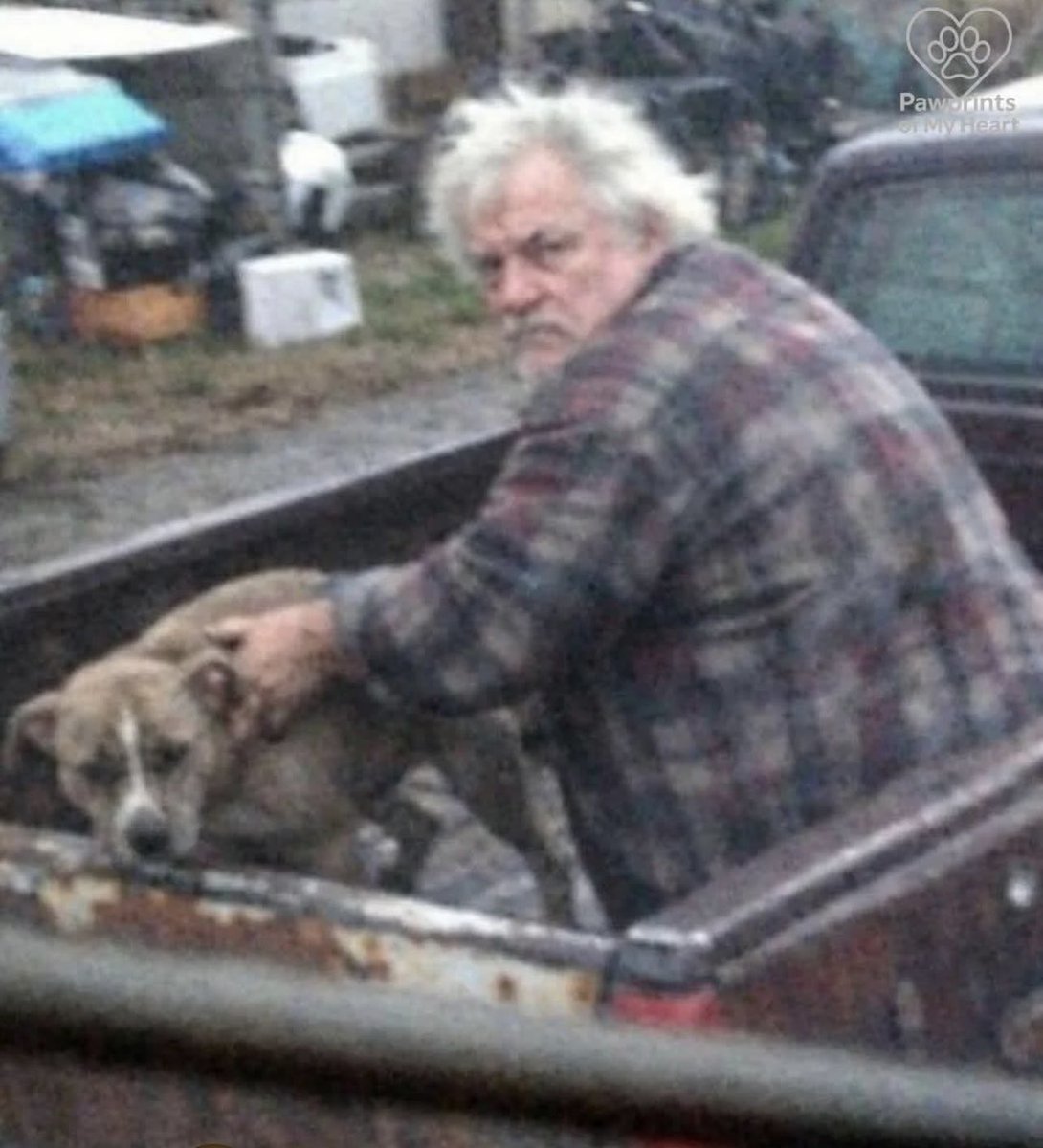
Like clockwork, Dad brings home a dog. Not the cute puppies everyone wants. He picks the "unadoptables." The three-legged pit bulls, the senior labs with gray muzzles, the curs that cower in the corner. For six months, that dog lives like royalty. I’d visit and see Dad hand-feeding them steak scraps, walking them for hours, talking to them in a soft voice he never used with me.
Then, six months later? Gone.
The dog vanishes. No photos, no collar left behind. Just an empty bowl and Dad driving his rusted pickup truck to the shelter to get another one.
"Where’s Barnaby?" I asked last Sunday. Barnaby was a one-eyed Golden Retriever mix he’d had since spring. That dog worshipped the ground Dad walked on.
"Moved on," Dad grunted, staring at his coffee.
"Moved on? Did you sell him, Dad? The neighbors are talking. They say you’re sick."
"Let them talk."
I couldn't take it anymore. I loved Barnaby. The thought of my father selling that sweet soul to some stranger for a few hundred bucks made my stomach turn. So, when I saw him load a bag of high-grade kibble and a new leash into his truck the next morning, I followed him.
I expected him to drive to a breeder or a shady parking lot exchange. Instead, he drove two towns over to a drab apartment complex near the VA hospital.
He pulled up to a ground-floor unit. I watched from my car, phone ready to record evidence, as he knocked on the door.
A young man answered. He couldn't have been older than 25, but he looked 50. He was missing his right arm, and the way he stood—tense, scanning the perimeter—screamed PTSD. I recognized that look. I’d seen it in Dad’s old photos.
Dad didn't say a word. He just whistled.
From the passenger seat of Dad’s truck, a dog jumped out. It wasn't Barnaby. It was "Duke," a German Shepherd he’d had last year. Duke looked incredible. Focused. Calm. He trotted right up to the young man and sat by his left leg, leaning his weight against the boy’s thigh.
The young man crumpled. He fell to his knees, burying his face in Duke’s fur, sobbing. Duke didn't flinch. He just held his ground, anchoring the boy to reality.
Dad handed the young man a thick envelope. Not money—paperwork. Vaccination records. Training logs.
I got out of my car. "Dad?"
He jumped, looking more terrified than I’d ever seen him. He walked me away from the boy, lowering his voice.
"You weren't supposed to see this."
"You trained him," I realized. "You didn't get rid of them. You trained them."
Dad sighed, lighting a cigarette with shaking hands. "A fully trained PTSD service dog costs anywhere from fifteen to thirty thousand dollars. The insurance doesn't cover it. The VA has a waiting list a mile long. These boys... they come home, and they can't sleep, they can't go to the grocery store, they can't breathe."
He looked back at the young man, who was now smiling through tears, throwing a ball for Duke with his left hand.
"I can't give them money," Dad said, his voice cracking. "I don't have any. But I know dogs. And I have time."
"But why the secrecy? Why every six months?"
"Because that’s how long it takes to turn a scared shelter dog into a soldier’s lifeline," he said. "Basic obedience, task training, desensitization. I take the broken dogs nobody wants, and I turn them into the partners these kids need."
"And Barnaby?" I asked, my throat tight.
"Delivered him yesterday to a female marine in Ohio. She hadn't left her house in two years. She went to the park this morning."
🐾 on my ❤️ Please share if this moved you.
🚨 Here is the full 42 minutes of my crew and I exposing Minnesota fraud, this might be my most important work yet. We uncovered over $110,000,000 in ONE day. Like it and share it around like wildfire! Its time to hold these corrupt politicians and fraudsters accountable
We ALL work way too hard and pay too much in taxes for this to be happening, the fraud must be stopped.