A hard-to-find 2014 article by Ray Peat on negation:
"When the organism is traumatized, it hardens, and stops developing, and wants to impose its moral hardness everywhere; assertiveness is the antithesis of perceptive life, and devises ways to negate it."
Negation by Raymond Peat
January 22, 2014
I think the concept is very simple in itself, but the problem is that it implies a cultural criticism that involves everything, biology, physics, politics, epistemology. Contraries, or different perspectives, can interact to eliminate error, in progressing. Negation is a human function that would stop the free advance of life and consciousness, opposing critical questioning and spontaneous understanding. The refusal to discuss a problem, and the many forms of censorship, and legal-economic systems that make whole courses of action impossible, are negations, that have their poisonous effects. Physiology reflects their poison, in all the ramifications of learned helplessness, restraint stress, the carcinogenic effects of work-school-media-religion-government.
Negation excludes or suppresses those complex processes of being,* and implants nothing but–at the most–obligation in their place. Undocumented aliens are negated simply, slaves and citizens are negated but with obligations. Religions tell people that their being is immaterial, a ghost that will be o.k. somewhere else forever, if they do their duty now. Having a false consciousness implanted by schools and television, labels and roles take the place of being. A sense of despair and impossibility is right behind the false consciousness.
Our surrounding context of language and culture is constantly distorting and misinterpreting anything which persists in moving toward a more expansive life. Knowledge, a physiological thing, is expansion, and as such is always clearing away errors; when people identify with error, they see knowledge as the deadly enemy, that must be destroyed.
Blake’s idea of the “intellectual fountain” was very different from the attitude of Schopenhauer and Nietzsche (where “Will” or assertion was the fundamental reality). Blake saw it as always flowing into new territory, discovering new things, enlivening the world that’s being discovered-created. When the organism is traumatized, it hardens, and stops developing, and wants to impose its moral hardness everywhere; assertiveness is the antithesis of perceptive life, and devises ways to negate it.
In an authoritarian culture, people want you to forget who you are, so they can implant themselves without resistance. Just recognizing your own presence, to attend to them fully, is something they don’t expect; it isn’t quite like Carl Rogers’ therapeutic presence, because it’s conditional–your conscious presence is the condition. Being present* and able to listen (and question and understand) is receptive and productive, and it can even be disruptive, but it’s very different from being assertive, because it’s always hoping to open up new possibilities, rather than imposing something carried along from the past. A priest is being assertive when he says you have to take it on faith, a physics professor is being assertive when he won’t justify his assumptions–where would physics be if your assumptions had to be plausible beyond a particular culture of physics? Much of their potential imagination has been invested in thinking of ways to keep you from questioning.
Physics, in the 20th century, has taken on the Nietzchean subjectivism, claiming to quantize/digitize everything. There is no digital nature, but assertive subjectivism has effectively written quantization into the constitution of science, and into the shadow of the humanities that remains in the corporate universities. Bits of “knowledge” are sold and hoarded, and people who would show that they are something other than knowledge are treated as vandals and worse–Aaron Swartz, for example.
A Little Boy Lost
Nought loves another as itself,
Nor venerates another so,
Nor is it possible to thought
A greater than itself to know.
And, father, how can I love you
Or any of my brothers more?
I love you like the little bird
That picks up crumbs around the door.’
The Priest sat by and heard the child;
In trembling zeal he seized his hair,
He led him by his little coat,
And all admired the priestly care.
And standing on the altar high,
‘Lo, what a fiend is here! said he:
‘One who sets reason up for judge
Of our most holy mystery.’
The weeping child could not be heard,
The weeping parents wept in vain:
They stripped him to his little shirt,
And bound him in an iron chain,
And burned him in a holy place
Where many had been burned before;
The weeping parents wept in vain.
Are such thing done on Albion’s shore?
A Poison Tree
I was angry with my friend:
I told my wrath, my wrath did end.
I was angry with my foe:
I told it not, my wrath did grow.
And I watered it in fears,
Night and morning with my tears;
And I sunned it with smiles,
And with soft deceitful wiles.
And it grew both day and night,
Till it bore an apple bright.
And my foe beheld it shine.
And he knew that it was mine,
And into my garden stole
When the night had veiled the pole;
In the morning glad I see
My foe outstretched beneath the tree.
Introduction.
Hear the voice of the Bard!
Who Present, Past, & Future sees
Whose ears have heard,
The Holy Word,
That walk’d among the ancient trees.
Calling the lapsed Soul
And weeping in the evening dew:
That might controll.
The starry pole;
And fallen fallen light renew!
O Earth O Earth return!
Arise from out the dewy grass;
Night is worn.
And the morn
Rises from the slumberous mass.
Turn away no more:
Why wilt thou turn away
The starry floor
The watry shore
Is giv’n thee till the break of day.
The Voice of the Ancient Bard.
Youth of delight come hither.
And see the opening morn,
Image of truth new born.
Doubt is fled & clouds of reason
Dark disputes & artful teazing.
Folly is an endless maze,
Tangled roots perplex her ways.
How many have fallen there!
They stumble all night over bones of the dead
And feel they know not what but care;
And wish to lead others when they should be led
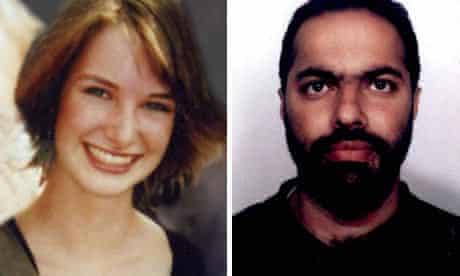
Hannah Foster was abducted after a night out in Portswood, Southampton, by a Sikh man named Maninder Pal Singh Kohli not far from her family home.
The 17-year old's body was found two days after her disappearance. She had been beaten, raped and strangled to death, before her body was dumped in bushes just outside of Southampton.
It was later found that she had called 999 whilst in the back of her killer's van, but the operator had failed to realise that Hannah was in trouble.
On the recording, she could be heard giving a false name, that of her sister, to a man with an asian accent who asked her questions. Towards the end of the call her voice could be heard saying: "Huh ... listen ... anything." before the line went dead. Her mother, Hilary, later said that she had never heard Hannah sound so scared.
Kohli immigrated to Britain in 1993. He fled the country following the murder, returning to India and adopting a new identity. He was not immediately extradited due to the Indian police not prioritising the case. Only after Hannah's parents travelled to the area he was suspected to be in to find him themselves did that change.
He was arrested, and three years after the murder was extradited back to the UK where he was sentenced to life imprisonment. Kohli originally stated the reason for murdering Hannah was that "she refused not to report the crime", therefore he was "forced" to kill her. He later tried to claim that criminals had forced him to rape and kill her, much to the disbelief of the court.
He is expected to be released in 2030.
I’ll never understand the men who refuse to cook or claim it’s women’s work; I courted my wife mostly in the kitchen. “Come over, let me make you dinner.” and now, a decade later, I am frying up steak while she plays with the children in the garden.
Cook, bro. It’s so good.