Beyond Delivery: Why the Ugandan Engineer Must Learn to Structure Projects
By Joel Aita
Uganda's engineers have proven, project after project, that they can build. The next frontier is not on the construction site — it is upstream, where projects are conceived, financed and made bankable.
Masters of the Ready-Made Project
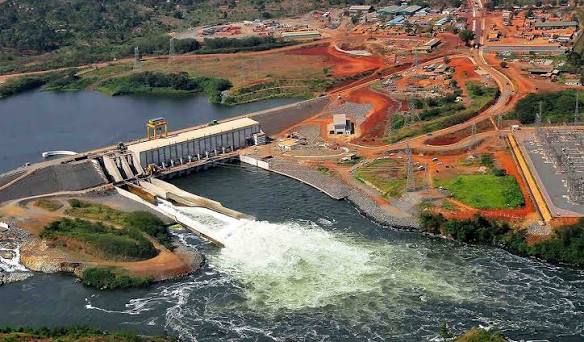
Walk onto any major project site in Uganda — a hydropower dam on the Nile, an urban flyover in Kampala, a modern water treatment plant — and you will find Ugandan engineers delivering with skill and confidence. Over two decades, our profession has mastered execution: setting out, supervising, certifying, testing and commissioning, holding our own alongside global contractors. By any fair measure, we are excellent at delivering ready-made projects — projects that arrive on our desks already conceived, appraised, financed and procured by someone else.
And that is precisely the problem. The projects pictured in this report did not begin as drawings; they began as transactions. Long before the first pile was driven, someone had defined the need, tested the economics, assembled the financing and allocated the risks. That upstream work — project structuring — is where a project's fate, and most of its value, is decided. Yet it remains the least understood, least taught and least contested space in Ugandan engineering practice.
The Questions We Never Ask
Very few of us pause to ask how the projects we build came to exist. Who framed the problem as a project? Who prepared the feasibility study and shaped the business case? Who decided it would be delivered as a traditional measured works contract rather than an EPC, a turnkey, or a public-private partnership? Who structured the financing between government, development partners and private capital — and who negotiated the covenants, conditions precedent and disbursement rules that now govern our certificates? Too often the answer is: transaction advisors and specialists from elsewhere, while the Ugandan engineer waits downstream for drawings and a contract to supervise.
The Cost of Staying Downstream
The consequence is quiet but costly. The greatest value in infrastructure is created — and captured — upstream. Structuring determines the fee levels, the risk exposure, the technology choices and even which firms are eligible to participate. When we absent ourselves from structuring, we confine ourselves to the thinnest-margin end of the value chain and surrender strategic influence over our own built environment. A profession that only executes will always be priced, directed and displaced by those who originate.
“A project is engineered twice: first as a transaction, then as a structure. The engineer who understands both is indispensable.”
Five Disciplines of Project Structuring
1. Project preparation. Pre-feasibility, feasibility, demand analysis and the economic and financial appraisal that make a project bankable. A project poorly prepared is a project poorly delivered — no site skill can rescue a flawed business case.
2. Financing architecture. How sovereign loans, grants, blended finance, EPC+F and PPP arrangements are assembled, and what lenders such as the World Bank, AfDB and IsDB actually require before a single dollar moves.
3. Risk allocation and contract strategy. Why the FIDIC Red, Yellow and Silver Books exist, and how the choice among them — and the particular conditions drafted around them — redistributes risk, reward and control.
4. Procurement design. How packaging, qualification criteria and evaluation methods decide who wins before any bid is opened. Procurement is not paperwork; it is strategy expressed as rules.
5. Information discipline. Structured, auditable, single-source project data from concept to close-out — because no financier funds what it cannot verify, and no structurer can work from scattered files.
Technology Levels the Field
This last discipline is where technology changes the game. Digital platforms — common data environments like InfraHUB — now allow African teams to prepare, document and govern projects to the standard international financiers demand. The tools to originate world-class projects are no longer the preserve of foreign advisory firms; they are on our desks, in our language, priced for our market.
An Invitation to the Profession
The invitation, then, is simple. To every Ugandan engineer: do not stop at delivery. Read the financing agreement, not just the drawings. Sit in the appraisal meeting, not just the site meeting. Learn how projects are structured — and then structure them. Our infrastructure future should not merely be built by Ugandan engineers. It should be conceived, shaped and led by them.
Joel Aita
Uganda’s $500 billion future: Why a wartime-scale push on electricity transmission and grid modernization is urgent. - 91.8 Boona FM https://t.co/X5UawtFJkO
The fact that we don't have any major Hydro-power Dam (100MW+) project planned or under construction currently doesn't sit well with me. We are going to run out of power if we remove these transmission and distribution inefficiencies. The notion of 'excess power' is an illusion.
@clevermulowoza@KakandeAlex@33 even with coupon re-investement- after waiting for the 6 months,its unlikely you'd get to invest on the same bond. If they were lucky to,then itd most likely be at a premium.
@KakandeAlex@33 "Treasury bonds compound quickly." This lie is not only dishonest bt unfortuntly misleadng to yo gullible audience. TBs don't compound! Even if one ws to re-invest their coupons, they wd hav a time lag of 6months to make a new invstment in order to realize any compoundng effects.
#AMEAPower announced today the groundbreaking of a 24MWp Solar PV Project in #Uganda 🇺🇬
The ceremony was attended by Hon. Dr. @NankabirwaRS, Minister of @MEMD_Uganda, Ms. @irenebateebe PS MEMD and, other govt. & pvt. sector personnel
To know more: https://t.co/t147cr1KJb
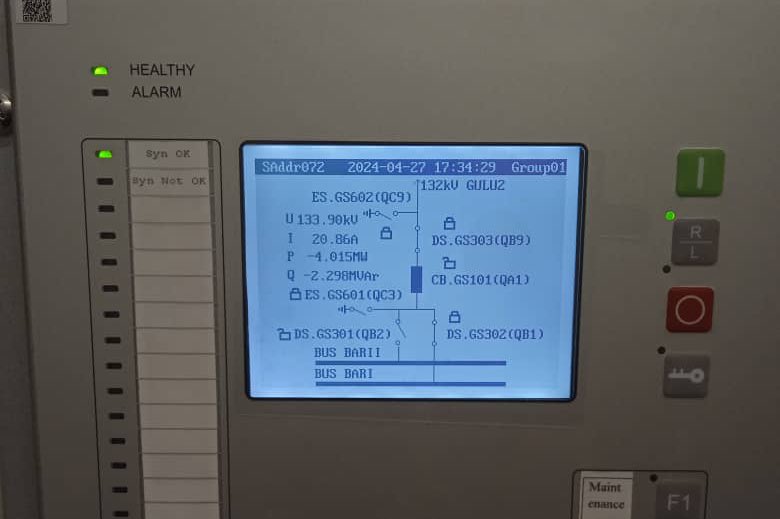
The Gulu - Olwiyo 132kV line portion of the Kole - Gulu - Nebbi - Arua (KNGA) project extending the transmission grid to West Nile was successfully energized on Saturday 27/04/24. Congrats to the team @uetcl, let's keep the collective efforts to the finish line. @KwameEjalu
@assempebwa@PathyKlinn Which/where are the five interchanges; I'd assume Busega and Mpigi are 2 of the 5. Which are the other 3? Does project scope cover tarmacing of the entire lengths(and what are these lengths)of the link roads from these interchanges to the existing Masaka and Mityana highways?
@TheMutaD@assempebwa Which/where are the five interchanges; I'd assume Busega and Mpigi are 2 of the 5. Which are the other 3? Does project scope cover tarmacing of the entire lengths(and what are these lengths)of the link roads from these interchanges to the existing Masaka and Mityana highways?
📣 #COP28 News:
AMEA Power is delighted to announce the successful project financing decision with Emerging Africa Infrastructure Fund (EAIF) and our liquidity supporter, African Trade and Investment Development Insurance (ATIDI) for our Ituka 20 MW Solar PV Project in the West Nile Region of Uganda 🇺🇬🌞💡 This project marks our first green field IPP transaction in East Africa!
The project will be owned and operated by AMEA Power. This reflects our dedication to sustainable energy 🌍✅
We will partner with Danway EME, a UAE-based contractor to execute and construct the 20MW Solar PV project.
We are grateful to the Ministry of Energy and Mineral Development, the Ministry of Finance, the Electricity Regulatory Authority, Uganda Electricity Transmission Company Limited, West Nile Rural Electrification Company, the National Environmental Management Authority and the People of West Nile Region, for their cooperation and support.
Stay tuned for the journey! #AMEAPower #SolarEnergy #Uganda #SustainableDevelopment