(17/21)
Persistent pathogens were connected with autoimmunity long before COVID vaccines existed.
The clearest modern example is Epstein-Barr virus and multiple sclerosis.
In a prospective cohort of more than 10 million people, the risk of MS increased approximately 32-fold after EBV seroconversion.
EBV then establishes lifelong latency.
Now combine:
-persistent infection → susceptible HLA → abnormal antiviral responses → repeated antigen presentation → molecular mimicry or cross-reactivity → tissue inflammation
and the relationship between infection and autoimmunity becomes much easier to understand.
🔴 “Everything we are seeing now is because of the vaccines.”
I keep reading variations of this statement.
But immunology is much more complicated—and much more interesting—than that.
Can vaccines rarely trigger immune-mediated complications?
Yes.
Can infections trigger the same type of phenomena?
Absolutely.
The real question is not simply:
“Was it the vaccine or the infection?”
A better question is:
Why does the same or a related antigen cause an abnormal immune response in one person but not in another?
(1/21) 🧵
SARS-CoV-2 ORF7a: a mitochondrial saboteur!
➡️ A striking study shows that the viral accessory protein ORF7a hijacks host metabolism, impairing mitochondrial respiration, increasing ROS and disrupting glucose/lipid metabolism. It boosts PDK4, suppresses pyruvate oxidation—and, remarkably, also damages complex I and respiratory supercomplex assembly.
👉 The virus isn’t just using the cell’s machinery—it appears to be rewiring and destabilizing the mitochondria themselves.
https://t.co/2bEvdo3Byl
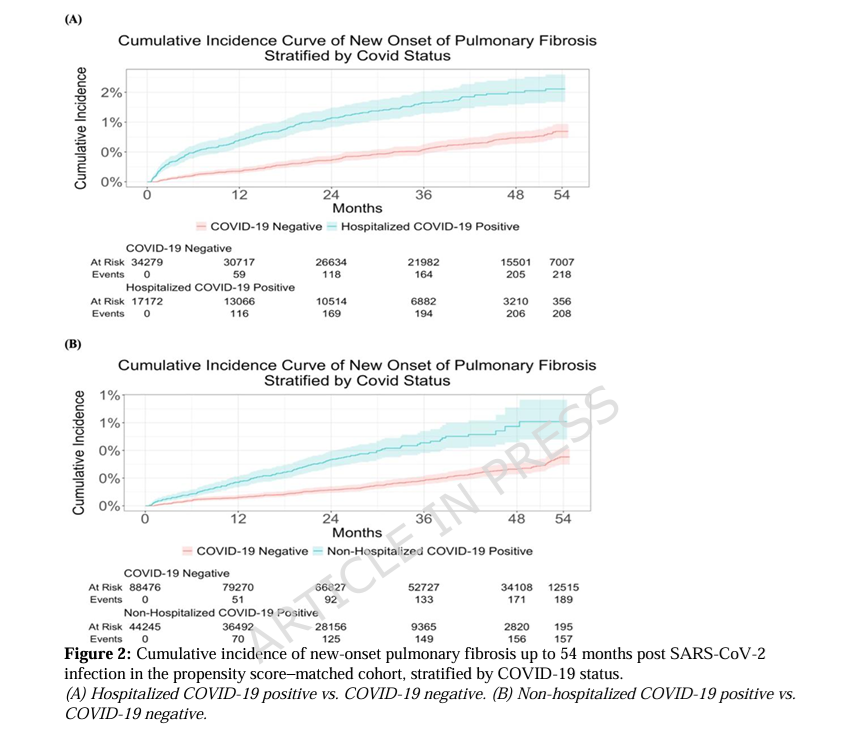
Incidence of new-onset pulmonary fibrosis 4.5 years post SARS-CoV-2 infection in an academic urban medical center
🚨IMPORTANT STUDY with the expected BAD NEWS!
🚨Even mild COVID roughly doubles your risk of new pulmonary fibrosis lasting 4.5+ years, and the fibrosis that follows brings far more pneumonia, respiratory failure & exacerbations. #LongC0VID
➡️This large retrospective cohort study from Montefiore Health System( March 2020–August 2024) examined new-onset clinical pulmonary fibrosis (PF, via ICD-10 codes) up to 4.5 years after SARSCoV2 infection,
➡️Follow-up runs from index date until new-onset PF, death, or the end of observation (August 2024), whichever came first,
- Only the earliest infections (spring/summer 2020) reach the full ~4.5 years / 54 months of follow-up,
- Patients infected in 2021–2024 have progressively shorter observation times.
- Average follow-up in the matched cohorts was roughly 600–630 days (~1.6–1.7 years),
➡️Hospitalized and non-hospitalized COVID-19 patients without prior PF were propensity-score matched 1:2 to COVID-19-negative controls,
➡️After matching, hospitalized patients had a subdistribution hazard ratio (sHR) of 2.05 (95% CI 1.69–2.49) and non-hospitalized patients an sHR of 2.33 (95% CI 1.88–2.88) for new-onset PF versus controls,
➡️Cumulative incidence remained elevated through ~54 months,
➡️Among those who developed PF, prior COVID-19 (especially hospitalization) linked to substantially higher odds of downstream complications:
- Pneumonia (OR up to 4.84),
- Respiratory failure (OR 3.76),
- Bronchiolitis, asthma/COPD exacerbations, plus elevated risks of pulmonary hypertension and embolism in subgroups,
➡️Vaccination status was collected and included in propensity-score matching to balance covariates (SMDs <0.1 post-match). It was not analysed as an effect modifier or outcome predictor,
➡️Possible reinfections(4 years) aren’t mentioned?🤔
➡️Conclusion:
“In a diverse cohort with up to 4.5 years follow-up, we found both hospitalized and non-hospitalized COVID-19 patients have a higher long-term risk of new-onset PF and higher burden of subsequent downstream respiratory complications compared to matched non-COVID-19 controls. These findings demonstrate post-COVID-19 PF as a relevant and clinically significant outcome and suggest the need for long-term surveillance, risk stratification, and targeted intervention.”
‼️So, according to this study, both mild and severe COVID-19 roughly double the long-term risk of clinically diagnosed new-onset pulmonary fibrosis for years afterward, and the fibrosis that does occur carries a markedly heavier burden of further life-limiting respiratory events. Post-COVID PF is a durable, clinically meaningful sequela requiring ongoing surveillance.
#AvoidSars2 #AvoidReinfections
https://t.co/tTjXtdYV47
A*STAR researchers studied tissues from 4 people who died of unrelated causes more than 250 days after mild COVID.
SARS-CoV-2 nucleocapsid antigen remained in lung, heart and brain, alongside persistent inflammation and immune disruption.
https://t.co/FN9m0of4j4
For me, they remain an essential part of prophylaxis, obviously in addition to a well-fitting mask, vaccines, etc (nobody ever suggests they should be used without a mask, that’s obviously just a strawman argument that people who are in opposition to additional layers of protection make up).
The way that all infections transmitted through the respiratory route work is that they spend a couple of days replicating in the Upper Respiratory Tract (nose and throat) until there are high enough numbers to overwhelm all of the body’s defenses (including the systemic immunity created by vaccines elsewhere in the body). At that point, it creates a full-blown infection that translocates to the lower respiratory tract, the brain, the various reservoirs around the body that cause long covid persistence, etc.
The immune response in those mucosal areas is more blunted compared to the rest of the body. In contrast, you don’t really need to worry about breathing a few virions straight into your lungs, Nuvaxovid’s protection will pretty much always be durable enough to take care of that. In the upper respiratory tract, though, even though Nuvaxovid and Matrix-M do represent the best mucosal protection that we’ve ever managed to achieve from a respiratory vaccine, it’s still not enough to fully block all infection, although it often does at lower exposure doses.
With that basic understanding, it becomes pretty obvious that nasal sprays can and should be an integral part of any layered defense strategy against infections. If you inactivate a virus, stop cell binding, and/or stop replication in the nose, you can stop infections from progressing. The mechanism of action is plenty sound. “Experts” will often complain about the lack of randomized clinical trials in the space, but if you take more then 2 seconds to think about it, how could anyone truly expect those to take place when you can produce most of these nasal sprays for dirt cheap? Where are they going to be getting the funding needed to accomplish those studies?
That said, we do still have some positive studies. There is real-world evidence in support of 3 nasal spray formulations in particular: Iota-carrageenan, Nitric oxide, and Azelastine.
Personally, I use a combination of iota-carrageenan (pre-exposure, more frequently) and nitric oxide (post-exposure, less frequently).
Below is a tweet where I discuss all of the different brands of iota-carrageenan sprays, and below that one is a tweet where I give my quick thoughts on all of the available types/formulations of nasal sprays.
A new population-based study from the Netherlands asks a simple question. After COVID, how long does it take for persistent symptoms to drop back to where a person was before infection? Median - 226 days.
Not calling that recovery - the study measures something narrower. 🧵
I think about this all of the time and it's why I'm so focused on trying to get this info to more people. I'd guess that less than 10% of the people dealing with new post covid health problems are connecting them to covid, and an even smaller percent will openly talk about it.
The people who have longcovid who know that that is what they have is a small fraction of all the people who have longcovid. And the people with longcovid can feel the damage the virus did, which is a fraction of the damage the virus does that we don’t feel until it’s too late.
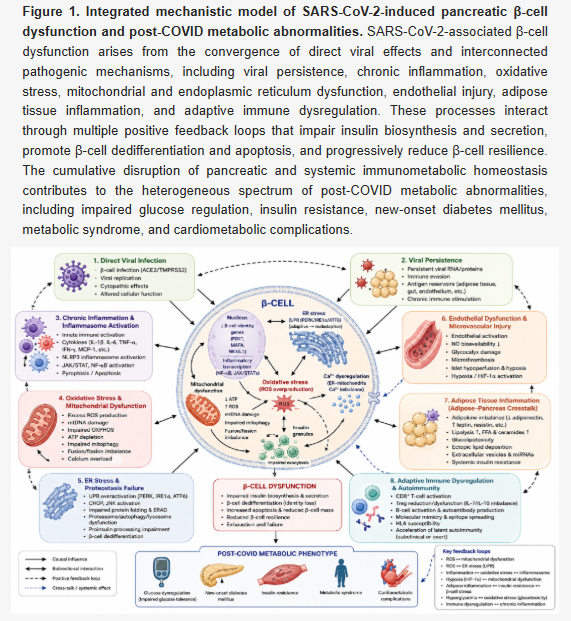
β-Cell Dysfunction in COVID-19 and Post-COVID Syndrome: Molecular Mechanisms Linking Inflammation, Oxidative Stress, and Insulin Secretion
🚨A further reminder: COVID doesn’t just leave lungs damaged, it can scar your pancreatic β-cells. Inflammation + oxidative stress + mitochondrial hit → higher new-onset diabetes risk that vaccines only partially blunt.
➡️This INTERESTING review examines how SARSCoV2 disrupts pancreatic β-cell function and glucose homeostasis, contributing to post-COVID/LongC0VID metabolic issues.
➡️Key mechanisms include:
- Direct or indirect viral effects,
- Persistent inflammation,
- Oxidative stress,
- Mmitochondrial dysfunction,
- Hypoxia-related signalling,
- Endoplasmic reticulum stress, and
- Immune dysregulation.
➡️These impair:
- Insulin secretion,
- Reduce β-cell resilience/compensation, and
- Promote insulin resistance.
➡️Clinical picture is heterogeneous:
- Transient dysglycaemia/stress hyperglycaemia in some,
- Persistent, impaired glucose tolerance,
- New-onset diabetes (mostly type 2-like), or
- Metabolic syndrome in others.
➡️Risk rises with:
- Acute infection severity( personal note: reinfections cumulative damage!),
- Older age,
- Obesity, and
- Pre-existing metabolic vulnerability.
➡️Epidemiological data (e.g., large cohorts) show:
- Elevated 12-month incidence of incident diabetes and need for glucose-lowering therapy after COVID-19.
➡️No explicit discussion of reinfections?
➡️Vaccination is addressed as a risk modifier: Population studies (including a ~16-million-adult English cohort) show vaccination reduces (but does not eliminate) the excess post-infection risk of new-onset diabetes, primarily by attenuating acute disease severity and the associated inflammatory burden rather than by completely preventing infection.
➡️SARSCoV2 infection has been associated with … "an increased incidence of newly diagnosed diabetes mellitus in individuals without previously recognised metabolic disease,” but authors do not give any specific numerical incidence rates, percentages, absolute numbers (e.g., cases per 1,000), or hazard ratios themselves!
➡️They discuss candidate biomarkers (C-peptide, inflammatory/oxidative markers, etc.), clinical implications for risk stratification/early intervention, and therapeutic angles (lifestyle, metformin/SGLT2i/GLP-1 agonists, and experimental redox/anti-inflammatory approaches).
➡️Reversibility remains an open question!
➡️The authors conclude that post-COVID metabolic dysfunction( LongC0VID) as a multifactorial systems disorder rather than simple direct β-cell destruction in most cases.
‼️So, SARSCoV2 infection leaves a measurable metabolic scar, elevating new-onset diabetes risk through lasting β-cell stress and insulin resistance, and this is not fully erased by recovery from the acute illness.
😡Do I really still need to remind you: #AVOIDSARS2 #AVOIDREINFECTINS
https://t.co/PyHDpmOz7y
A climate scientist is clearly brilliant on climate science & the dangers of this moment.
Even more powerful @KevinClimate says "As individuals we don't have much power. When we're a collective, we have so much power."
It's time to take back our power.
https://t.co/SXPNCnv545
Rare Complete Restoration of Intraepidermal Nerve Fibre Density by Immunoglobulins in Post-COVID Vaccination Syndrome-Associated Small Fibre Neuropathy: A Case Report and Literature Review
https://t.co/YtQsWGpLdB
After IVIG, nerve fibre density & symptoms improved.
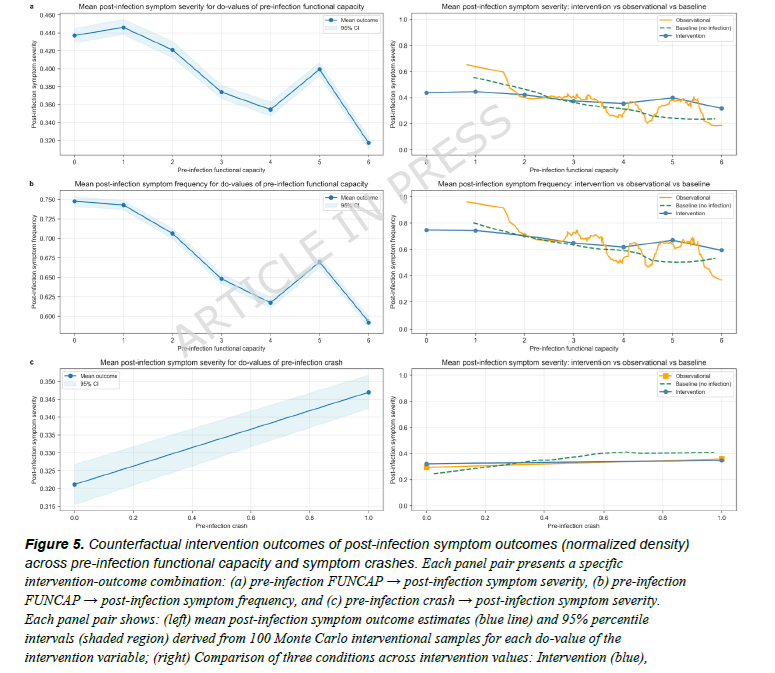
Each additional COVID reinfection measurably worsens symptoms and elevates resting heart rate in Long COVID and ME/CFS patients.
🚨Interesting Swiss study underscoring my ongoing #AvoidReinfection call!
➡️One of the first to apply causal AI to longitudinal reinfection data from a non-hospitalized LongC0VID/ME/CFS cohort.
➡️Manage your functional capacity (FUNCAP),
➡️Avoid reinfections and crashes(PEM),
➡️Or watch the damage accumulate!
#AvoidSars2 #AvoidReinfections
https://t.co/NCnYvS2pUz
One of my most striking observations in patients with dysautonomia is how small-fiber neuropathy (SFN) is never even considered, even following neurology and pain management evaluations - the burning pain, allodynia, paresthesias, and profound sensory hypersensitivity.