The United States has just hit a major debt milestone. Is this a signpost on the road to ruin? Or has the fear been oversold? Here’s what savvy investors are watching.
https://t.co/gGMMEd9orJ
The doomsayers treat the conflict in the Middle East as an existential threat. But speculative traders see the volatility as a chance to capitalise. Who’s right?
https://t.co/5gACqt63UQ
Waste. Inefficiency. Incompetence. Could AI offer us a way to cut through this nation’s bureaucratic fat? Here’s our contrarian take on what the future holds.
https://t.co/8RWvhT6qNN
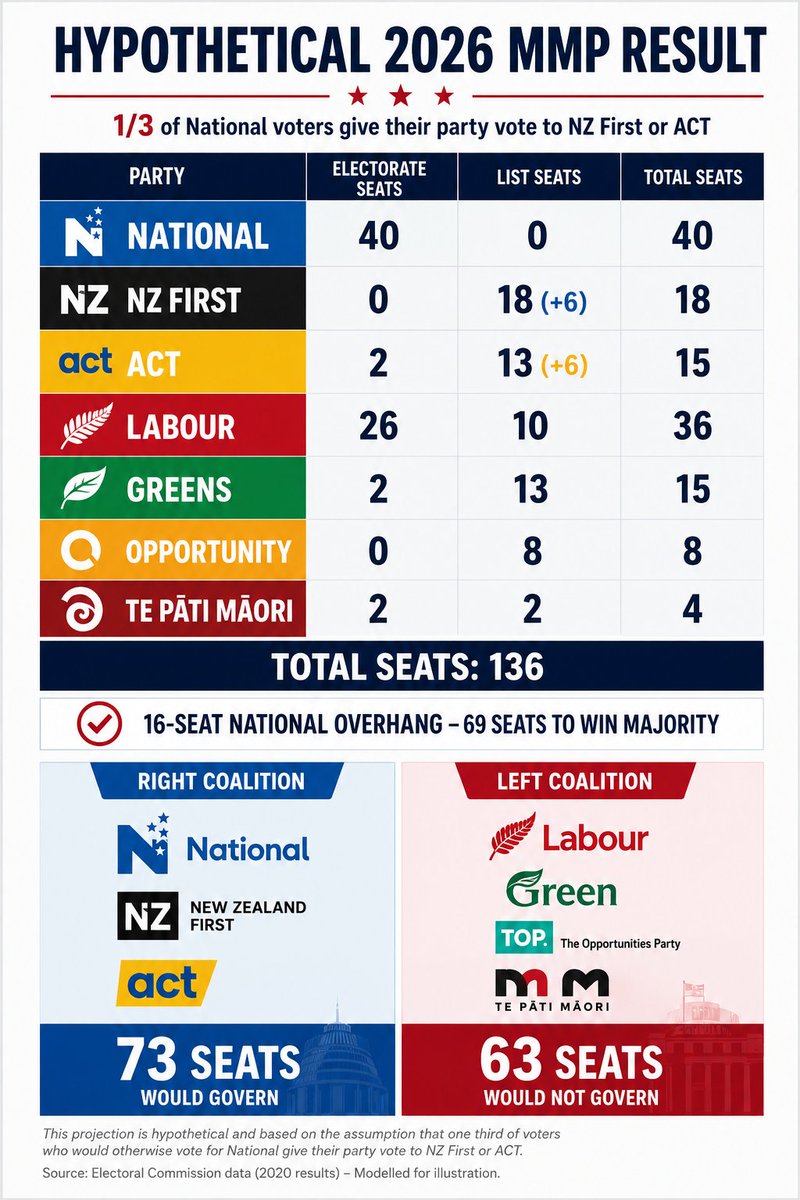
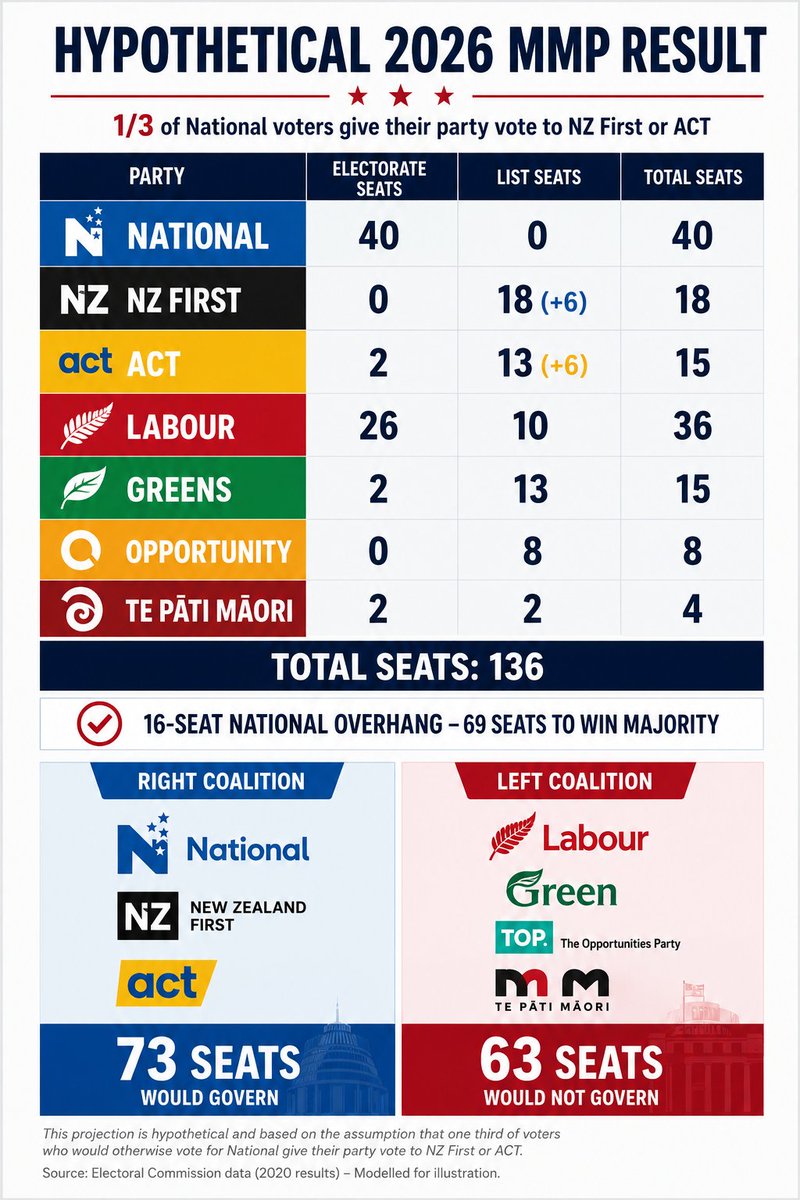
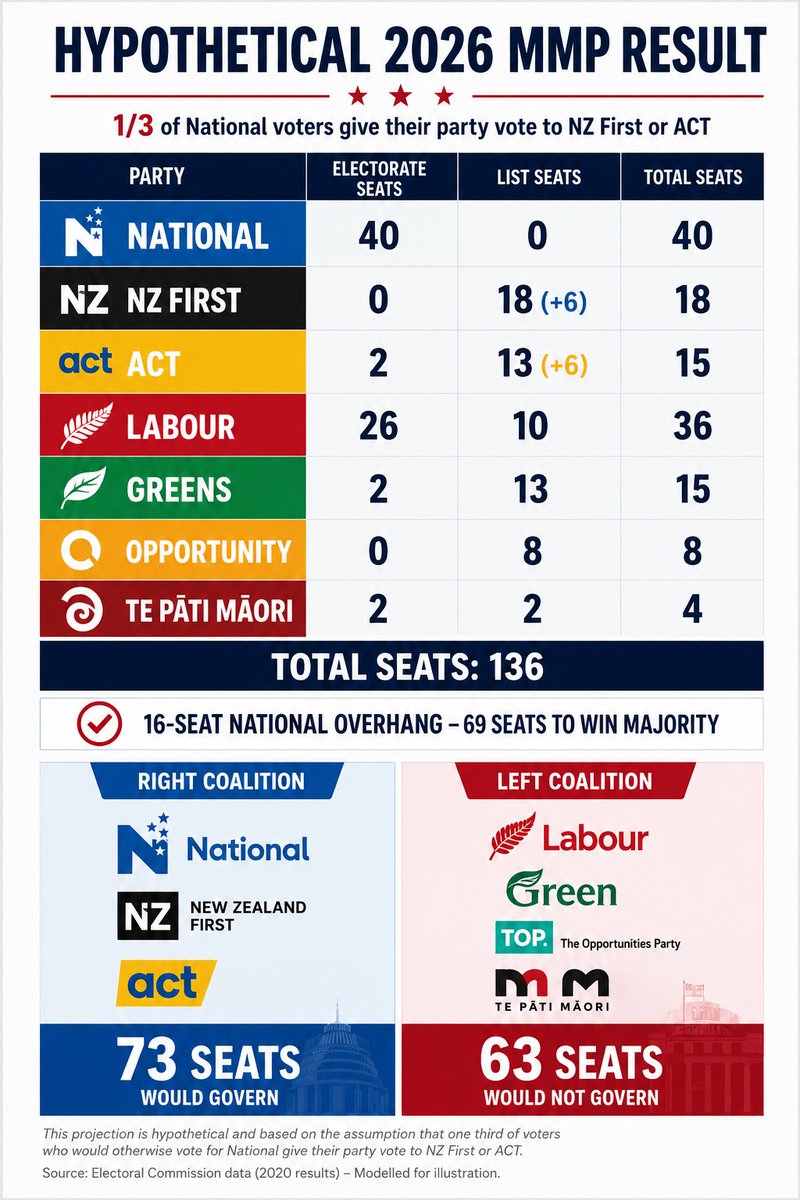
Do you actually want the centre‑right to stay in power? If you’re a National supporter, give National your electorate vote only — and give your party vote to NZ First or ACT. Here’s the strategic logic behind that view:
@gaye_ess If 1 in 3 National voters shift their PARTY vote to NZF or ACT, National still keeps ~40 electorate seats. With only ~20% party vote, they’re entitled to ~24 seats — the extra 16 become OVERHANG. NZF/ACT then grow on top of those 40, sharply changing the balance under MMP.
@ajthompson13 Yes, the system assumes stable voting patterns along electorate lines. Supplementary Member (SM) would likely have been a more reliable choice for NZ.
@bobmccoskrienz If 1 in 3 National voters shift their PARTY vote to NZF or ACT, National still keeps ~40 electorate seats. With only ~20% party vote, they’re entitled to ~24 seats — the extra 16 become OVERHANG. NZF/ACT then grow on top of those 40, sharply changing the balance under MMP.
@2ETEKA If 1 in 3 National voters shift their PARTY vote to NZF or ACT, National still keeps ~40 electorate seats. With only ~20% party vote, they’re entitled to ~24 seats — the extra 16 become OVERHANG. NZF/ACT then grow on top of those 40, sharply changing the balance under MMP.