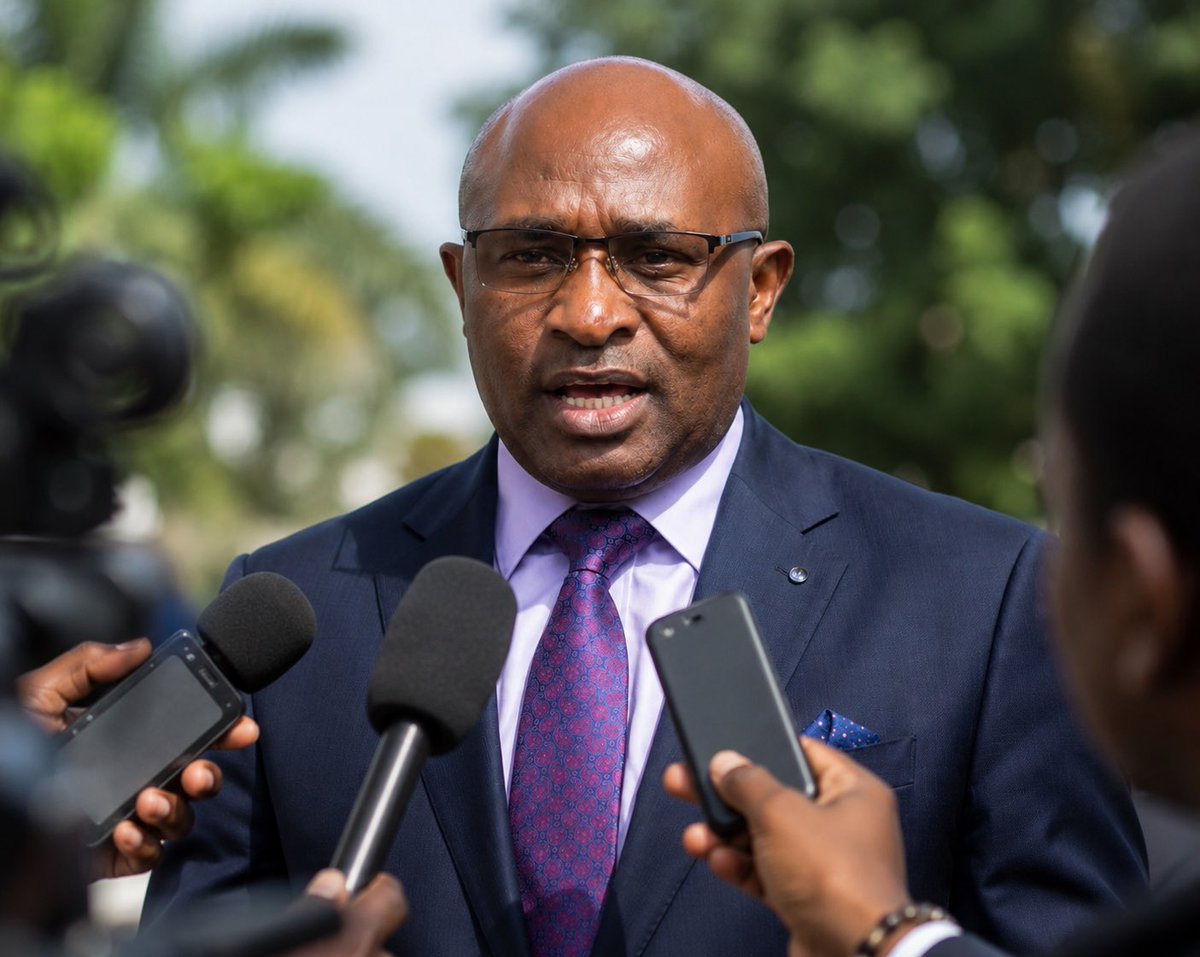
@ccgea1 An very grateful for your kind words and congratulatory messages. I cannot take them for granted. I hope I do not let you down. I therefore need your support always and to point out things that aren’t going well.
@ccgea1 Am humbled by the CCG fraternity! We share the joy and preparations for hard work. Let us put together our professional minds and support me and the office.
Thank you for your message on the plight of Uganda’s migrant workers. I appreciate your concern regarding this important matter. You are most welcome to come to my office so that we can discuss the issues affecting our migrant workers and explore possible solutions together. Certainly. Immediately after swearing in and handover.
Thank you as well for your congratulations. I look forward to meeting you and having a productive discussion.
I was pleased to engage with the Parliamentary Committee on Appointments, chaired by the Rt. Hon. Speaker of Parliament. Our discussions focused on key issues shaping Uganda’s labour sector, including labour externalization, worker protection, skills development, employment opportunities, and strengthening governance within the industry. I appreciate the Committee’s insightful engagement and commitment to advancing policies that promote decent work and sustainable employment outcomes for Ugandans.
Thank you for highlighting this important issue. Many public servants, particularly in the lower and middle salary brackets, face genuine financial pressures arising from rising living costs, family responsibilities, housing, education, and healthcare expenses. While figures such as 80% indebtedness should be supported by empirical data, the underlying concern deserves serious attention.
Government has already undertaken salary enhancement in selected sectors, but there remains a broader conversation about remuneration, purchasing power, and workforce welfare. Going forward, policy responses should be evidence-based, fiscally sustainable, and aimed at ensuring that public servants can maintain a decent standard of living while delivering quality services to citizens.
@peterokello88632, even Kenya’s process is not based on an open-ended public forum. It is governed by the Constitution of Kenya (2010), particularly Articles 118 and 124, the Public Appointments (Parliamentary Approval) Act, 2011, and the Standing Orders of Parliament. Public participation exists within a structured legal framework, not as a substitute for parliamentary scrutiny.
In Uganda, ministerial appointments are governed by Articles 113 and 114 of the Constitution, which require parliamentary approval, while Parliament conducts its business under its constitutional authority and Rules of Procedure. If your argument is that Uganda should reform its parliamentary rules to allow greater public participation, that is a legitimate legislative proposal. But that is different from claiming the current process lacks constitutional validity.
The real issue is not whether Uganda follows Kenya’s model. It is whether Uganda follows Uganda’s Constitution and laws. Constitutionalism means fidelity to the law as enacted, not to another country’s preferred practice.
That claim is strong on outrage but weak on law. Uganda’s Constitution requires Cabinet Ministers to be appointed by the President with the approval of Parliament under Article 113, and State Ministers under Article 114. It does not prescribe a public referendum or street-style vetting. The Appointments Committee operates under Parliament’s Rules of Procedure, which regulate committee work and oversight. Unless one points to a violated constitutional article, quorum rule, conflict-of-interest rule, or procedural breach, calling the process “meaningless” is political rhetoric, not legal argument. Institutional reform is welcome, but contempt is not constitutionalism.
Thank you for your thoughtful message. My engagements with the East African Community (EAC), IGAD, the African Union (AU), the International Conference on the Great Lakes Region (ICGLR), and the United Nations have provided valuable lessons on regional integration, labour mobility, social development, governance, and economic transformation.
I hope to draw upon these experiences to support policies that strengthen workers’ welfare, promote decent employment, enhance social protection, and contribute to Uganda’s development agenda. The opportunity to serve is both an honour and a responsibility that I embrace with humility and commitment.
Thank you for the congratulations and for raising a matter that is central to effective public service. Fair remuneration is not merely a welfare issue. It is also an economic and governance imperative. Evidence across countries shows that when compensation consistently lags behind the cost of living, the result can be reduced morale, lower productivity, talent attrition, and greater vulnerability to unethical practices.
Any reforms, however, must be fiscally sustainable and linked to productivity, performance, and broader economic realities. The goal should be a public service that is motivated, professional, accountable, and capable of delivering quality services to citizens.
Thank you for the kind words and confidence. I am deeply humbled by the trust placed in me and mindful of the responsibility that comes with it. Public service is ultimately about improving lives, creating opportunities, and ensuring that workers are empowered to contribute productively and share in the benefits of economic growth.
I remain committed to listening, learning, and working with all stakeholders to advance policies that promote decent work, productivity, fairness, and national development. Together, we can build a stronger and more prosperous future for all Ugandans.
My personal take is that Uganda needs an adjusted minimum wage, but not a blunt national wage shock. With a labour force of about 23.4 million and a highly informal economy, the optimal policy is sectoral wage floors tied to productivity, inflation, and firm capacity. Microeconomically, a wage above marginal revenue product can reduce labour demand, especially in low-margin sectors. China’s investment take-off shows that low unit labour costs can attract FDI, but only when combined with infrastructure, skills, and export discipline. Uganda should protect workers without pricing them out of jobs.
@EstherAnyakun Congratulations my sister, and colleague Minister. You have worked so hard and smart. You deserved this continuity in cabinet. Good luck in your new endeavours.
@Ademko9 Size tamamen katılıyorum ve bu kardeşlik ilişkisini daha da güçlendirmek için üzerimize düşeni yapmalıyız.
Allah, gönlünüzden geçen tüm hayırlı dilekleri gerçekleştirmenizi nasip etsin ve sizi başarıya ulaştırsın.