retired software consultant & freelance journalist, interests: Church of England, equality legislation, early and baroque music, modern railways and badgers.
@AlexHynes You would have thought that after the negative, and that's putting it mildly, responses to @Heidi_Labour 'Nationalisation' announcements, it would have dawned that it is an internal railway issue with no immediate impact on passengers. Why not celebrate integration successes?
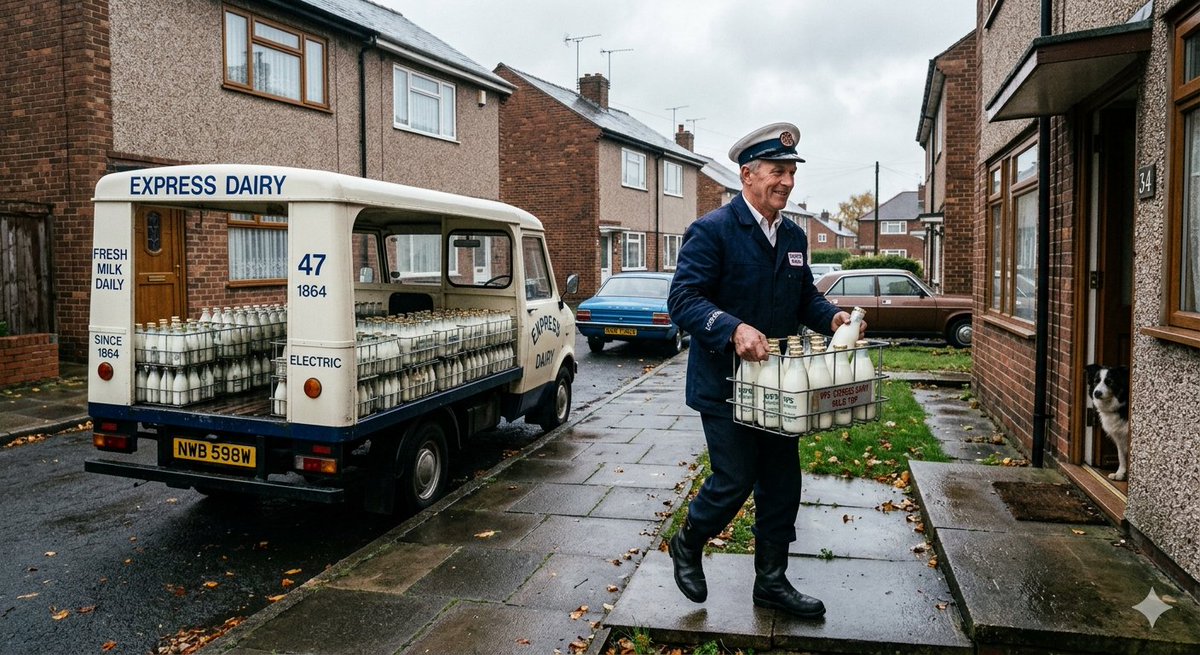
In 1975, more than 90% of milk in Britain was delivered to the doorstep by a milkman before seven in the morning. The float was electric. The bottles were glass. The pint left on the step was waiting for the kettle to go on.
By 2025, doorstep delivery had collapsed to under 3%.
The British milkman, at his peak, was one of the most visible faces of national life. He knew every customer on his round by name. He left bottles in the porch, on the wall, in the rack by the gate. He picked up the empties. The bottles made, on average, more than twenty round trips before being retired.
The milk came from a local dairy. The dairy was supplied by farms within a few miles. The milkman, the dairyman, the farmer, and the customer were, very often, on first-name terms.
Several things broke this between 1980 and 2000.
The fridge had arrived in nearly every British home by the late 1970s. Daily delivery became unnecessary.
The supermarkets moved into milk. Tesco, Asda, and Sainsbury's began undercutting the doorstep on price. The local dairy was bought out, consolidated, or closed.
The glass bottle was replaced by the plastic jug. Plastic doesn't get washed and reused. Each plastic container of milk now generates a piece of single-use waste that takes hundreds of years to break down.
What disappeared, with the milkman, was a piece of daily British life. The same person at your door every morning for twenty years. The clink of bottles at half past five while the rest of the street slept. The conversation when you were in. The note left under the bottle on the day of the funeral.
The milk is still being produced. It is just being produced further away, by fewer and larger farms, shipped further, sold in plastic, by people you will never meet.
A small British revival has been quietly building since around 2015. Milk & More now serves around half a million doorsteps. Independent dairies in Devon, Somerset, Yorkshire, and the Scottish Borders are running their own glass-bottle rounds. Slightly more expensive. Whole milk. Washed bottles. A man at the door who knows the dog's name.
If there is one in your area, sign up.
The system died because nobody fought for it.
It's coming back, in the same way, by the same people.