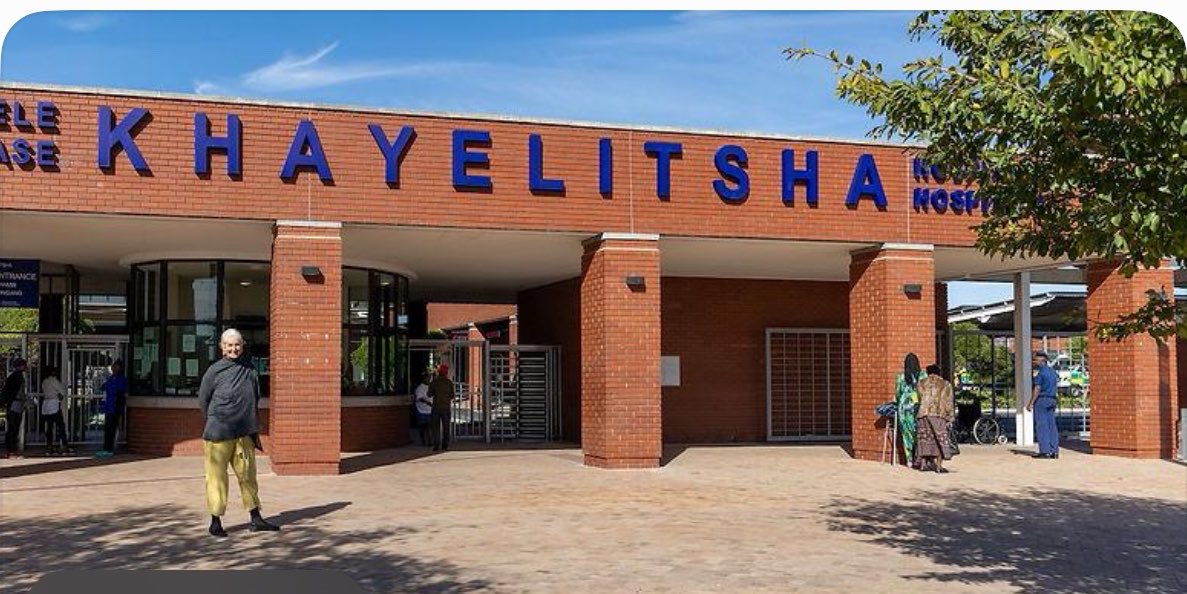
For those who are wondering why the #Halaal topic is such a big deal not only regarding the food you eat, but also on job creation here is a summary of The Khayelitsha District Hospital catering tender in the Western Cape and why it matters:
The Western Cape Department of Health and Wellness advertised a three-year catering contract, with a closing date of 13 February 2026. The tender required the successful contractor to apply for Halaal certification within two weeks of occupying the hospital premises. It also specified Halaal requirements for meals prepared for Muslim patients.
This prompted a public dispute as the Khayelitsha Caterers Forum argued that compulsory certification could exclude local businesses and raised concerns about religious freedom and fairness. More so, when more than 90% of the community served was non-Muslim.
The Western Cape Department of Health and Wellness said its responsibility was to provide safe, dignified and appropriate care, including meals meeting diverse dietary, medical and religious requirements. But, how is only offering one dietary requirement diverse? It doesn't make sense.
The Muslim Judicial Council Halaal Trust argued that Halaal certification is a food-preparation and handling standard that enables Muslim patients to eat hospital meals; it does not require non-Muslims to adopt Islam. But, no one said that it does make anyone Muslim who isn't. The argument is that it violates our religious rights and is being shoved down our throats because no one is offered alternatives. We are asked if we want vegan or non vegan meals. No one asks if we want Halaal or non halaal.
The constitutional concern with this whole #Halaal certification is that non Muslims are not being given alternatives because of their sincerely held beliefs. It's Halaal or nothing else. No one asks the patients at Khayelitsha hospital if they want it or would prefer non halaal. The decision is made for them ...for us.
The other issue is on businesses, especially small businesses. They lose these life changing opportunities because of a certificate and a practice that for the majority goes against their own religious beliefs. In our country with such high unemployment why is that being allowed? Why not have a separate caterer for the small Muslim population and then allow the small businesses to handle the rest? Everyone wins in that case. People need the jobs and business opportunities and this practice is contributing to the high unemployment in our country.
umuntu kuhlukene kathathu nokwelapha kanjalo futhi.
• Umoya
• Umzimba
• Nengqondo.
Traditional healers can document their knowledge for future generations but unfortunately in many cases, traditional healing is not simply about knowing which herbs treat which ailments. Otherwise everyone selling herbs at herbal markets as well as the children of traditional healers who grow up learning about these herb would automatically be healers.
Traditional healing isn’t like Western education, where you choose a career, look for a college, enrol and follow a curriculum. That’s why you’ll find some people who have completed ukuthwasa but still struggle to heal even a single person.
Those who are chosen to heal people traditionally will continue receiving guidance and messages even in their sleep. Nature speaks directly to them. It goes beyond the knowledge of herbs, it is understood as a calling that requires something deeper than what can simply be documented in books.
That’s why you’ll find someone who uses nothing but water to heal people yet the recoveries they witness are remarkable. It reinforces the belief that, in traditional healing, it goes beyond the herbs themselves. there are dimensions that cannot simply be explained by knowing the medicinal uses of plants alone.
My biggest wish is that our indigenous knowledge never falls into the wrong hands, where it can be tampered with, exploited and ultimately used against us.
Interesting backstory on how economics, energy security and public policy intersect. Did you know South Africa’s 120 km/h freeway speed limit not only has historical ties with road and automotive engineering, but with the oil price too?
South Africa converted to the metric system in 1971. With this, the old 70 mph open-road (highway) speed limit was rounded upwards to 120 km/h that year.
When the 1973 global oil crisis struck, driving slower became a critical economic intervention. Fuel conservation became a national policy priority: dropping open road speed limits to 80 km/h (and that of urban and rural roads even lower to 60km/h) and the strict enforcement of regulated mid-week trading hours and weekend closures of petrol stations.
As the crisis eased, the government began to see how restricted petrol sales had achieved more reserve savings, as compared to reducing speed limits. And so, in 1984 the 120 km/h freeway speed limit was reinstated.
Sometimes the most interesting lessons in economic policy are hiding on the highway!
#SouthAfrica #EconomicHistory #TransportPolicy #EnergySecurity #HowTheWorldWorks
SN: Recorded road fatalities fell by 26% in 1974; another important observation on how lower speed limits and enforcement can change driver behaviour and safety.
Ask ten economists to define South Africa's middle class and you will get ten different numbers.
BER says R5,000 to R20,000 a month.
Eighty20 says R8,000 to R30,000.
Discovery Bank puts it at around R8,300 to R29,200.
Then UCT Liberty Institute draws a completely different line R22,000 to R75,000 household income.
All of them are measuring the same thing. None of them agree on what it is.
The reason is not bad methodology. It is the inequality.
The median employee in South Africa earns roughly R6,000 a month. That is the actual middle of the income distribution. In most countries the median person is comfortably middle class. Here the median person is one shock away from being unable to pay rent.
So when researchers try to find the middle class, they are not finding the middle. They are finding the top 12 to 20 percent and calling it middle because calling it "rich" feels wrong.
Think about what the markers actually are. Medical aid. A home loan. Meaningful personal income tax. Each of these covers a small slice of the population. The person earning R22,000 household has none of the security that "middle class" implies in other contexts. But they also do not qualify for any government support. They sit in that gap too poor to be comfortable, too "well off" on paper to get help.
That is where the UCT definition becomes useful. It is not about lifestyle. It is about policy. R22,000 is roughly where subsidy cut-offs kick in. R75,000 is where you stop being squeezed entirely. The middle class, in this telling, is defined not by what you have but by what you do not qualify for.
Now compare this to the political reality.
The person earning R5,000 a month is surviving. The person earning R22,000 is stressed. The person earning R75,000 is doing fine but anxious about load shedding and insurance premiums. None of them feel middle class. None of them feel secure.
That is the uncomfortable thing about inequality. It does not just distort the numbers. It distorts how people see themselves.
A household at R25,000 a month in Johannesburg is statistically in the top quintile. They do not feel like the top quintile. They feel like they are barely keeping up. And in a very real sense, they are.
So the question is not where to draw the line. It is whether the line matters at all when everyone on either side of it feels like they are one event away from falling through.
The destruction of black communities, black families was systematic, policy driven and executed with political will over prolonged periods . How can their upliftment be ad hoc, haphazard, organic and unintentional?
This is what I gathered from this:
Funds (Your money) from your account gets put in the air (reserved) by the merchant when you make a payment.
That payment is not cleared until the merchant themselves banks it from their side, however, FNB still deducts it from your available monies. That means you will only see this transaction appear on your transaction history once banked by the merchant.
But here is where the deception occurs, or a “system exploit” which the bank benefits from. Knowingly or unknowingly, my money is on the former.
If you run your account to zero rands, and that transaction that was reserved is finally banked by the merchant, FNB’s system treats it as a negative balance (even though your funds were in the air)
They then charge you an item paid fee and extract fees from this system exploit.
Basically, it’s a deceptive practice and the only way not to be punished by it is to ensure your account isn’t on R00,00 when those reserved funds are banked.
This is a massive scandal if the bank knowingly does this.
📢 Ransomware Alert: 🇿🇦
BCX (https://t.co/m7fe8rFEXz), a South Africa-based IT Services and IT Consulting organization, has reportedly fallen victim to INC RANSOM ransomware.
🔍 Key Details:
🛡️ Threat Actor: INC RANSOM
📅 Reported on: 24/09/26
⚠️ Data Compromised: 500 GB
An unsecured database.
Not hacked. Not breached. Just left open.
GroundUp's Joel Cedras - a Stellenbosch computer science student - looked at what the Gauteng e-Panic Button app connected to. He did not break in. A reasonably technical person could have done the same.
What he found was not a small leak. It was everything.
What was exposed.
Crime reports - including domestic violence and assault. Names. Phone numbers. Email addresses. Vehicle registration numbers. GPS coordinates attached to every report. Location histories - where people moved, when, at what speed. Over 5,000 uploaded photos. One-time PINs and login codes tied to phone numbers. Names of people accused in reports.
Think about the domestic violence survivor who pressed that button. Her location history. Her photos. Her phone number. All sitting in an unsecured database that anyone could query.
The response.
GroundUp notified the Gauteng Department of e-Government and the contractor - Evolve Value Added Services - on 21 September. Evolve closed the holes quickly.
A week later. The provincial government had issued no public statement. No confirmation that affected users would be notified.
This is a panic button app. The people who used it were in distress. And the department could not be bothered to tell them their data was exposed.
The contract.
R269 million. R131.3 million already paid. 180,000 downloads claimed.
For context: Evolve Value Added Services - the contractor - left a database unsecured that a student could access without hacking. R131 million bought you an open door.
POPIA requires notification.
The Protection of Personal Information Act is clear. After a security compromise, both the Information Regulator and the affected people must be notified. That step appears to still be outstanding.
The DA has said it will refer the incident to the Information Regulator and wants the department called before the legislature's e-Government committee.
The uncomfortable part.
This is not a sophisticated attack. This is negligence. The kind that does not require a foreign adversary. Just someone who did not do their job.
The panic button was meant to make people feel safe. Instead, it made them visible.
The question is not whether the hole got patched. It got patched the same day GroundUp called.
The question is how many other holes exist in the R269 million worth of systems Gauteng is paying for - and whether anyone will check before the next student looks.
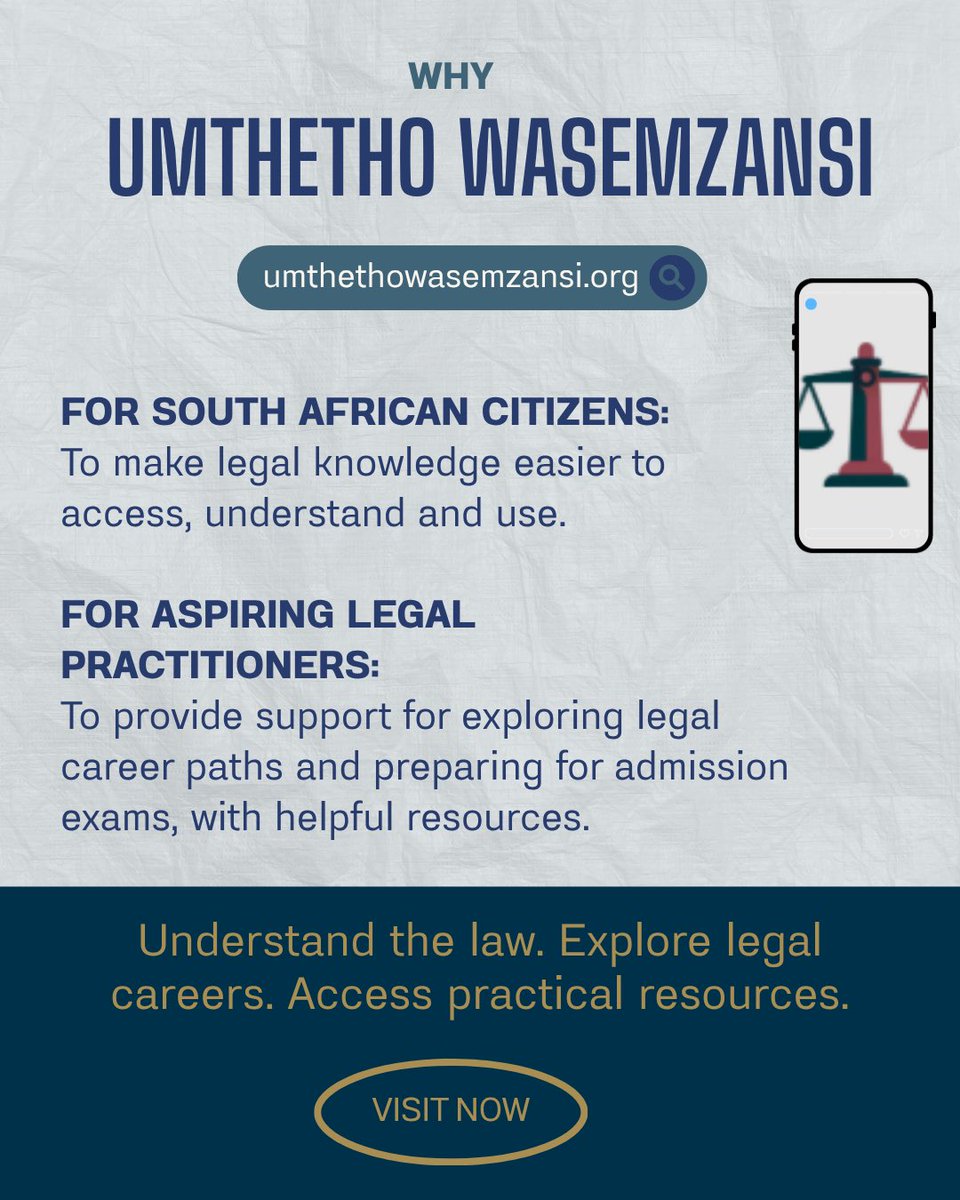
Umthetho waseMzansi is officially live. ⚖️
I created Umthetho waseMzansi to make legal knowledge easier for South Africans to access, understand and use, while also providing aspiring legal practitioners with helpful resources for exploring legal career paths and preparing -
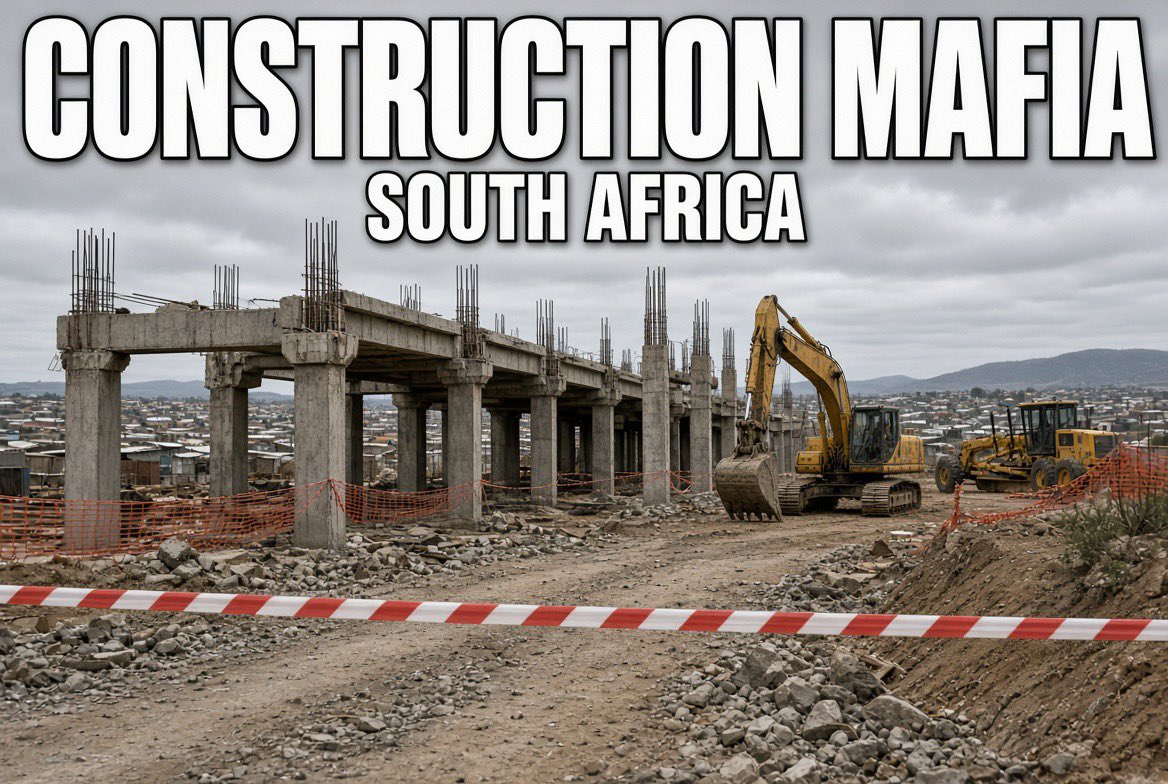
The “Construction Mafia” in South Africa is no longer a localised provincial site invasion. It has become a national extortion economy affecting public infrastructure, inflating project costs, and deciding which schools, roads, clinics and water works get built.
It began in KZN as armed “business forums” demanding cuts of contracts. It now sits in procurement, subcontracting, plant hire, security and, in some metros, and the municipal supply chain itself.
Government estimates the direct cost in lost economic output to about R17 billion a year, “with billions more lost before a project gets off the ground.”
In 2024, Department of Public Works and Infrastructure said 164 of 206 of its own infrastructure projects were delayed (79%), with R1.3 billion spent that year and R2.9 billion over several years still incomplete. Causes included late client payments, weak project control, contractor default and site disruption.
The scams:
1. Groups arrive armed, claim to represent “the community,” and demand 30% of contract value, nominated subcontractors, or cash. Work stops until they are paid or given a stake.
2. A 30% demand of local partners. National Treasury has confirmed the 30% rule does not apply to private contracts and is not a licence to extort. The syndicates treat it as one.
3. Forced labour and dummy SMMEs. Contractors are compelled to put forum-linked companies on the books. Many exist only on paper. Unqualified labour is forced onto site. Quality collapses; costs rise.
4. Equipment theft and sabotage as collection. Graders, generators and copper are stolen or sites are vandalised until protection money is paid.
5. Front companies and recycling. After blacklisting, directors resign, the entity is renamed, family members become new directors, and the same network bids again.
2014-2015: Origin: Two KZN township groups - Delangokubona Business Forum and KwaMashu Youth in Action - began invading sites. They later formed the Federation for Radical Economic Transformation, subsequently renamed the Black Business Federation. Delangokubona still operates separately in a loose alliance. The method was copied into Gauteng from 2017-18 and then into the Western Cape and Eastern Cape.
2015-2019: As specialised policing and prosecution capacity across the state thinned during the State Capture years, the forums professionalised. Industry accounts say almost all major construction sites in KZN were affected in this window. In January 2019 Aveng–Strabag terminated a R1.65 billion Mtentu Bridge contract on the N2 Wild Coast after 84 days off site following armed threats and protest action. A R11 billion Montrose Mega City housing project in Randfontein, launched in 2017, stalled after 2017-18 with contemporaneous accounts citing “forum demands” and “failed bulk services”. The site was later stripped.
2019 : SAFCEC and GI-TOC put 183 infrastructure projects worth more than R63 billion as disrupted by that year. Public Works and National Treasury still use it as the official baseline - roads not built, clinics delayed, water schemes stalled.
2020-2024: Extortion cases nationally (all sectors) ran at 6 056 reported between April 2019 and March 2024, with 2 389 arrests and only 178 convictions. Construction remains the primary subset.
Links with taxi associations as enforcers were now being recorded.
At the Lower uMkhomazi water project an altercation left a ward councillor and two security guards dead.
2024 onwards: The Durban Declaration between Public Works, Treasury and SAPS created hotlines, economic-infrastructure task teams and a blacklisting push with more than 770 cases reported.
There is still no official figure for what the “construction mafia” itself took in cash, dummy subcontracts or protection fees. Treasury and Public Works put more than 180 projects worth R63 billion as disrupted since 2019 - the value of sites hit, not money stolen - while estimating about R17 billion a year in lost output.
Attention FNB homeowners! 🚨
If you have had your home loan for more than 24 months and your credit profile has improved, you can request a lower interest rate.
Download the attached form to request your FNB rate review today and lower your monthly payments.
https://t.co/HJJVWAUp3j
I've sad it before and I'll say it again - throwing the South African National Defence Force at illegal mining is about as helpful as throwing the South African National Defence Force at gangsterism in the Western Cape. It fundamentally misdiagnoses the problem and will never work.
Illegal mining is not simply a problem of people mining without permits. It is well-organised crime.
Whenever illegal mining comes under heightened scrutiny, particularly after incidents such as the recent shooting on the West Rand in which 17 people were killed, the response tends to follow a familiar pattern. More police officers are deployed on the ground or, as we have now heard, the South African National Defence Force is brought into whatever operation is underway.
But an important part of the discussion is consistently missing. Whenever we see arrests of illegal miners, the images are invariably the same: dishevelled, filthy, sorry-looking people being pulled out of holes in the ground, often without shoes, before being processed through the criminal justice system. Frequently, their immigration status becomes an immediate focus.
But those people are only one part, and probably the lowest part, of an organised crime operation. The investigations, or at least what we see publicly of them, seldom appear to move meaningfully in either direction from the miners themselves.
Consider first what lies below or behind them in the supply chain.
Illegal miners operate in an environment in which they require tools and materials to conduct their trade. They need explosives. They need chemicals. They need equipment and machinery to extract and refine ore. All of this has to come from somewhere.
There must be suppliers who enable them to do what they do. Who supplies the explosives? Who supplies the chemicals? Who provides the equipment? Who transports these materials to mining areas? Who pays for them?
That supply leg forms part of the organised crime enterprise. Yet it seldom appears to be exposed when illegal-mining operations are disrupted. The focus remains overwhelmingly on the individuals physically underground.
If you don't disrupt the supply network, you don't disrupt the organised crime operation.
Then there is the other direction, and perhaps the more important one, because this is where the underlying financial incentive lies. Once the miners have extracted the ore and refined it into gold, who buys it?
Who pays them? Who takes possession of the gold? How are those payments made? Is money being transferred elsewhere, including to families in the miners' countries of origin? Who are the people actually providing the financial reward that makes the entire operation worthwhile?
And once the gold has been bought, where does it go? At some point, presumably, illegally mined gold must either be introduced into a legitimate market or moved through an illicit one. If it is being regularised, how is that happening? Who is facilitating it? If it is instead being smuggled elsewhere, where is it going, and through which networks?
Neither possibility suggests a handful of desperate people operating independently in abandoned mine shafts. It suggests networks capable of purchasing unregistered gold, moving significant amounts of money and transporting a valuable commodity. It suggests suppliers, buyers, financiers, intermediaries and logistical networks.
These are fundamental questions about the organised crime surrounding illegal mining, yet they rarely seem to occupy the centre of the public conversation.
And this raises another important question: what does simply throwing more boots on the ground - more patrolling police officers, or the SANDF - actually do to address the investigative capacity within the SAPS to properly investigate organised crime?
Identifying and dismantling organised crime requires a far more sophisticated policing approach. It may require the infiltration of criminal networks. It requires informants within those networks. It requires investigators capable of following financial and logistical trails beyond the people encountered underground. And it requires an integrated approach between the SAPS and the National Prosecuting Authority, where investigators and prosecutors work together to build cases using the powerful legislation already available to them, including the Prevention of Organised Crime Act, or POCA.
Those are the kinds of tools that need to be used to identify and dismantle organised crime networks. Instead, the focus continues to fall on the superficial and most visible aspect of the problem: the men underground.
Instead, when we have an incident in which it is alleged that members of one group of illegal miners murdered people associated with a rival group, the focus once again settles on the lowest foot soldiers in the network. It becomes a localised dispute between rival groups of zama zamas.
But the shooting itself may be only one manifestation of a much larger criminal economy. We look for the people who pulled the triggers. We look for the people underground. We deploy more police officers, or soldiers, to the affected area. Meanwhile, the people supplying the criminal economy and the people buying its product remain largely absent from the conversation.
And until those parts of the network are brought front and centre, we will continue having the wrong discussion - in government, in the media and in the broader public discourse.
That also means we cannot properly hold the authorities accountable for dismantling these networks. Because fundamentally, this is not an illegal-mining problem that can be understood simply as people mining without permits. It is an organised crime problem, and the state does not have the capacity nor expertise to adequately respond to it.