@Holden_Culotta@RobertKennedyJr@FoxNews The 34 trillion dollars is sitting in an account, you could call it a savings account at the fed. In the form of bonds, a financial instrument used to pay the elites free money. Every time the Congress spends money into existence. @FindingMoneyDoc
⚠️ Most people still don't get it. In 6 months your new car with be a data harvesting machine.
It will collect:
-Risk scores
-Attention data
-Behavioral profiles
-Location + routine patterns
Your car won’t just watch you...
It will monitor you, rate you, and monetize you.
#Fooked?
Remember when Trump had all the farmers at the White House in March bragging about the Ethanol?
Full video of event: 👇🏻
https://t.co/4lFkZVj0sG
“Among the announcements, Trump said his administration issued an emergency order this week allowing immediate sales of E15 fuel — a gasoline blend containing 15% ethanol — and called on Congress to authorize E15 sales year-round.”
United States v. Green (5th Cir. 2022)**: The Fifth Circuit reviewed a challenge to jury instructions. The case contains a citation to Juilliard and notes that courts have long held such legal tender arguments to be frivolous.
First Bank & Trust v. Scottsdale Ins. Co. (E.D. La. 2015)**: A federal district court noted that a party failed to provide Louisiana law to support its argument about the validity of payment by check, citing Juilliard.
L.R. Nixon v. Phillipoff (N.D. Ind. 1985)**: A federal district court found that a plaintiff misinterpreted the law regarding legal tender, citing Juilliard.
Leitch v. Dep’t of Revenue (Or. T.C. 1982 & 1994)**: In two separate rulings (1982 and 1994), the Oregon Tax Court rejected arguments that Federal Reserve notes must be converted to gold and silver before taxes could be assessed, citing Juilliard.
Radue v. Zanaty (Ala. 1975)**: The Supreme Court of Alabama declared statements on checks demanding payment only in gold or silver coin "null and void," citing Juilliard.
Edgar v. Inland Steel Co. (7th Cir. 1984)**: The Seventh Circuit found an argument that federal reserve notes are not "money" because they are not backed by gold to be untenable, citing Juilliard.
United States v. Rigen (8th Cir. 1978)**: The Eighth Circuit noted that Article I, § 10 of the Constitution does not "limit Congress' power to declare what shall be legal tender for all debts," citing Juilliard.
United States v. Gardiner (9th Cir. 1976)**: The Ninth Circuit rejected the argument that no tax was owed because Federal Reserve notes do not constitute "lawful money," citing Milam v. United States, which in turn relied on Juilliard.
Milam v. United States (9th Cir. 1974)**: The Ninth Circuit Court of Appeals rejected a claim that a $50 Federal Reserve Note must be redeemed in gold or silver, citing Juilliard to affirm Congress's power to establish a national currency.
The Gold Clause Cases (1935): A series of Supreme Court cases that upheld the Roosevelt administration's adjustment of the gold standard during the Great Depression.
Congress has broad, exclusive, and constitutionally sanctioned authority to regulate the nation's currency—including coining money, issuing paper currency, and making it legal tender. That is the law as established by the Supreme Court in Juilliard v. Greenman and subsequent.
In the American constitutional system, sovereignty resides in the people, not in Congress. The federal govt, including Congress, is a govt of delegated powers—it can exercise only those powers granted by the Constitution.
The Supreme Court has consistently construed this grant as authorising Congress to regulate every phase of currency, including the issuance of paper money and the making of such notes legal tender.
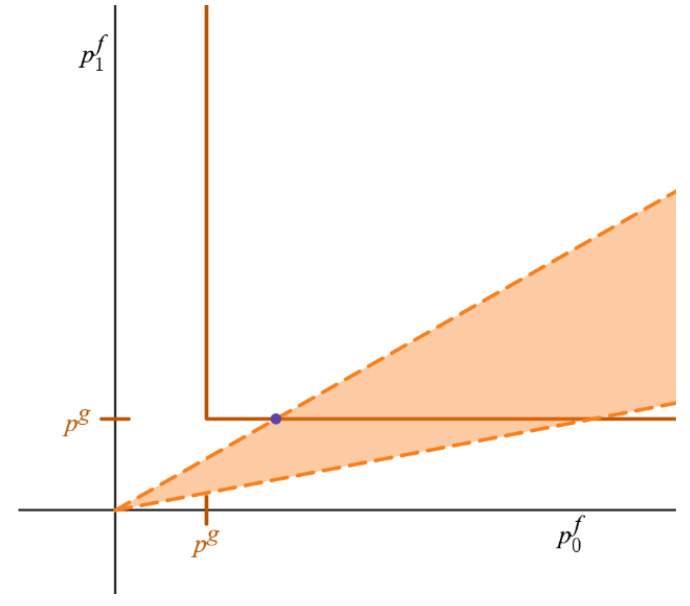
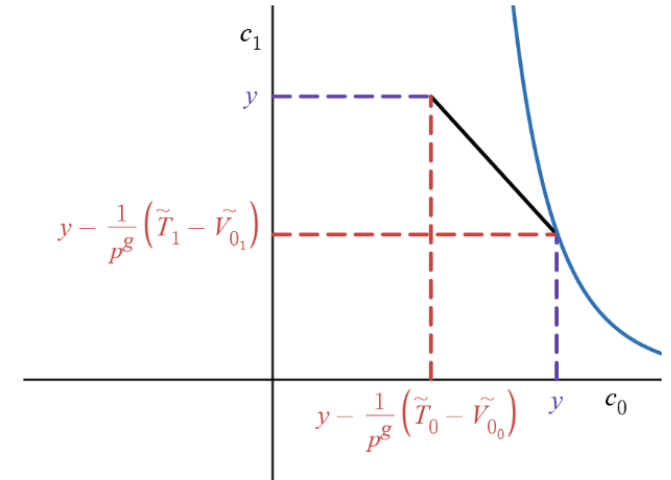
Why does money have the value that it has? This is a surprisingly difficult question in economics.
In some newly-updated work, I formalize the answer to this question that comes from Modern Monetary Theory (MMT), but using standard mainstream modeling techniques.