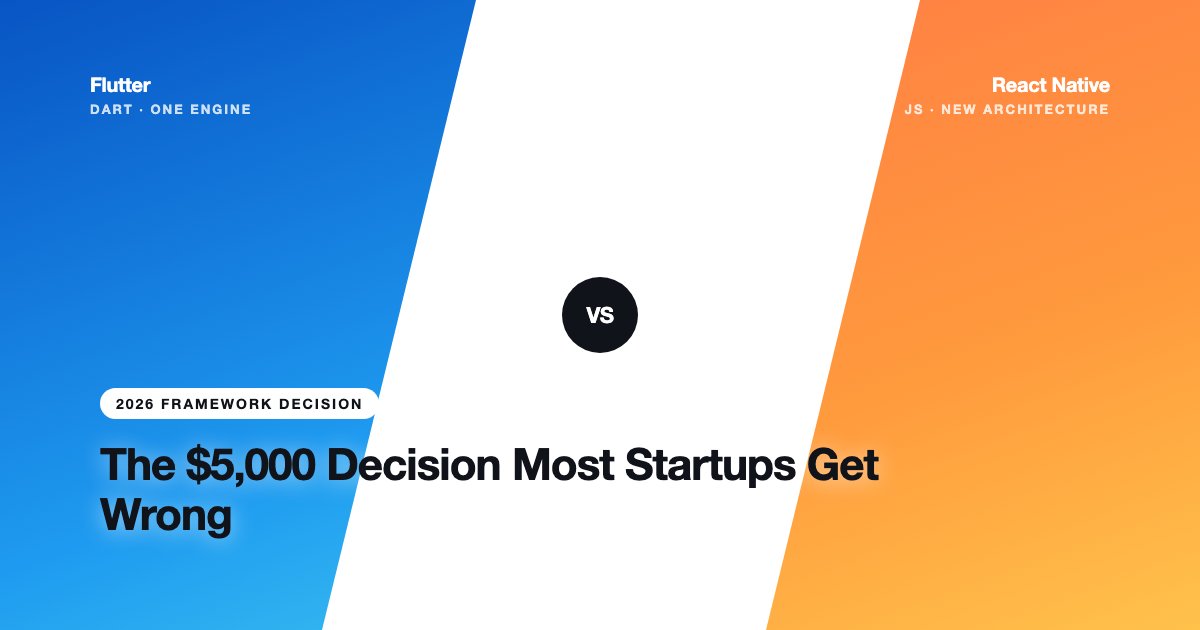
The real axis: React Native if your team already lives in JS. Flutter if you want pixel-identical UI everywhere and don't mind Dart.
#Flutter#ReactNative
The Bridge Everyone Warns You About in React Native Doesn't Exist Anymore
A founder I know burned roughly $5,000 and four months building the same app twice — wrong cross-platform framework the first time.
If your mental model of React Native is "slow because of the JS bridge,"
Shopify's Shop app, Amazon, Instagram. Both are past "is this production-ready."
Most of the market-share and job-count stats floating around this debate are SEO content echoing itself — skip them. Hiring cost has converged to roughly the same $40–180/hr band either way.
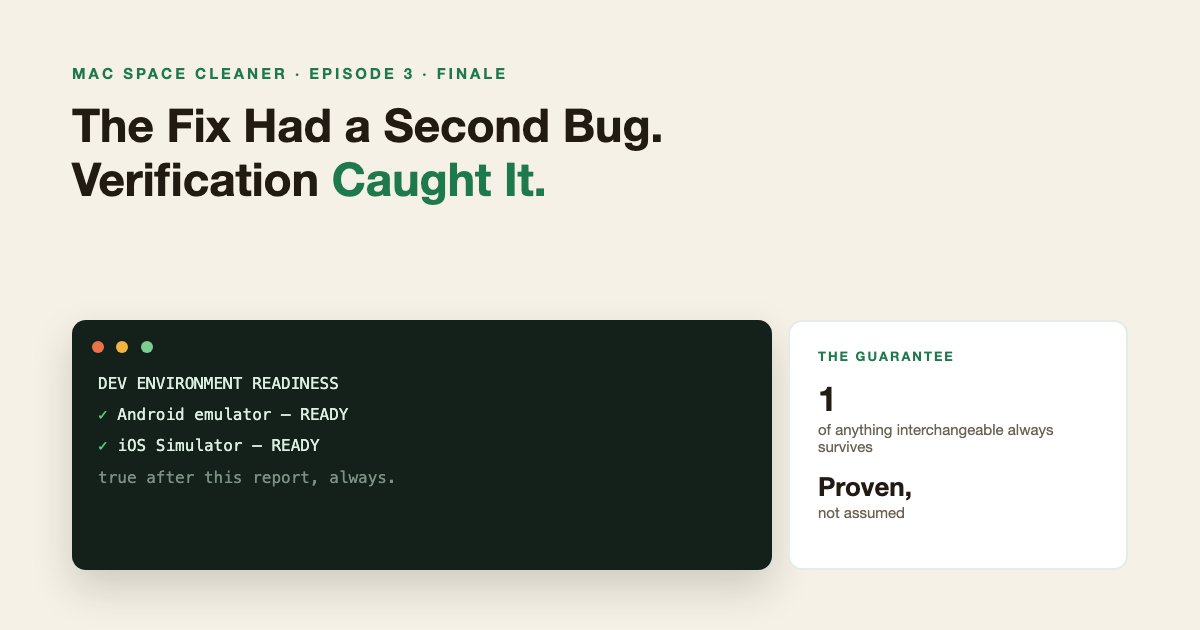
depth. Never matched anything, ever. Fixed. Proven, not assumed.
Now every report opens with a readiness check:
✅ Android: READY
✅ iOS Simulator: READY
A guarantee nobody can see is a guarantee nobody can verify.
Open source: `https://t.co/tJYlQezqUc`
#Flutter#OpenSource
Mac Space Cleaner — Ep. 3 (Finale)
An Android system image vanished. Every image was one category — approve it, all gone.
New rule: at least one of anything interchangeable always survives.
Verifying that fix found a second bug: the existing protection compared paths at the wrong
Mac Space Cleaner — Ep. 2
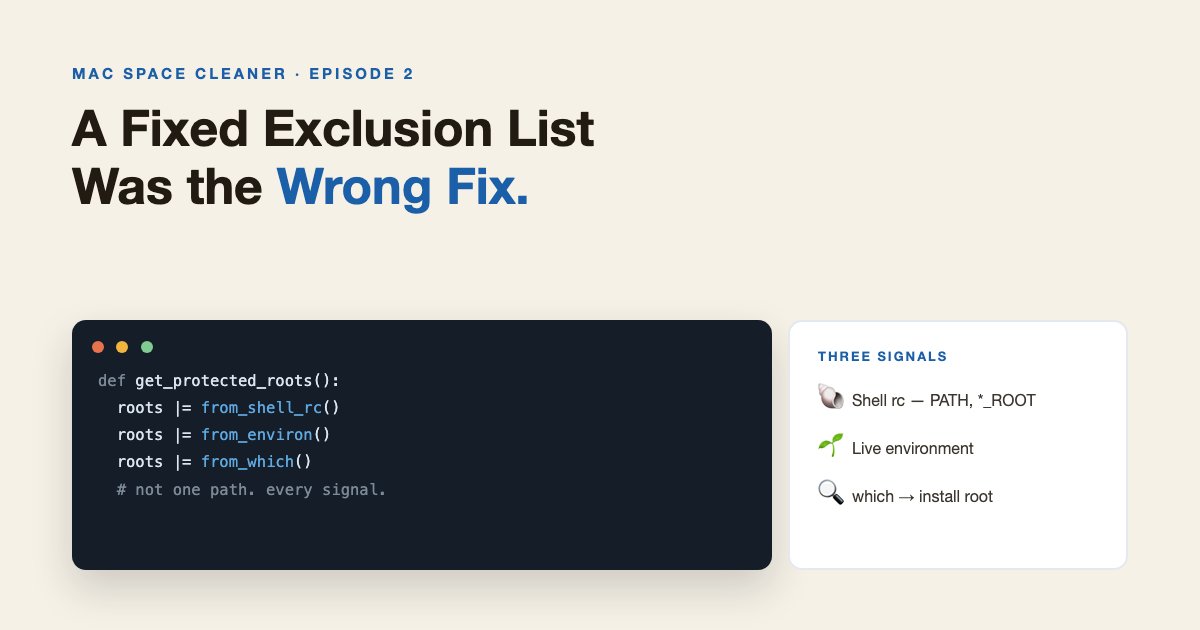
A fixed exclusion list was the wrong fix.
Naming one SDK path would only protect that one name.
Built dynamic discovery instead:
🐚 Shell rc PATH / *_ROOT / *_HOME
🌱 Live environment
🔍 which, resolved to install roots
Then filtered every scanner's output against it: never propose deleting a path that's an ancestor of a protected one.
It broke itself once before shipping — parsing `$PATH` naively crashed the exact check meant to prevent this. Fixed that too.
Widget Previews graduated to stable — inspect one widget without rebuilding the whole app.
Flutter's own auto-generated changelog barely mentions either of the last two. You have to read the actual blog post to catch them.
#Flutter#FlutterDev
Three things shipped in Flutter 3.47 that aren't cosmetic — and one of them comes with a deadline.
material_ui / cupertino_ui hit 1.0, split from the core SDK. The old bundled libraries get formally deprecated this November.
Migration is one command — dart fix --apply --code=migrate_design_widgets — trivial to run, easy to deprioritize. Don't.
Impeller is now default on macOS, Windows, and Linux, closing the last rendering-consistency gap (iOS always had it, Android since 3.27).
Should a startup use Angular in 2026? For most: no. For one specific kind: genuinely yes. The reasoning flipped completely from five years ago, which is the actual interesting part.
The old case against Angular was technical — heavy, Zone.js watching everything. Mostly gone:
team doesn't have to invent. If your founders came from Angular shops building something with real architectural complexity from day one, that trade favors Angular specifically.
Median startup: React, not close. Startup that knows why it wants enforced architecture:
filesystem/shell interop
🐚 Bash — zero deps, but unreadable fast once its safety-critical
1,943 lines later: zero 3rd-party dependencies.
Pick d language that makes d safety model easy 2 write — not d one already open in another tab.
`https://t.co/tJYlQeyT4E`
#Python#OpenSource
Node.js matched my stack. I pickd Python anyway.
3 real options for a tool that walks a filesystem & deletes things: Python, Node.js, Bash.
🐍 Python — stdlib covers everything: os.stat, plistlib, subprocess, argparse
📦 Node.js — matches daily tooling, not built for heavy
Trash emptied. Gone.
42.79GB moved in one run. 8.2GB of it: the SDK.
A confirmation dialog only protects you from what it knows to ask about.
Next: the fixed list that wasn't enough 🔗
#Flutter#macOS
Mac Space Cleaner — Ep. 1
Every confirmation prompt fired. It still deleted the wrong thing.
Real guardrails:
📋 Full report first
🔍 Tiered confirmation
🗑️ Trash, never `rm`
Then accidentally: a generic scanner flagged a live Flutter SDK as "just a big folder." Approved.