In another universe, you missed your kid's recital. Your mom's birthday dinner. That anniversary celebration with your person.
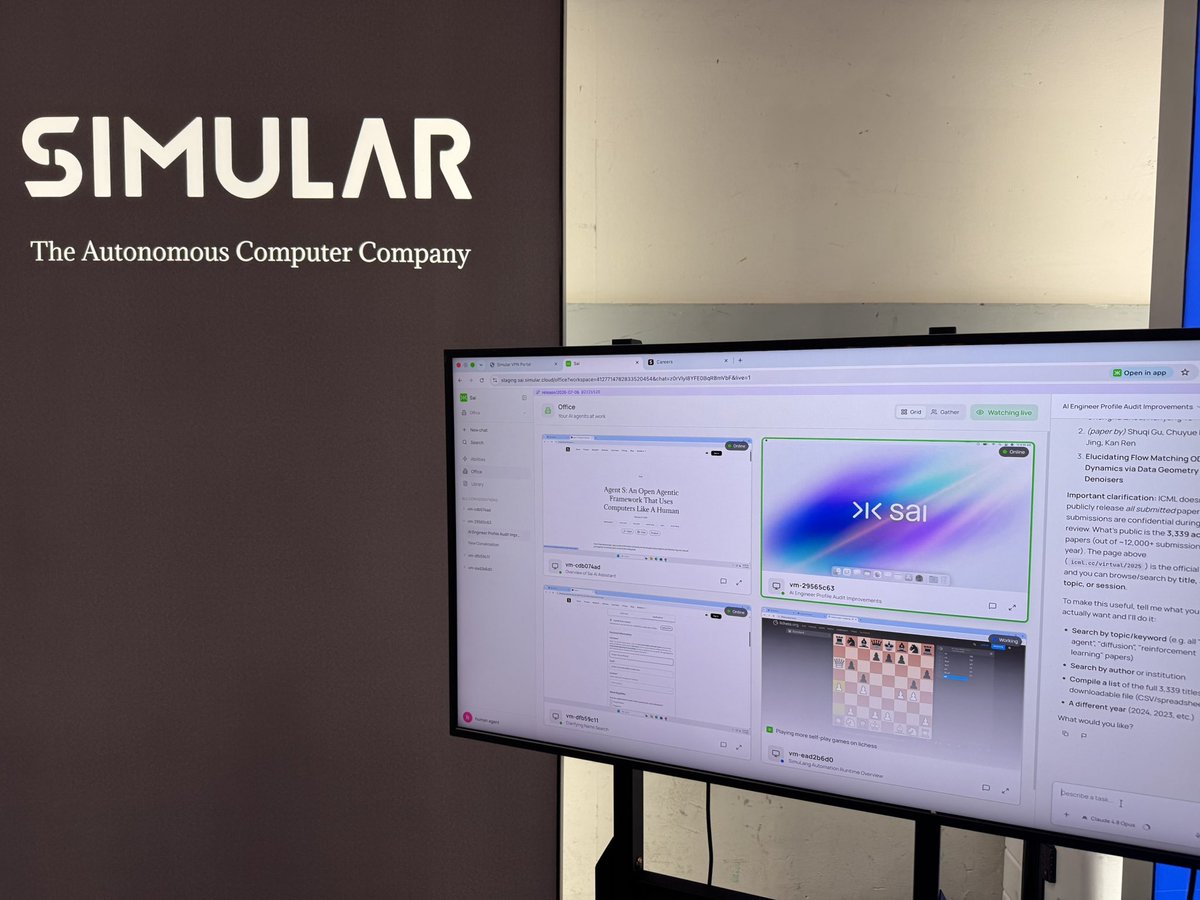
In this one, you have 𝐒𝐚𝐢.
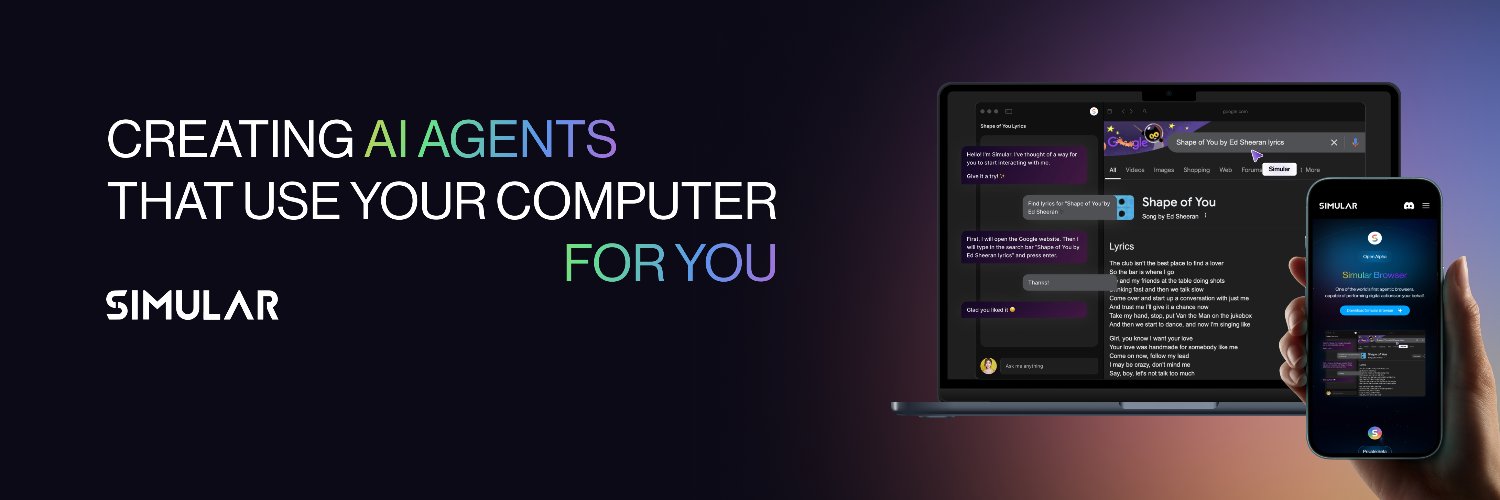
The AI co-worker that does your computer work so you don't have to choose.
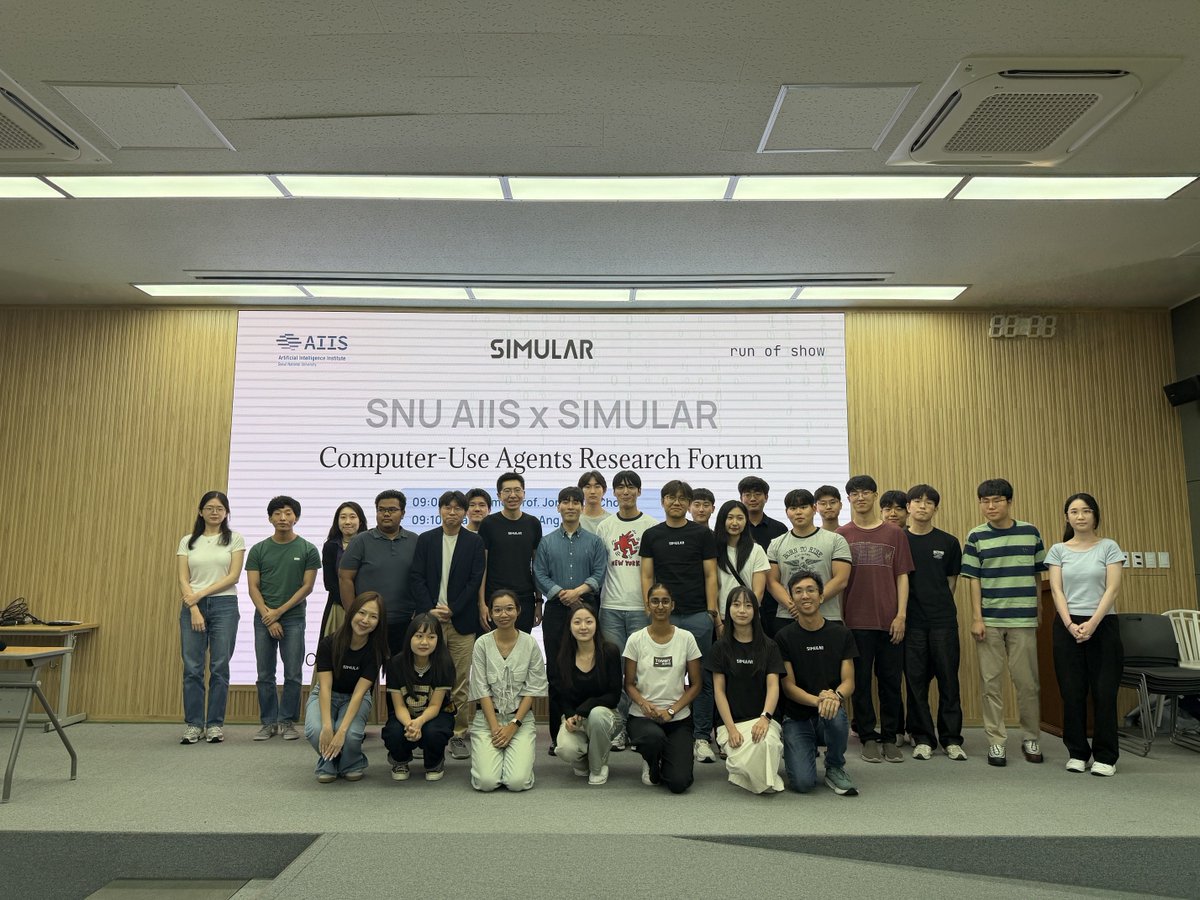
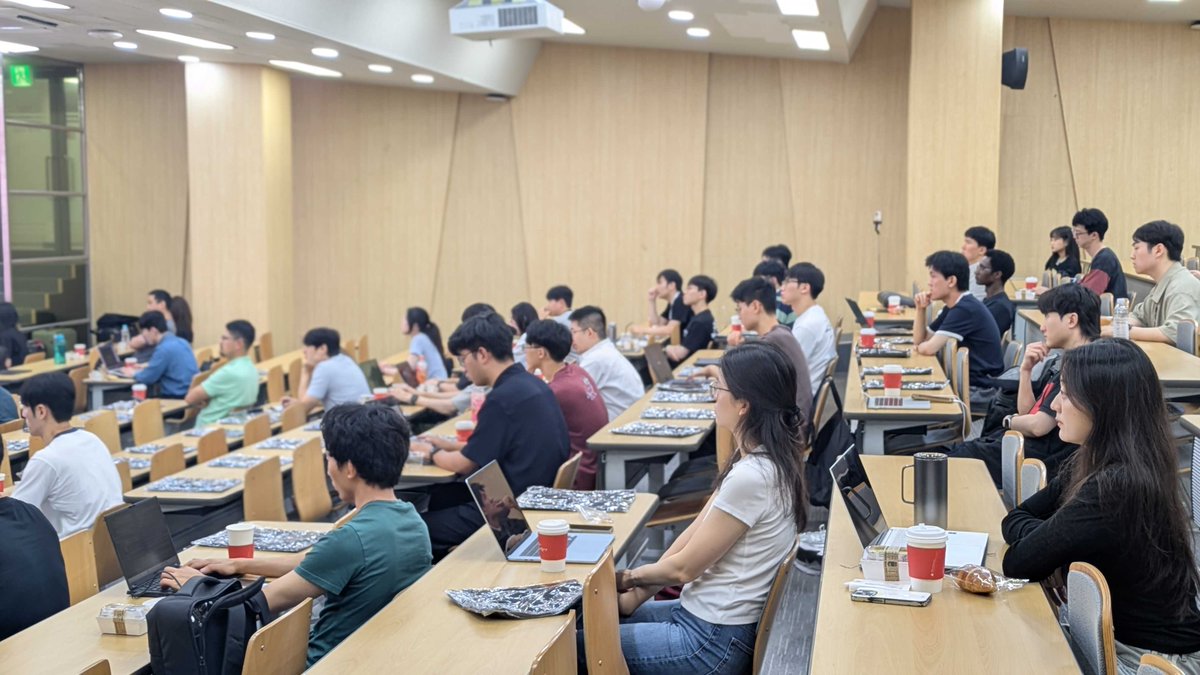
Wrapped our @SeoulNatlUni AIIS x @SimularAI Computer-Use Agents Research Forum in Seoul this morning 🇰🇷 #ICML2026
And a fireside that didn't hold back 🔥 thank you @ritacyliao moderated this session with Prof. Jonghyun Choi (SNU), @angli_ai, and @youtubejocoding on what AI actually does to human work.
Thank you SNU AIIS for having us 🙏
#ComputerUseAgents #AI
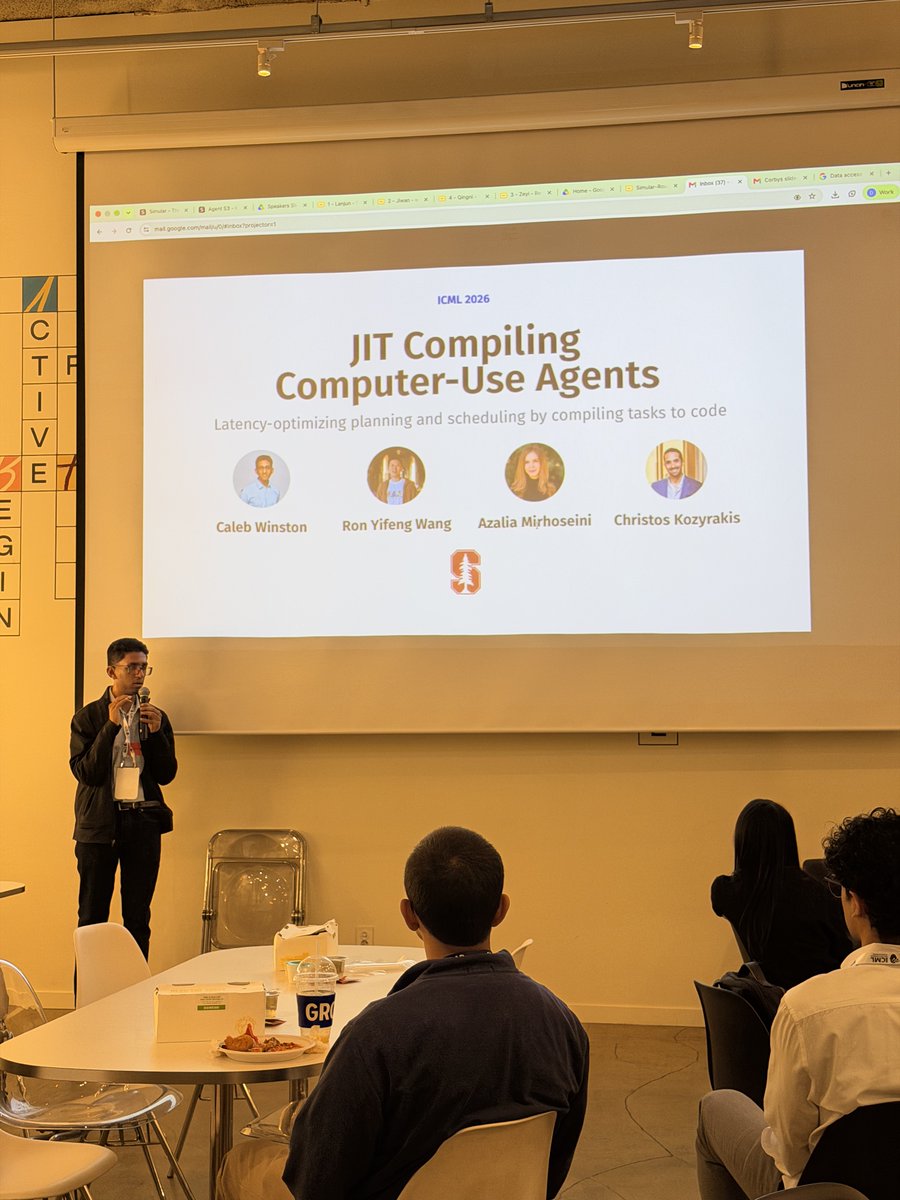
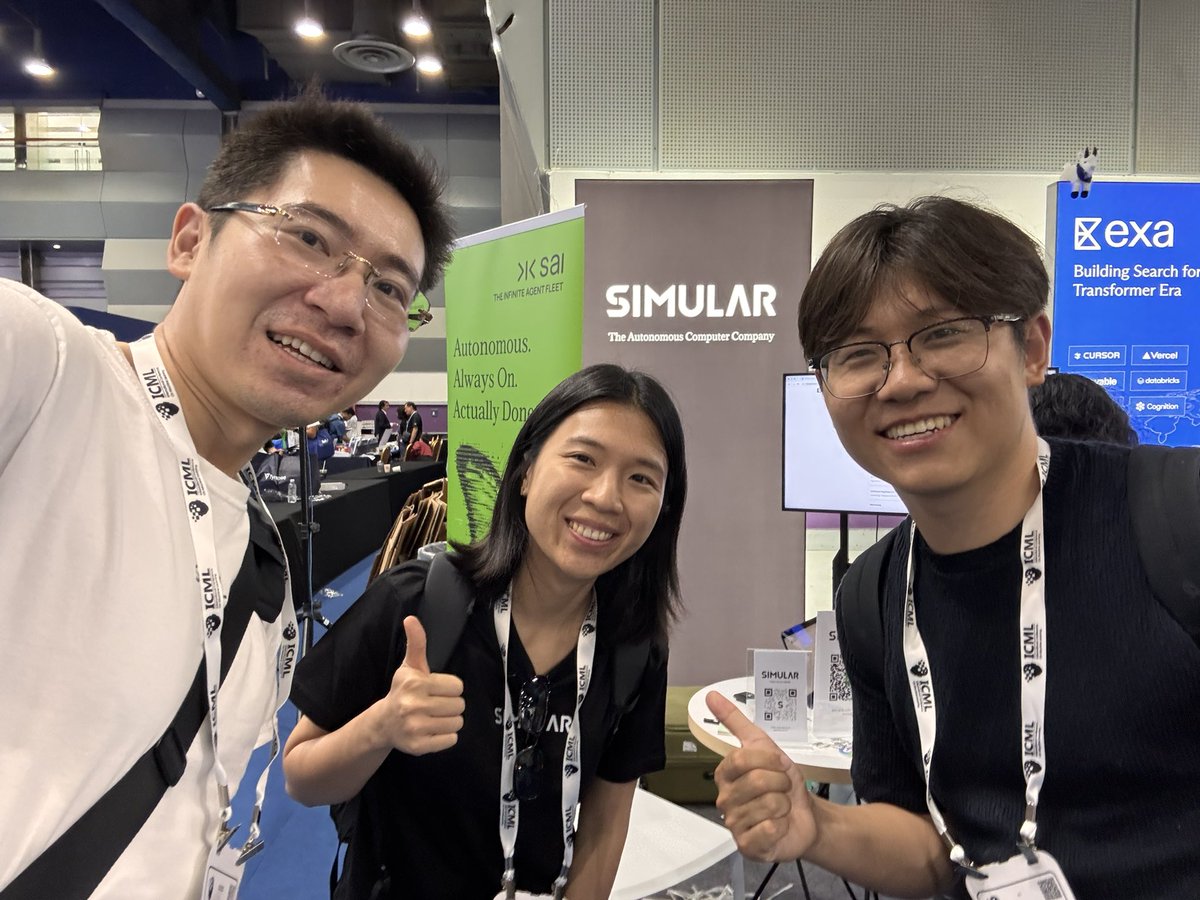
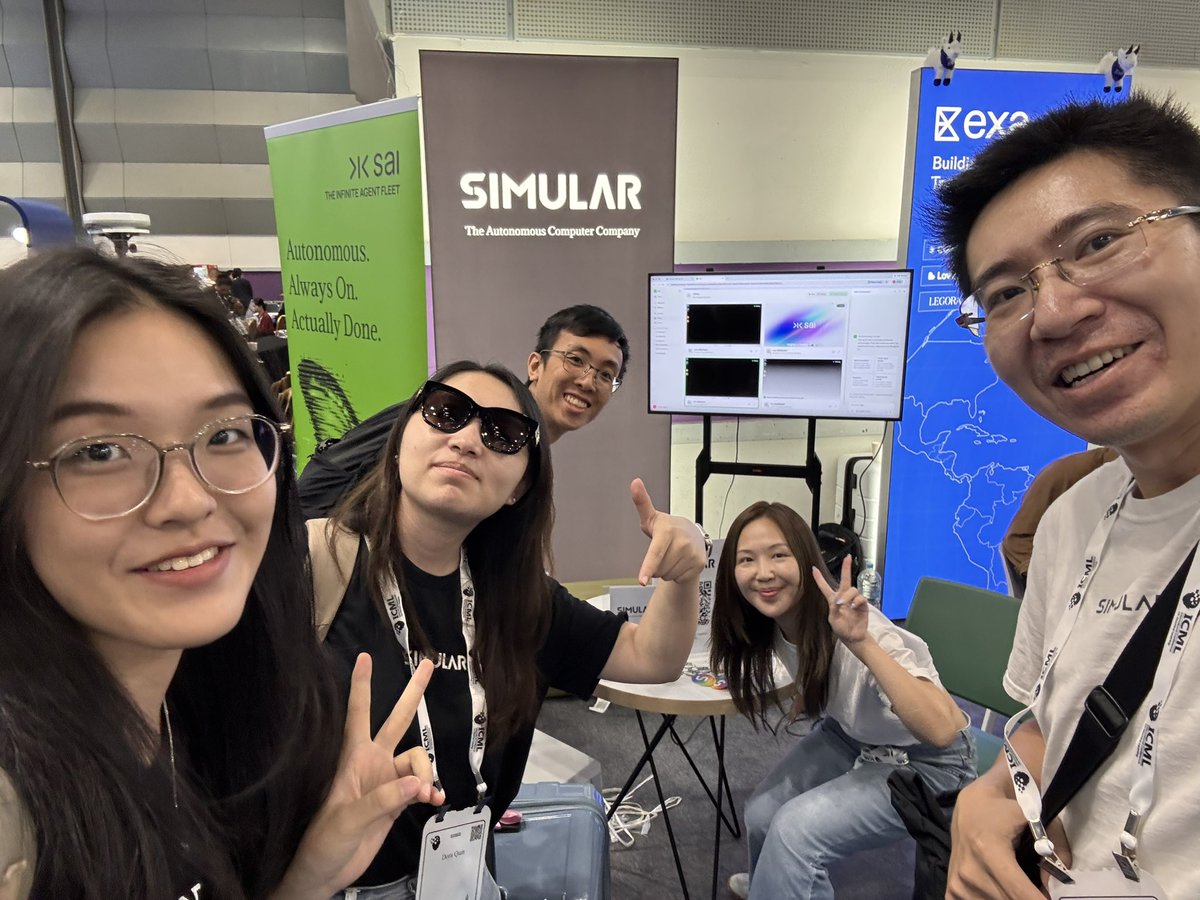
Great memories made in #ICML2026@SimularAI hosted a Computer-Use Agents Researcher Roundtable, gathered a room of researchers publishing at the frontier of CUAs.
A warm evening of real research: trajectory-level benchmarks, reward and judge models for RL, uncertainty calibration that teaches an agent when to defer, and a compiler-layer architecture already showing 10–15x efficiency gains.
IF YOU FOMO, we still have one more event coming this Friday 😌 #ICML
This Friday, here's what you'll walk away with:
🧠 A clear picture of where computer-use agents stand today
📄 The research arc behind Agent S → S2 → S3
🫡 How trust gets engineered into an agent, not bolted on after
💻 Concrete patterns for taking agents from research into real workflows
The lineup:
Prof. Jonghyun Choi - Associate Professor, Seoul National University
@angli_ai - CEO, Simular · ex-Google DeepMind
@xwang_lk - Professor, UC Santa Barbara · Head of Research, Simular
@youtubejocoding - one of Korea's biggest AI-coding creators
Sign up now 👉 https://t.co/BPkwiESUj1
*Food, drinks, and merch — first come, first served. #ICML #simular #seoul
From research paper to real product, how do computer-use agents actually get built, evaluated, and put to work?
@SimularAI will be co-hosting a research forum with @SeoulNatlUni 's AI Institute this FRIDAY, giving talks on Agent S3, trust-by-design, and taking agents from research into real workflows. #ICML2026
JOIN US! Register below to save your seat. 👇
LAST CALL: a couple of speaker slots just opened on tonight's Computer-Use Agents Researcher Roundtable, near COEX.
If you're deep in this space, apply through the Luma link. 🇰🇷 #ICML2026
We are hosting a roundtable on computer-use agents during ICML 2026 week.
💻️ Computer-Use Agents Researcher Roundtable
📅 Tuesday, 7 July 2026 · from 6 PM (KST)
What to expect:
- Short research presentations + discussion
- Beyond Agent S3
- A room of active researchers advancing CUA
Got work to share? Note it in your application and we'll slot you in. 🎤
If you're publishing in this space and will be in Seoul, apply NOW 👉️ https://t.co/LlqGF24Qa1
i started to unbundle my agents into specialized agents with limited context, each focused only on specialized tasks with a specialized harness. they have agent meetings (e.g. on telegram) to figure out cross-functional tasks.
@simularAI controls my linkedin from a virtual machine with computer use agents.
@grok analyzes everything x-related, blogs, etc.
@hyperagentapp for airtable-related tasks because of the superior integration.
@notion agents for notion content.
@nousResearch for calendar, email, etc. runs locally on a separate machine. @Teknium@elicitorg for research deep dives.
@claudeai and @openai for everything experimental.
let’s see how this goes…let more startups win!
Moved to Singapore knowing no one. couldn't remember which uni friends even lived here.
@sai_borg surfaced all of them + wrote all my coffee chat invites
dormant connections reunion tour, activated. Thank you Sai~ ✨
(we're dropping Sai codes over at @sai_borg this week if you want your own reconnecting era 🎟️)
we’re at cap for our ICML fringe events 🙏 thank you to everyone who signed up (still working out the final list)
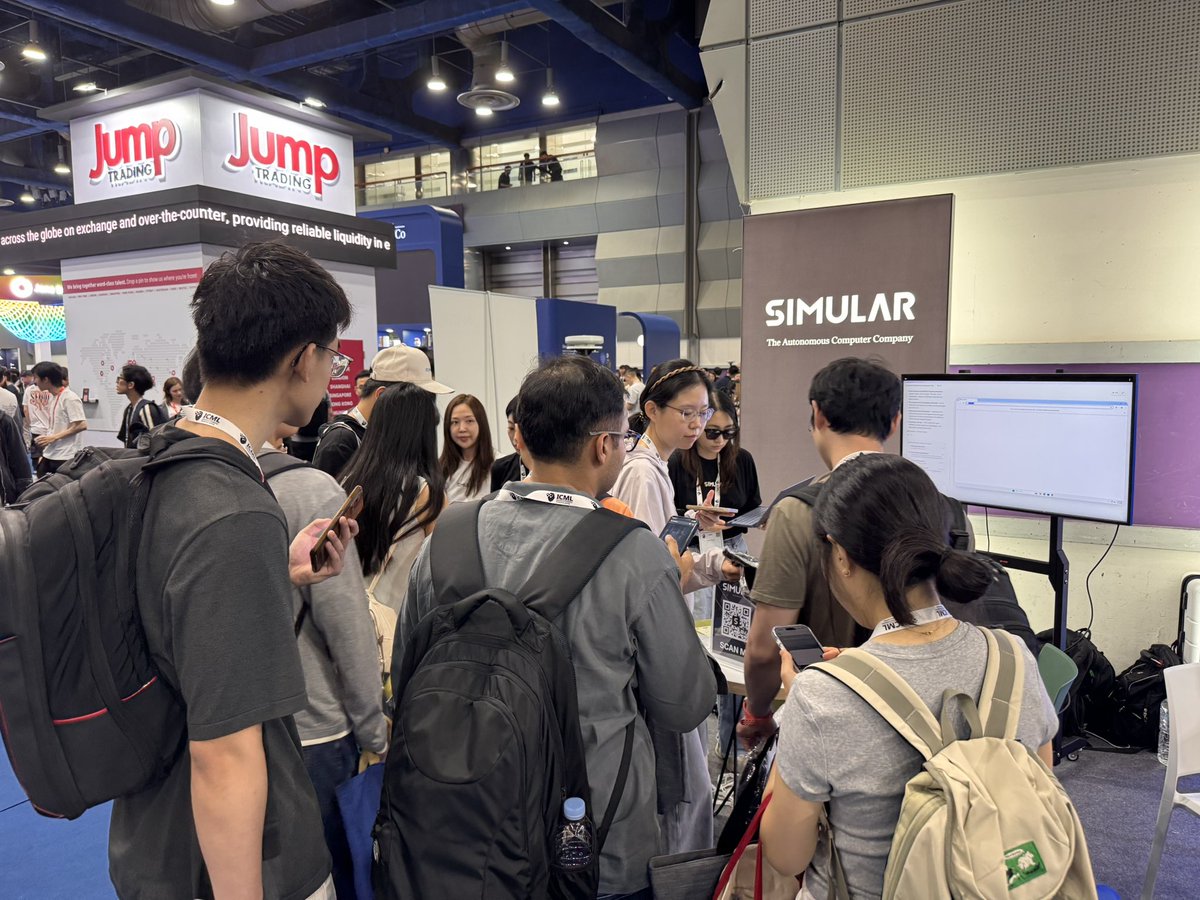
but if you still want to meet the @SimularAI team at @icmlconf, come find us at booth B609. would love to say hi if you’re:
→ a grad researcher after an internship
→ an engineer or researcher who wants to build computer-use agents full-time
→ in industry, figuring out where CUAs fit into your stack
→ curious what an AI worker that actually uses your screen looks like
we’ve reserved merch for you 👋
The Q&A after our CEO @angli_ai's talk at AI Engineer World's Fair in SF ran long. If you've been wondering how computer-use agents actually handle reliability, guardrails, and legacy software, this post has you covered.
1. On stateless vs. stateful programming
The neurosymbolic approach is "stateful programming" - every line of code checks the environment/state as it runs. This is a new, more stable programming paradigm for the future. No single modality (screenshots, accessibility tree, DOM) is fully reliable on its own, so they combine multiple signals, like a self-driving car using camera, radar, and LiDAR together.
2. On agent accuracy
100% accuracy is the goal but not guaranteed by any single model. Our solution is a self-verification loop: after the agent completes an action (e.g., filling a healthcare form), a separate check asks the model to "reverse" and verify whether the output makes sense. If something's wrong, the task is retried.
3. On guardrails and security
On the product side, irreversible actions trigger a stop-and-approve step from a separate monitoring system. For OS-level restrictions (e.g., blocking specific apps), that requires control at the VM/operating-system layer, which is why we favor cloud-managed VMs, where whitelists and stricter controls can be built into the machine image itself.
Same neurosymbolic principle: code-based rules handle it first; if rules don't cover a case, it escalates to the agent, and if still unresolved, to a human for verification.
4. On code vs. vision dependency
Token/vision usage should trend toward zero over repeated runs, as the code accumulates more branching logic to handle known scenarios, similar to how humans need less conscious effort as they gain experience with a task.
5. On legacy software prompting
Currently prompts do need to be fairly specific for unfamiliar software. Long-term direction is "exploration": let the agent freely explore an environment (when exploration is low-risk/low-cost) to build familiarity, reducing the need for precise prompts over time. The goal is just finding one successful trajectory - once found, it can be replayed reliably.
Using a "swarm" of agents to continuously re-explore and repair the map/trajectory when the underlying software changes is the right direction. But this only works best when exploration is cheap (low-risk environments); in costly/sensitive contexts (e.g., banking) free exploration isn't feasible.
three months building Sai @sai_borg. here's what actually happened, and three lessons learned the hard way 👇
nothing goes viral on day one. we stared at a flat line for weeks, the first day is not the verdict.
you have to grow a thick skin. people aren't always nice, and as a founder you have to be ok getting roasted by your own users. i get plenty of it, it stings every time. but they're usually pointing at something real, so you go fix it.
and you keep grinding, because one day the line moves, faster than you're ready for.
Win a Sai code 🎟️
For the next 10 days, we're dropping Sai access codes through @sai_borg.
Every day we pick 20 people with the best answer to that day's theme. Tell us what you actually do alongside your answer to increase your odds.
Winners get a code by DM (single-use, 72h) - follow + turn on notifications 🔔
#saicoded #trysai
The hardest part of computer-use agents isn't getting them to work once. It's getting them to work every time, at scale, at a price that makes sense.
I'm speaking at @aiDotEngineer#AIEWF on how we closed that gap at @SimularAI. Two years of building the autonomous computer, layer by layer:
🖥️ Sai @sai_borg : the always-on autonomous computer you actually work with
🧠 Agent S: our open-source framework, first to beat the human baseline on OSWorld
⚙️ Simulang: turning flexible LLM behavior into reliable, repeatable, self-healing skills
☁️ Saibox: cloud virtual desktops that run agents economically at scale
A teaching session. You'll leave with a mental model + a playbook for shipping agents that are reliable AND scalable.
🗓️ Mon Jun 29 · 4:30pm · Track 1, Room 2010
If you're shipping agents to real users, don't miss this 👇
https://t.co/GXVWlb4qKv
🌱 @sai_borg runs on Windows 365 for Agents — bringing computer-use AI to legacy enterprise environments with no APIs needed.
As an early-adopter pilot partner with @msPartner, we've been building toward this moment.
See it in action ↓
Read more on https://t.co/s8tqiYN8LN
As a solo hacker at Cal Hacks, @vivianbuilds found a team -- Sai's autonomous computers.
She built STING, an anti-scam browser guard in 24 hours while still hitting all the workshops.
How @sai_borg helped:
✅ Visual QA with roleplaying - tested STING as an absent-minded elderly person, a brain-rotted Gen-Z user, and everything in between
✅ Demo video production - created a walkthrough with the correct UI and product features (no hallucination). Shows how STING gives plain-English scam explanations instead of vague red warning screens.
🏆 Simular Pick at @CalHacks