USDC on Solana, but need it on Base? 👀
No stress. No unnecessary complexity. Just tell CowryPay where you want your USDC to go. 🔄💚
Solana ↔️ Base. Cross-chain sends made simpler.
Sending money shouldn't feel like passing an exam. 😭
Moving between chains, cashing out, tracking your money… why does everything need a tutorial?
CowryPay is here to make payments simpler. 💚🚀
Try it: https://t.co/QbGiKZs82j
Arc USDC is live on CowryPay 💚
Need Arc USDC? Just say the word.
Convert your Base or Stellar USDC to Arc USDC via chat, then off-ramp straight to your local bank account, no extra bridges, no complicated steps.
New week, new moves. 👀💸
Got stablecoins to pay out? Don't let payment stress run your week.
Make your payouts simpler with CowryPay. 🌍💚
Start your week right: https://t.co/QbGiKZs82j
7 YEARS OF WEB3BRIDGE! ❤️🎉
Seven years of learning, building, growing, and creating opportunities.
Today, we celebrate how far we’ve come, everyone who has been part of our journey, and everything we’re yet to become.
Happy 7th Anniversary to us! 🥳
#Web3BridgeAt7#W3BAt7
🇺🇬 Happy Independence Day, Uganda!
Celebrating the people, creativity, and possibilities shaping Uganda's future. 💚
From all of us at CowryPay, we’re proud to build for a more connected Africa. 🌍
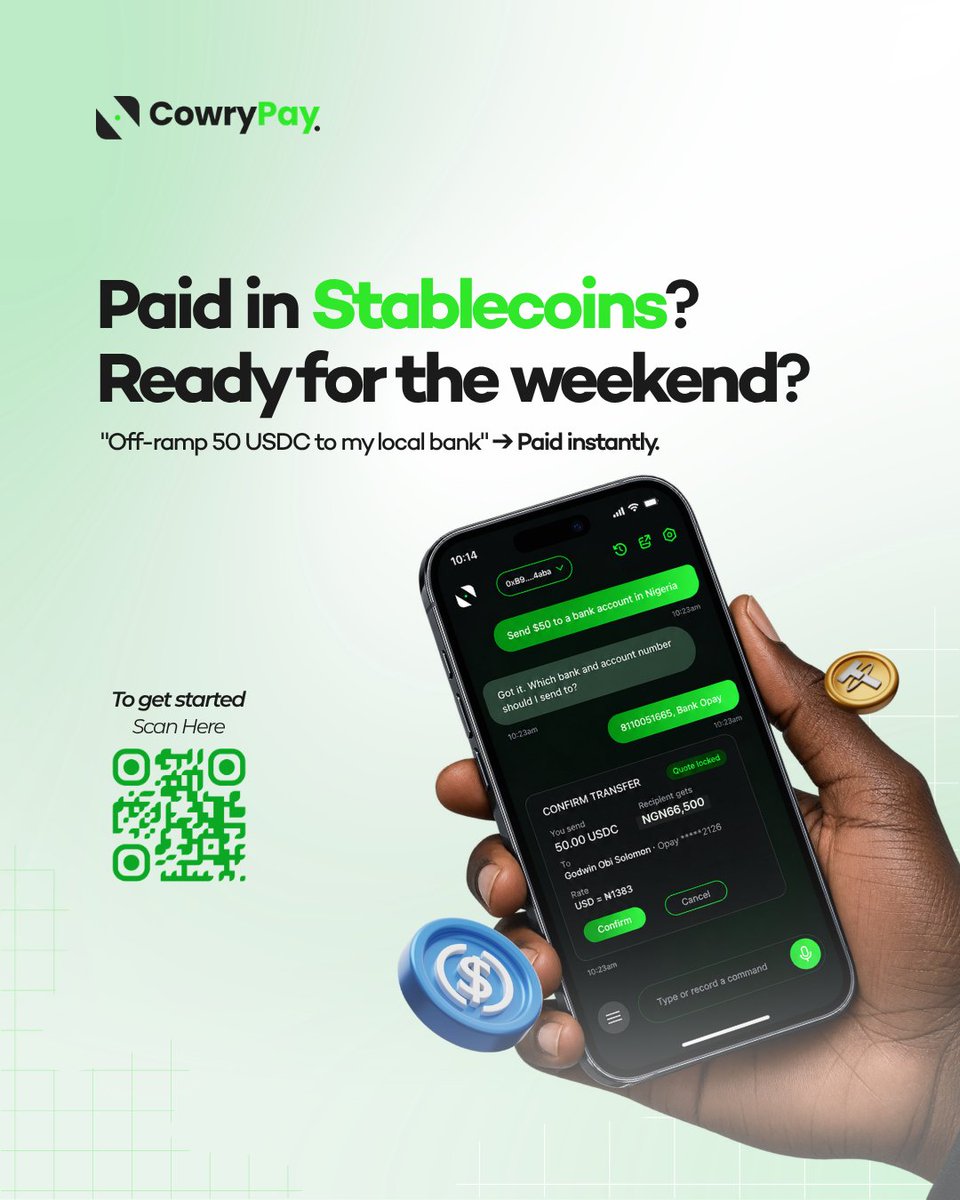
Paid in stablecoins? 👀
Don't let your money spend the weekend sitting in a wallet.
Off-ramp straight to your local bank account with CowryPay. 💸
NGN • UGX • KES • MWK • TZS