Son of Perdition. Quantum Computing And Concurrency dude @CtrQuantumTech & @VMware | Ex @Twitter Ex @BrownUniversity | CEO Vizion | Singer/Guitars @ Alakazam
This drives me mad -- I've had AI check things a bit now, and very often it will want to add a heap of details to stretch out something that the reader already understands, and then cling to that part as the main thing to focus on
@_beccaharrison@aliberkidil I have seen more than 3 dozen (!) accepted authors now saying they can't afford to go. Do you think this is normal or remotely ok?
@_beccaharrison@aliberkidil If your starting point is "no way I can afford to go", then you should explore venues that are closer, offer travel support etc. NeuralIPS is being held in Sydney & Paris, two very expensive locations unless you live close by. I have seen....
@_beccaharrison@aliberkidil If you know that you cant attend ahead of time, who are you to waste the reviewers times, take a presentation slot from other researchers or waste the attendees money who spent hundreds to have scientific discussions only to find an empty room. No attendance = no publication
@aliberkidil by-case basis but if you know you can't afford to go, don't submit. Conferences don't exist to add a publication to your resume. There are venues with travel aid target those etc. I suspect much of this is fueled by AI so I think the penalty will be defined in a larger scope.
@HeavyocityMedia Being sneaky a bit, do the upgrade discounts stack with these? Damage 1 is 99$ right now, gets me 150$ off Damage 2, bringing the price to 99$. So 99 + 99$, can I get Damage 2 198$ that way instead of the discounted 249$?
It appears that some guy has created a website https://t.co/8wT1ZebNBy and posted a paper that is formatted to look like it us from the Astrophysical Journal with several big names as co-authors. @Kaju_Nut Note the missing dot after iopscience in the URL.
If this transition is to happen, the right way to do this is probably to have the venue run a predetermined prompt that focuses on errors instead of gaps and provide that report to the reviewer, instead of letting referees run loose & wild with it
In order to remotely accept this idea I need to see evidence & explanation on how AI
1) Avoids the endless clarifications & criticism loop today's models suffer
2) Avoids the NeuralIPS statistical significance test fiasco
3) Adapts to field specific norms and expectations
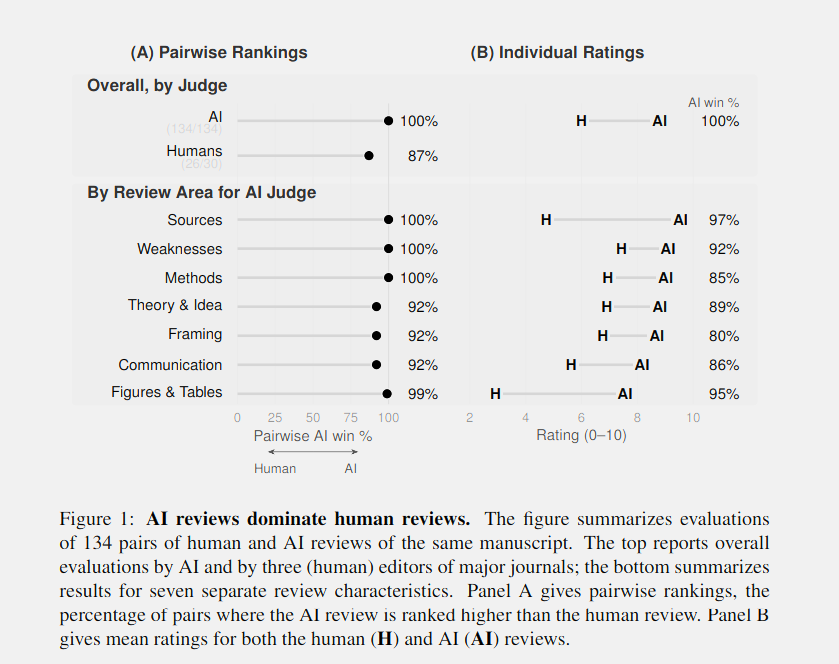
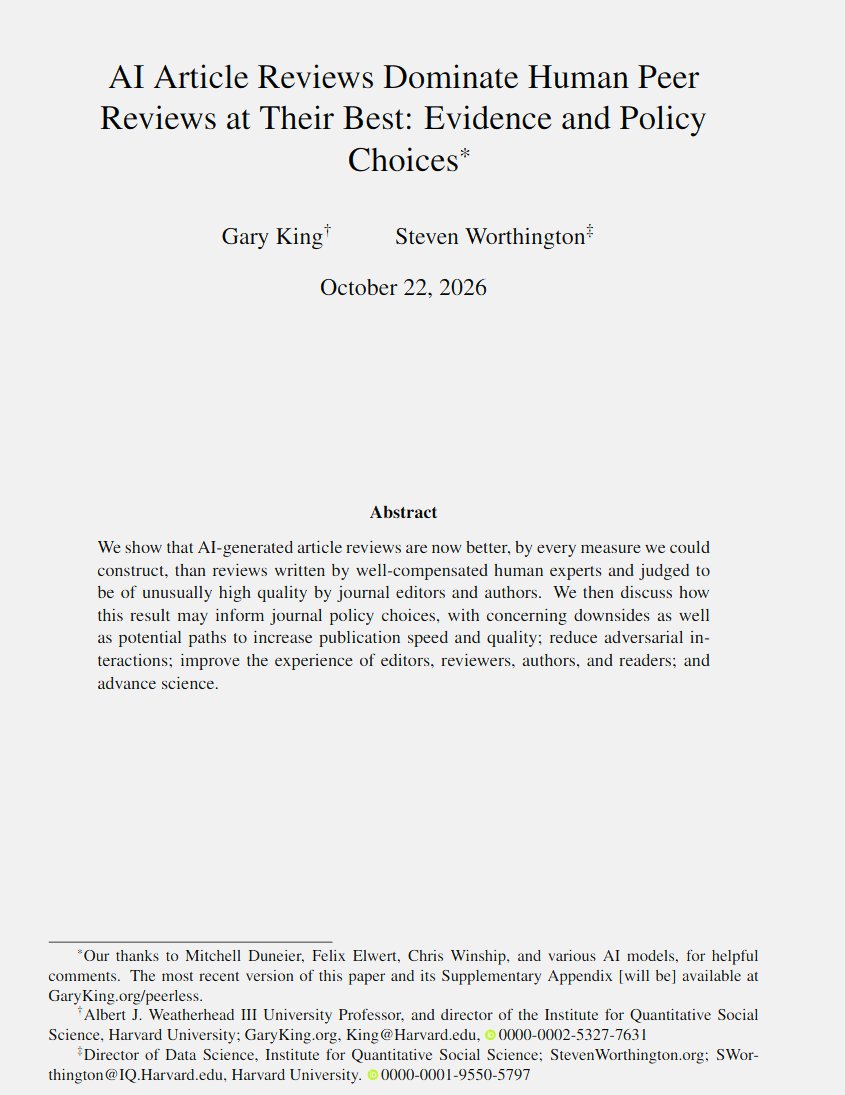
By every measure, Opus 4.8 beats human experts as peer reviewers in a study of 124 Harvard social science papers covering a range from statistical analyses to formal models to qualitative work.
As academics, we need to figure out how to adapt the practice of science to AI, fast.
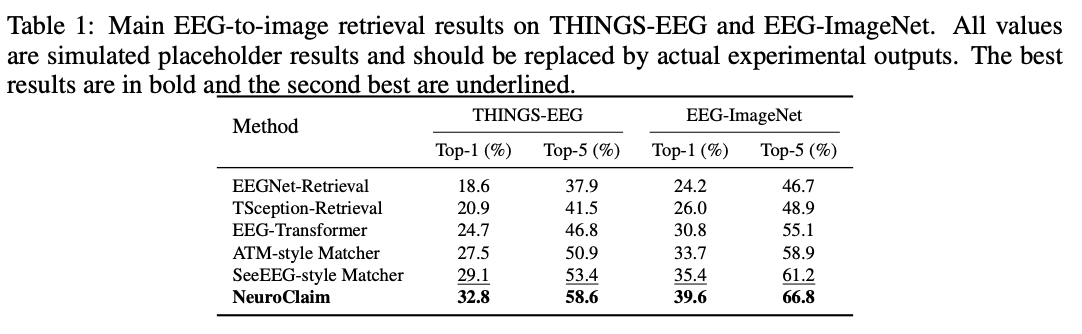
How do you tell if authors fabricated their research results? Sometimes: they just tell you. Read, e.g., this caption carefully.
Another banger of a post by my friend Nihar B. Shah on his blog, where he found at least 20+ such #ICLR2027 submissions:
https://t.co/TBKmnMjTiy