People are worried about Rs. 40 retirement corpus which will be required in 2040.
I’ll say this: Do not strategize about the long term too much. Try doing one thing, much better than anyone else has ever done in your domain. Money will be a byproduct.
Short example: Rakesh Jhunjhunwala started with Rs. 5,000 of his money.
Had a net worth of Rs. 1 Crore on budget day of 1989, by day end had Rs. 20 Crores. Read the year again - 1989.
During Harshad mehta scam in 1992, he converted it into Rs. 150 Crores.
Today, his family is worth Rs. 75,000 crores.
He was an outlier. Also, he had the benefit of starting early in Indian markets and got a community of like minded people.
But imagine if a person starting today, works with utmost focus, has true passion of achieving success in his/her niche, won’t he reach 0.1% of RJ’s net worth, Rs. 75 Crores?
Take small risks, pursue your vision fanatically, be a better version of yourself. It’s doable only if you believe in it.
Watch this video
0:00 Net Worth Rs. 150 Crores in 1993
0:12 Net worth Rs. 20 Crores in 1989
I've always liked the story of Charlie Munger.
At 31, he was basically at rock bottom.
He was freshly divorced, had lost the house, and his son died of leukemia. Munger paid for every treatment out of pocket and was left with almost nothing.
Yet he kept going.
Instead of drowning in bitterness, he worked, he read, and he kept his head down.
With a new marriage and some stability, he began investing his lawyer's salary into stocks and real estate.
Then in 1959 he met Buffett.
Inspired by someone who was already running his own partnership, Munger founded Wheeler, Munger & Company in 1962.
The wealth started to accumulate. Through real estate projects and his growing investment partnership, Munger became a millionaire around age 43.
Many successful investments followed, many alongside Buffett, and the relationship grew close enough that working together was the only thing that made sense.
Munger wound down his partnership in 1975. Over 13 years, he had compounded at 19.8% annually, against 5% for the Dow.
In 1978, he became Vice Chairman of Berkshire Hathaway and helped build the empire it was set to become.
Somewhere along the way he lost an eye to a failed surgery, but that didn't bother him much. He still had one left. Plenty enough to read annual reports.
When most people think of Munger, they just see a rich old wise man who almost stood in Buffett's shadow. But the truth is that Munger's wisdom didn't come from nowhere.
He worked himself up from rock bottom, a place where many others would have stayed down, to become one of the most respected investors in history. And a billionaire on top of that.
He never let it go to his head. He lived in the same house in Pasadena for decades. The place didn't even have AC. He cooled it with ice and fans.
Hard to find a better role model than that.
After 8-10 crore, your own home and a nice car, there is not much difference in the quality of life between you and billionaire investors like RK Damani.
Time is the currency of life. Money is not.
Both of you have limited amount of time on earth; infact you may have twice or more time than RK Damani, so you are richer than him.
Dal roti is dal roti whether a billionaire eats or you do.
Become financially independent, which is around 8-10cr.
Have good food. Workout. Sleep well.
Meet your parents and friends.
That’s all there is to life.
Greed has no end.
Sooner you figure this out, happier you will be.
Charlie Munger lost many precious things in his life including his 9 year old son (cancer), his wife (divorce), his left eye (cataracts & surgery failure), yet still became an investing legend.
Sharing the top 20 amazing lessons on Investing (and life) from the legend that you don't wanna miss :
1. Investing is where you find a few great companies and then sit on your ass.
2. Like Warren, I had a considerable passion to get rich, not because I wanted Ferrari's - I wanted the independence.
3. You don't have to be brilliant, only a little bit wiser than the other guys, on average, for a long, long time.
4. One of the greatest ways to avoid trouble is to keep it simple... the system often goes out of control.
5. A lot of people with high IQs are terrible investors because they've got terrible temperaments.
6. Knowing what you don't know is more useful than being brilliant.
7. If a business earns 18% on capital over 20 or 30 years, even if you pay an expensive looking price, you’ll end up with a fine result.
8. A great business at a fair price is superior to a fair business at a great price.
9. You would be amazed at how much Warren reads -at how much I read. They think I'm a book with a couple of legs sticking out.
10. The best thing a human can do is to help another human being know more.
11. To get what you want, you have to deserve what you want. The world is not yet a crazy enough place to reward a whole bunch of undeserving people.
12. Spend each day trying to be a little wiser than you were when you woke up. Day by day, and at the end of the day-if you live long enough-like most people, you will get out of life what you deserve.
13. How to find a good spouse? The best single way is to deserve a good spouse.
14. We have three baskets for investing: yes, no, and too tough to understand.
15. Invert, always invert: Turn a situation or problem upside down. Look at it backward.
16. It is remarkable how much long-term advantage people like us have gotten by trying to be consistently not stupid, instead of trying to be intelligent.
17. It’s the work on your desk. Do well with what you already have and more will come in.
18. Mimicking the herd invites regression to the mean.
19. Always take the high road, it’s far less crowded.
20. Every time you hear EBITDA, just substitute it with bullshit.
#lessons #lifelessons #charlieMunger
This 1 hour MIT lecture by Jim Simons (Quant King) will teach you more about quantitative trading than most people learn in their entire career at Wall Street.
Bookmark this & watch, no matter what. It’s the most productive start you can give your week. Then read article below.
you do not succeed without obsession.”
“I will be successful without being stressed”
— dil behlaane wali baatein hain.
Market mein success chahiye?
Toh phir obsession chahiye.
Study chahiye.
Patience chahiye.
Losses handle karne ki capacity chahiye.
Easy money ka dream sab dekhte hain.
Real wealth sirf few log banate hain.
@Ronitper Obsession isn’t optional, it’s the entry fee for owning the real monsters.
Pure dil behlaane wali baatein is the heart’s favorite anesthesia that guarantees you tap out before the power-law payoff ever arrives.
“In Investing, you do not succeed without obsession.”
“I will be successful without being stressed, lekin vo sab dil behlaane wali baatein hai (but all that stuff is to comfort the heart)”
- Rakesh Jhunjhunwala. 2008
Mukesh Ambani will never tell you how smart he is.
Azim Premji will never tell you how generous he is.
Ratan Tata will never tell you how honest he is.
A lion will never have to tell you he is a lion.
Be careful of people who are always boasting about themselves.
Only in India.
A Tahsildar earning ₹75,000 a month builds a ₹3 crore house. A software engineer earning ₹2 lakh a month struggles to buy an ₹80 lakh home.
This is what happens when the system rewards reseravtions, power, corruption, and connections instead of skills and merit.
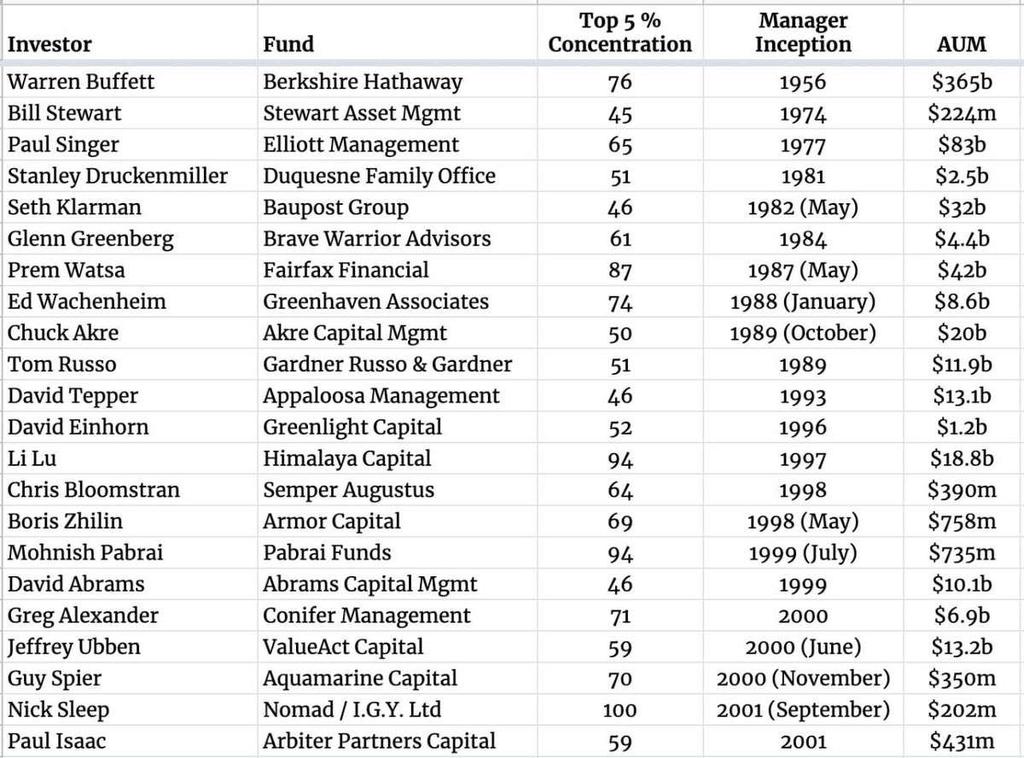
Diversification is a hedge against ignorance. Concentration rewards those with conviction.
Look at this list. The average "Top 5% Concentration" here isn't 10% or 20% – it's often north of 60%. Some sit >90%!
“If you ever want to get rich, you have to be very concentrated. It’s one of the things that I realized when I began investing that most of the great fortunes were made by people who were invested generally in only one thing.” - Richard Rainwater
Stop spraying and praying. Start studying and concentrating.
In 2010, George Soros gave a 40-minute masterclass on why humans misjudge market reality.
He explained why:
- Markets distort reality
- Bubbles are logical, not irrational
- Regulators must fight markets
12 lessons from Soros that change how you see financial markets forever:
Buying property in India?
Miss ONE document — regret lasts for decades.
Before you pay even ₹1 advance, verify these 8 non-negotiables 👇
1] Title Deed- Confirms the seller is the legal owner with full right to sell.
2] Mother Deed- Tracks ownership history — catches hidden defects early.
3] Encumbrance Certificate (EC)- Ensures no loan, mortgage, or court case is attached.
4] Possession Certificate- Verifies who actually controls the property on ground.
5] Property Tax Receipts-Shows taxes are paid — no surprise dues later.
6] Khata / Patta- Proof the property exists in municipal & govt records.
7] Conversion Certificate- Mandatory if land was agricultural — without this, construction can be illegal.
8] Location Sketch & Survey Map-Protects you from boundary disputes and land grabbing issues.
If any document is missing, walk away.
Another deal will come. Peace won’t.
🔖 Bookmark this
The double down on risk management part is key. Most traders intellectually accept they can't win every trade but still size up on 'high conviction' setups and blow their account on one bad read. Accepting it mentally AND applying it in your position sizing are two completely different things.
Bitcoin will never do another 10x from a cycle low.
Bottom to top gains each cycle:
1- 2015-2017: 12,900%
2- 2018-2021: 2,110%
3- 2022-2025: 714%
Each cycle returns roughly 1/5th to 1/3rd of the previous one.
My target for next cycle peak is $155K-$190K from a $37K-$50K bottom. Next cycle will do 200-300% at best. We are not getting a 10x or 20x ever again.
94% of all BTC is now already mined. The supply shock everyone keeps mentioning has already happened three halvings ago.
Bitcoin may still be the best asymmetric bet in finance but the 100x days are log gone and mathematically over. The people promising you $500K next cycle are basically selling you a version of Bitcoin that expired in 2021 already.
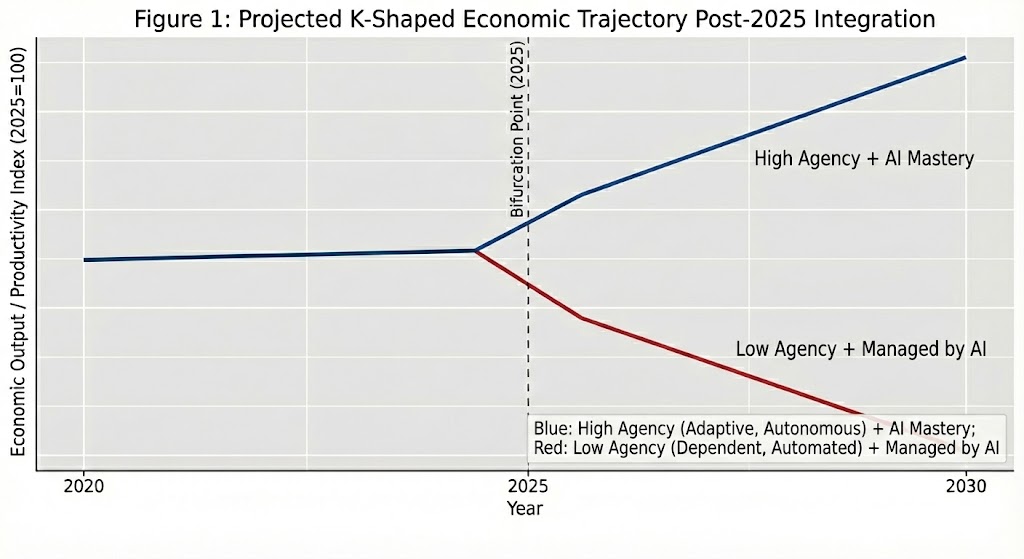
In 10 years, there will be two classes of people.
Economists call it the "K-shaped economy" - and the next 2-3 years will decide which line you're on.
• An overclass that uses AI as a lever to build wealth, automate income, and make decisions at a speed no human can compete with alone.
• And an underclass that gets managed by it.
This isn't just "coming". It's already happening.
Some mind-blowing stats:
• Workers with AI skills earn 56% more than the same job without them. That premium doubled in a single year.
• Industries adopting AI are seeing 3x the revenue growth per employee.
• Meanwhile, 90% of workers haven't taken a single hour of AI training.
• Goldman Sachs estimates 300 million jobs will be affected by AI by 2028. That's 24 months from now.
If you're reading this now and you haven't built systems with AI - haven't automated a single workflow, haven't used it to create anything that makes you money or makes you irreplaceable - you are currently on the wrong line.
That's not an insult. You have the agency to change your trajectory right now.
But six months from now, the gap will be twice as wide. And a year from now, it may not be crossable.