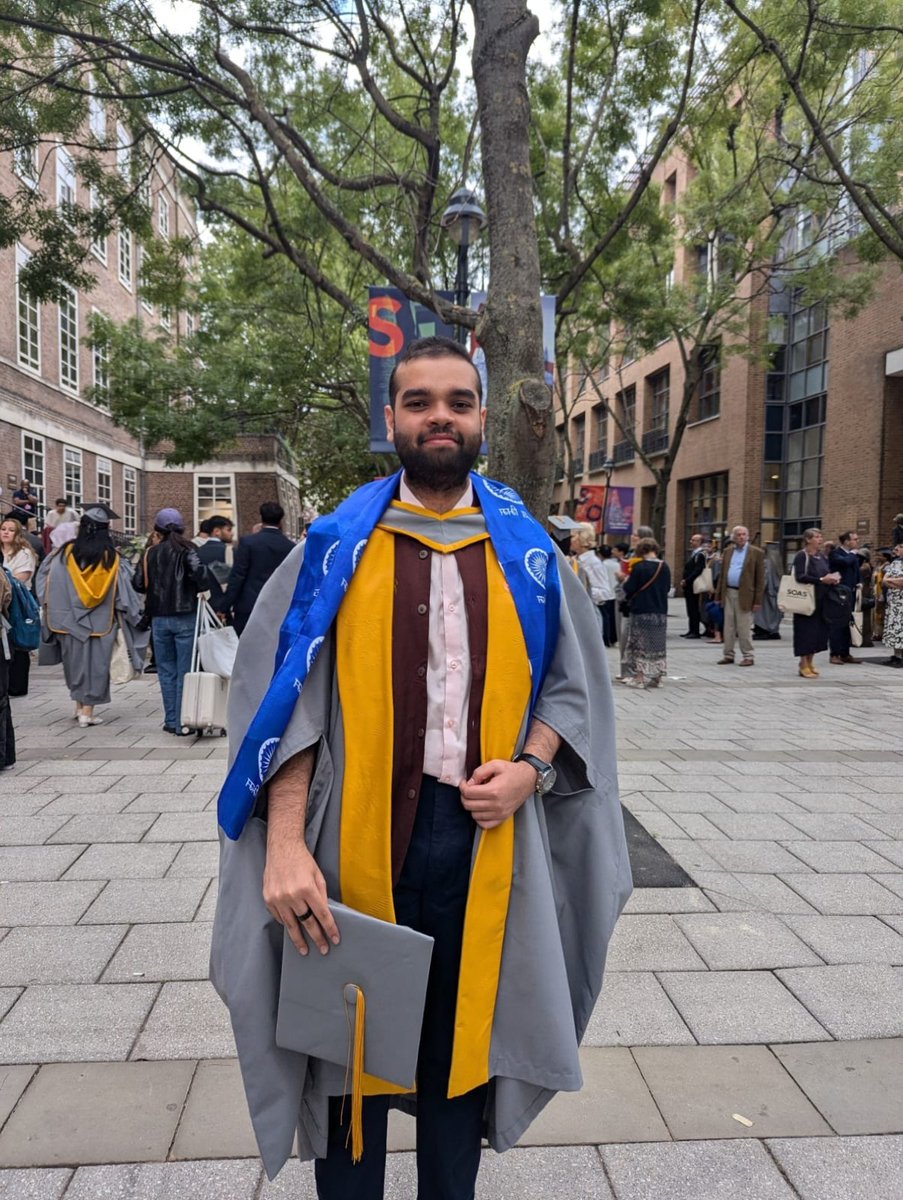
Part 1 of 2 @SOAS@SOASpolitics done🐣🥹🙆💙
This frame is an assertion of three Dalit generations of yearned aspirations of education-liberation-emancipation.
I owe to Ambedkar💙 and my staunch Ambedkarite Parents who ensured my access to education.
Jai Bhim💙
#soas#grad24
Reading @thirana1 The Monster in Your Path (2026) has left me in aweof its analytical anti-caste writing: calm, intimate, bounded, and still politically exacting.
Holding on to the book, and its review, for weekss now// with more takeaways than colours left for highlighting
@jrs437 wondering if anticaste erasure and DBA epistemicide would also become a part of this conversation or be counted as also foil/declining affect of SA academic freedom
Archiving it here before it is too late. Something of a powerful serendipity, and so much more incoming in this.
for BISA 2026 w/ by @ChandniGanesh1 and Priya
Devastated by the passing of prof
@raulpacheco true champion of demystifying academic research & writing. As a waste scholar, too, he was inspiring. I really recommend his blog to PhD students🌹
https://t.co/ptQTNHPLwx
I along w/ @ChandniGanesh1 will be presenting at York St John Discussing Decolonisation series for 2025/26 on
Accountable Methods: Decolonial, De-Brahmanical and Anti-Imperial Research Against Hierarchies of Knowledge
Register here to join us - https://t.co/1YVmrRzTzA
Hello me and @Aishwarya_avrj are looking to access the Sociology syllabi at Maharaja Sayajirao University of Baroda, across UG & PG courses.
If anyone has leads, knows how to access them, or can connect us with current/former students, please DM me or Aishwarya.
Many thanks
A survey of 2600 Ph.D. students, postdocs, and other researchers in 65 countries found that top three complaints were that supervisors:
1) used dismissive or disrespectful communication,
2) provided little or no feedback on performance, and
3) ignored team members’ personal lives and well-being
The main thing they wanted was empathy:
"If a supervisor is empathetic, this supervisor will understand personal situations of the early-career researchers in their group. They will understand that they have to be supportive, not treat people like production units of papers, but instead like colleagues who are at a different stage of their career. This shouldn’t be shocking. But it seems like sometimes we need to remind people that they need to be empathetic towards those working in their groups." https://t.co/JMbBECZwQs
Unfortunately, most academic units don't reward good mentorship, select for good mentorship during hiring, or offer mentorship training. This means that mentorship ability varies wildly, even within a program--from world class mentors to people who endlessly burn through students.
This is why there needs to be more training and a higher value placed on mentorship. I used to write a career advice and mentorship column to try and communicate these lessons. Far more needs to be done and it should be structural to ensure it sticks. But fostering empathy is a critical place to begin.
Putting this out here, hoping it gets around
Looking for a research collaborator for a writing-piece on South Asian (political) thought + Black epistemic traditions w.r.t critical caste studies, and CRT, on themes surrounding solidarity and epistemic futures themes.
Applications are open for the 2026 Summer School in Applied Social Science Research Methods at NYU Shanghai.
Advanced English-taught courses on Agentic AI, Quantitative Text Analysis, and Social Network Analysis.
Apply by May 29: https://t.co/48GL8HvGmE
The caste question and Ambedkarite politics, despite its powerful legacy in Bengal, is relegated to the background through coercion and social misrecognition''
My Piece in @thewire_in
https://t.co/M5L0aKq9jo
My review article of Aesthetics of Dalit Theatre (Naskar, 2025) in the Journal of Comparative Literature and Aesthetics (49/1)
Link - https://t.co/Cn9UIbSjWy
If this review does anything, I hope it honours that wager, by reading theatre as a living insurgent archive