Why SB19?
...Why not SB19?
The P-Pop Kings, SB19, kept breaking record after record during their "Simula at Wakas" concert, featuring back-to-back sold-out nights at the Philippine Arena to kick off their tour, which spanned over 21 stops worldwide.
This level of dedication and quality deserves the WORLD. Thank you for lifting Filipino excellence to the world, SB19! It's always an experience being with you every damn time.
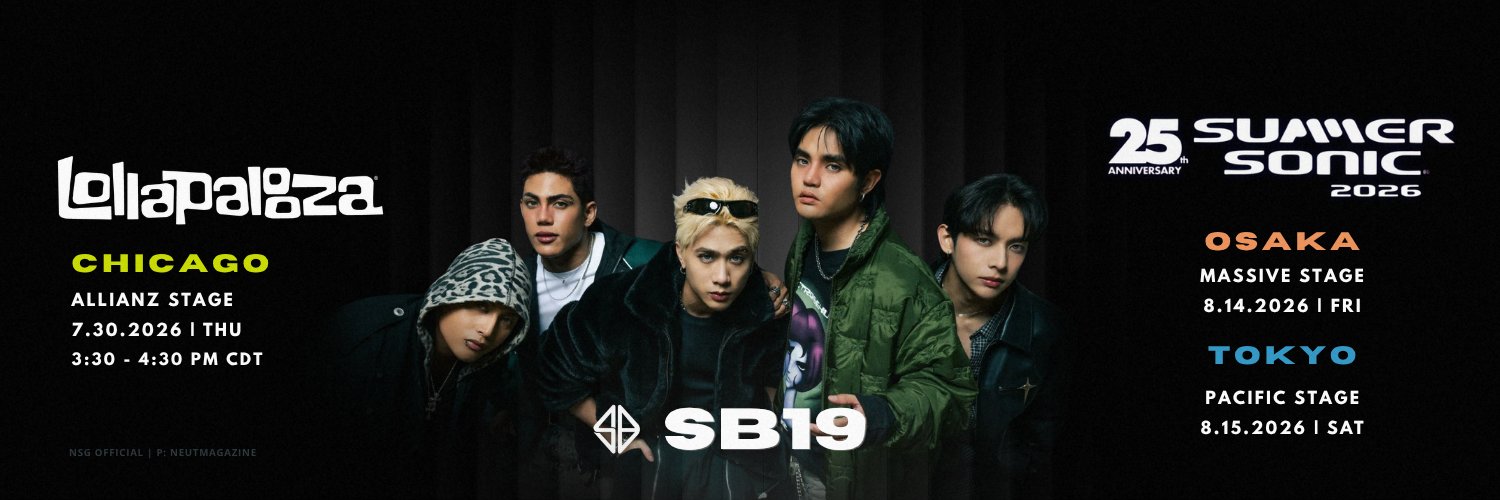
AND THAT'S WHY SB19 IS A MUST SEE AT LOLLAPALOOZA 2026...
AND...GRAMMY'S BEST ASIAN POP WORTHY 😉✨
Global recognition continues! @MSN recognizes #SB19 as one of '8 Asian pop acts who could compete for the new Grammy category' --- @SB19Official is the only P-Pop group featured on the list!
FULL ARTICLE:
https://t.co/3u7s8r0pjd
🍎 SB19 ‘Simula At Wakas Kickoff Concert Film’ on Weverse
One year since the Simula at Wakas Kickoff Concert at the Philippine Arena, the story returns to where it all began.
Relive the performances that moved us, the memories we created together, and the moments that marked the beginning of the Simula at Wakas journey.
Coming this July 12 on @weverseofficial
#SB19 #SimulaAtWakas
#SB19SaW #SawWorldTourKickoff
#SaWKickoffConcertFilm
Most Filipinos know Alex Eala as the face of Philippine tennis.
But here’s a piece of sports trivia many have forgotten: decades before Eala was born, the Philippines already had two tennis stars who regularly battled the world’s best on the biggest courts.
Their names were Felicisimo Ampon and Raymundo Deyro—a golden tandem that helped make the Philippines one of Asia’s tennis powers during the 1940s and 1950s.
At a time when international travel was far more difficult than today, the two Filipinos journeyed across Europe and North America to compete in Grand Slam tournaments against some of the sport’s greatest legends.
Ampon, nicknamed the “Mighty Mite,” became an international sensation because of his remarkable size. Standing just around five feet tall and weighing barely 115 pounds, he routinely defeated much larger opponents using speed, precision, and relentless court coverage.
His résumé remains one of the finest ever assembled by a Filipino tennis player. He reached the quarterfinals of the French Open in both 1952 and 1953, advanced to the fourth round of the US Championships four times, won the prestigious Wimbledon Plate in 1948, and captured the 1950 Pan American Tennis Championship after defeating American star Bill Talbert.
Over nearly three decades, Ampon also became the Philippines’ greatest Davis Cup player, finishing with a national record 40 overall victories.
Deyro, meanwhile, was every bit as accomplished. The steady baseliner reached the fourth round of the French Open in 1953 and the third rounds of both Wimbledon and the US Championships. He represented the Philippines in a record 37 Davis Cup ties and remained a mainstay of the national team until he was 43 years old.
The pair produced one of Philippine sports’ greatest moments at the 1958 Asian Games in Tokyo.
Deyro defeated Ampon in an all-Filipino men’s singles final to win the gold medal, guaranteeing the Philippines both gold and silver. They then reunited in doubles to capture another gold, completing one of the country’s most dominant performances in Asian tennis history.
Together, they even defeated Japanese stars Kosei Kamo and Atsushi Miyagi in Davis Cup competition—the same duo that would later become US National Championships doubles champions.
Despite these remarkable achievements, both men gradually faded from public memory as Philippine tennis declined during the professional Open Era. As tennis became increasingly expensive and globalized after 1968, the country struggled to produce players capable of consistently competing at the highest level.
Today, Alex Eala is deservedly inspiring a new generation of Filipino tennis fans.
But perhaps her greatest contribution is reminding the nation that she isn’t writing the first chapter of Philippine tennis history.
She’s writing its long-awaited sequel—a story first begun by two forgotten Filipino heroes who proved, decades ago, that the Philippines belonged on the world’s biggest tennis stage.
(✍️: Top Dagohoy)
#radarPHLifestyle #radarPHMost Filipinos know Alex Eala as the face of Philippine tennis.
But here’s a piece of sports trivia many have forgotten: decades before Eala was born, the Philippines already had two tennis stars who regularly battled the world’s best on the biggest courts.
Their names were Felicisimo Ampon and Raymundo Deyro—a golden tandem that helped make the Philippines one of Asia’s tennis powers during the 1940s and 1950s.
At a time when international travel was far more difficult than today, the two Filipinos journeyed across Europe and North America to compete in Grand Slam tournaments against some of the sport’s greatest legends.
Ampon, nicknamed the “Mighty Mite,” became an international sensation because of his remarkable size. Standing just around five feet tall and weighing barely 115 pounds, he routinely defeated much larger opponents using speed, precision, and relentless court coverage.
His résumé remains one of the finest ever assembled by a Filipino tennis player. He reached the quarterfinals of the French Open in both 1952 and 1953, advanced to the fourth round of the US Championships four times, won the prestigious Wimbledon Plate in 1948, and captured the 1950 Pan American Tennis Championship after defeating American star Bill Talbert.
Over nearly three decades, Ampon also became the Philippines’ greatest Davis Cup player, finishing with a national record 40 overall victories.
Deyro, meanwhile, was every bit as accomplished. The steady baseliner reached the fourth round of the French Open in 1953 and the third rounds of both Wimbledon and the US Championships. He represented the Philippines in a record 37 Davis Cup ties and remained a mainstay of the national team until he was 43 years old.
Ampon and Deyro shared the greatest rivalry in Philippine tennis history. Their frequent career battles included Ampon winning the 1951 Swedish Hard Court Championship and Deyro taking the 1953 Oslo International title.
But the pair produced one of Philippine sports’ greatest moments at the 1958 Asian Games in Tokyo.
Deyro defeated Ampon in an all-Filipino men’s singles final to win the gold medal, guaranteeing the Philippines both gold and silver. They then reunited in doubles to capture another gold, completing one of the country’s most dominant performances in Asian tennis history.
Together, they even defeated Japanese stars Kosei Kamo and Atsushi Miyagi in Davis Cup competition—the same duo that would later become US National Championships doubles champions.
Despite these remarkable achievements, both men gradually faded from public memory as Philippine tennis declined during the professional Open Era. As tennis became increasingly expensive and globalized after 1968, the country struggled to produce players capable of consistently competing at the highest level.
Today, Alex Eala is deservedly inspiring a new generation of Filipino tennis fans.
But perhaps her greatest contribution is reminding the nation that she isn’t writing the first chapter of Philippine tennis history.
She’s writing its long-awaited sequel—a story first begun by two forgotten Filipino heroes who proved, decades ago, that the Philippines belonged on the world’s biggest tennis stage.
(✍️: Top Dagohoy)
In less than 2 months, SB19 bagged two additional endorsements.
Thank you po sa addtional Ninong & Ninang sa pagtitiwala sa SB19 💙
SB19 X DATU PUTI
@SB19Official#SB19#AdoboSeriesNatinTo
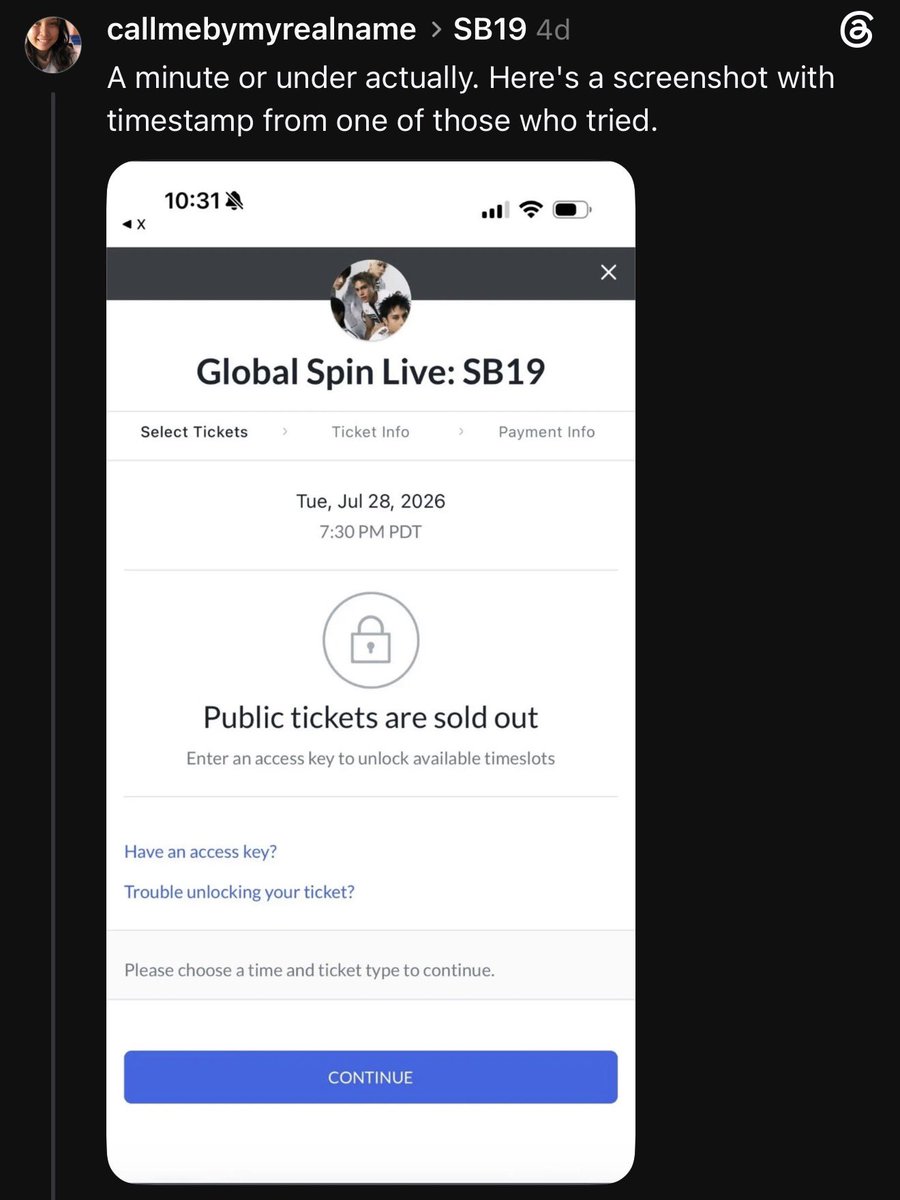
A earlier comment by an A’TIN made on Threads has provided a screenshot of the SB19 appearance at GRAMMY Museum’s Global Spin Live was actually sold out in under 1 minute without an official announcement from the organizer.
This confirms them to be THE fastest selling P-Pop male band and tied for the fastest OPM band in Grammy museum event history.
@SB19Official
#PPOP #SB19
𝟮 AAA Awards
𝟲 Filipino Music Awards
𝟮𝟯 Wish Music Awards
𝟭𝟴 Awit Awards
𝟭𝟰 PMPC Star Awards
𝟴 MYX Awards
𝟯 TikTok Awards
𝟴 Nylon Awards
𝟭 Nickelodeon Kid's Choice Award
𝟭 Billboard Korea Award
𝟯 Billboard Fan Army Awards
𝟱 SEC Awards [NEW +2]
@SB19Official#SB19







![gel_atinboy's tweet photo. 𝟮 AAA Awards
𝟲 Filipino Music Awards
𝟮𝟯 Wish Music Awards
𝟭𝟴 Awit Awards
𝟭𝟰 PMPC Star Awards
𝟴 MYX Awards
𝟯 TikTok Awards
𝟴 Nylon Awards
𝟭 Nickelodeon Kid's Choice Award
𝟭 Billboard Korea Award
𝟯 Billboard Fan Army Awards
𝟱 SEC Awards [NEW +2]
@SB19Official #SB19 https://t.co/gTfKtGuQnR](https://pbs.twimg.com/media/HL-Z7tdbsAAYzDO.jpg)


