@AuronMacintyre As in what does the tower represent?
The throne represents the king you serve
The altar represents what is sacrificed.
…what’s the tower? Maybe I’m dumb
The Little Tribe – Have Four to Six.
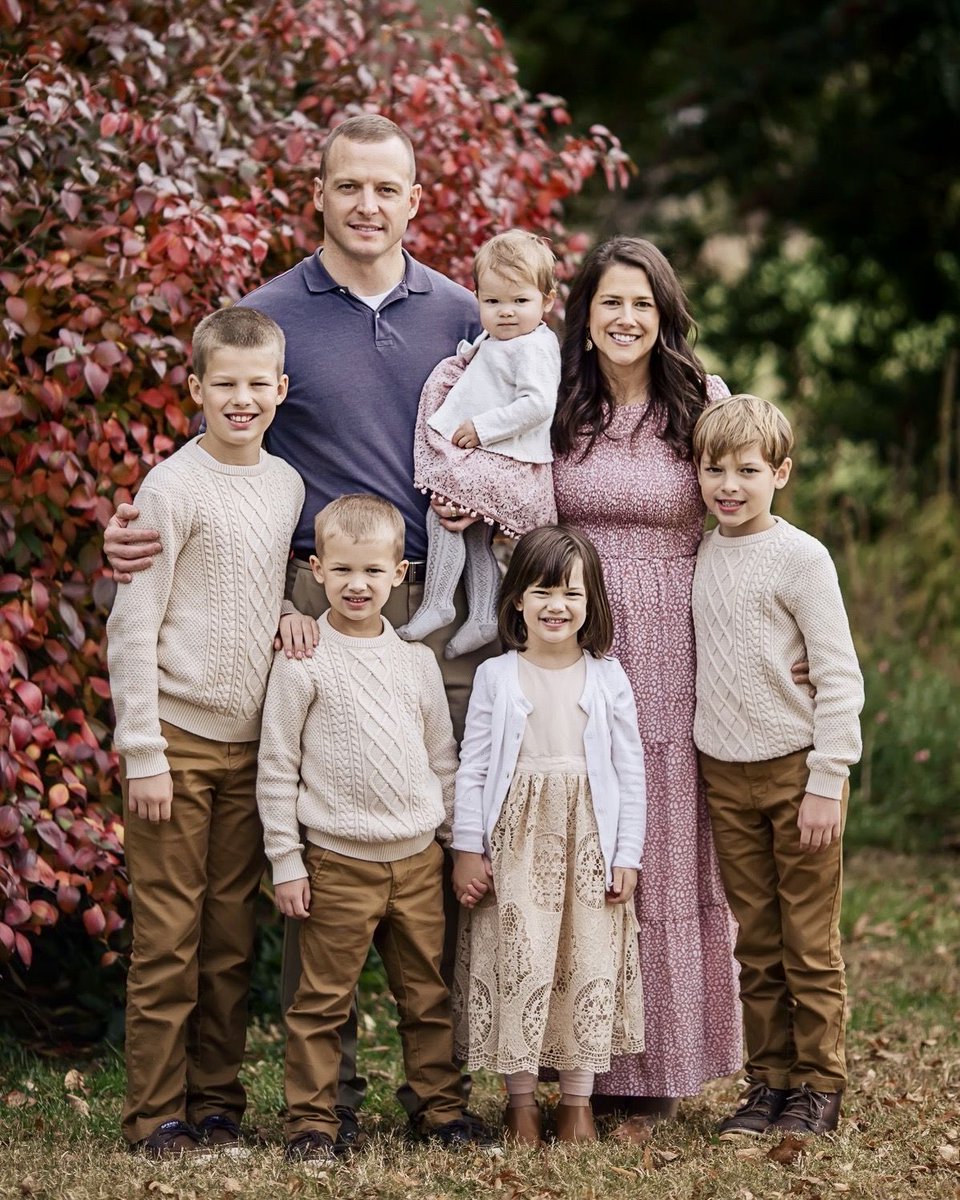
Have four to six children.
Not as a sacrifice. Not to fix a statistic. As the best project of your life – and the most radical one still available.
1. So that you have them to spend most of your life transmitting to. With one child, parenthood is a chapter. With six, it is the whole book. Thirty years of a full table and a full car, of stories told again and again – each time to a new face. Transmission stops being a lesson and becomes a whole life.
2. A little tribe – so they can stick together. Siblings are the first society. They argue, form alliances, betray each other over the last pancake and reconcile by dinner. Every parent of several knows the tribunal: "That’s not fair!" is the first cry of civilization. The child with five siblings learns early what a self-centered culture never teaches: you are not the center of the universe. And you are never alone in it.
3. A small society of civilizational resistance and development. The school has been captured. The media has been captured. Five siblings who grew up at the same table have not. Same stories, same jokes, same references – a shared language the system cannot edit. And cancellation depends on isolation – cut the target off from support, and the rest is easy. It is very hard to isolate someone with five siblings.
4. They can build together. Siblings start with the rarest capital there is: trust, earned over twenty years of shared bedrooms and shared secrets. The family firm is the oldest enterprise in the world for a reason – your best co-founder may be the one who knows all your weaknesses and shows up anyway. And excellence spreads in a family the way envy spreads in a committee: the younger ones chase the older ones, and the older ones cannot afford to slow down.
5. They can give each other courage. Fear works on individuals. It works much worse on tribes. One child who says the wrong thing at school is a problem. Five who say it are a family with an opinion. The family table is the first free-speech zone – the place where saying what you think is normal long before anyone explains that it is dangerous. Children raised there do not falsify their preferences easily. They have had too much practice being honest in company.
6. The objections. Too expensive – say the governments that take half your income and then explain that children are unaffordable. Rome did the same: the state removed the reason to have children, then legislated for babies. The career – almost nobody at eighty wishes for one child fewer. The planet – the Club of Rome said you were the problem, and the Club of Rome was wrong. For those who can – and not everyone can – the objections are mostly borrowed, usually from people with two children or none.
7. Maybe even a dynasty. Johann Sebastian Bach had twenty children; four of his sons became composers in their own right, and in one German town the musicians were simply called "the Bachs." The Adamses gave America a president, then a president, then an ambassador, then a historian. A dynasty is not money passed down. It is standards passed down. And a tribe carries the torch in more than one hand: one child is a thread, six are a rope.
Values without numbers lose. So does liberty.
Numbers are made at home.
The long march needed a century to capture the institutions. A tribe needs one generation to become one.
Tell the truth. Have courage. And build.
A large family.
@honestpollster I’d interpret that as the chemotherapy approach - get the patient near death, but work to make the cancer die first.
Maybe that is the way.
This is what students at Founders Classical Academy of Lewisville, a classical school in Texas, are asked to read. This is what serious education looks like:
5th Grade:
— Don Quixote (select episodes for young readers)
— Prince Caspian
— A Midsummer Night’s Dream
— Sherlock Holmes
— Little Women
— The Adventures of Tom Sawyer
— Narrative of the Life of Frederick Douglass (abridged)
6th Grade:
— Greek Myths (summer reading)
— The Children’s Homer
— Julius Caesar (adapted)
— The Scarlet Pimpernel
— The Count of Monte Cristo (abridged)
— The Prince and the Pauper
7th Grade:
— The Jungle Book (summer reading)
— The Strange Case of Dr. Jekyll and Mr. Hyde
— The Call of the Wild
— Fahrenheit 451
— Cyrano de Bergerac
— A Christmas Carol
— Romeo and Juliet
— Animal Farm
— The Diary of Anne Frank
8th Grade:
— Frankenstein (summer reading)
— Lord of the Flies
— Uncle Tom’s Cabin (selections)
— To Kill a Mockingbird
— Narrative of the Life of Frederick Douglass
— Much Ado About Nothing
— The Red Badge of Courage
— Benjamin Franklin’s Autobiography (selections)
9th Grade:
— The Odyssey (summer reading)
— The Iliad
— Oedipus the King
— Antigone
— The Clouds
— The Aeneid
— Julius Caesar (Shakespeare)
— Metamorphoses (selections)
10th Grade:
— Tales of King Arthur
— Sir Gawain and the Green Knight
— Beowulf
— The Canterbury Tales
— Hamlet
— Paradise Lost
— Shakespeare’s Sonnets
11th Grade:
— The Adventures of Huckleberry Finn
— The Scarlet Letter
— Walden
— Self-Reliance
— Moby-Dick
— The Tempest
— My Ántonia
12th Grade:
— Pride and Prejudice
— Metamorphosis
— Heart of Darkness
— Crime and Punishment
— King Lear
— Murder in the Cathedral
Skip forward to the 48:27 mark on this video and watch the question from @jonathanccadams and the following interchange.
Kudos to young, brave NSA students like Jonathan for standing up for the good men slandered by Erick Erickson and holding those who participated in the dangerous slander accountable!
You can only watch 5 movies for the rest of your life. What are your 5?
Master and Commander: The Far Side of the World
Once Upon A TimeTime… In Hollywood
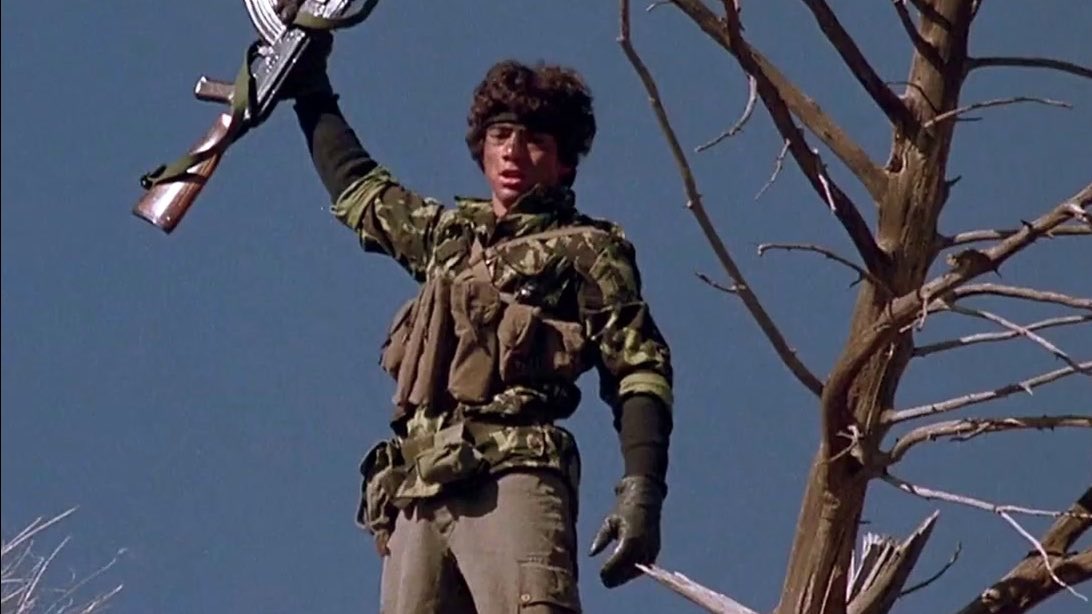
Red Dawn (original, of course)
True Grit (Coen brothers remake)
Curious George: A Very Monkey Christmas
Windows on the World, Ezra Stoller, 1976
One of my favorite photographs. Ezra Stoller likely used bright, raking strobes in order to raise the light levels of the interior to avoid over-exposing the view out the window.
Peter Thiel just put 72% of his public portfolio into energy and power.
Here’s the full list:
VIST 18.1%
Argentine shale in Vaca Muerta. Second biggest position in the whole book.
VST 14.1%
Independent power producer with nuclear and direct data centre contracts.
AEP 10.1%
Regulated utility with one of the largest contracted data centre pipelines in the country.
DTE 9.6%
Midwest utility feeding industrial and AI demand.
FE 9.5%
Transmission heavy. The wires side of the buildout.
CMS 9.4%
Another regulated utility, sized almost identically to the rest.
XE 0.9%
Small modular reactors. Tiny position, but that's the nuclear bet.
Generation, fuel, regulated utilities and next generation nuclear. 4 different ways to own the same constraint.
This architectural feature should be used more often in American home building. Having a dry place to step outside, permanent and part of the home. A passage between home and garage.