They said African languages were too fragmented, too complex and too commercially insignificant to build advanced AI for.
We disagreed. So we built it.
64 languages. 166 voices. 3 billion parameters. ONE model.
Today, we are unveiling STORM-Ensemble 3.0, the most capable multilingual speech synthesis model we have built at PlotWeaver.
From Yorùbá, Igbo, Hausa and Nigerian Pidgin to Swahili, Amharic, Wolof, Zulu, Xhosa and dozens more, STORM-Ensemble 3.0 generates speech across 64 languages, with 166 distinct speaker voices.
Every voice you hear is generated by our model, not a prerecorded sample.
But the real breakthrough isn't the numbers.
It's what becomes possible when this technology is in the hands of people who can build with it.
-African filmmakers distributing stories across languages.
-Banks and telcos serving customers in their mother tongues.
-Education platforms reaching more children.
-Developers building voice AI products without starting from scratch.
We are not building AI for African languages simply to prove it can be done. We are building the infrastructure to make our languages commercially viable at global scale.
Next week, I will be speaking at the Commonwealth Business Forum in Antigua about unlocking the Commonwealth's creative potential. This launch is a practical demonstration of that ambition.
Africa must not simply consume the future of AI. We must build, own and shape the infrastructure that powers it.
Watch the video. Listen to the voices. Imagine what's possible.
Introducing STORM-Ensemble 3.0.
PlotWeaver. Build Once. Speak Every Language.
#PlotWeaver #STORMEnsemble #VoiceAI #AfricanLanguages
Effective Immediately, all organizations using PHP for their systems are advised to be prepared for an update addressing two critical vulnerabilities. PHP is widely used for web applications. These vulnerabilities often provide a direct path to the server's file system or database. If an immediate update is not feasible, it is recommend that organizations take the system offline until it can be fully mitigated. NSA will follow up shortly with more specific guidance.
Crazy 72 hours in security. Three major incidents dropped back-to-back: eMudhra, PingCAP (TiDB Cloud), and PHP.
Here is the short version of what happened and who got hit.
1. eMudhra (Trusted CA compromise)
eMudhra generated 8 intermediate CA certificates in April 2025 (cross-signed by Sectigo). A bug in their HSM key-wrapping test script created a second set of P-384 keys where the private keys were single-byte numbers under 256. Operators picked the wrong key labels and signed them into real CA certs.
One of the intermediate CA private keys was literally the number 4.
The other seven: 56, 66, 115, 155, 156, 230, 237.
Three weeks later (May 2025), their CRL signatures started failing because the CRL signer was using the real keys instead of the weak ones. Instead of asking why the keys didn't match, someone switched the CRL signer to the weak keys and closed the ticket.
• Browsers are safe: Chrome, Firefox, Apple, and Microsoft already blocked them, and zero rogue certs hit CT logs.
• Servers are not: curl, Python (certifi), Go binaries, and Docker base images don't check CRLs. Update ca-certificates, certifi, and Go (1.27.3 / 1.26.10).
• 10-second check on any server:
curl https://t.co/vhiGLxNhIS
(TLS error = safe. 200 OK = still vulnerable.)
2. PingCAP / TiDB Cloud (10.6 TB breach)
Attackers found GCP and Azure credentials committed inside PingCAP's own repos. They set up a replication feed of TiDB Cloud's production control plane and exported the entire database every 6 hours for 22 straight days. 88 full exports, zero alerts. 200 GB is already out on torrents.
Beyond the 413 private repos and 20.6M customer SQL queries logged from their web SQL Editor, PingCAP engineers were pasting customer secrets into Jira tickets.
Who is affected in the leaked records:
• Live credentials exposed in support tickets:
- Pinterest: AWS keys for their pingcap-logs S3 bucket
- CardX / Silverlake (NPCI-linked env): AWS admin key in a backup log with full access to 258 external S3 buckets
- DeBank: 38 presigned S3 URLs
- An unnamed AI/dev platform: a 314 MB slow-query log attached to a ticket containing 8,027 live customer secrets (an AWS root key, a GitHub admin PAT over 1,701 repos, 7,485 AWS STS tokens, and 192 OpenAI/Anthropic/Gemini keys)
• Tenants with infra metadata, VPC CIDRs, app-server IPs, or contract pricing exposed:
- Tech: Atlassian, Databricks, Airbnb, Baidu, LINE, Nylas, Persona, PatSnap
- E-comm & Travel: https://t.co/C512KFOEq5, Shopee, Flipkart, Mercari, ZOZO, AEON, Delhivery, Klook
- Gaming: Capcom, Square Enix, Konami, Bandai Namco, Cygames, Colopl, DMM
- Finance: PayPay, SoftBank, SBI, SB Payment Service, Fujitsu, TOPPAN, Bank of China, China Life
- Crypto: Bitget (said only public trade logs were on it and they already left), Pionex, DigiPlus, NFTscan, Chainbase
• Developer profiles leaked (from a purchased https://t.co/28tjHqd5Wr table in PingCAP's BigQuery):
- 24,900 personal emails + GitHub/LinkedIn profiles of engineers at Tencent (3,327), Huawei (2,726), ByteDance (2,475), AIG (2,140), Mastercard, Flipkart, and bKash.
If you use TiDB Cloud: rotate your console API keys, DB passwords, and anything you ever pasted into a support ticket.
3. PHP "PHP2Shell" (CVE-2026-109618 & CVE-2026-109619)
Two CVSS 9.2 pre-auth RCEs leaked yesterday ahead of today's 14:00 UTC patch.
Public writeups trace it to a heap Use-After-Free in PHP's native C multipart/form-data session upload-progress handler (ext/session/session.c).
Because C-level multipart parsing runs before line 1 of index.php:
• App auth, Laravel/WordPress middleware, and file_uploads = Off do not stop it.
• Only PHP 8.2–8.5 get official patches today (59% of PHP servers on Shodan are on EOL <= 8.1).
• Until you patch php-fpm: lock php_admin_flag[session.upload_progress.enabled] = off and block unexpected multipart requests at Nginx/Apache/Cloudflare.
How on earth did this happen:
The Indian certificate authority (CA) eMudhra had one job (well, two):
1. Create secure, 384-bit private keys
2. Store these securely and do not leak them
Well, eMudhra chose private keys between 1 and 256 (the numbers!!) and called it a day. WTF
Haven’t laughed so hard in a while.
@SteveNdukwu asked @HaddadArvin to review a Nigerian ‘luxury’ development. 😂😂😂
Dear Nigerian developers, please watch this video.
https://t.co/I1H11LhuQm
Ownership is not a feeling. It's a decision.
Most people treat their standards as a response to their environment performing when conditions are good, pulling back when they're not.
I've built my entire career on the opposite principle. https://t.co/YUIkXbvZAz
Built in Nigeria. Ready for the world.
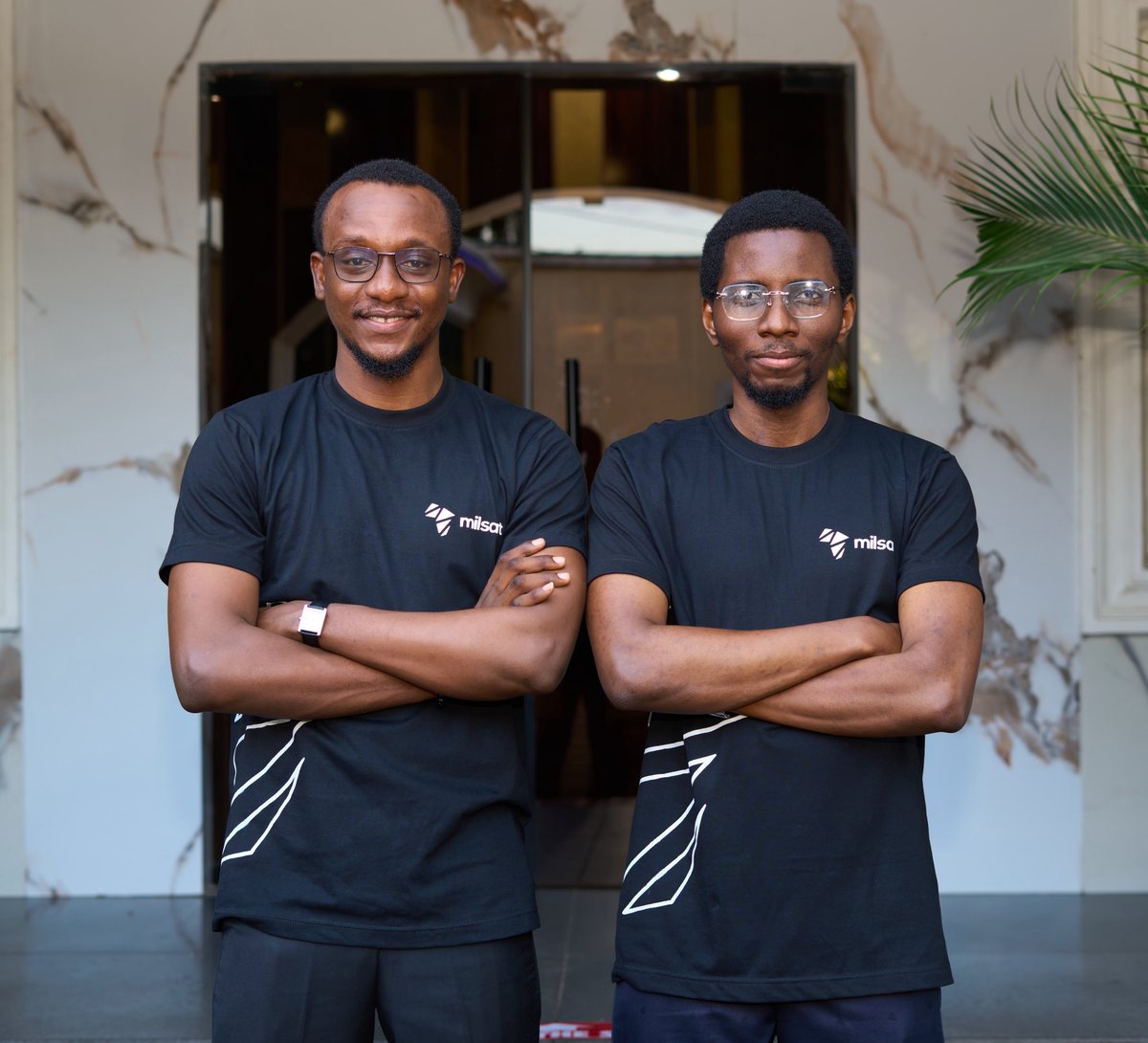
Today, I want to celebrate @milsat_africa, founded by Taslim Saluadeen and Adedamola Baderinwa, the Nigerian company behind the technology powering our new National Digital Postcode.
From delivering a pilot in 2023 to building a national system, Milsat demonstrates the depth of Nigerian technical capability and our ability to create infrastructure that improves public services, supports businesses and opens up economic opportunities.
Their work extends beyond postcode. Milsat supported the National Population Commission’s mapping of more than 65 million properties in preparation for Nigeria’s first digital census, and has deployed enumeration area demarcation technology in Sierra Leone.
This is the ambition I want us to nurture: Nigerian companies building solutions for our needs, proving their capabilities at home and taking that expertise to the world.
With appreciation to @NipostNgn, Meeds Network Limited and the National Population Commission for their roles in this journey, today’s spotlight belongs to the Milsat team.
I look forward to seeing you help many more countries turn location and field data into better services for their people.
#NigerianExcellence
I was having dinner last night with a friend working in the chicken industry and I learned something that blew my mind.
Where do chicken farmers get their chickens? Most of us would say "from their existing chickens obviously, they breed and lay eggs."
That's what I thought too, but turns out I was dead wrong.
The reality is that the immense majority of meat chicken farmers in the world get their chickens from one of 2 companies: Cobb-Vantress, owned by Tyson Foods, or Aviagen, controlled by Germany's EW Group (the Wesjohann family).
They have a concept specific to the industry called grandparent stock: what you buy from these 2 companies is - essentially - a bunch of chickens with planned obsolescence.
The way it works is that each company keeps "pure" bloodlines on its own farms. Let's label them A, B, C and D. Those are the crown jewels - these companies' IP - and they never leave the building.
What they sell you are the "grandparents": chicks from those four lines, but each line in only one sex. You get A roosters but no A hens, B hens but no B roosters, C roosters but no C hens, D hens but no D roosters. Which means you can never breed more A, B, C or D birds yourself.
What you can do is cross them. A roosters with B hens give you the fathers, C roosters with D hens give you the mothers - these are the "parents". The parents then give you the chickens that actually end up on our plates, slaughtered at around 6 weeks.
And that's the end of the road. If you tried breeding those chickens, their chicks would be a complete genetic lottery: still chickens, sure, but without the genetic properties that make them commercially viable. They'd grow slower and less evenly, you'd have to sell them for way more than your competitors, and your business would be dead.
So you have to go back to Cobb or Aviagen for new grandparents. Forever.
Why buy grandparents at all, and raise 2 generations just to sell the third? The answer is scale. If you buy say 100 grandparents, each of them gives you around 50 parents, and each parent hen then gives you around 150 chicks: from those 100 grandparents, you have yourself some 600,000 chickens whose meat you can sell.
It makes no sense for these 2 companies to sell the final chickens directly. They'd have to hatch tens of billions of chicks a year and ship them all over the world. Much easier to simply sell the grandparents and let farmers do the multiplying and pay for the farms, the feed and the labor.
And, you knew this was coming, there is also a China angle here: as you can imagine, China isn't too pleased to be dependent on foreign companies for such a basic food item as chicken.
So China did what China does best: long-term planning. The Ministry of Agriculture and Rural Affairs launched a plan for "national broiler genetic improvement" (2021-2035), which aims for domestically bred breeds to make up at least 60% of the domestic market by 2035 (https://t.co/INHrS7YUpD).
And, of course, they're ahead of the plan. As of 2025, homegrown breeds held more than 30% of the market: halfway to the 2035 goal in just four years (https://t.co/hF0HvB6Q5y).
Can you escape all this as a consumer? Sure, you can buy organic or Label Rouge chicken, from slower-growing breeds raised for at least 81 days instead of 6 weeks, for two to three times the price.
Except, plot twist: the genetics behind most of those slow-growing birds come from a French company called Hubbard... which has belonged to Aviagen since 2018 (https://t.co/URsRSI3gI0)😅
And even if you could truly escape, you wouldn't want everyone to: we'd need vast new swathes of farmland, both for the chickens and their feed. Ironically, advocating for organic free-range chicken for everyone is one of the worst positions one can take for the planet's resources.
If you want to minimize your environmental footprint, the counterintuitive answer is to buy the cheapest supermarket chicken - or eat less meat, of course.
As my friend was saying last night, you may not like the way this industry works but, at the end of the day, it's what puts affordable protein on the plates of billions of people, using proportionally fewer resources than any other way of raising chicken.
I can’t stress enough how little an idea matters compared to the agency of the people executing the idea.
I have had the privilege of knowing and sometimes even working with some of the most successful people (by various metrics).
The difference between mediocre and excellent work and outcomes is predominantly one of agency.
In practice this means: they dont wait for things to happen to them they go out and make things happen for them.
They don’t wait for someone else to do something, for someone to teach them, for someone to give them the path, etc. They just go out and find a way to do it.
I think the single biggest superpower these people have is the realization/belief that the world around them is completely mutable. Most everything that happens is because a person made it happen.
I used to tell people to look around the room you’re sitting in. Look at everything. Every noun. It almost all exists because a person willed it into existence. Nothing is stopping you from doing the same.
I see people online all the time dismissing someone else’s success because “I had that idea first” or whatever. I mean… yeah? If so then the difference is… you. So a bit of a self own whenever I hear that.
Number one tip: act with agency.
Look at America, Europe and Canada today.
Indians are leading top companies, building global technology, running hospitals, teaching in world-class universities and occupying important positions across the world.
Look at China.
They moved hundreds of millions from poverty to global power by taking education, science, engineering, manufacturing and national planning seriously.
None of this happened by accident.
Nations that invest in human capital eventually export influence.
That is the path we must take.
We are not grooming children just to survive Nigeria.
We are grooming a generation that will compete with the best minds on earth.
Our education must move from survival to global domination.
Every developed nation first became an education superpower before becoming an economic superpower.
Education is not another sector.
Education is the operating system of a nation.
Everything else runs on it.
Overthinking isn't a thinking problem. It's a discomfort problem.
We tell ourselves we're being careful. Weighing options. Doing our due diligence. But most of the time, the loop in our head isn't analysis — it's avoidance.
The decision feels heavy because making it means accepting a tradeoff. And accepting a tradeoff means sitting with the discomfort of what we won't get to have.
So instead of choosing, we deliberate. We open a new tab. We ask one more friend. We re-read the same pros and cons list at 11pm. The thinking feels productive. It isn't. It's the same coping mechanism as reaching for the phone — just dressed up as responsibility.
Here's what helped me stop:
1. Set a deadline for the decision. Most decisions don't deserve more than 10 minutes. The big ones rarely deserve more than a week.
2. Name the discomfort you're avoiding. "I'm scared I'll regret it." "I don't want to disappoint them." "I don't want to be wrong in public." Once it's named, it loses most of its power.
3. Decide what you'd do if you trusted yourself. Then do that.
Most overthinking ends not when we get more information, but when we get honest about what's actually slowing us down. The thinking was never the bottleneck. The feeling underneath it was.
One of the biggest problems with our political system is that many of our leaders are career politicians. They have spent their entire adult lives climbing the political ladder until they reach positions of power.
Many of them have never worked in a structured organization where they learned how effective systems are built and managed. They have never created wealth or managed a successful enterprise. They have never experienced environments where merit, competence, and accountability determine who gets ahead.
They have also missed the kind of exposure that shapes decision-makers, like world-class training, diverse professional teams, and organizations where performance is measured and poor decisions have real consequences.
Their greatest qualification has simply been surviving politics.
Make no mistake, politics is important, but governing requires much more than political survival. It requires leadership, competence, sound judgement, and a deep understanding of how successful systems work.
If we want better outcomes as a nation, we need more people in public office who know how to build, manage, and improve systems, not just win/rig elections.
I have always argued that the easiest way to distort the hierarchy of competence is by putting the most incompetent person on top. That is exactly what is happening in Nigeria. That is why the system is collapsing. That is why the Okoro culture is on the rise. That is why the acceptable standard is at an all-time low.
If Nigeria is to be run as one of the companies that make up the S&P 500, most of our governors, senators, and local government chairmen won't even make it as a receptionist.
Well this is massive:
- Every non-US company sees how they can be cut off from US vendors with a snap of a finger. Non-US vendors getting free advertisement
- What does this mean for US AI labs’ offices and employees outside the US? Reads pretty draconian
What a mess
As someone who partially grew up among European elite kids like him, this reminds me just how incredibly hollow some of them are.
For a quick background, I went to one of the poshest high schools in France (Janson de Sailly, for those who know) and, afterwards, to what was at the time - and probably still is - the most expensive undergraduate school in Europe (EHL in Lausanne, Switzerland).
Needless to say, many of my classmates were from unbelievably privileged backgrounds. Just in my classroom in Lausanne I had the son of a (very famous) Russian oligarch, the son of Italy's largest real estate developer and the son of Spain's largest real estate developer (funnily, the latter two were flat mates).
Another classmate of mine came from the richest family in Naples, Italy and - while we were at school - his father (known in Naples under the nickname "Il Sultano") got arrested for having bribed half of Naples's city council - which, if you know Naples, ought to tell you something.
These were the kids I was doing group projects on business ethics with (literally) 😅
Anyhow, my story, and probably my luck, was that - before going to high school in Paris - I was raised in very normal public schools in the South of France where my friends were anything but wealthy. Their parents were farmers and everyday workers.
Which means - and I'd come to realize this was very important in life - that it was easy for me to understand how big a mistake it is to see money as identity and meaning - and to confuse someone's net worth with their actual worth.
What really struck me at the time was the contrast with my "poor" classmates of earlier in my life. They couldn't define themselves by what they had - by definition - and this forced them to reach deeper for their identity: their skills, knowledge, humor, etc.
Rich kids can skip that entire process, and the tragedy is that most of them do: they reach for the readymade identity that money provides. I remember being incredibly frustrated by many of my classmates, like "ok, I get it, your dad is rich and you own a lot of nice things but who are YOU, what else is there?" The answer, more often than not, was nothing.
To be fair, there were exceptions. One of my classmates I was most impressed by came from one of Zurich's wealthiest families (which, if you know Zurich, means insanely wealthy) yet he was almost OCD in not showing he had money: driving the shittiest car imaginable, living in a small studio, etc. He was very intellectual, very contrarian, and clearly at war with the idea that his family's wealth ought to define who he was.
I only discovered who he actually was when I started my first company and he approached me to invest: to discuss the investment I went to one of his family homes, which it turned out was a literal palatial castle on the shores of Geneva lake. The guy had decided to live in a small rundown studio when he literally had a castle sitting empty a 5-min drive away.
THAT I was impressed by: it's easy to see that money isn't meaning when you don't have any. To see it when you have more than almost anyone - when everyone around you is organized around the opposite assumption - is much harder. But to actually live it, to choose the studio when you have the castle keys in your pockets - with no audience to applaud you for that - that shows real depth.
At the end of the day, I think, the real distinction isn't between rich and poor but between people who exist from the inside out and people who exist from the outside in.
Wealth just happens to make it incredibly easy to be the latter, to skip the work of becoming someone and settle for a borrowed identity that glitters from the outside but is hollow all the way through. A Potemkin village identity.
This is actually a real societal issue, and magnified by social media (with idiotic posts like this one 👇): the more "outside in" folks out there, the less people with genuine internal anchors, the more fragile everything becomes.
When you think about it, everything that genuinely matters in a society is built by people who think for themselves: they take the world in, pass it through something genuinely their own, and give back something that didn't exist before: an idea, a conviction, a stand.
Every reform, every invention, every act of moral courage in history came from someone with an internal anchor strong enough to resist the current. Remove those people and all you have left is the current.
This isn't new, by the way. Most ancient traditions warn against exactly this, from the Bible (the golden calf story) to Confucius, who built his entire ethics around the distinction between the exemplary person (the Junzi, 君子) - oriented around internal cultivation and righteousness - and the petty person (Xiaoren, 小人), oriented around profit and gain. The junzi builds himself from the inside, the xiaoren chases what's outside.
So please, do not make the mistake of being impressed by wealthy people flaunting their wealth. Don't focus on the glitter, focus on the hollowness it's trying to hide.
Why isn't Nigeria rich?Bad government? Corruption?
Or is there a more uncomfortable explanation: the way we think about money itself?
In my new article, I explore why some societies turn money into capital,while others struggle .
Find the link here: https://t.co/FVIMeohKMp
Every year, this has to be the one report I look forward to the most: the Democracy Perception Index, compiled by the Alliance of Democracies Foundation (in partnership with Nita Data).
In fact, my yearly thread on the report is apparently such a tradition that, this year, its lead researcher personally sent me the report with this message: "every year, I look forward to your thread about it!". That's how you start wondering whether you tweet too much 😅
Why do I like this report so much? A few reasons:
1) The Alliance of Democracies Foundation, the organization behind the report, cannot even remotely be suspected of being some sort of anti-West outlet: it was started by an ex-NATO Secretary General (Anders Fogh Rasmussen) and its stated purpose is "to unite world democracies"
2) It's surprisingly honest and the methodology is actually democratic. Unlike other reports on democracy the scoring isn't done by the report's authors (like the report by Freedom House or The Economist's "Democracy Index"). It simply asks people what they think and, when it comes to democracy, that's kind of the point 🤷♂️
3) I love the expression "perception is reality" because, like it or not, what people believe about their system is what determines its legitimacy. A democracy that nobody actually experiences as one can't credibly claim to be one. And conversely, a so-called "autocracy" that its people overwhelmingly believe is actually a democracy might... actually be a democracy.
Anyhow, this year's edition did not disappoint. The data is absolutely fascinating and frankly, a little terrifying. So here you go: my thread on the 2026 Democracy Perception Index 🧵
One of my “go to” lines for years has been that the sign of success for a country isn’t that poor people drive cars, but that rich people ride the subway…