Just got my long-awaited package! Knife through the shipping tape, unboxing this little surprise feels like winning a tiny prize. Love those fresh, unopened items right out of the box ,
Just made warm chocolate chip cookies with my kiddo, and we’ve been laughing over the silly drawings they scrawled on the baking tray. Perfect little Sunday win
Thanksgiving is comin’! Try our seasonal pumpkin spice roast turkey platter – juicy, spiced perfectly, ready for your feast! Tag us in your family meal pics! #ThanksgivingFeast#SeasonalEats,
The money supply is shrinking. So what?
Well, the last time it did this was the Great Depression
However, it's important to note that this is a YoY change
Looking closer, the money supply change has actually flatlined and is almost unchanged from May-Dec this year
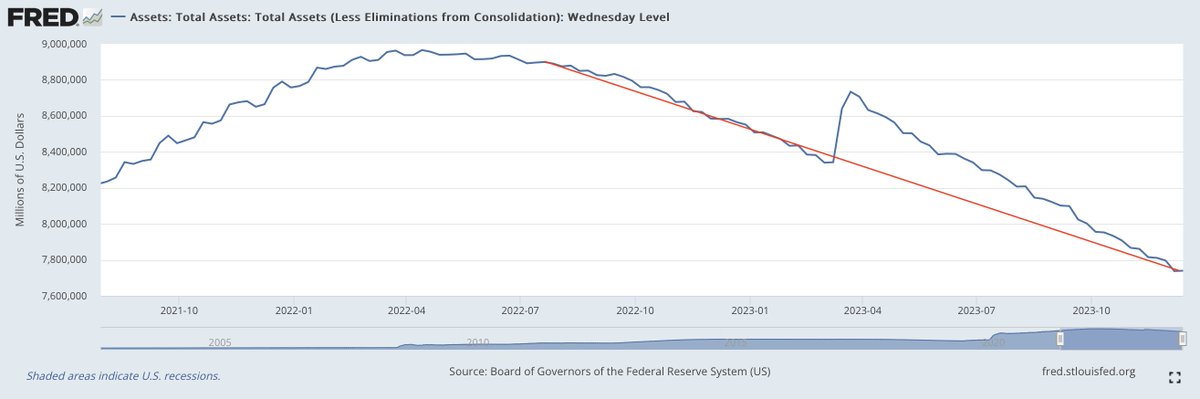
The flatline occurred despite continued shrinking of the Fed's balance sheet
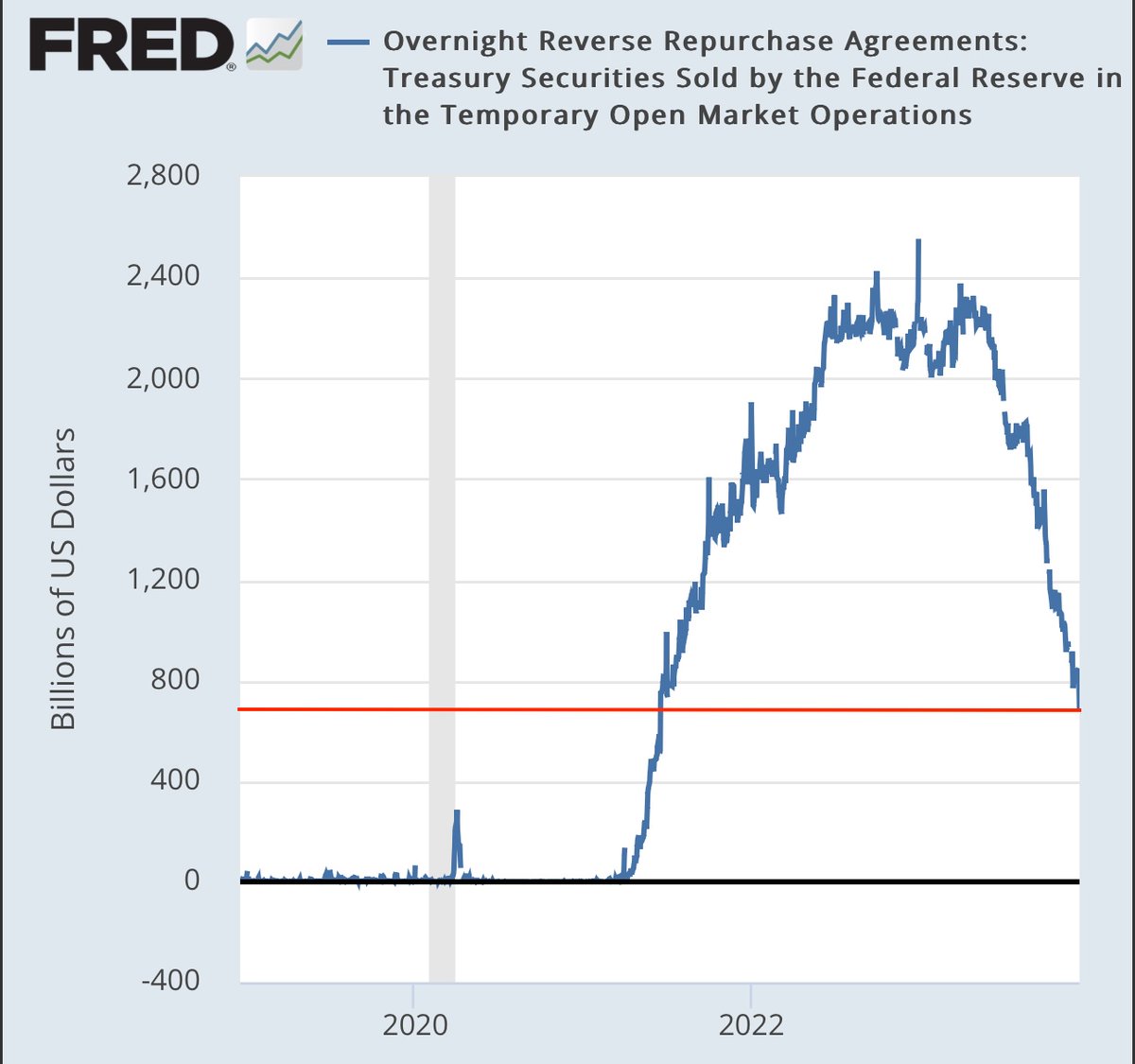
The reason the money supply stopped shrinking is likely because money started to leave the reverse repo facility
It was May when the money supply stopped shrinking, and it was also May when the cash started to leave the Reverse Repo facility
This makes sense because Institutional cash in reverse repo is outside the banking system and not counted in M2
So as t bills rates began to exceed the RRP rate (also starting in May), cash started to leave RRP and go to T bills instead
T Bills are gov borrowing, which means gov spends it, and reintroduces that cash to the banking system
So money supply should begin falling again starting in Jan-Feb when RRP runs out, and no more can be reintroduced to banking system
QT will start to have the same effect on money supply yet again, and shrink it more
In the past, a shrinking money supply is always associated with panics, depressions, and recessions.
There is always a lag, and we should expect a lag especially when the shrinking of the money supply pauses halfway through
But we should not expect that there will be no economic pain simply because it has not started yet
Only $683 Billion left in the Fed's Reverse Repo facility
One year ago it topped at $2.5 trillion
Right now, all this cash is going into t bills (short term government debt)
If everything stays the same (treasury borrowing amounts, treasury bill issuance, Fed interest rates, QT), it will be empty in a few months
Once it is empty, the money the government is borrowing has to come from somewhere else. This is a force that will push up on interest rates.
TBD whether that force will be offset by other forces
Warning: Credit card interest rates have spiked to 21.19%
A level that has NEVER been seen since 1995
This is happening at a time when credit card debt have surpassed $1 trillion
And personal interest payments has crossed above $500 billion
There is only 1 word to define this: Unsustainable
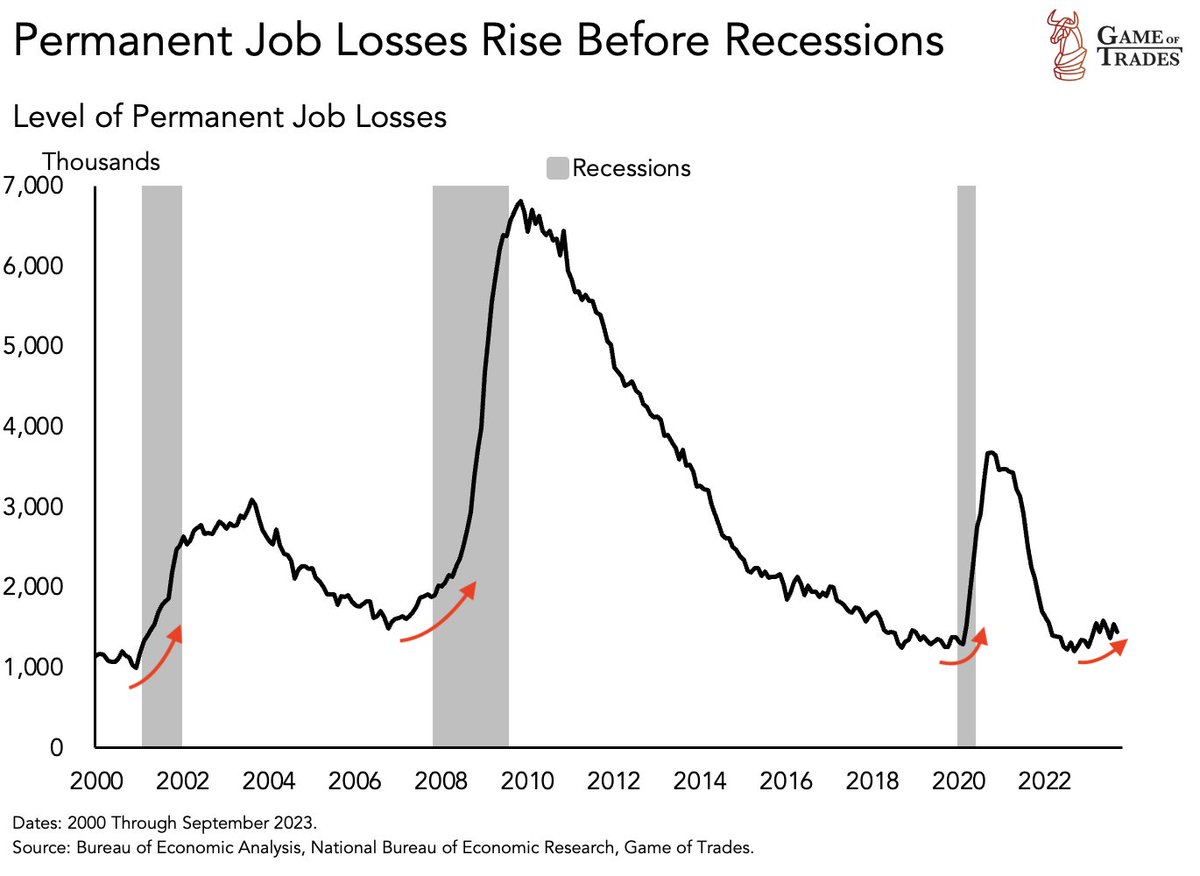
Permanent job losses have been on the rise
A spike in this metric has sysmtematically led to a recession
Current rate of increase is comparable to:
- Dot Com bubble
- Financial Crisis
- Pandemic
All three instances experienced significant economic downturns,
Resulting in sharp market downturns
US Mortgage applications fell another 6.9% in the week ending October 13th
The mortgage market index is now at the lowest in almost 30 years as interest rates continue to freeze up the housing market.
The mortgage market index includes both mortgage applications and applications for refinancing.
October @NAHBhome Housing Market Index much weaker at 40 vs. 44 est. & 44 in prior month (rev down from 45) … all components declined, with future sales outlook falling most m/m
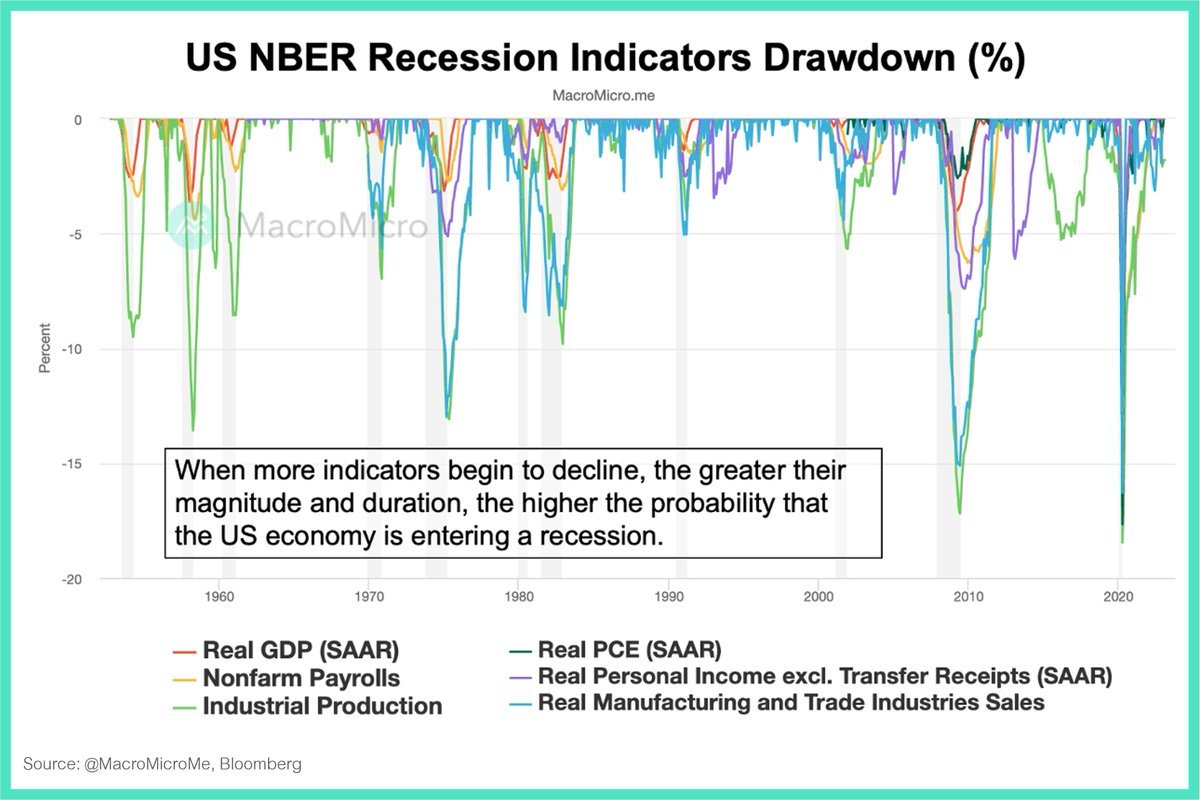
🇺🇸US #NBER#Recession Indicators has served as a reliable precursor to previous recessions. We observe that these indicators have almost always fallen by more than 2% during the last 7 recession periods since the 1970s. #MM
👉Full Article: https://t.co/5IU86gukaP