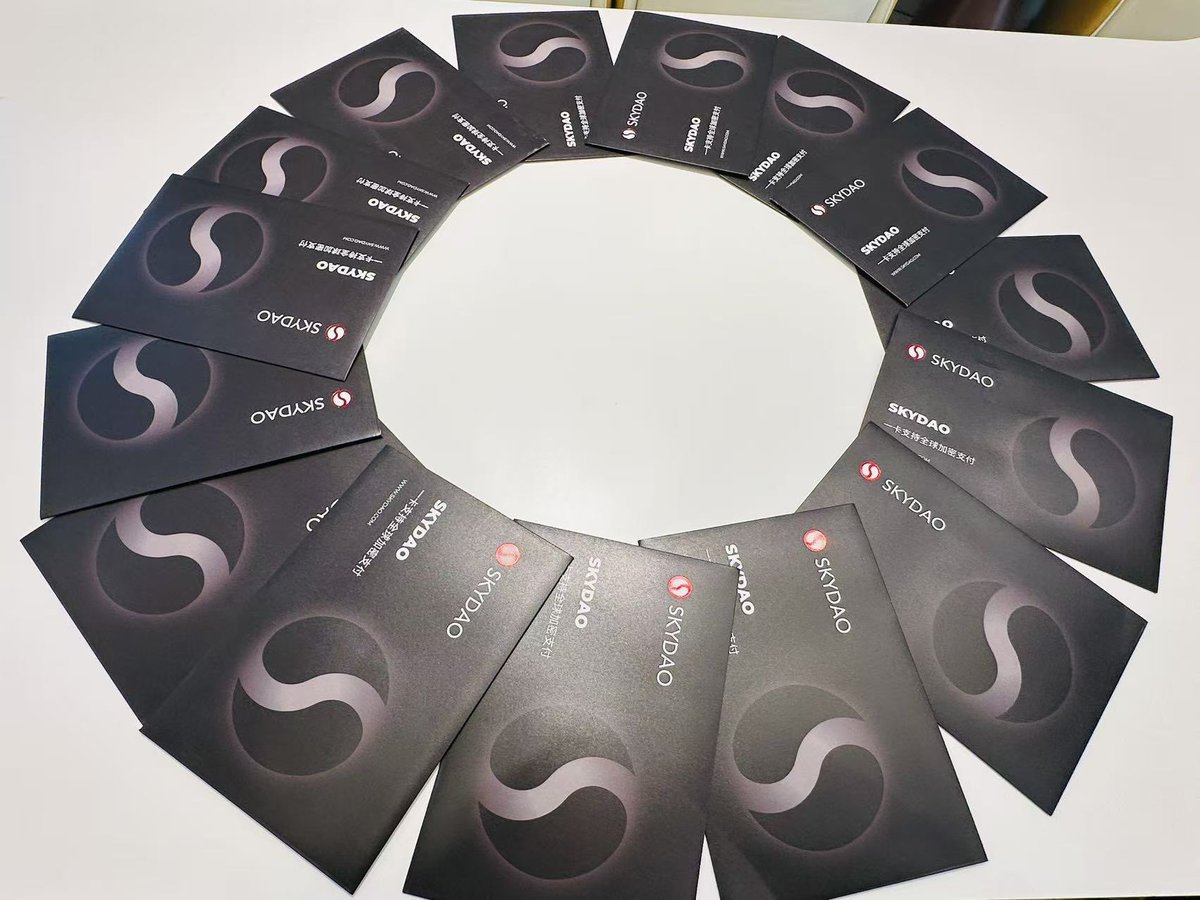
SkyDAO is proud to support our new partner TradingSkill 🚀
Together, we are entering the new era of AI-powered trading:
🤖 AI-driven strategy execution
🛡 Real-time risk control
⚡ Compute power empowering performance
🌍 Built for global markets and real liquidity
Our SkyDAO community always shows up for every offline gathering. Frequent meetups, deep sharing, strong connections—building Web3 together side by side🥳
AI is depreciating execution while appreciating vision and 'perseverance.'The moat of 0→1 is being eroded by technology. What becomes the hardest currency in the next chapter of civilization: the imagination to take 1→100, and the willpower to keep exploring where no map exists
In the age of AI, human intelligence is rapidly depreciating.
With AI’s growing power, basic R&D, design, and integration have become ridiculously simple.
0→1 is losing its premium.
@peterthiel
What truly matters now:
The imagination to go from 1→100 (or beyond),
and the willpower — the deep mission — to continuously operate and evolve AI capabilities.@ericzhu
How I think about "security":
The goal is to minimize the divergence between the user's intent, and the actual behavior of the system.
"User experience" can also be defined in this way. Thus, "user experience" and "security" are thus not separate fields. However, "security" focuses on tail risk situations (where downside of divergence is large), and specifically tail risk situations that come about as a result of adversarial behavior.
One thing that becomes immediately obvious from the above definition, is that "perfect security" is impossible. Not because machines are "flawed", or even because humans designing the machines are "flawed", but because "the user's intent" is fundamentally an extremely complex object that the user themselves does not have easy access to.
Suppose the user's intent is "I want to send 1 ETH to Bob". But "Bob" is itself a complicated meatspace entity that cannot be easily mathematically defined. You could "represent" Bob with some public key or hash, but then the possibility that the public key or hash is not actually Bob becomes part of the threat model. The possibility that there is a contentious hard fork, and so the question of which chain represents "ETH" is subjective. In reality, the user has a well-formed picture about these topics, which gets summarized by the umbrella term "common sense", but these things are not easily mathematically defined.
Once you get into more complicated user goals - take, for example, the goal of "preserving the user's privacy" - it becomes even more complicated. Many people intuitively think that encrypting messages is enough, but the reality is that the metadata pattern of who talks to whom, and the timing pattern between messages, etc, can leak a huge amount of information. What is a "trivial" privacy loss, versus a "catastrophic" loss?
If you're familiar with early Yudkowskian thinking about AI safety, and how simply specifying goals robustly is one of the hardest parts of the problem, you will recognize that this is the same problem.
Now, what do "good security solutions" look like?
This applies for:
* Ethereum wallets
* Operating systems
* Formal verification of smart contracts or clients or any computer programs
* Hardware
* ...
The fundamental constraint is: anything that the user can input into the system is fundamentally far too low-complexity to fully encode their intent. I would argue that the common trait of a good solution is: the user is specifying their intention in multiple, overlapping ways, and the system only acts when these specifications are aligned with each other.
Examples:
* Type systems in programming: the programmer first specifies *what the program does* (the code itself), but then also specifies *what "shape" each data structure has at every step of the computation*. If the two diverge, the program fails to compile.
* Formal verification: the programmer specifies what the program does (the code itself), and then also specifies mathematical properties that the program satisfies
* Transaction simulations: the user specifies first what action they want to take, and then clicks "OK" or "Cancel" after seeing a simulation of the onchain consequences of that action
* Post-assertions in transactions: the transaction specifies both the action and its expected effects, and both have to match for the transaction to take effect
* Multisig / social recovery: the user specifies multiple keys that represent their authority
* Spending limits, new-address confirmations, etc: the user specifies first what action they want to take, and then, if that action is "unusual" or "high-risk" in some sense, the user has to re-specify "yes, I know I am doing something unusual / high-risk"
In all cases, the pattern is the same: there is no perfection, there is only risk reduction through redundancy. And you want the different redundant specifications to "approach the user's intent" from different "angles": eg. action, and expected consequences, expected level of significance, economic bound on downside, etc
This way of thinking also hints at the right way to use LLMs. LLMs done right are themselves a simulation of intent. A generic LLM is (among other things) like a "shadow" of the concept of human common sense. A user-fine-tuned LLM is like a "shadow" of that user themselves, and can identify in a more fine-grained way what is normal vs unusual.
LLMs should under no circumstances be relied on as a sole determiner of intent. But they are one "angle" from which a user's intent can be approximated. It's an angle very different from traditional, explicit, ways of encoding intent, and that difference itself maximizes the likelihood that the redundancy will prove useful.
One other corollary is that "security" does NOT mean "make the user do more clicks for everything". Rather, security should mean: it should be easy (if not automated) to do low-risk things, and hard to do dangerous things. Getting this balance right is the challenge.
Recently, SkyDAO Group Chairman @SkyDAO_Trust invited influential global leaders and innovators for private discussions on the future of the world and how to strategically position for the next phase of project growth.
In times of uncertainty, real leadership means building ahead
Eric Zhu is here.
From a 17-year-old high school founder featured by TechCrunch
to a serial builder behind breakout, culture-shifting projects —
this time, he stepped into the SkyDAO Office.
A closed-door conversation with SkyDAO Group Chairman Neo,
diving deep into:
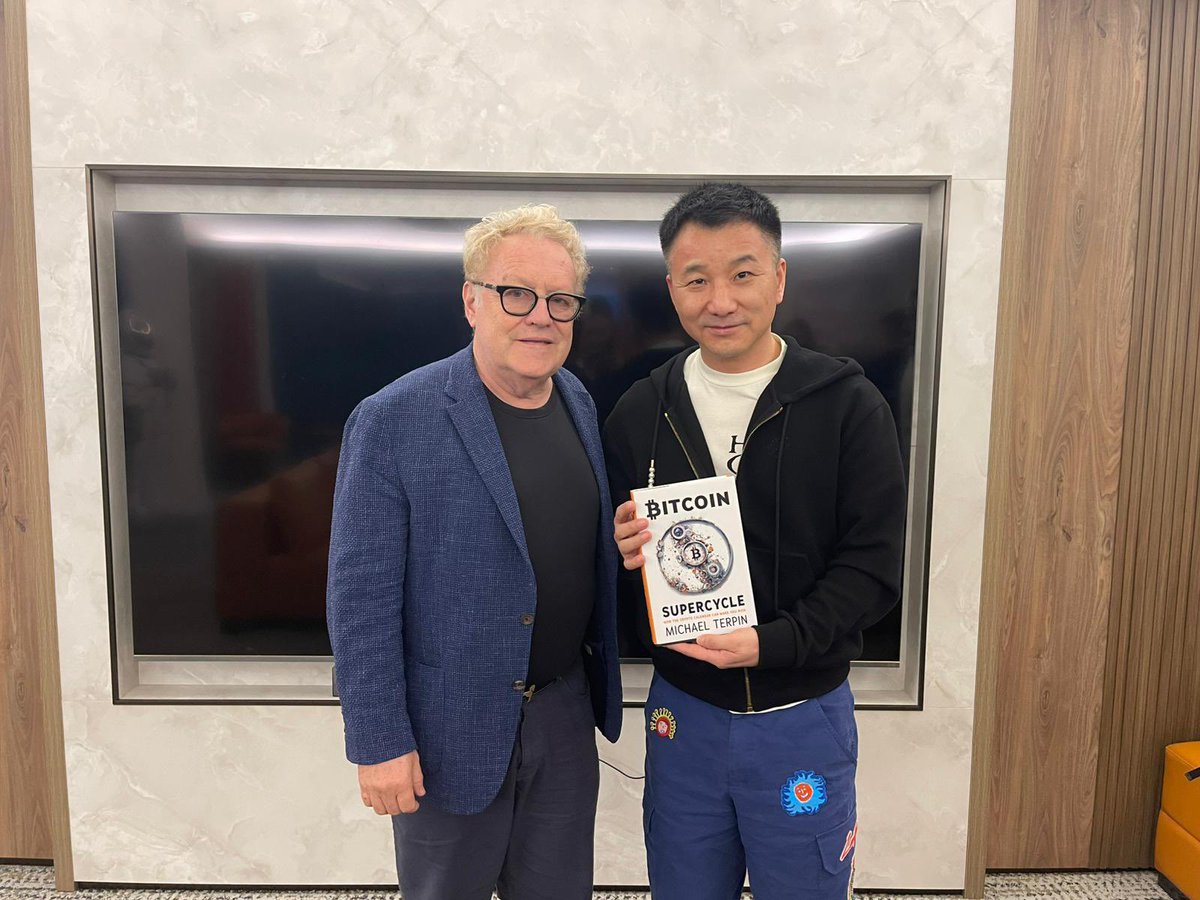
Honored to welcome Michael Terpin to the SkyDAO office.
He met with SkyDAO Group Chairman Neo Wang to discuss the future of Web3 and potential collaboration.
Michael also presented a signed copy of Bitcoin Supercycle — a symbol of long-term conviction in crypto @SkyDAO_Trust
Welcomed Michael Terpin, founder of Transform Ventures, to the SkyDAO office.He met with SkyDAO Group Chairman Neo Wang to discuss Web3’s future and potential collaboration, and gifted a signed copy of Bitcoin Supercycle.
Building the future of Web3 — together. 🚀@SkyDAO_Trust
The Industrial Revolution made “physical labor ”cheap.
The AI Revolution is making “intellectual labor ”cheap.
Most current organizations are about to be disrupted.
Next era:
First → imagination
Then → willpower (the strength of your vision + the depth of your mission)
SkyDAO integrates a diverse product suite to seamlessly connect payments, assets, and digital identity—building a future-ready global payment ecosystem #skydao#btc#web3
🚀 The SkyDAO App upgrade is now complete.Please update to the latest version on the App Store and explore the improved experience.Thank you for your continued support #skydao