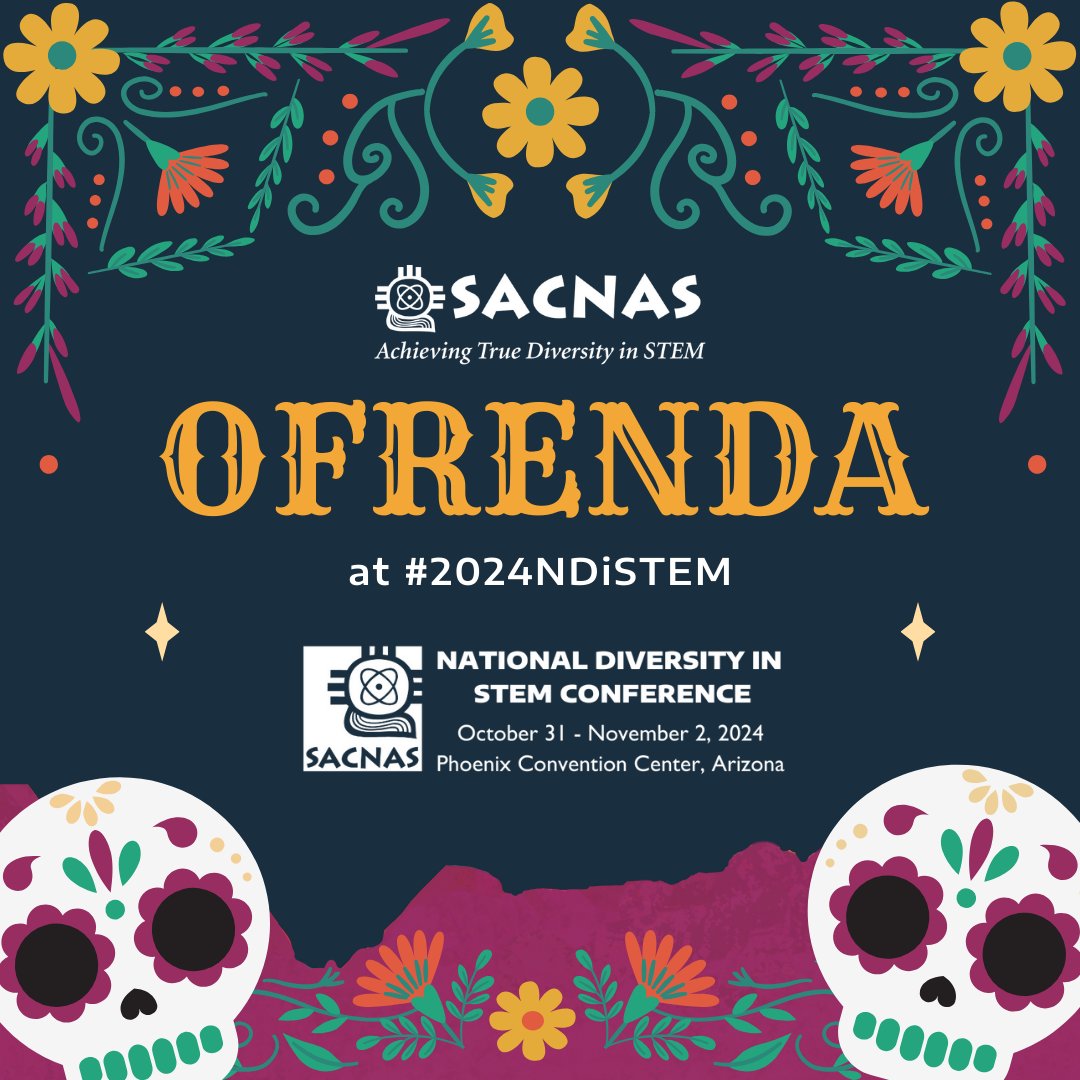
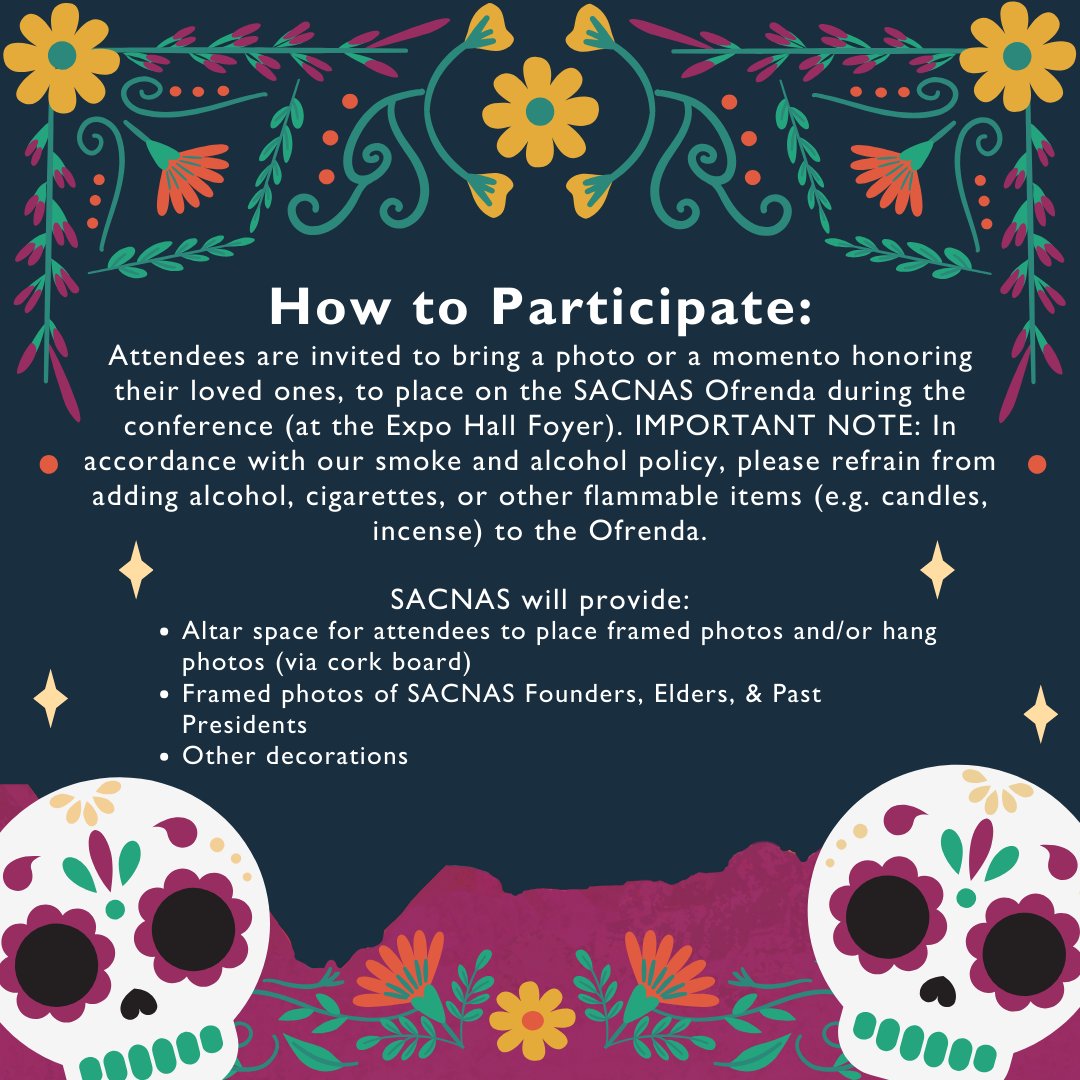
🕯️ Join us in honoring loved ones at #2024NDiSTEM with our #DíaDeLosMuertos Ofrenda 🕯️
There's still time to register for #2024NDiSTEM and participate in impactful cultural practices like this one. Register here: https://t.co/6H3y7p8Xoc
#Ofrenda#Community#SACNAS
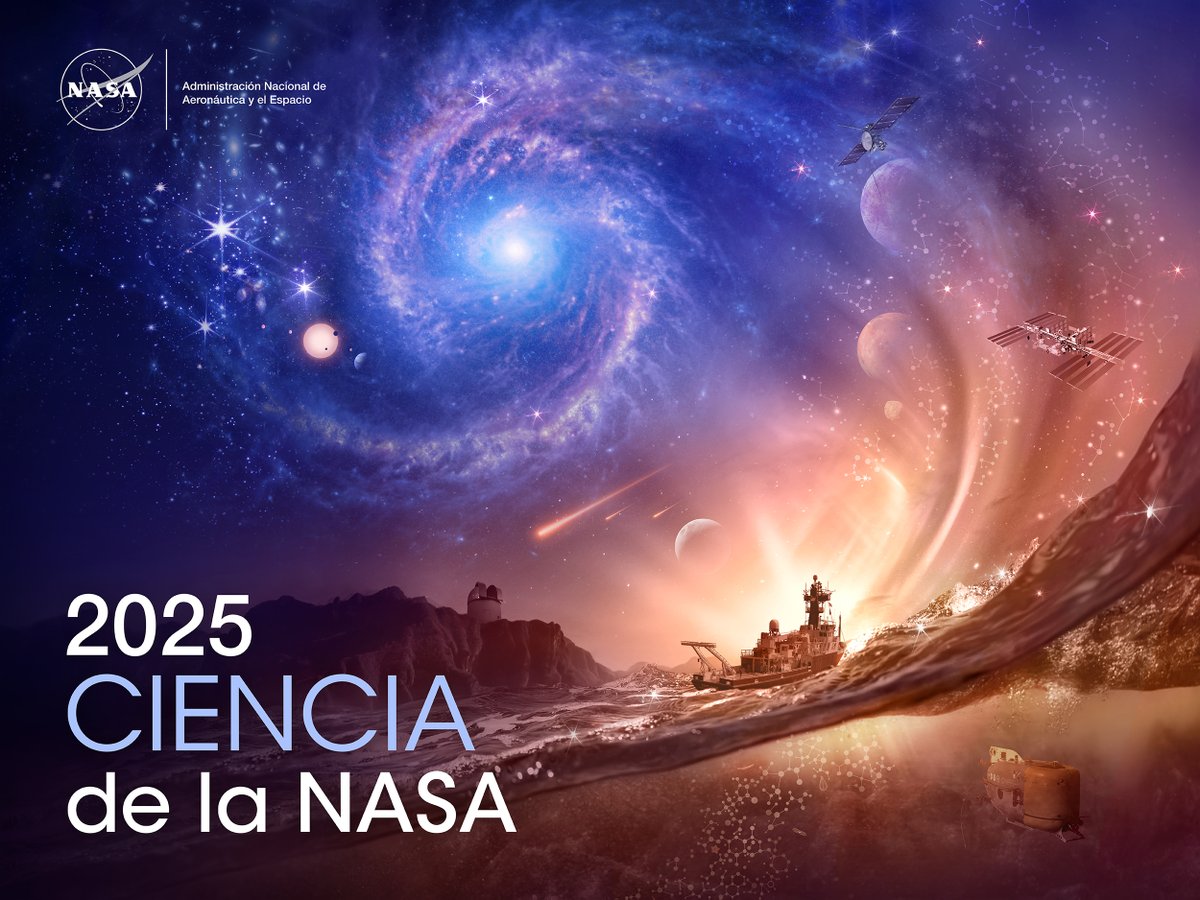
¡Redoble de tambores! Presentamos el calendario de Ciencia de la NASA 2025
Descarga de forma gratuita nuestro más reciente calendario en español, y descubre la fascinante ciencia detrás de sus imágenes. Además, guarda fondos para tu computadora y celular: https://t.co/QFNnxZ9ibP
🎉 Exciting news! The first Professional @SACNAS Chapter in Puerto Rico has been approved as a provisional chapter! We’re thrilled to begin our journey in supporting diversity, equity, and inclusion in STEM across the island🇵🇷. #SACNAS#HispanicHeritageMonth#STEM
Todd Thompson, a professor in @OSUAstro, has been appointed chair of the department. Thompson is a theoretical astrophysicist whose research focuses on the evolution and impacts of massive stars and what happens at the end of their lives. https://t.co/qrZoBFQnce
Do you want to help shape the future of NASA MOSAICS (aka Bridge Program)? Give us your feedback on our new call! You can find all the info here: https://t.co/1ZAaA0AtrQ
Including a copy of the draft, and how to submit your suggestions.
Let us know what you need from MOSAICS!
@dvcotton When a signal resembling a planet can not be confirmed with ANY statistical significance, you instead calculate the probability the signal could have been caused by not a planet. If that probability is low enough, you label the planet "statistically validated." It's a poor name.
I've been asking for a database that excludes statistically validated planets for this exact reason. Statistically validated is not the same as confirmed.
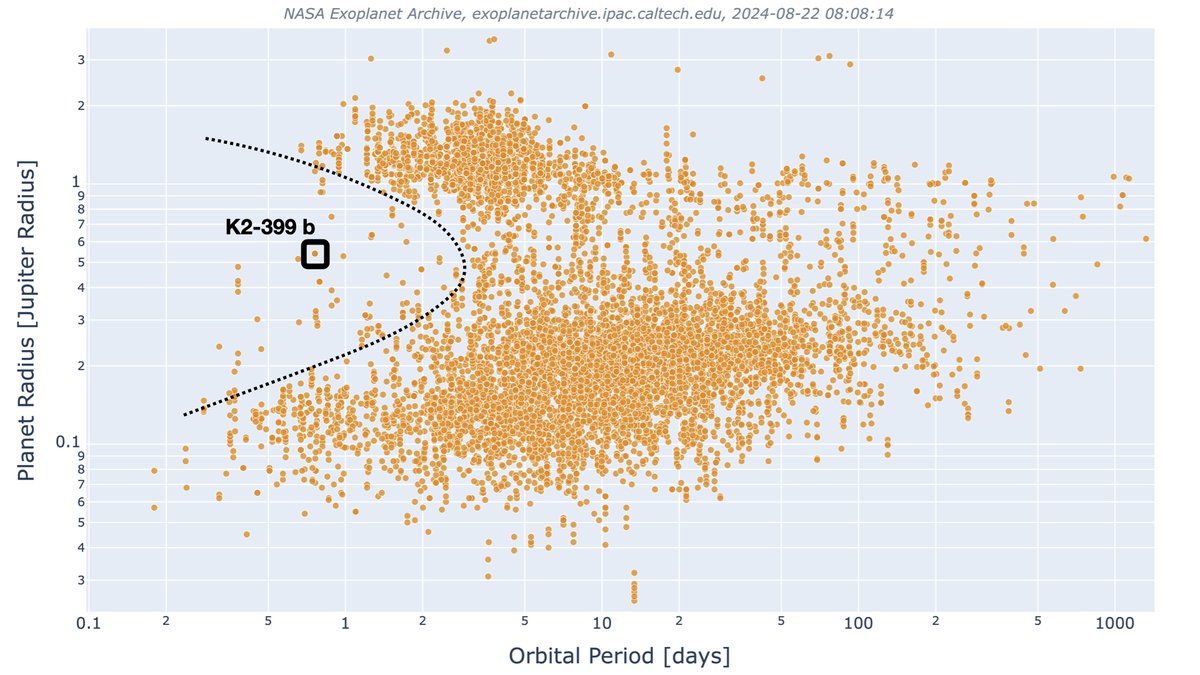
K2-399b is NOT a planet. Today, we publish in A&A an unusual paper: a planet demotion. We show that the "confirmed" Saturn planet that was wandering the Neptune desert is actually a hierarchical eclipsing binary. https://t.co/NAEyaFXzPW
@dvcotton Unfortunately, when these PCs are published as statistically validated, they are then added to our planet databases. They are mixed with confirmed planets and without a way to separate confirmed from validated.
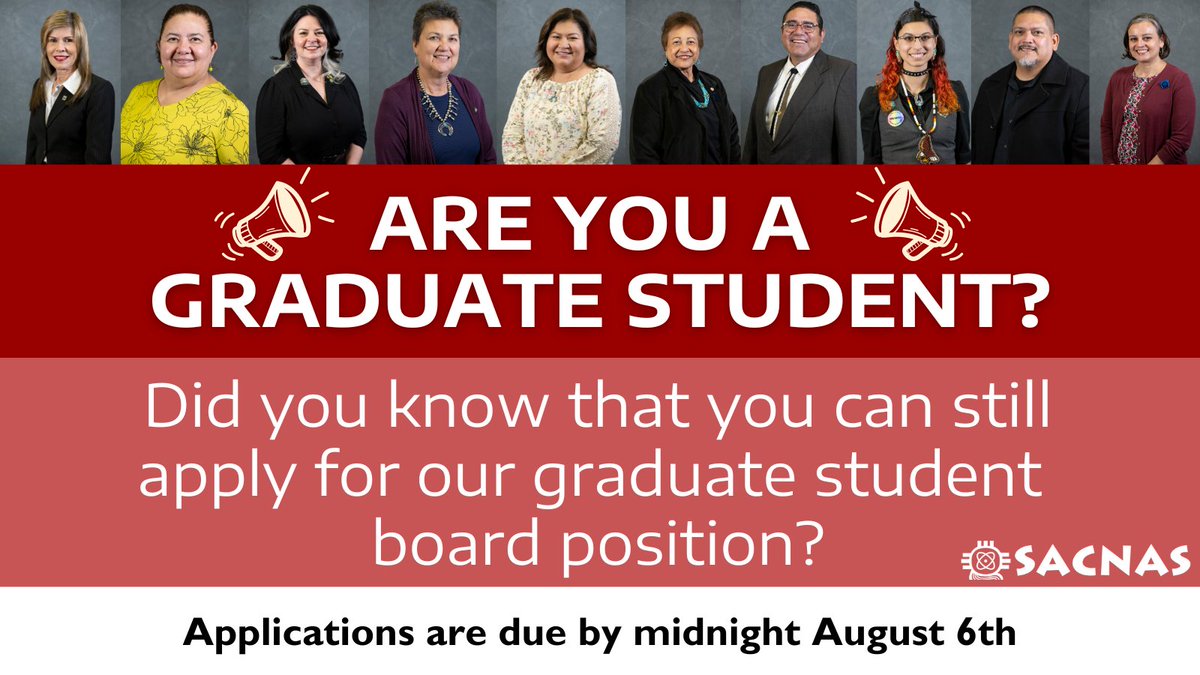
🚨 LAST CALL for #SACNAS Student Board Applications! 🚨 Don’t let this opportunity pass you by! Applications are due by MIDNIGHT tonight! 🕛✨
Contact [email protected] with any questions.
🔗 Apply here: https://t.co/u6e734M37u
#STEMLeaders#DiversityInSTEM#ApplyNow
NSBP and NSHP members are excited to hear from Dr. Ronald Gamble, Visiting Assistant Research Scientist at NASA, at the Student Leadership Development Summit this August.
#NSBP#NSHP#SLDS2024
🔊 #Webinar announcement! 🔊
Learn career opportunities available in the gaming industry, receive practical advice from experienced professionals, and gain inspiration to pursue your passion for gaming. 🎮 👾 🧠
#SACNAS#GamingCareers
🔗 Register here: https://t.co/Xi7Egiev03
The 2024 NSBP-NSHP Conference is a research-based conference and we welcome abstract submissions for oral and poster presentations from all areas of physics to this conference. The abstract submission deadline is Friday, September 30, 2024. Link in bio. #2024NSBP#2024NSHP
#SACNAS is accepting applications for postdocs to join the fourth annual Postdoc Leadership Institute (PLI). Develop your leadership competencies and build community! Held in conjunction with #2024NDiSTEM, workshops are on Oct. 29th, 30th and Nov. 2nd. Apply by July 26th!