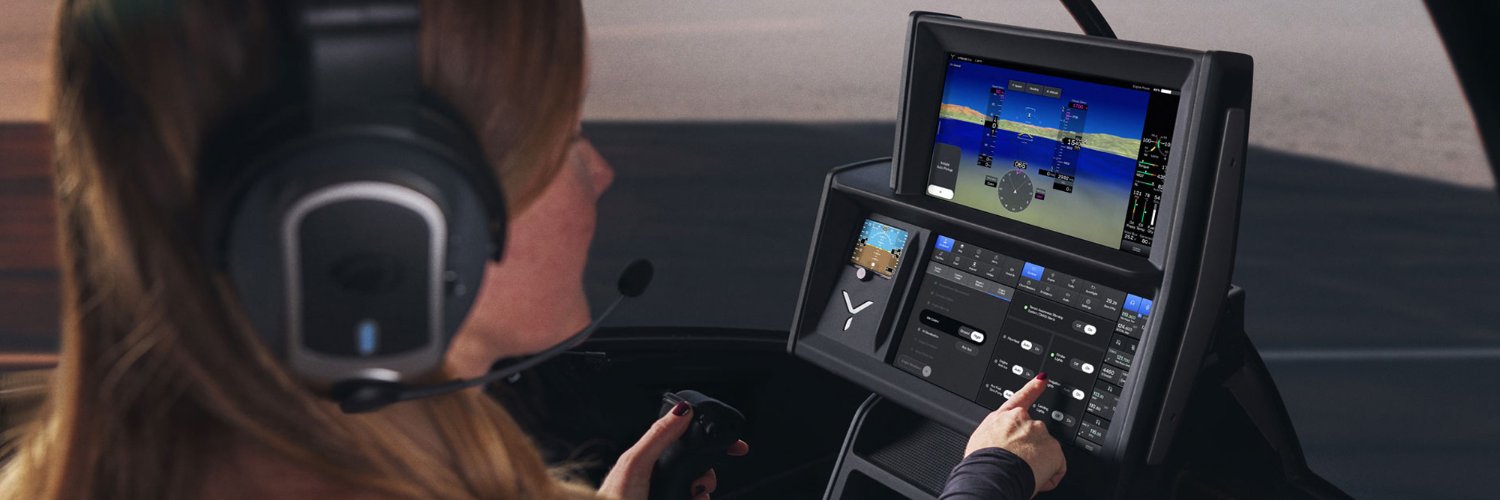
Skyryse One™ has done something that’s never been done before – a fully automated takeoff with just a simple swipe of the finger.
Controlling and hovering a helicopter is now as simple as a person swiping right on a cell phone.
Flight controls haven’t fundamentally changed in decades. Skyryse is leading the shift from hardware-defined to software-defined flight with automation designed to make aviation simpler, safer, and more accessible.
In the latest episode of The Future Of, Founder and CEO Mark Groden joins Jeff Dance to discuss how SkyOS is driving this transformation — from simplifying pilot interactions and improving safety to enabling new levels of automation and accessibility.
The conversation covers the evolution of SkyOS, why Skyryse started with helicopters, the role of automation in preventing dangerous flight scenarios, and what the next 10-20 years of aviation could look like.
From fully automated autorotations and zero-visibility flight to AI copilots and software-defined control systems, this is about building the future foundation of flight.
🎧 Listen to the full episode → https://t.co/tacucAx7Kq
From the Archives: Running Landings
Running landings are like landing a helicopter the way you would an airplane – where the aircraft touches down while still in forward motion. Because helicopters have skids and no landing gear, including suspension and wheels to absorb impact, running landings are a high-stakes maneuver that demand incredibly precise piloting skills to pull it off safely, and without damaging the aircraft.
In our new series, “From the Archives,” we’ll be sharing a firsthand look at our flight test program, where we validate SkyOS’ automation capabilities across a variety of flight scenarios, both routine and emergency.
Take a look into how SkyOS handles a running landing – just one of many emergency management features made safer and simpler through automation.
What happens when the system enters an area of GPS jamming? Or faces an electrical failure mid-flight?
We asked our Chief Engineer.
In this episode of Ask a Skyryser, Dave Defusco breaks down how SkyOS is designed to handle real-world edge cases – and how automation changes what the pilot actually needs to manage.
Watch → https://t.co/M8qgKvRHGB
Introducing Skyryse Defense.
Aviation is a high-demand, low-supply asset. There are never enough aircraft, pilots, or flight hours.
Skyryse Defense brings SkyOS to defense missions to increase reliability, flexibility, and operational scale from piloted to autonomous flight.
🌎 Learn more → https://t.co/eTMp0VZdnV
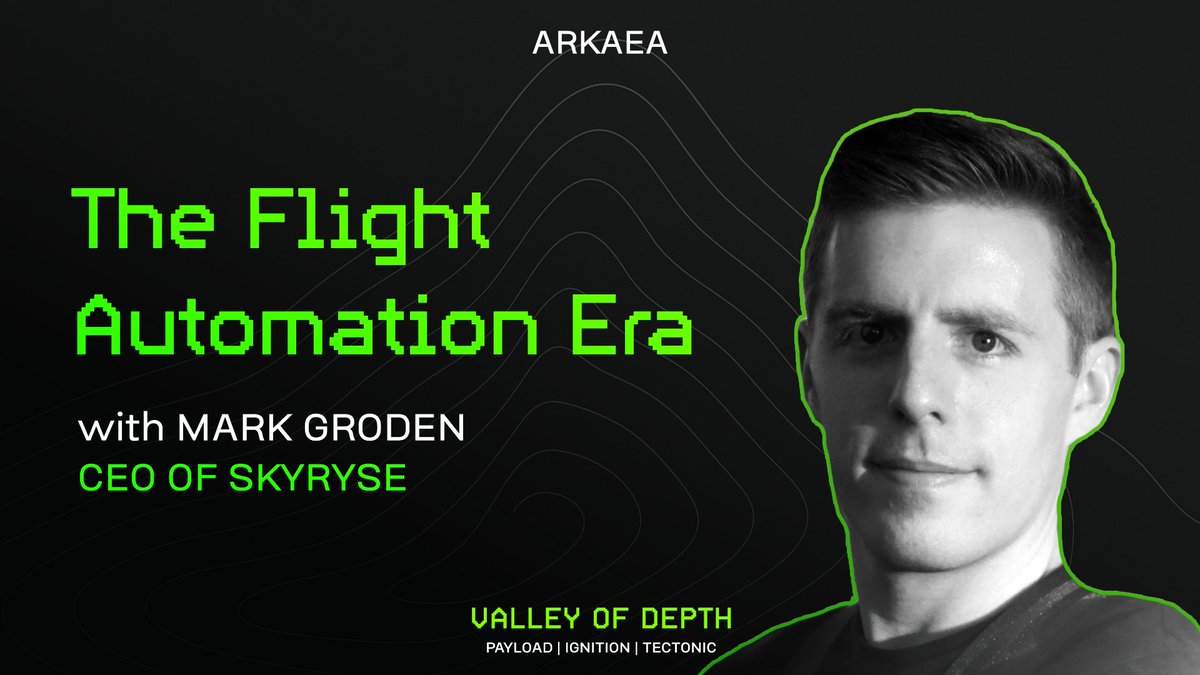
🎧 Hear more from Mark on the Valley of Depth podcast → https://t.co/UceL3wmzTb
Skyryse was built on a simple belief: automation should make every flight safer and every mission more effective, especially in the environments where it matters most.
In our latest conversation on the Valley of Depth podcast, Founder and CEO Mark Groden breaks down our approach to aviation automation and the launch of Skyryse Defense (https://t.co/eTMp0VZdnV), a new business unit focused on deploying SkyOS across crewed, unmanned, and autonomous aircraft for defense missions.
In defense, aviation is a high-demand, low-supply asset. You never have enough aircraft, pilots, or available flight hours. SkyOS is designed to change that by increasing reliability, flexibility, and operational scale across every mission.
From integrating SkyOS into a Black Hawk in just 91 days to expanding flight operations today, this is about delivering real capabilities, not concepts, for the missions that matter most.
🎧 Listen to the full episode → https://t.co/UceL3wmzTb
As part of our path to FAA certification, we test each SkyOS component in DO-160 testing – which is qualification testing used to ensure hardware can safely operate in real-world environments. This testing puts all SkyOS hardware in the toughest conditions and includes:
•Vibration testing
•Shock testing
•Waterproof testing
•Thermal testing
•Electromagnetic Interference (EMI) testing
SkyOS is built for real-world unpredictability and by testing SkyOS piece by piece, our technology exceeds typical airliner standards to ensure the highest performance and reliability.
Take a look at some of the most common operations that involve high EMI environments.
SkyOS™ never stops learning.
Last year in Mojave, our Flight Test and GNC teams implemented real-time gain tuning to enhance aircraft response across various maneuvers in Skyryse One™.
Real-time gain tuning is the process of automatically adjusting control parameters of a system, while it’s actively running. For us, that means fine-tuning SkyOS as its flying.
Our ability to make these enhancements real-time not only validates our software architecture on Skyryse One but sharpens our capabilities for our Black Hawk, the SR-22 and soon, the H130. Unlike manual tuning or traditional testing methods that require the system to be offline, our process uses software to make real-time adjustments to controller gains to improve performance.
Stay tuned to see more flight testing on our path to certification.
SkyOS™ was developed on the hardest of all aircraft types – the small helicopter.
We took on this challenge first because we knew it would unlock rapid scaling and deployment across every other aviation category – including airplanes and much larger helicopters like the Black Hawk.
By training SkyOS on a superset of aviation’s engineering requirements, we’re now able to integrate SkyOS on any platform in under 100 days.
Watch as our Founder and CEO @MarkGroden recounts our historic first flight of the Black Hawk with SkyOS, a feat we accomplished in 91 days.
Full episode here 👉https://t.co/2yr7odR9nO
Hangar X Studios, a popular podcast for aerospace leaders, operators, investors and innovators following the transformation of flight featured our portco, @Skyryse for a discussion on software, automation, and integrated system.
https://t.co/oTnZvS48P1
When we set out to achieve the world’s first automated autorotation (an engine out landing on a helicopter), we purposefully designed SkyOS™ to blend the best of human decision making with the most advanced flight automation.
Our Founder and CEO @MarkGroden joined @hangarxstudios to recount our approach to automating one of the hardest emergency maneuvers in aviation – the autorotation.
Watch the full episode here: https://t.co/2yr7odR9nO
When we built SkyOS™, we set out on a path to certify a new way of flying.
Now, with 2,800+ crewed flight hours to date, and DO-160 testing underway (which is a series of harsh environmental testing performed on aviation hardware, meeting the most rigorous of standards applied to commercial airliners), we’re accelerating SkyOS’ deployment across both helicopters and airplanes.
Our Founder and CEO @MarkGroden joined @hangarxstudios to break down the latest in our FAA certification progress.
See the full episode here: https://t.co/2yr7odR9nO
Most people who fly helicopters are on challenging and critical missions – including the air medical and rescue industry and specifically our partners @AirMethodsCorp
We’re focused on equipping everyone with the most advanced automation technology so they can fly with confidence and reliability, especially in challenging conditions. Specifically in air medical and rescue, SkyOS™ improves situational awareness, reduces pilot workload, and enhances overall safety for both crews and patients.
As demand for rapid response and complex rescue operations continue to grow, SkyOS plays a vital role in supporting emergency transportation through precision and reliability.
Hear more from our Founder and CEO @MarkGroden on the @hangarxstudios podcast.
https://t.co/2yr7odR9nO
We’re proud to welcome representatives from the National Transportation Safety Board (@NTSB), including Board Member Michael Graham, to our Hawthorne facilities.
Their visit underscores a shared commitment to advancing aviation safety through transparency, collaboration, and innovation. As we continue testing and deploying SkyOS™, our flight automation technology designed to make flying safer and simpler, engaging with organizations like the NTSB is critical to ensuring we’re building to the highest standards.
It was a privilege to showcase our work, exchange perspectives, and discuss the future of safety. Thank you to the NTSB team for the thoughtful dialogue and for the vital role you play in shaping a safer aviation ecosystem.
Wow this is a MASSIVE upgrade to the Black Hawk. In a hugely ambitious feat @skyryse has completely reworked flight controls for this military aviation workhorse.
This morning at VERTICON, we provided a firsthand look at how SkyOS™, the world’s first operating system for flight, is maturing its capabilities on the Black Hawk platform.
In a session led by former commander of the 160th Special Operations Aviation Regiment (aka the “Night Stalkers”) and our Director of Strategic Pursuits, Mike Hertzendorf, we shared how our team was able to rapidly expand our flight envelope for Black Hawk with SkyOS, to perform precision maneuvers and patterns with one hand.
Just weeks after achieving the first-ever automated pickup, hover, and setdown of a Black Hawk with SkyOS, we’re continuing to witness our system’s maturity on a new platform.
SkyOS unlocks safety and performance without compromise – making flying every aircraft more reliable and effective.
Watch as this battle-proven aircraft enters a new era.
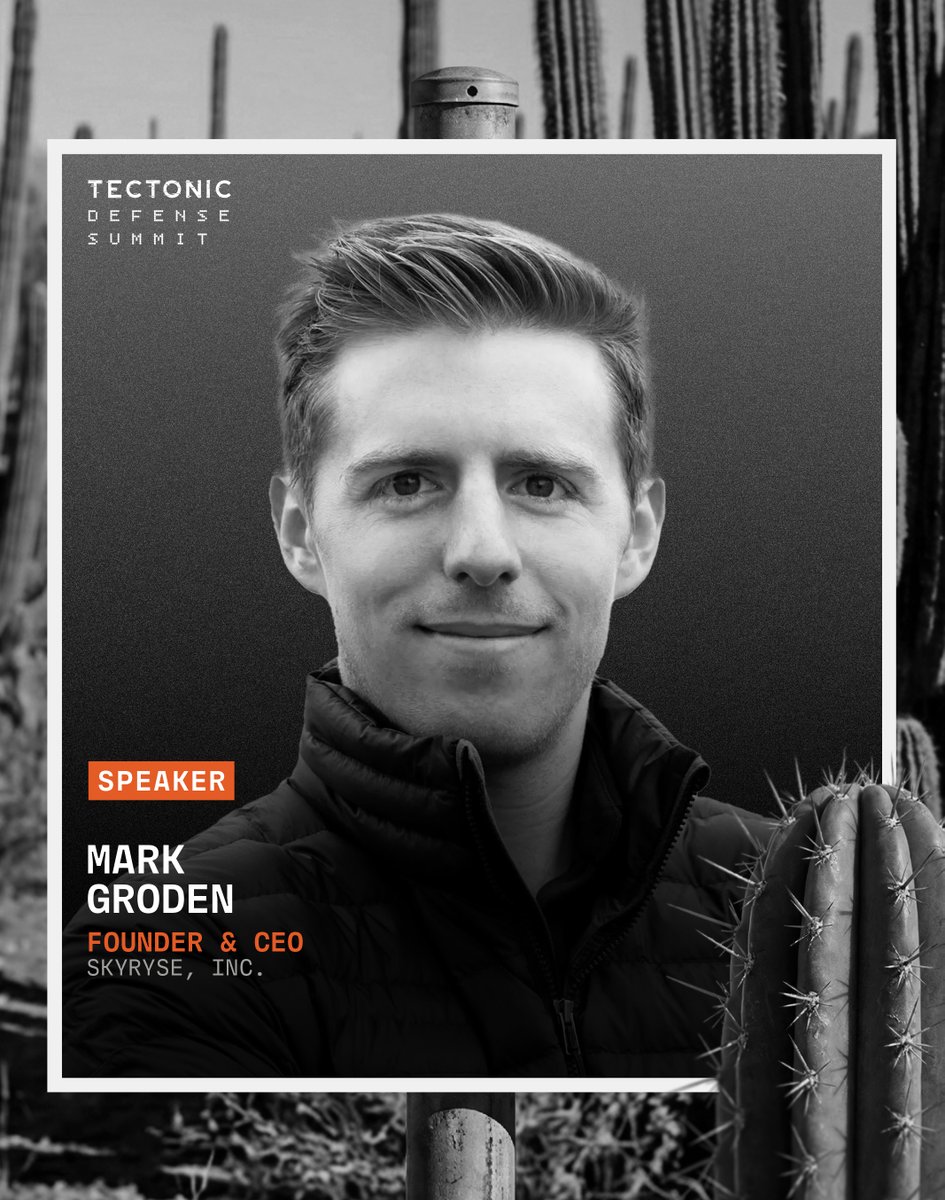
Our Founder and CEO, Dr. @MarkGroden is ready to take the stage at the sold-out @tectonicdefense Summit next week.
Mark will be speaking on “Scaling Up: Autonomy Beyond FPV” to share more about how SkyOS™ is an aircraft-agnostic automation technology built for dual-use in defense and civilian markets.
Whether the mission calls for a flight that is uncrewed, single-piloted, dual-piloted, or non-pilot operated from a ground station, SkyOS is capable of adapting across all mission profiles. From military and emergency response to medical and firefighting missions, we’re building the future of vertical lift.
See the full agenda here 👉 https://t.co/gnySLgh5LZ
Emergency autoland has never existed for helicopters. If a pilot is incapacitated, the helicopter can now land itself safely. This is the kind of AI safety feature that will save lives and eventually become mandatory.
California-based @skyryse said Thursday that it plans to introduce a universal emergency autoland capability for all aircraft—both fixed-wing and rotorcraft—that activates with a single tap on a touchscreen. https://t.co/iDUPoqrcwb