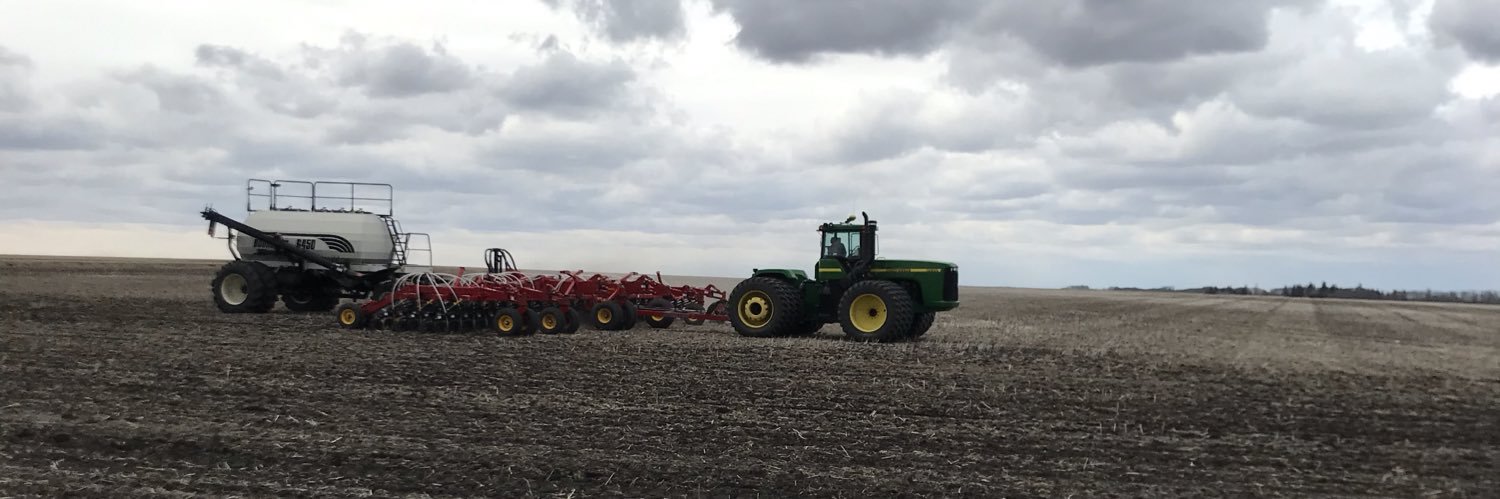
Here’s to all the “farm help” this time of year
All those who work a full day at their regular job then come run combine or cart for friends or family
These are people who enjoy helping take the crop off and honestly without them many farms like mine couldn’t do it
#Harvest25
Two young men with the last name Fox went to high school 24kms apart just outside of Vancouver, BC in the mid 1970s. Both young men would inspire the world and combine to fundraise over $3billion for Cancer and Parkinson’s research. Two amazing Canadians, Terry Fox and Michael J Fox.
Most #Saskatchewan Small Town Bar: Episode 21 - Yellow Creek (Route 41)
Maybe the best wings I’ve ever had in my entire life. Perfect crispiness to them. So juicy. Almost perfect. This place rocks. Love the patio and little back room. Awesome owner too!
Habitual lying is an ugly trait that should disqualify someone from higher office.
Today we saw the Liberal Party embrace it.
Why? Because they value electoral success over character.
Trudeau is proof of that.
@FoodProfessor Great breakdown. Interestingly everything mentioned comes out of the west. One positive thing from the tariffs might be Ottawa recognizing the importance of the west instead of alienating us.
The hypocrisy in Quebec agriculture is maddening. While condemning Trump's potential tariffs, half of the province's agricultural sector is protected by tariffs that, in some cases, are more than ten times higher than those Trump is proposing.
Canada’s Internal Trade Fix? Anand’s Plan Leaves Major Barriers Untouched
“Supply management is the linchpin of Canada’s internal trade dysfunction, keeping food prices high and stifling competition. While Ottawa celebrates minor progress in removing trade barriers, the real roadblock remains untouched—an outdated system that prioritizes protectionism over affordability and efficiency.”
Minister @AnitaAnandMP, the outgoing Liberal minister, recently announced that over 60% of Canada’s internal trade barriers will soon be eliminated. Ottawa claims to have removed 64% of federal exceptions in the Canadian Free Trade Agreement (CFTA), though it has yet to release a list of the 20 newly removed exceptions—expected next week. While this is a commendable step, it falls short, particularly in the food sector, where inefficiencies persist due to longstanding protectionist policies.
While much attention has been given to interprovincial restrictions on alcoholic products—an issue rooted in Canada’s regulatory history—barriers in the broader food sector remain just as problematic. Nova Scotia and British Columbia boast the highest number of vineyards per capita in the country, yet both provinces struggle to sell their world-class products to Canadians in other regions. This inefficiency is emblematic of Canada’s broader internal trade dysfunction.
Multiple studies, including reports from the @CdnChamberofCom, the @OECD, and the @CompBureau, estimate that eliminating interprovincial trade barriers could save Canadians up to $9 billion annually on food alone—excluding potential savings in the restaurant sector. For the average Canadian, this could translate into more than $250 in yearly savings. However, most of these savings’ hinge on reforming supply management, a policy that remains politically untouchable for the current government.
Anand’s continued shielding of supply management in dairy is problematic. Eggs and poultry also operate under supply management, but these sectors have demonstrated a long-standing tradition of coordinated governance and strategic collaboration among provincial marketing boards, ensuring stability and efficiency across the supply chain. That is not the case in dairy.
Supply management functions as a quota system that limits imports through tariffs exceeding 200% on certain products from countries like the United States. This system, while benefiting a concentrated group of producers, drives up domestic prices, creating artificial inefficiencies in Canada’s food economy. Quebec remains the epicenter of protectionism, benefiting disproportionately from these internal trade barriers. Despite housing just 20% of Canada’s population, Quebec produces nearly 40% of the nation’s milk. The provincial control over quota allocation ensures that Quebec’s dairy industry operates in a closed system, effectively blocking competition from other provinces and maintaining inflated prices.
A truly free and competitive dairy market in Canada would require federal harmonization of quota allocations and the elimination of provincial dairy boards. This would allow all provinces an equal opportunity to produce milk and butterfat competitively, rather than permitting smaller, less efficient Quebec farms to dictate national pricing structures. Removing these artificial constraints would introduce greater efficiency into the sector, benefiting consumers and non-Quebec producers alike. Yet, political considerations have consistently obstructed any meaningful reform.
Quebec Premier @francoislegault’s insistence that supply management is “not negotiable,” as stated in Washington, underscores the entrenched nature of these policies. However, his stance is increasingly untenable in the face of mounting economic evidence that these trade barriers impose significant costs on consumers and hinder national competitiveness.
Beyond dairy, regulatory fragmentation across provinces stifles food manufacturing. If a food product is deemed safe for sale in Nova Scotia, it should logically be permitted for sale in Alberta, Ontario, or Quebec. Yet, under the current system, manufacturers and processors with only provincial licenses can sell exclusively within their province.
Even federally licensed facilities must navigate redundant bureaucratic hurdles to access domestic markets. Enforcing mutual recognition of food safety standards across provinces would significantly reduce these inefficiencies, allowing beef and pork processors, seafood producers, and other food manufacturers to expand their markets without costly regulatory duplication.
Such reforms would be transformative, particularly for the economies of Atlantic Canada and the Prairies, regions that would benefit from improved market access. Increased competition would lower costs for consumers, strengthen regional food industries, and foster a more dynamic national economy. Yet, resistance from entrenched interests continues to stifle progress.
Minister Anand’s announcement is a step forward, but it does not address the fundamental inefficiencies that continue to plague Canada’s food economy. The CFTA was designed to facilitate internal trade, yet its multiple exemptions continue to allow provinces to uphold protectionist policies at the expense of consumers and businesses. The federal government has long championed international free trade agreements but has failed to secure genuine free trade within its own borders.
While Anand’s announcement represents incremental progress, it is far from sufficient. Until Canada takes decisive action to eliminate all interprovincial trade barriers—including those protecting supply management—consumers, businesses, and entire regions will continue to bear the burden of political inaction.
Supply Management vs. No Supply Management
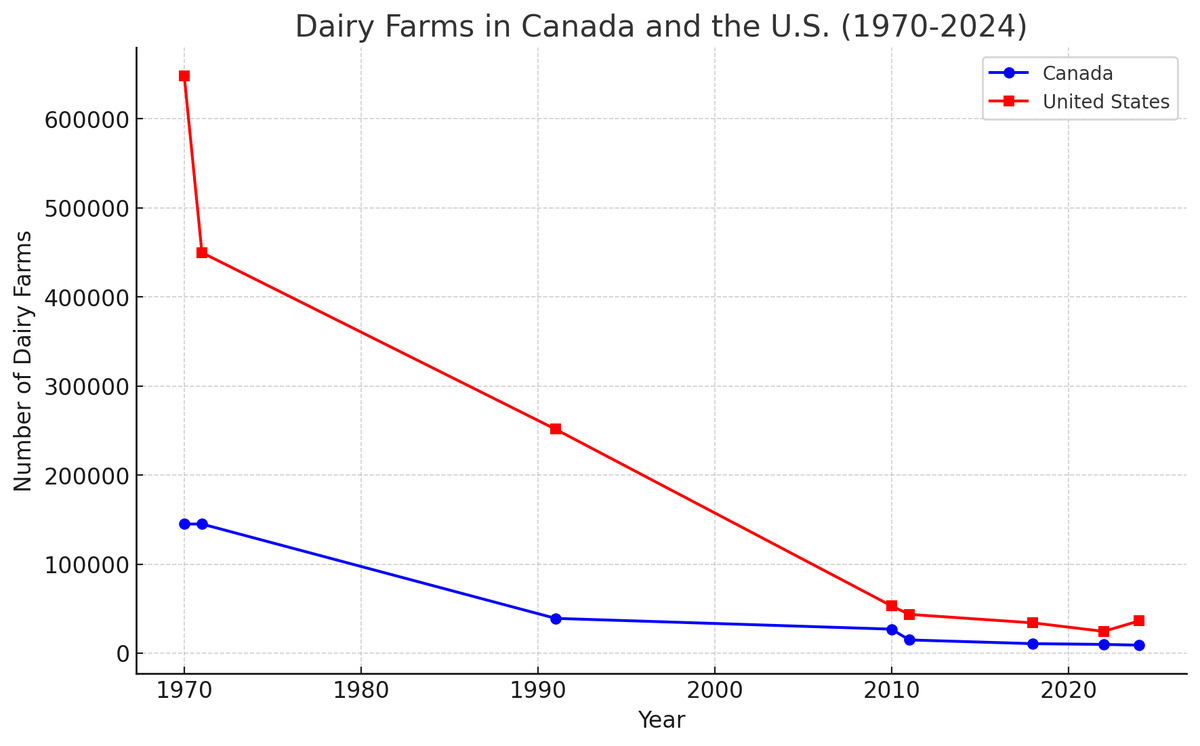
Since 1970, Canada has lost 94% of its dairy farms under supply management—the same percentage decline as in the U.S., where no supply management exists and industrial milk is three times cheaper.
Supply management didn’t save anyone; it only resulted in higher costs for Canadians.
This banker is about to control the 9th largest economy in the world.
Yet, he's never won an election in his life.
And he answers to global elites—not citizens.
Here's what Canadians don't see coming:
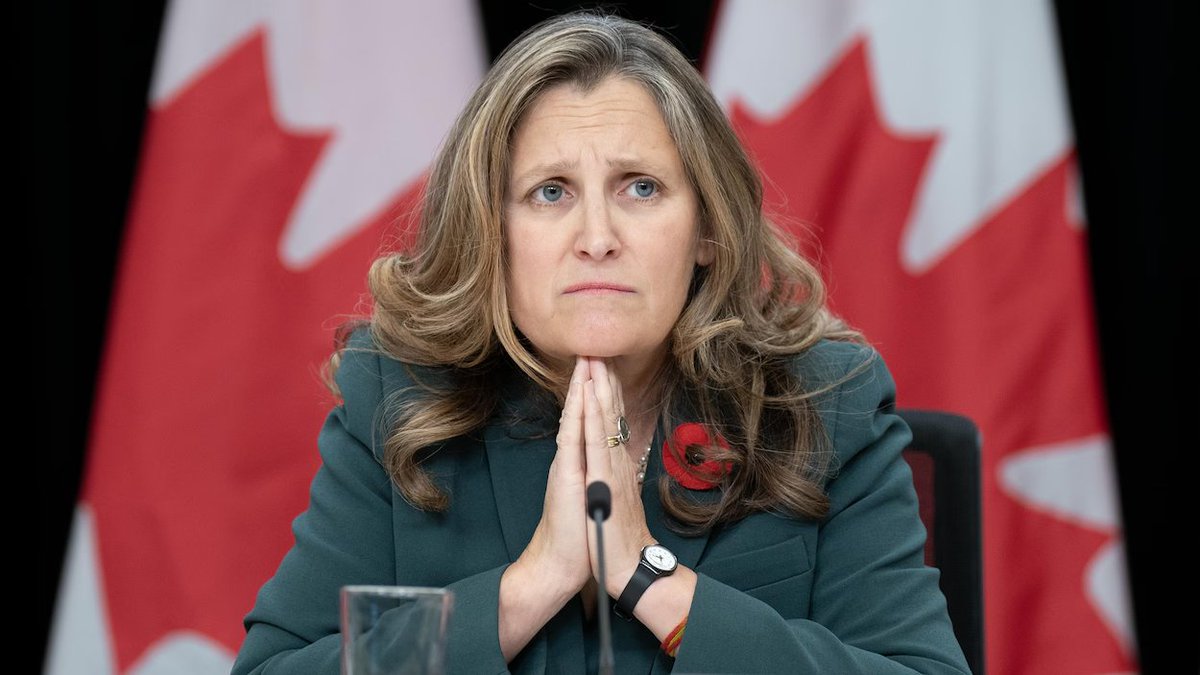
Politicians can evolve in their positions, but here's my critique of Chrystia Freeland.
As a top player in the government, she has vigorously endorsed, supported, and advocated for policies such as the carbon tax, capital gains tax, and GST holiday—measures that have left many agri-food stakeholders deeply unsettled and battling to protect their livelihoods for almost an entire decade. A pivot to a "let's move on" narrative falls flat for farmers and food manufacturers who have spent nearly a decade locked in a relentless struggle against Ottawa's heavy-handed policies.
Ottawa should never, under any circumstances, play with people's livelihoods like that.
You gotta see this:
Freeland brags that she, as Trudeau’s Finance Minister, hiked the carbon tax “at a time of high inflation.”
That’s why she’s Carbon Tax Chrystia!
Someone, and I’m not saying who, needs to look at all the flags in their profile before talking about allegiance.
Would anyone even guess, or be able to guess, that @acoyne has even visited Canada based on the four flags in his profile?