@LynnTraboulsi Regardless if the incident happened or not muslims trying to entice Christians outrage against Jews must definitely understand the immense Christians outrage against muslims, as muslims do these type of actions round the clock
@Alice_MiaX@INVESTONOVA First no need to be impolite
Second I am not in the business in showcasing my portfolio, investing strategy and suggesting tickers
Third WE ALL REMEMBER $ULTY
We're excited to launch our first Fixed Yield Product - UQCY
UQCY offers 7% APY Compounded Quarterly
(Similar to ONDO USDY with higher yield)
Contract Address
0x60Ef723E3b852EA57526A289BfC84d6885E12c74
Buy UQCY on Base Network
https://t.co/52o58nT0sh
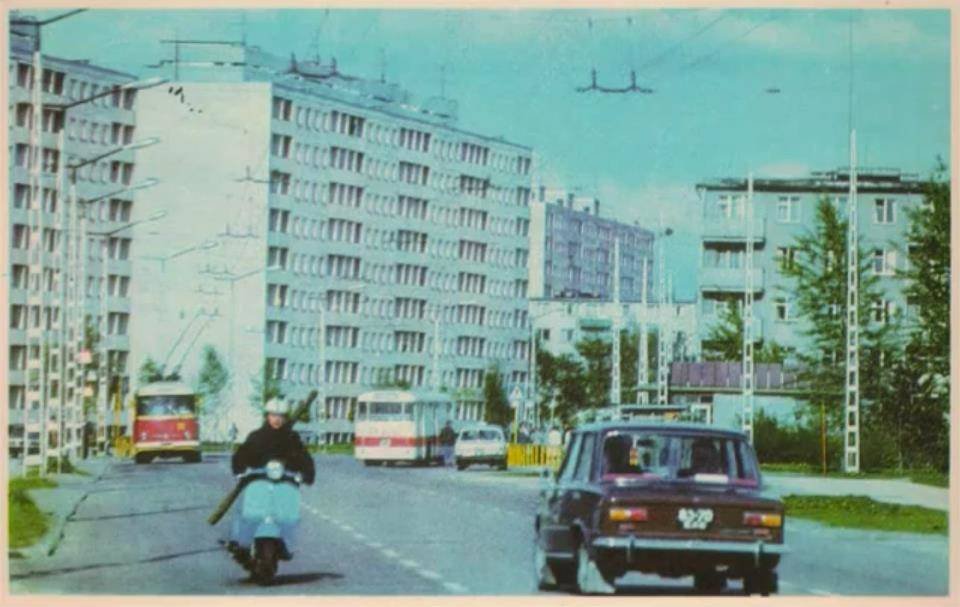
As someone who experienced the “warmth of collectivism” firsthand as a child, because Russian colonisers brought communism and collectivism to my very individualistic country, let’s dig into what that “warmth” actually looked like.
1. A flat or house to live in. You literally couldn’t buy one. That simply wasn’t an option. You waited for years to get housing assigned by the state. And you can already imagine the quality: quickly built blocks, or the confiscated apartments of “enemies of the people” who were shot or sent to the Gulag. The party elite got the good places. Ordinary people got a cheap Khrushchyovka with a tiny kitchen and no lift after 5–10 years of waiting. No other option.
2. Your job “for life” (whether you wanted it or not). Officially, everyone had work. In practice, you didn’t choose a career so much as you were placed into one. Want to switch? Good luck. Want to start a business? Cute. Private enterprise was either illegal, punished, or pushed into shady “don’t ask, don’t tell” territory.
3. Travel? Not for you. You couldn’t just decide to go somewhere, even within the “friendly” socialist world, without permissions. The border wasn’t a line on a map, it was a wall in your head. Want to see the West? That wasn’t a holiday plan, that was a crime plot.
4. Information was “collective” too. One TV truth, one newspaper truth, one approved version of reality. If your eyes disagreed, your eyes were “wrong.” And if you repeated what you saw out loud, you could become a “problem.”
5. The “warmth” came with a price: fear. You learned early what not to say, to whom, and where. You learned that walls had ears, and sometimes so did classmates. Collectivism works best when everyone self-censors.
6. Queues: the national sport. Food, shoes, furniture, books, washing machines, a decent winter coat. You stood in line because “they might bring something.” Planning your life around rumours about deliveries isn’t community. It’s scarcity management.
7. Quality didn’t matter, because choice didn’t exist. When there’s only one type of sausage, it doesn’t have to be good. When there’s only one brand of anything, the producer doesn’t compete for you. You compete for the product.
8. Equality was a slogan, not a reality. Officially, everyone was equal. Unofficially, some were “more equal,” and their equality came with better housing, better shops, better doctors, and better futures.
9. Collective responsibility meant individual guilt. One person messes up, everyone gets punished. One person speaks out, everyone gets threatened. It trains people to police each other, not support each other.
And the punchline: they still called it “care.” Not because it was caring, but because calling it care made it harder to argue with.
Tallinn occupied buy Societs.