Being drowsy or falling asleep at the wheel is preventable! Read about some things you can do before hitting the road for short trips, like going to the grocery store or commuting to work, or a longer journey like traveling to a neighboring state: https://t.co/K7Rl09TUQM
Shout out to the sponsors and collaborators that helped make Drowsy Driving Prevention Week® a success. Let’s work together to prevent drowsy driving all year long. @Waymo@MazdaUSA@zoox@AASMorg@GHSAHQ
If you work early mornings, late nights, or alternating shifts, you have a higher chance of drowsy driving. When you’re sleep-deprived, your motor functions and reaction time are impaired, which can raise your chances of getting into a crash. Learn more:
https://t.co/WYpS635bBl
Getting an optimal amount of good quality sleep is the best way to prevent drowsy driving crashes. We recommend most adults get 7-9 hours of sleep per night for adults and 8-10 hours for teens. Sleep has a fundemenal role in keeping our roads safe. https://t.co/m2N57Yc1Hh
Not being alert behind the wheel can slow down your reaction time, impair judgment, and increase your risk of crashing. When getting ready to drive, ask yourself, “Am I alert enough to operate a 3,000-pound fast-moving machine on public roads?”
https://t.co/vOafKib9HU
The science behind drowsy driving is sobering. When you’ve been awake for 18 hours, your body functions as if you have a blood alcohol content of 0.05%. After 24 hours without sleep, it’s equivalent to a 0.10% BAC, above the legal limit in all states.
https://t.co/64A2DQJZvW
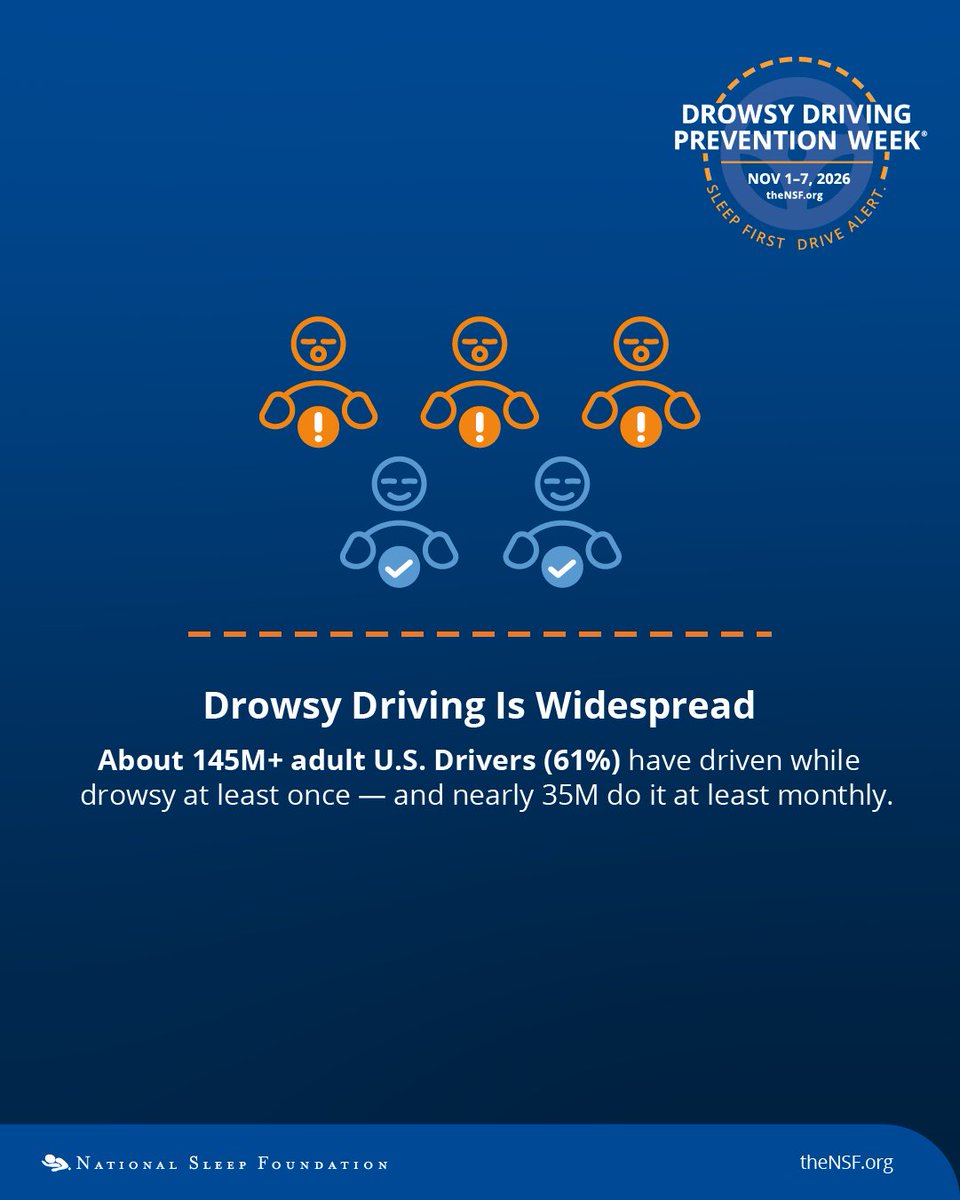
Driving when not fully alert is a form of impaired driving. 6 in 10 drivers have operated a vehicle when they were so tired they had trouble keeping their eyes open. Learn more:
https://t.co/fUkywfaskR
#SleepFirstDriveAlert
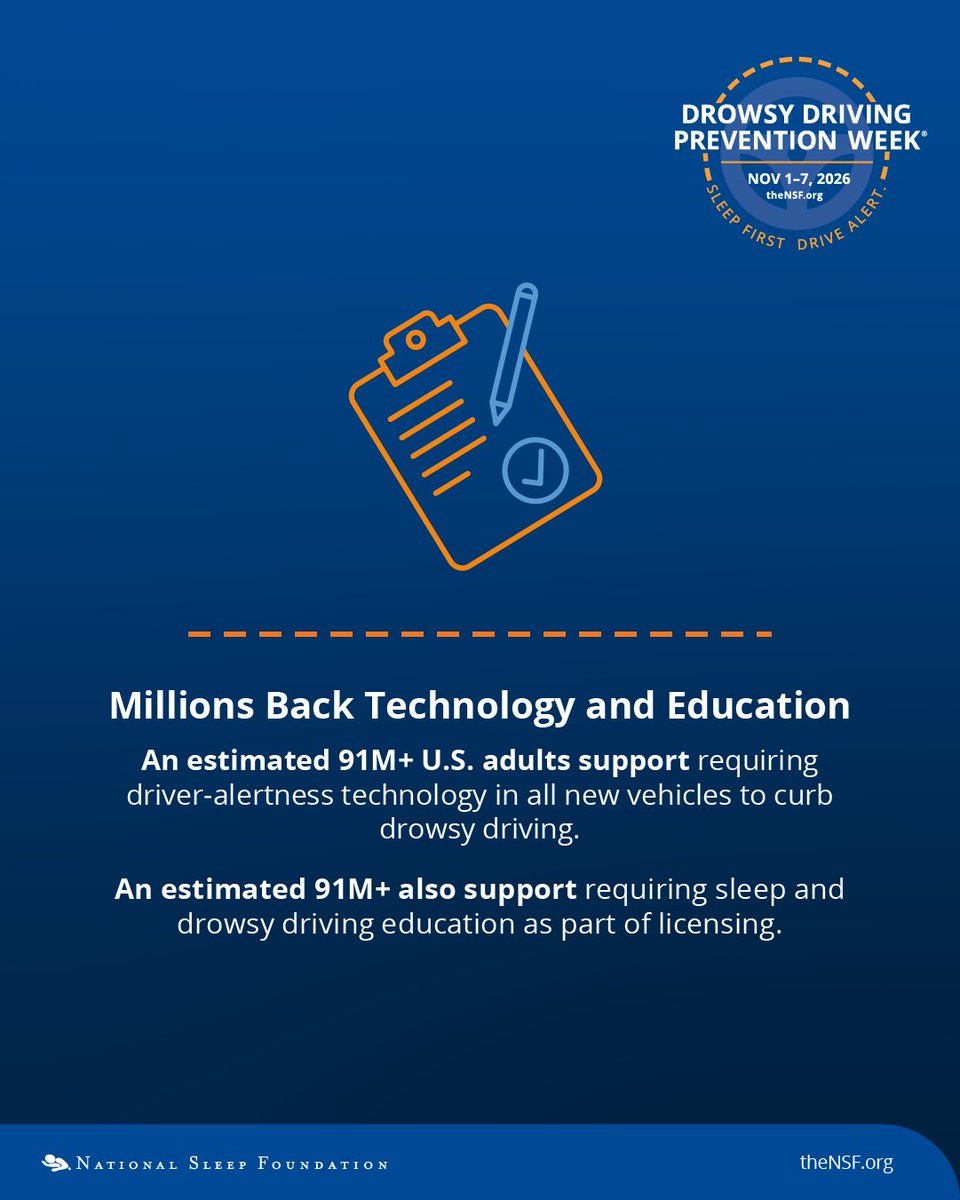
Drowsy driving is a major public health and safety issue in the United States. More than 1 in 5 crash-related fatalities are linked to drowsy driving. The best way to avoid drowsy driving is to Sleep First. Drive Alert.® Scroll through our slides to learn more.
Today, we kick off Drowsy Driving Prevention Week®! Drowsy driving is impaired driving. This week we’ll share how to keep yourself and your family safe on the road.
Visit our website for more information. https://t.co/QKIfrA0D0t
#DDPW#SleepFirst
Tomorrow: the 2026 NSF Drowsy Driving Forum.
Drowsy driving is impaired driving, and it's preventable. Tomorrow, leaders from government, transportation safety, sleep health, and industry will gather to turn that message into action.
What's ahead:
✅ Leadership Panel with representatives from NHTSA, NTSB, and the automotive industry
✅ Solutions & Actions Panel on turning research into practical prevention
✅ First release of findings from NSF's 2026 Drowsy Driving Survey
On Sunday, November 1, 2026, the clocks will fall back one hour and Daylight Saving Time (DST) will end. Scroll through our time change tips and get prepared.
“Two Views of the Night: Consumer Reported Sleep Insights Paired with Smart Bed Data�� with support from @TempurPedic is a first-of-its-kind report showing what Americans say about their sleep and what smart bed data reveals. Swipe to see our key findings.