A fair piece just ran at the James G Martin Center (Sam Nagus, author) on our work at the Postsecondary Commission to create an accreditor focused on outcomes, transparency and innovation in higher education. Have a look. #HigherEd@AcademicRenewal
https://t.co/jmVY2hGwx1
Most students say they pursue a degree to get a good job yet far too many institutions fail to deliver. #HigherEd can do better; in @RealClearEd@sleschly, @MariaKFlynn and I lay out three ways college leaders, employers, and policymakers can enable economic opportunity for all:
https://t.co/VLgCQpnYtP
@jfftweets@wgu
📅 At @AEI on Tues., Oct. 17 join @DrBethAkers, @PrestonCooper93, @sleschly, @Pulsipher_WGU, Chance Russell, David Troutman, and @turnersarahe as they discuss the prospect of holding institutions accountable for the economic outcomes of their graduates. https://t.co/k2Z3imOII3
I recently testified in Congress, in a hearing on higher education reform, about the Postsecondary Commission (the new accreditor we are trying to start). The clip is here.
https://t.co/mTRkBkNWCa
@jamesheathers Thx, James. Agree. We have 2 research papers you might like. This one (on how accreditors deter new colleges) and also one on their reluctance to regulate quality in existing colleges. See here: https://t.co/gG1mIoan2X
College101 has a radical theory of action.
Founder @sleschly believes students will benefit if they’re able to choose colleges that cost less, meet their needs, & boost future earnings and prospects.
He just might be on to something.
At #RHSU. https://t.co/bCqzMSUs3e
We analyzed new college formation going back a century plus. The headline: 92% of US undergraduates go to colleges more than 40 years old, and new colleges, though needed, are rare in large part because accreditors thwart them. Blog and full report here: https://t.co/2PlijODOMj
My latest @NewYorkSun highlights @sleschly study showing that accreditors truly are watch dogs that don't bite when talking poor student outcomes. @arneduncan
So much so that the advice to pick an accredited school to protect yourself is bad advice
https://t.co/4yk4pX4R6a
We analyzed ~40K regulatory actions taken by US college accreditors over the last decade and found that a mere 2.7% of them discipline colleges for poor student outcomes or sub-par academic programming. This is bewildering, given the state of #highered. https://t.co/kVzVGluo4P
The federal government recently released new data on the earnings outcomes of students in 4-year colleges in the US. The data tell a startling, unnerving story about the now-very-dicey economics of paying up to go to these colleges. Buyer beware!
https://t.co/uXDaFTdPbM
@ThxForAllDaFish @WSJ Hard to know which factors are driving this - most selective colleges dropping the SAT/ACT requirement is probably the main one (since so many more can now apply plausibly). The common app has a role to play. And yes, delay of Covid applicants who took a gap year. Crazy times!
Amen. Below, more stats on just how surreal the selective college warp zone has gotten, even in the last 2 years. Let's take seriously serious students in less selective schools -- hi-five them, hire them, know them. They are the talent pool. #college, @profgalloway, #highered
Sadly this is not surprising as many young people are in similar positions this year. TY @sleschly & @profgalloway for their insights on #college as we go down this road again. Parents need to get past the brand name approach as well. Find best fit; listen to your kids’ needs.
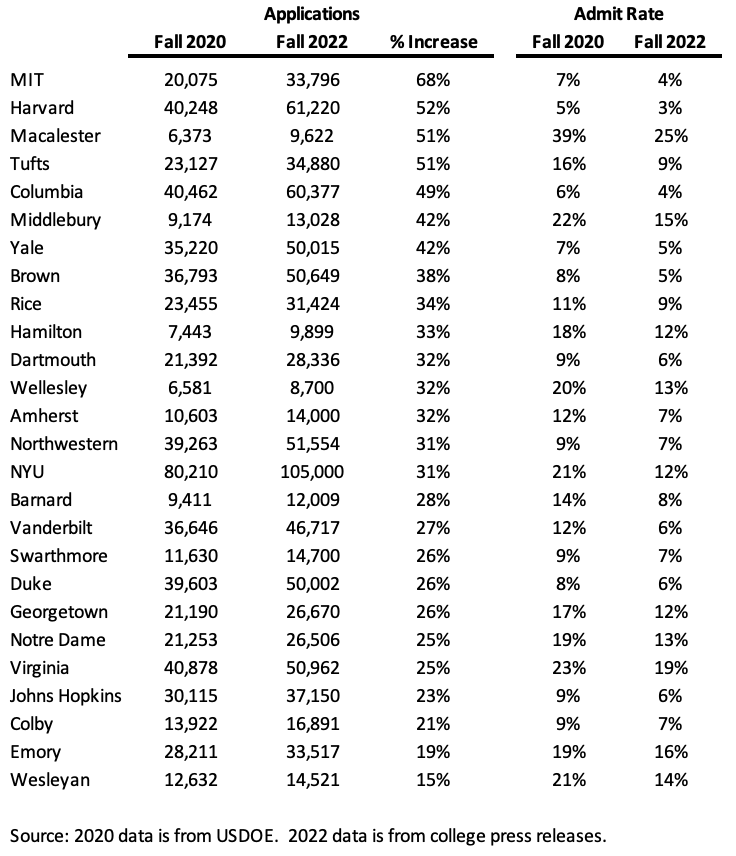
Selective college admissions have gone crazy. Applications have sky-rocketed, and admissions rates have plummeted - partly from a surge of applications after the roll-back of the SAT/ACT. Illustrative stats below. #highered
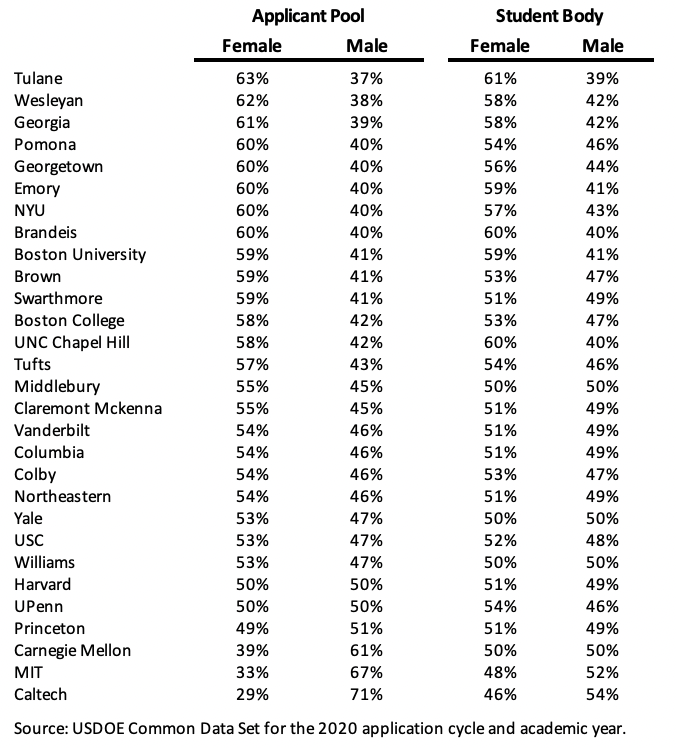
Girls now strongly outnumber boys in the applicant pools and student bodies of selective colleges (except in STEM-focused colleges). Lots of debate these days on whether that's good or bad. Decide for yourself. Illustrative stats below. #highered
@enriqueabeyta That data is just out (I will blog on them soon), and the picture changes very little. Earnings rise with time, of course, but their weak correlation to price and selectivity remain. Note: majors (unlike price and selectivity) do predict earnings.
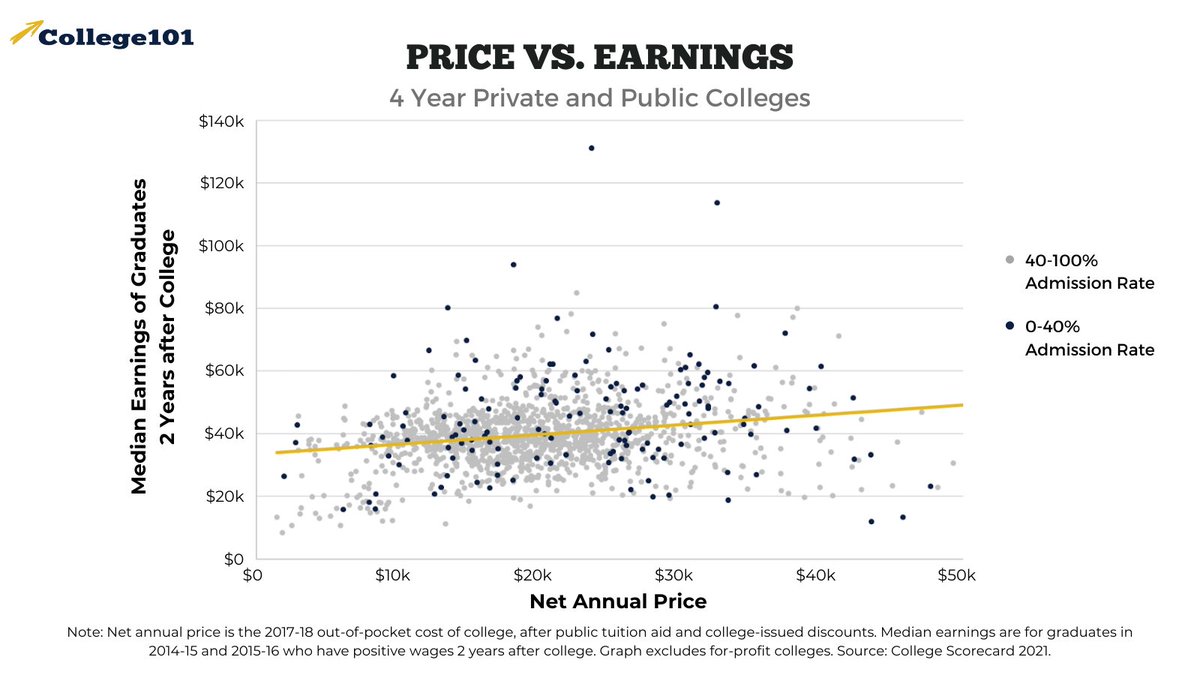
The price of a 4-year college does NOT predict the earnings of its students 2 years after graduation (nor does its admission rate). Pricey, selective colleges have no hold on good salaries after graduation. Spread word, especially to students in the throes of application season.
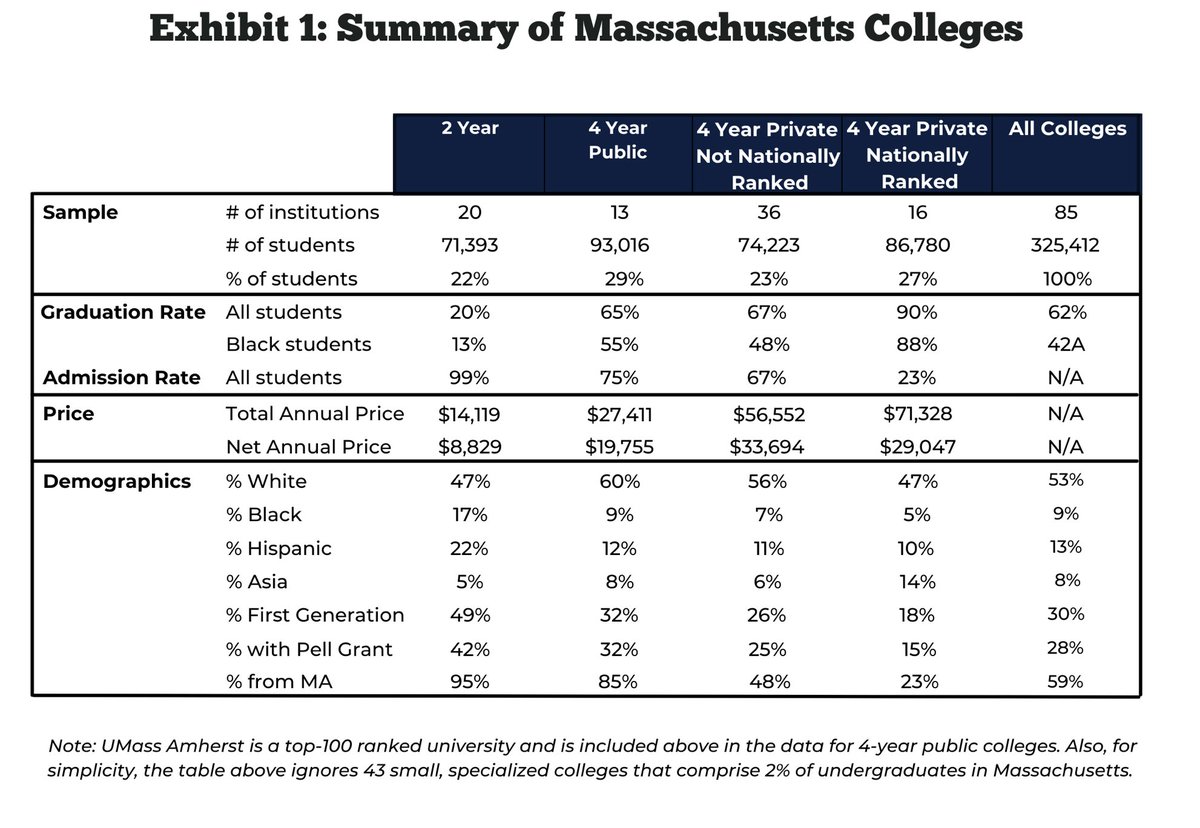
Below is a simple and sobering (if you stare at it a bit) overview of the college sector here in Massachusetts. It reminds me sometimes of that emperor who had no clothes on. For the longer story: https://t.co/FVaQZZYRE4. #highered
And why - exactly? remind me again? - won’t law-makers allow students to begin to use Pell Grants, proceeds from federal loans, and TitleIV aid in general to seek and encourage competitive internships of the sort profiled here? Pretty sure students would appreciate the option.
"The number of officially registered programs in tech fields grew about 41 percent between fall 2020 and 2021. Almost 1,200 programs were serving 4,100 active apprentices in fall 2021." @workshiftnews
https://t.co/beEkSwOhAb