The prediction market pitch in Agent Tank Episode 2 made me think about a problem that goes way beyond prediction markets.
The panel asked what happens when an outcome isn't obvious. The proposed answer was token holders voting on it.
But a vote can tell you what the majority thinks happened. It doesn't necessarily tell you what happened.
That distinction gets pretty important when agents start doing business with each other.
Imagine Agent A pays Agent B to deliver a dataset.
Agent B says, “done.”
Agent A checks it and says, “you missed half the requirements.”
There isn't a customer support rep sitting in the middle. Neither agent should automatically get to be judge and jury either.
So where does the disagreement go?
That's the part of @GenLayer that makes sense to me. A random panel of validators can examine the evidence, reach a verdict, and a challenge can bring in a larger panel if someone thinks the decision is wrong.
You're not pretending every dispute is objectively obvious. You're giving the dispute somewhere credible to go.
Because agents being able to transact without humans is one thing.
Agents being able to deal with each other when something goes wrong is the harder part.
The Agent Tank hackathon is a good place to build around that problem:
https://t.co/QTJkW31yjj
If two agents disagree about whether a job was actually completed, should the system trust one side, trust a vote, or make both sides prove their case?
@themegamind24@Acurast Yes! Big Tech has monopolized server farms for way too long. Turning global smartphones into a decentralized supercomputer is brilliant.
I never open Google Maps because I enjoy looking at maps.
I open it when I want to understand what is actually around me.
That was the feeling I had when I started exploring the @GenLayer Portal.
I expected a page about GenLayer.
What I found was closer to a map of the ecosystem forming around it.
There are projects you can actually explore, validators you can see, and different ways people are building around the network.
That changed something for me.
When you only follow a project through X, you mostly see whatever happens to reach your timeline.
One announcement.
One campaign.
One founder thread.
One person explaining what they think the project is becoming.
You can end up knowing a lot about the conversation without really knowing what is being built.
The Portal gives you another way to look at it.
You can move from the network itself into the projects and people around it, then start forming your own picture instead of relying entirely on the timeline to do that for you.
That is probably the part I would have wanted when I first became curious about GenLayer.
Not another page telling me that something important was happening.
A place where I could actually see what was happening.
If you have never explored the Portal beyond the surface, I think the ecosystem section is a good place to start and see what is being built around GenLayer for yourself.
When you discover a new crypto ecosystem, what helps you understand it faster: the people building it, the products already being built, or the infrastructure underneath everything?
https://t.co/4rWHWl8xIw
@iam_kinging77@GenLayer Information isn't really scarce in crypto. Organized context is. Finding individual posts is easy. Understanding how everything fits together is much harder.
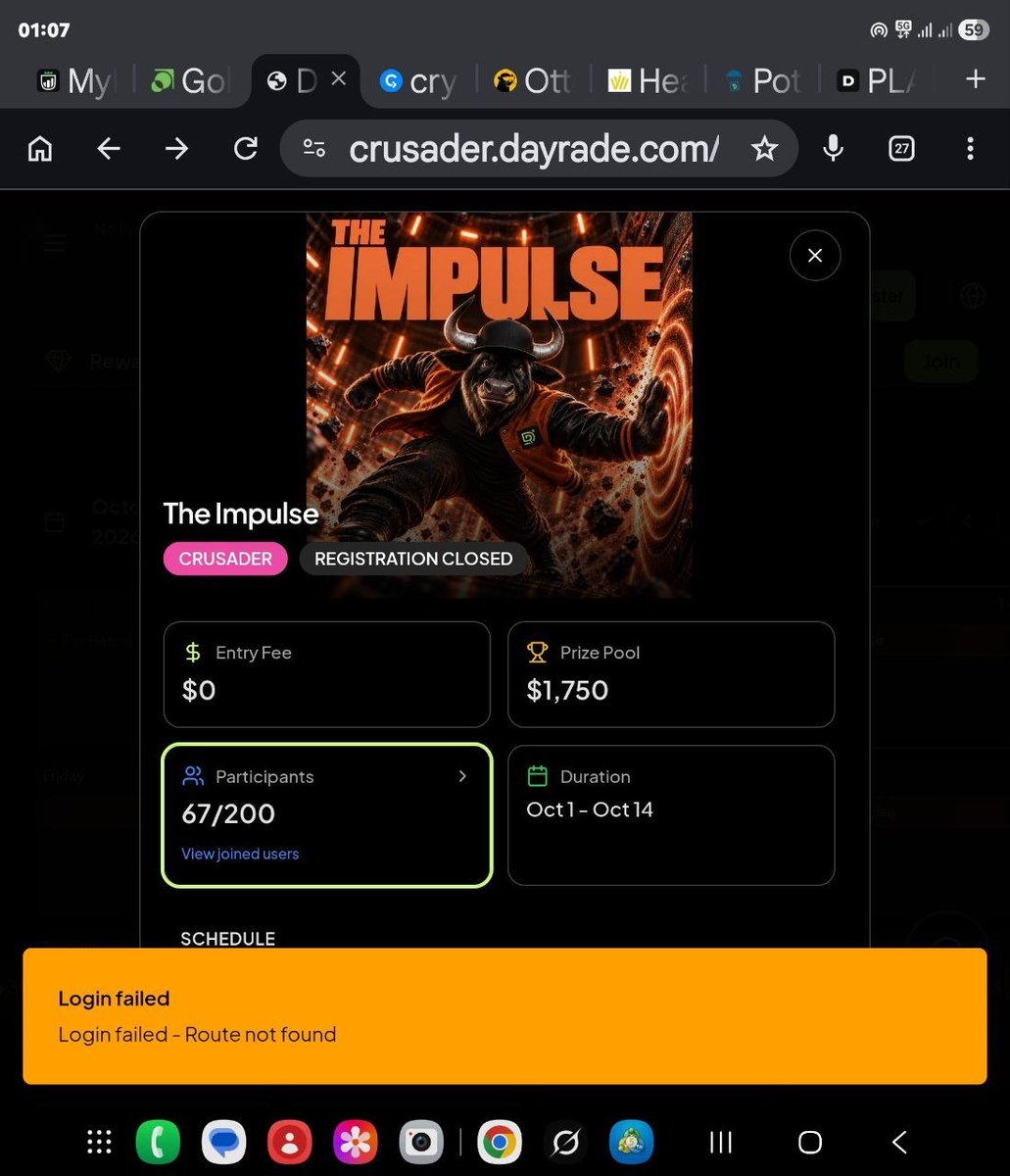
@dayrade_ I decided to test you guys and after everything the stuff refuse to log me in again also I don't understand where is the trading part on your website
@Hemtee5@GenLayer i think clarity on worth would change behavior more than clarity on timing. people already understand deadlines, they don’t understand what earns real credit versus busywork.
Rally is now live on Robinhood Chain.
I’ve become pretty skeptical of “new chain, new campaign” announcements.
A project can get plenty of attention without anyone actually understanding what the product does.
One project I’d be genuinely curious to see put this to work is @ethena.
Ethena gives Rally something interesting to work with because its product is already part of the financial machinery being built around Robinhood Chain. Ethena’s USDe was selected as the primary collateral asset issuer for Robinhood’s first crypto earn product, giving it a real role beyond simply being another token people can talk about.
That creates a better campaign question:
What is USDe actually useful for?
You can explain the dollar side, the collateral side, the onchain side, and why a productive digital dollar matters when lending and other financial activity start moving onchain.
That’s the kind of education I want to see rewarded.
Not who can make the most noise.
Who can make a complicated product click for someone seeing it for the first time.
Rally gives projects on Robinhood Chain a way to turn that kind of understanding into community participation.
So if Ethena gets the next campaign, what part of USDe would you want creators to explain first?
@Hemtee5 i’d nominate a volatile equity, not the S&P as a basket but a single high beta stock. index volatility hides a lot that single name volatility would expose immediately.
@Teeboy375648@2FactorFinance reread the volatility segmentation section twice. the idea that the missing layer for tokenized assets was never distribution but capital structure reframes a lot of the rwa narrative for me.
@Teeboy375648@NetNetCap my prediction: people will call USDG “the yield source” when it’s actually the reserve asset. conflating reserve and yield is an extremely common mistake in this space.
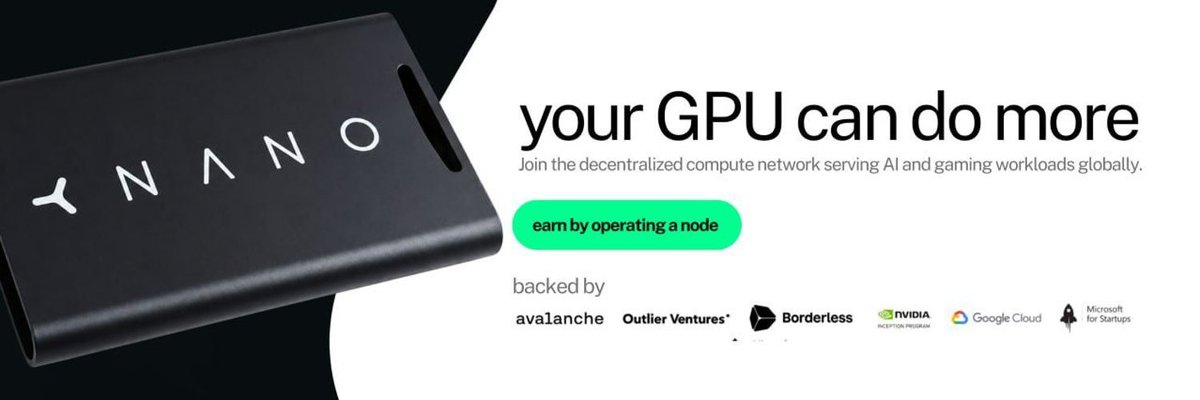
Why should a GPU sit idle when someone else needs the compute ?
That’s the part of @YOM_Official I find interesting.
YOM connects spare GPU capacity with real-time workloads across AI, gaming and streaming, so existing hardware can be useful beyond its primary owner.
The real test is execution: can YOM make distributed GPUs feel as usable as a single source of compute ?
$YOM is available on MEXC.
@Alexxx636@YOM_Official Every delayed project is demand looking for another path. If YOM can settle sessions on-chain and pay operators for real work, that’s more useful than another press release about a 1GW campus.
I got asked to drop proof that I was in GenLayer. I had likes, replies, and a Space I could not find again. I did not have a page with my name on the work.
That is why I opened the @GenLayer Portal. It is where the ecosystem keeps score. You make an account, link the accounts you already use, complete a mission or a contribution, and the record sits against your name. Builders, community members, and validators show up on the same leaderboard.
I stayed because the next time someone says drop proof, I can send a page instead of a scavenger hunt. GenLayer is the adjudication layer for the agentic economy. Validators each run a different AI model and settle questions that need judgment, not only math. The Portal is the front door to that system.
The page is here.
https://t.co/JBkrAoRmHN
Reply with the last time someone asked you to prove you were in a project. What did you actually send them?