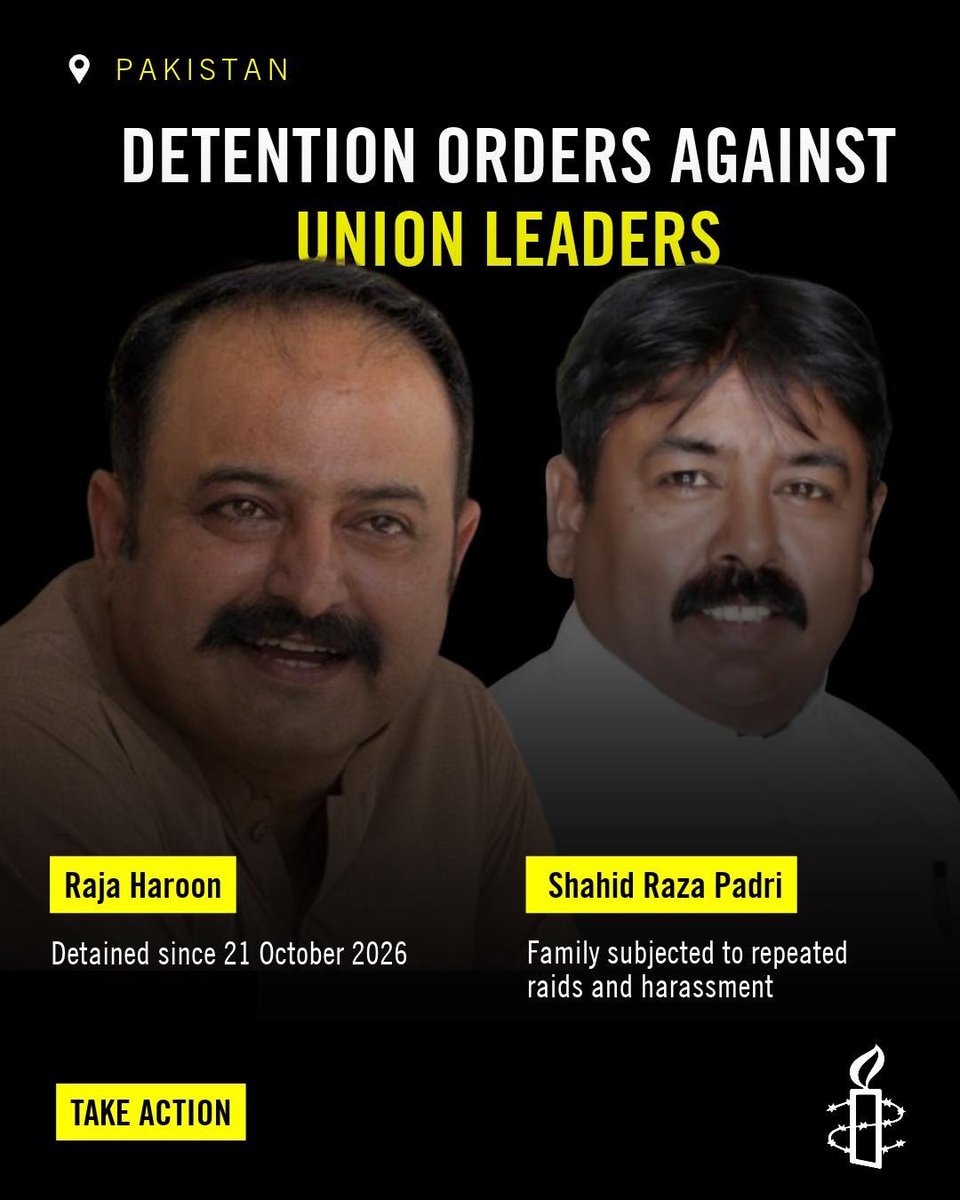
Pakistan: Two labor unionists, Raja Haroon Rasheed and Shahid Raza Padri, from Rawalpindi are been targeted by the Pakistani authorities for their union organizing.
30-day administrative detention orders were issued by @DCRawalpindi under the Maintenance of Public Order Ordinance for both Raja Haroon and Shahid Raza on 20 October after they called for a strike. Raja Haroon has remained in detention since 21 October. Meanwhile, authorities have repeatedly raided Shahid Raza's home and harassed his family.
✍️ Call on the authorities to release Raja Haroon immediately, withdraw the detention orders, and end the targeting of both labor leaders.
🔗 Take action: https://t.co/vh3tCEkCE4
In a ground-breaking report released on September 16, 2025, the UN Independent International Commission of Inquiry on the Occupied Palestinian Territory, chaired by Pillay, concluded that Israel’s actions in Gaza constitute genocide.
Read full article: https://t.co/zE1INypBqa
🔊 Navi Pillay wins the 2026 Nobel Peace Prize. She’s the South African judge who established sexual violence and rape as acts of genocide and concluded that Israel has committed genocide in Gaza. Listen to the Reuters World News podcast for more https://t.co/e0e74YKQUt
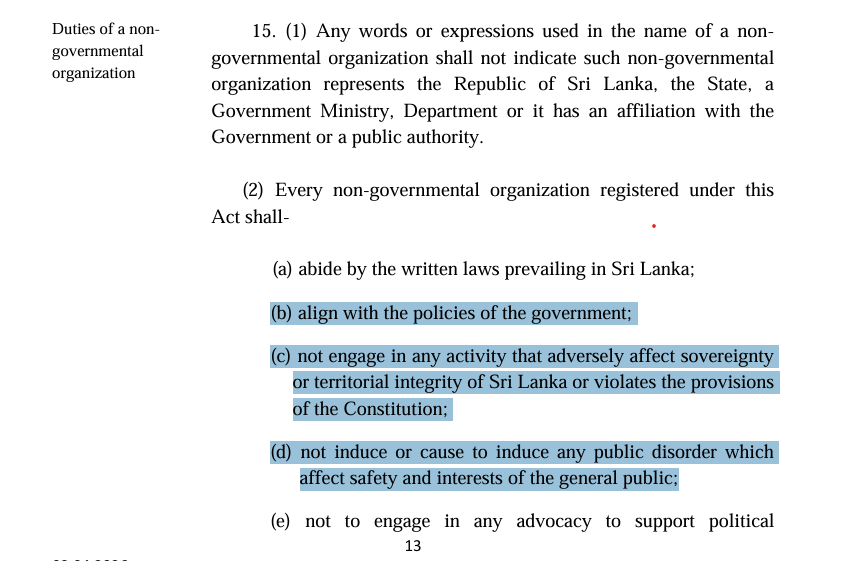
#SriLanka's proposed new NGO legislation imposes an obligation on NGOs to “align with the policies of the government” and “not engage in any activity that adversely affects the sovereignty or territorial integrity of Sri Lanka or violates the provisions of the Constitution”.
NGOs cannot “induce or cause any public disorder which affects the safety and interests of the general public”.
They must not engage in “any advocacy to support political ideologies using funds and resources of the non-governmental organisation during a period of pre-election or, unless it is an object of such non-governmental organisation”.
NGOs must also use their funds “only for the purposes it was registered” and notify the Competent Authority “prior to initiation of any crowdfunding activity”.
https://t.co/fN6csla2ud
Some of the workplace harassment allegations made by Nadia Sarwar against two employees at NBP:
When the complainant was wearing
loose clothing, one of the respondents threatened to tear off her clothes if she
wore such clothes again
One of the respondents showed the complainant private parts of a body sketched on the glass of his table by a marker and asked her to name them. On her refusal, he asked another colleague to explain what the body parts were
One of the respondents would question her single status in the presence of others and also inquired whether she had a boyfriend
General accusations, corroborated by other colleagues: “Personal comments, shameless double meaning words, abusive language, being forced to stay in the office after office hours; disclosing personal details for taking sick leave and/or domestic issues; comments about her medical fitness owing to her marital status etc”
At the minimum, these clearly show a “sexually demeaning attitude.. creating an intimidating, hostile or offensive work environment”, which is part of the definition of harassment in Section 2(h) of the original 2010 Act
The FCC judgment yesterday set aside the IHC judgment that had upheld findings of the ombudsperson and the imposition of major penalty of “compulsory retirement” of the respondents. The judgment restored the President’s earlier decision that directed the bank to issue “censure” to both respondents
Nadia Sarwar first complained about being harassed in 2013. After 13 years of pursuing her case on a number of forums, this is what she got: “censure” to the respondents by the bank
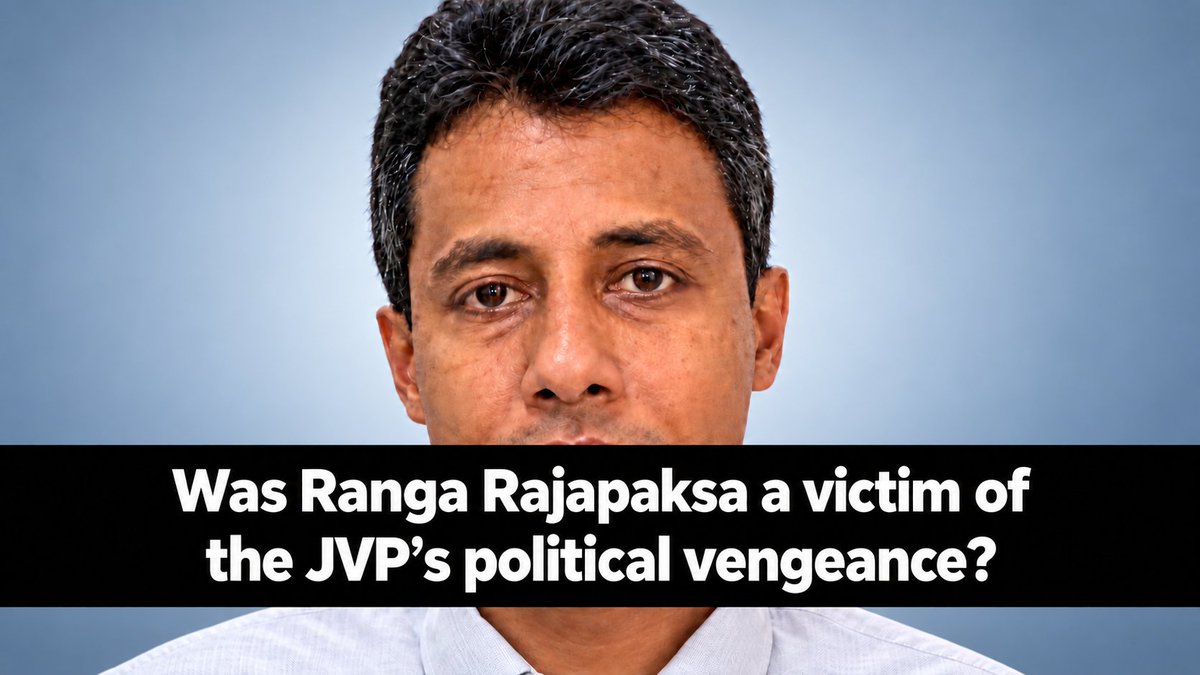
Ranga Rajapaksa was a 50-year-old father, a career public servant, and the Assistant Director of the External Resources Department at the Ministry of Finance. On April 30, 2026, his daughter found him lying in the garden behind their home in Kuliyapitiya. There was a large bloodstain near a banana tree. His body had multiple knife wounds: three cuts to one leg and another to his arm. The veins in both legs and his left wrist had been severed. A small knife lay nearby. He was dead.
Within 24 hours, which is unusually fast for a case of this sensitivity, a four-member panel of Judicial Medical Officers conducted a post-mortem and ruled the death a suicide caused by "self-inflicted cut injuries," citing cardiorespiratory failure from blood loss. The case was effectively closed. The government moved on. Sri Lanka was expected to move on with it.
However, the circumstances of Ranga Rajapaksa's death demand far more than a 24-hour autopsy and a one-line conclusion. They demand answers that no one in this government appears willing to provide.
Ranga Rajapaksa was at the centre of one of the most embarrassing financial scandals in Sri Lanka's recent history: the cyber theft of USD 2.5 million from the Treasury. He was the official who lodged the complaint with the CID about this unprecedented theft. He was the one who brought the crime to the attention of investigators. He was, in the most literal sense, the whistleblower: the person inside the Treasury who raised the alarm that USD 2.5 million of public money had been stolen on the government's watch.
And for that, he was suspended.
Not the officials responsible for the catastrophic cybersecurity failures that allowed criminals to monitor government communications for months. Not the people who designed a payment system so vulnerable that four out of six vouchers could be redirected without detection. Ranga Rajapaksa, the man who reported the crime, was interdicted from service while the investigation proceeded. He was summoned to the CID three times. He cooperated on each occasion, providing investigators with full access to his computer. He was not accused of stealing the money. He was not charged with any crime. Instead, he was suspended; left in professional limbo, stripped of his position, and his reputation publicly destroyed by association with a theft he had reported, all while the government scrambled to contain the embarrassment of having lost $2.5 million through what Deputy Finance Minister Anil Jayantha Fernando acknowledged involved "repeated alterations to account numbers" that somehow passed through the Treasury's verification processes.
The cyber theft itself had been concealed from the public for months. The breach occurred between December 2025 and January 2026. It was detected during routine transaction reviews in January. But it was not disclosed to Parliament or the public until much later, only after MP Maithri Gunaratne raised it in Parliament. The government that claims to stand for transparency and accountability had hidden the loss of USD 2.5 million in public funds from the people who own those funds. When the disclosure finally came, it was not voluntary; it was forced by parliamentary questioning.
Now consider the sequence of events from Ranga Rajapaksa's perspective. You are a career civil servant. You discover that millions of dollars have been stolen from the Treasury through a cyber breach. You do the right thing and report it to the CID. And then, instead of being protected as a whistleblower, you are suspended. Your name is publicly associated with the theft. You are summoned for interrogation three times. Your career is destroyed. Your family watches as their father, a man who reported a crime, is treated as though he committed one. The investigation remains active. The government is embarrassed. And you are the most visible face of that embarrassment: not the hackers who stole the money, not the officials who failed to secure the systems, but you, the person who told the truth.
And then you are found dead in your garden with your veins severed.
The forensic panel ruled suicide. Perhaps it was. But consider what must be true for the suicide ruling to stand: a man must have taken a small knife, walked into his back garden, and methodically cut the veins in both legs and his left wrist with sufficient precision and force to cause fatal blood loss. He then had to continue cutting after the first wound, and the second wound, and the third wound, as blood poured from his body, until he collapsed near a banana tree where his daughter would find him. This is the official account. This is what Sri Lanka is asked to accept.
Former MP Udaya Gammanpila was the first to publicly raise doubts about the death, stating there was evidence suggesting the circumstances were suspicious. Ranga Rajapaksa's wife initially lodged a complaint indicating the death was suspicious. She later filed a second complaint stating she had "no doubts" about her husband's death, but notably added that statements by Gammanpila and others suggesting foul play had caused her and her children "severe mental distress." Read that carefully. A widow under pressure, with children to protect, publicly retracting her initial suspicion while simultaneously describing the distress caused by others raising the very questions she initially raised herself. Whether that retraction was voluntary or the product of pressure (institutional, social, or otherwise) is a question no one in the government has asked or answered.
The questions that remain unanswered are devastating:
Why was the whistleblower suspended while the systemic failures that enabled the theft were not addressed? Why was the cyber breach concealed from Parliament and the public for months? Why was the forensic determination made within 24 hours, a timeline that would be unusual for any suspicious death, let alone one involving a key witness in a major financial scandal? Who else in the Treasury knew about the vulnerability that allowed hackers to monitor government communications for months? Why were four out of six payment vouchers successfully diverted without detection, and who designed the verification system that failed so comprehensively? Has the USD 2.5 million been recovered? Have the hackers been identified and prosecuted? What happened to the other three officials who were suspended alongside Rajapaksa; are they alive and safe? And most fundamentally: did Ranga Rajapaksa possess knowledge about the cyber theft (about how it happened, who was responsible for the systemic failures, or who benefited from the concealment) that someone wanted to ensure would never be disclosed?
The government has answered none of these questions. The case has been ruled a suicide. The file, for all practical purposes, is closed. The FBI and Australian Federal Police were reportedly brought in to assist with the cybercrime investigation, but the death of the key witness in that investigation has been treated as a routine matter requiring no further inquiry.
Ranga Nishantha Rajapaksa deserved the protection of the State he served for decades. He deserved to be treated as a whistleblower, not a suspect. He deserved an investigation into his death that took longer than 24 hours. He deserved a government that asked questions rather than closed files. He deserved better than to bleed out in his back garden while the people who failed to protect the Treasury's money also failed to protect the man who told the truth about it. His daughter deserved better than to find her father in the garden. His wife deserved better than to be pressured into retracting her own suspicions. His children deserved better than to grow up knowing that their father did the right thing, and that the right thing killed him.
#SriLanka #LKA @UNHumanRights@hrw@UN@commonwealthsec@PMOIndia@EUCouncil@EUCouncilPress
Uptill now since General Musharraf was deposed,we have had the most political prisoners.There has been a silencing of the press with 29 journalists slapped with charges since Feb 2025,The picking up of PTI MNAs & MPAs is a new low even for Pakistan’s struggling hybrid set up.
Reacting to the re-arrest of human rights lawyers Imaan Mazari-Hazir and Hadi Ali Chattha just hours after they had been granted bail by the Supreme Court yesterday, Babu Ram Pant, Amnesty International’s Deputy Regional Director for South Asia, said:
"Imaan and Hadi's re-arrest dispels any pretence that the charges against them are anything other than a politically motivated attempt to punish them for their human rights work. Their case demonstrates once again the authorities’ willingness to weaponize the legal system against critical voices.
“These latest charges, brought against them for simply attending a peaceful protest, are not only absurd but an insult to their lifelong commitment to human rights.
“The Pakistani authorities must stop misusing the justice system to target Imaan and Hadi. They must be released immediately and unconditionally, with no further charges to prolong their detention. Imaan and Hadi should be free to meet their friends and family and to do the work they love – representing victims of human rights violations."
Read here: https://t.co/gZ4ZenymIk
🚨🚨#BREAKING: #Islamabad bar association express serious concerns on delay on #Pakistan’s most devoted human rights defenders @ImaanZHazir and @AdvHadiali’s suspension of conviction applications since February 2026 and urged #SupremeCourt to hear the petitions on 17th September and decide accordingly.
So #srilanka army admits soldiers rape little boys and girls in #haiti and do not go to jail. Where was @OHCHRAsia all this time? What is the lesson - just wait for time to pass and it will all be swept under the carpet.
The Punjab Anti-Terrorism (Amendment) Bill 2026 is outrageous & terrifying. It’s an attempt to give legal cover to enforced disappearances while providing impunity to those responsible for criminal treatment of accused persons who are rights holders.
Two Palestinian journalists are still missing.
Israeli forces detained Nidal al-Waheidi and Haitham Abdelwahed three years ago. We don’t know why or where they are or even if they’re alive. Their families have no idea where they are or if they’ll ever see them again.
Help us mark the International Day of the Victims of Enforced Disappearances by demanding the immediate release of Nidal and Haitham.
We need answers. We need justice. Take action now: https://t.co/wP3XXDfeY2
✊ Every message matters.
پچھلے 4، 5 سیلابوں میں 7,000 لوگ مارے جا چکے ہیں، اور 7,000 لوگ تو کسی جنگ میں بھی نہیں مارے گئے۔ جبکہ 4 کروڑ لوگ سیلاب کی وجہ سے بے گھر ہوئے ہیں۔
وفاقی وزیر برائے موسمیاتی تبدیلی مصدق ملک کا موسمیاتی تبدیلی سے متعلق گول میز کانفرنس سے خطاب۔
#AJCONF@DrMusadikMalik@EUPakistan@Asma_Jahangir
*Kashmir - A crises no one is covering*
Political turmoil and long term grievances, a region on edge. We go where most journalists can’t — talking to politicians, traders, civil society, and voters shaping the story from the ground. Watch our exclusive coverage
Watch our exclusive documentary *Kashmir Diaries*:
https://t.co/KBLQNQKepg
Subscribe to Munizae Jahangir Official for in-depth conversations on politics, international affairs, democracy, human rights and global security.
Root causes: #India’s youth crisis is about the absence of jobs, not just examination reform - @the_hindu editorial
Where are all the jobs in a purportedly thriving economy?
https://t.co/GTZEPpjULW via @the_hindu
Found this excellent letter after seeing the backlash. If we feel like anti-imperialist movements are weakened by a timely warning about hollow anti-imperialism, and so triggered by it as some leftists seem to be, we have some deep reflecting to do.
https://t.co/lMOt7ksJ4A
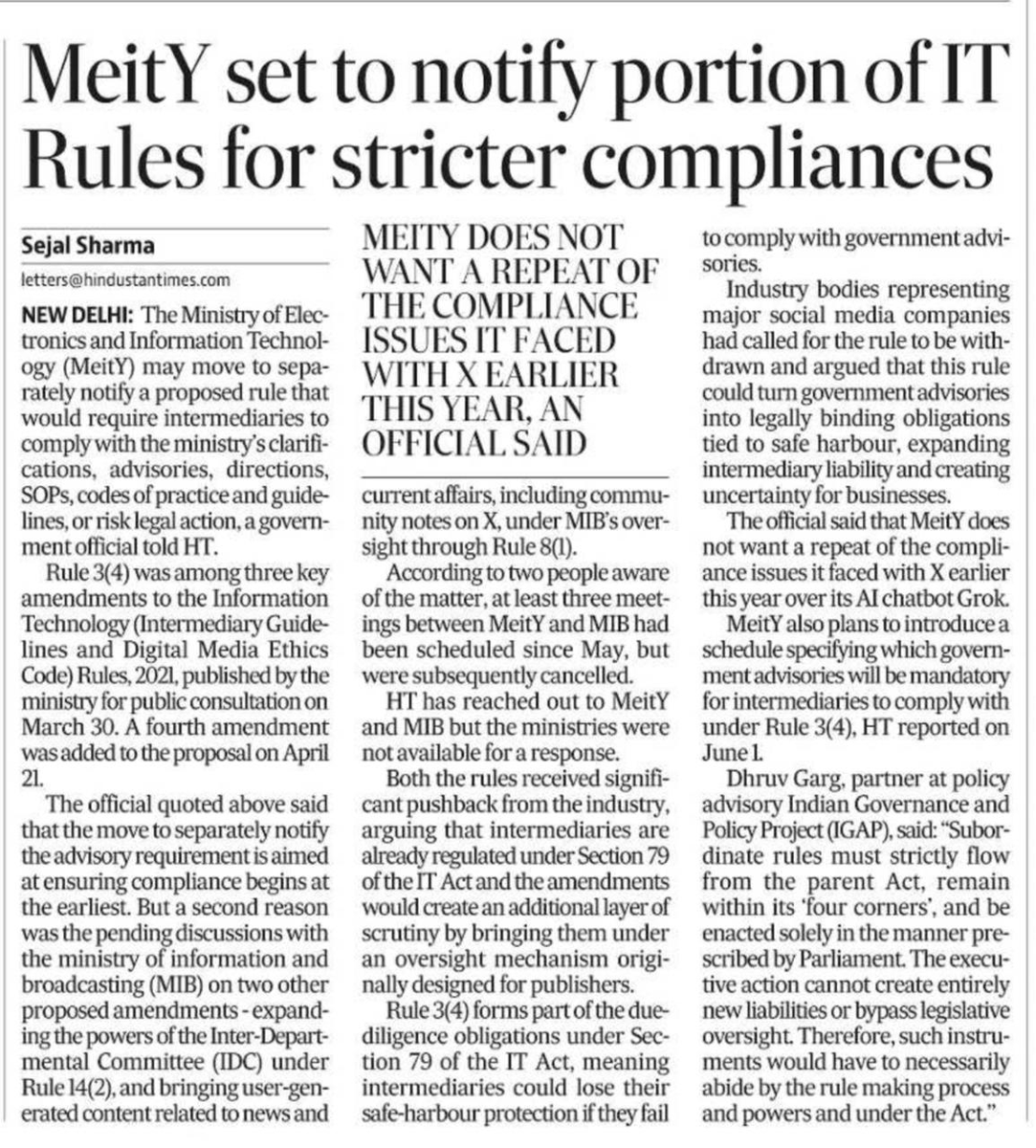
This is draconian and being slipped in under the guise of the rules. The effect is much worse than anything achieved by the press censorship during the official Emergency.