Hematopathologist/molecular pathologist at @BrighamWomens @MassGenBrigham, Pathology Curricular Theme Director at @HarvardMed. Tweets/RTs not medical advice.
Looking forward to giving #GrandRounds on Monday at @WCMCPathology and presenting our work on TP53 mutations in myeloid neoplasia. Thanks so much to @SanjayPatelMD for inviting me!
I'll never forget my own #MatchDay (coincidentally also March 15th), opening my envelope and then texting my parents from the auditorium to tell them I'd matched at @BWHPath. To the incoming residents and fellows, I'm looking forward to meeting and working with all of you!
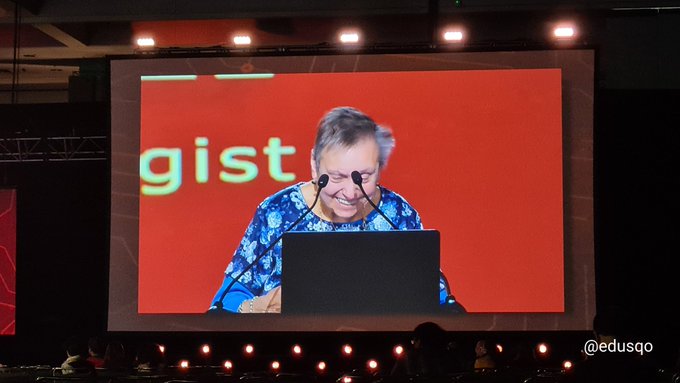
We are so saddened at the loss of Dr. Virginia A. LiVolsi, a true pathology legend. Dr. LiVolsi was the recipient of this year's Board's Distinguished Pathologist Award and she will be missed.
@aakasharmand will be presenting the Histology Bootcamp: Thyroid in her honor.
RIP Anthony Epstein, pathologist and co-discoverer (with his grad student Yvonne Barr) of Epstein-Barr virus. He heard a talk by Denis Burkitt about the lymphoma he observed in Africa (Burkitt lymphoma), correctly hypothesized it was caused by a virus, and proved it by EM.
His groundbreaking research, which he performed with Yvonne Barr, his doctoral student, uncovered the first virus capable of causing cancer in humans. https://t.co/7xinU3OE2b
Are you a pathology trainee interested in a #hemepath fellowship? Big news: most hemepath fellowship programs will be moving to a match process for positions that begin in 2026! For more information: https://t.co/2WFaouRS8t
I am saddened to learn that Dr Viginia LiVolsi - a true giant of the field of pathology - particularly endocrine pathology - has passed away unexpectedly
She was a great mentor to many
I will always remember her as a fascinating conversationalist
Finally and most importantly: this was a collaboration in every sense with Dr. Ashwini Jambhekar at @HarvardMed, and none of this would have been possible without her expertise and insights. This was a true labor of love for us, and we’re excited to see where it leads. (5/5)
These differences suggest distinct biological roles for mutated p53 in initiation of myeloid dysplasia and progression to acute leukemia. https://t.co/RZFERaNsI4 #bloodneoplasia
Thanks to everyone who helped make this happen, including my colleagues at @BWHPath, the audience at @USCAP (where we first presented this as a platform talk last year) for their feedback, and the staff at @BloodNeoplasia. (4/5)
Mutations in MDS also had higher retained transcriptional activity, and co-mutation profiles were different between disease categories and TP53 mutation types, suggesting different mechanisms for driving initiation and progression of disease. (3/5)
We analyzed the spectrum of TP53 mutations across different categories of myeloid neoplasia (MDS, AML, AML-MR, and tAML). Missense mutations were more common in MDS, while inactivating mutations were more common in secondary AML. (2/5)
Briefly: TP53 mutation is associated with poor prognosis in heme malignancies, but little is known about the impact of specific mutations and mutation types (missense, nonsense, frameshift, splice site, etc). (1/5)
These differences suggest distinct biological roles for mutated p53 in initiation of myeloid dysplasia and progression to acute leukemia. https://t.co/RZFERaNsI4 #bloodneoplasia