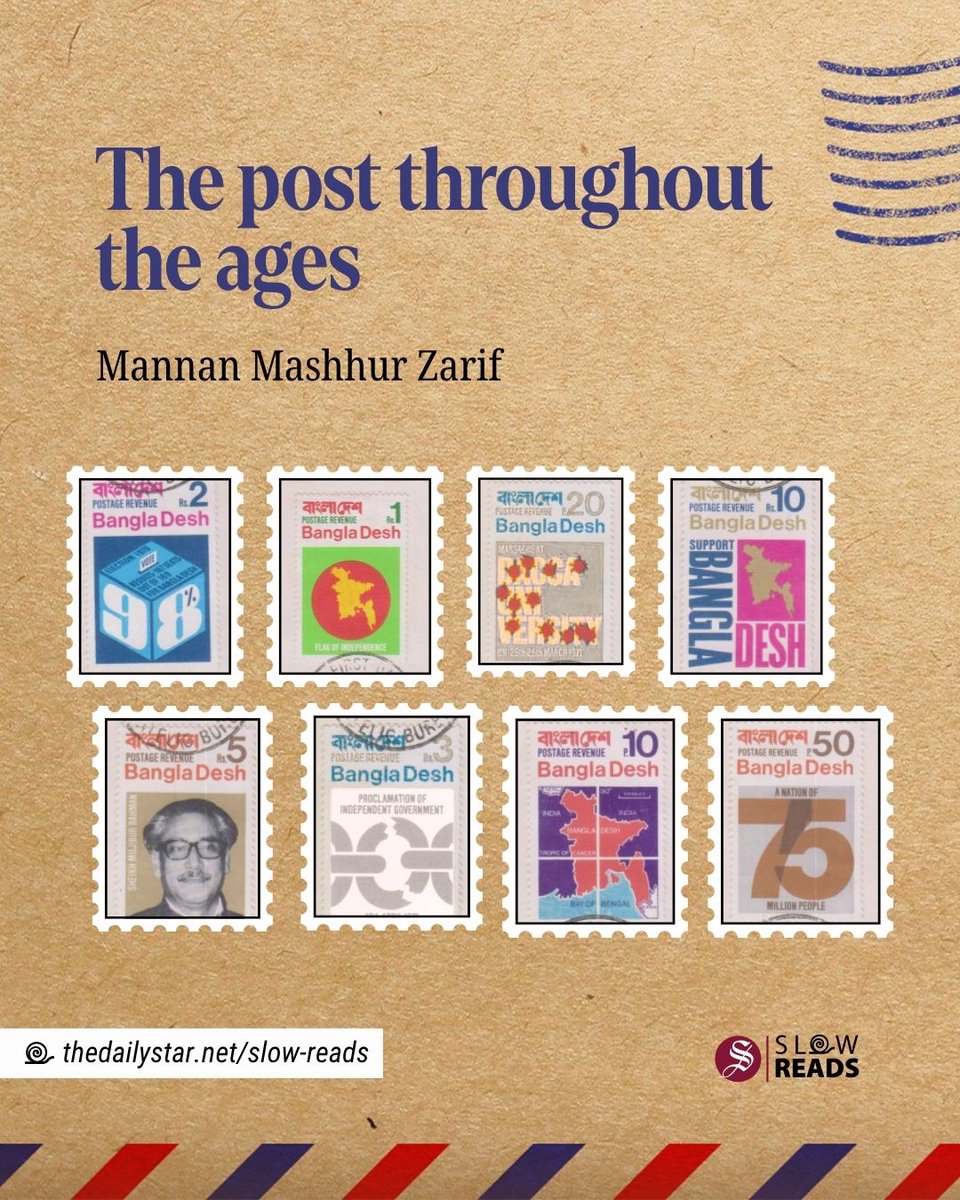
The post has evolved from mounted couriers and dak runners to emails and social media, but its role in connecting people has endured. From Sher Shah Suri’s postal network and the creation of the Universal Postal Union in 1874 to Bangladesh’s first postage stamp in 1971, Mannan Mashhur Zarif looks at the history of postal communication and the changing place of philately in Bangladesh. As private couriers reshape the postal landscape, he explores whether philately could help revive interest in the country’s postal heritage.
Read the full article here: https://t.co/5cnsUZKP7H
.
.
#SlowReads #PostalHistory
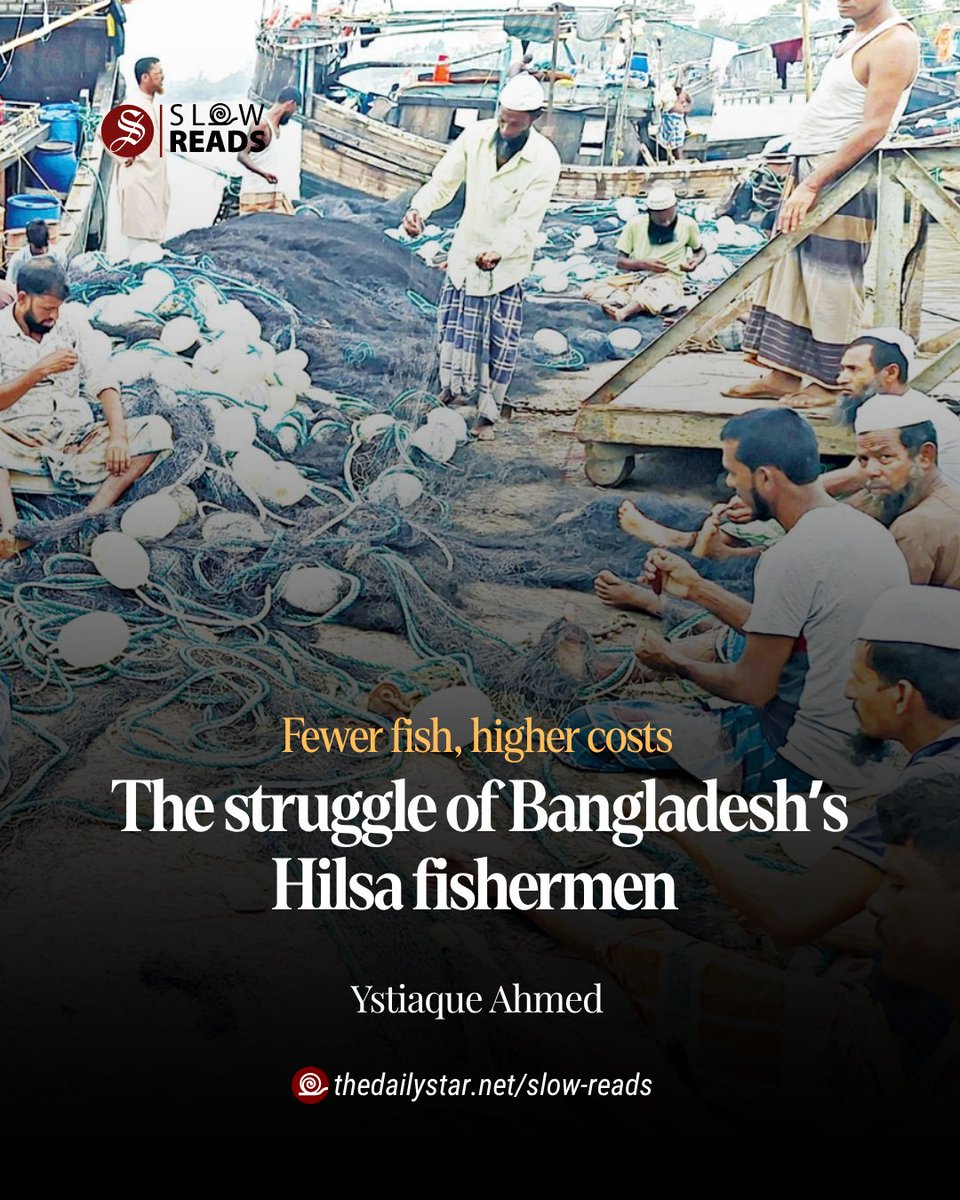
There is a bitter irony in this dependence on Hilsa. As the market price of the fish rises, the people who catch it can find themselves increasingly unable to afford it. Harun says a kilogramme of Hilsa can sell for as much as Tk 2,500. At that price, keeping part of the catch for his own family becomes a luxury. “We are the ones catching the fish, but we cannot afford to eat it ourselves,”
Read the full article here: https://t.co/nlfCAkwWrS
#SlowReads #Hilsa #fishermen #Bangladesh
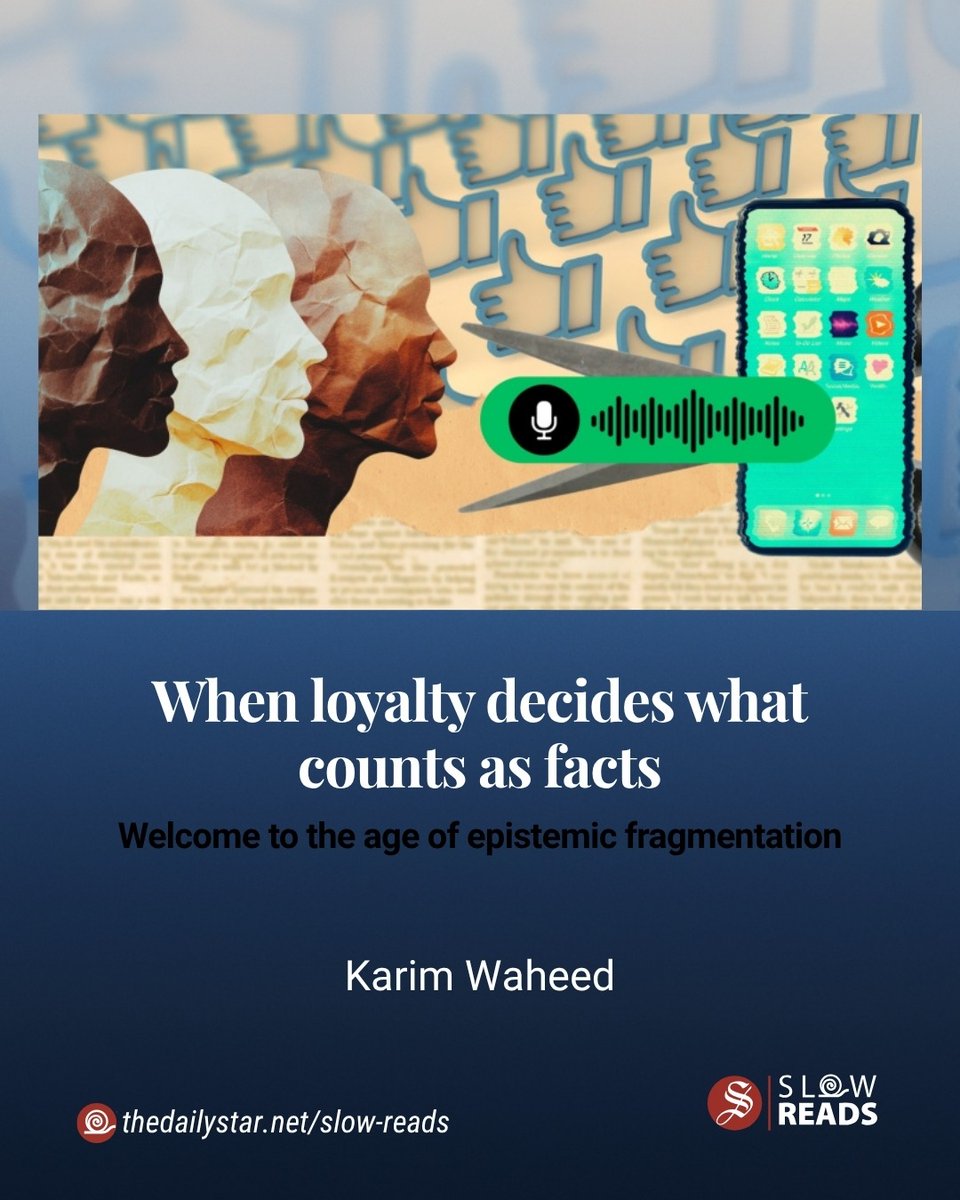
We increasingly disagree not merely about what the facts mean, but about whether the facts themselves exist. Welcome to the age of epistemic fragmentation. Or, in less philosophical language, a world where different groups seem to inhabit their own realities, complete with supporting evidence and comment sections. This article explores the rise of epistemic fragmentation and how tribal loyalty is eroding our shared understanding of truth
.
Read the full article: https://t.co/tUrRmDqSKa
#TheDailyStar #SlowReads #EpistemicFragmentation #PublicDiscourse #MediaTrust
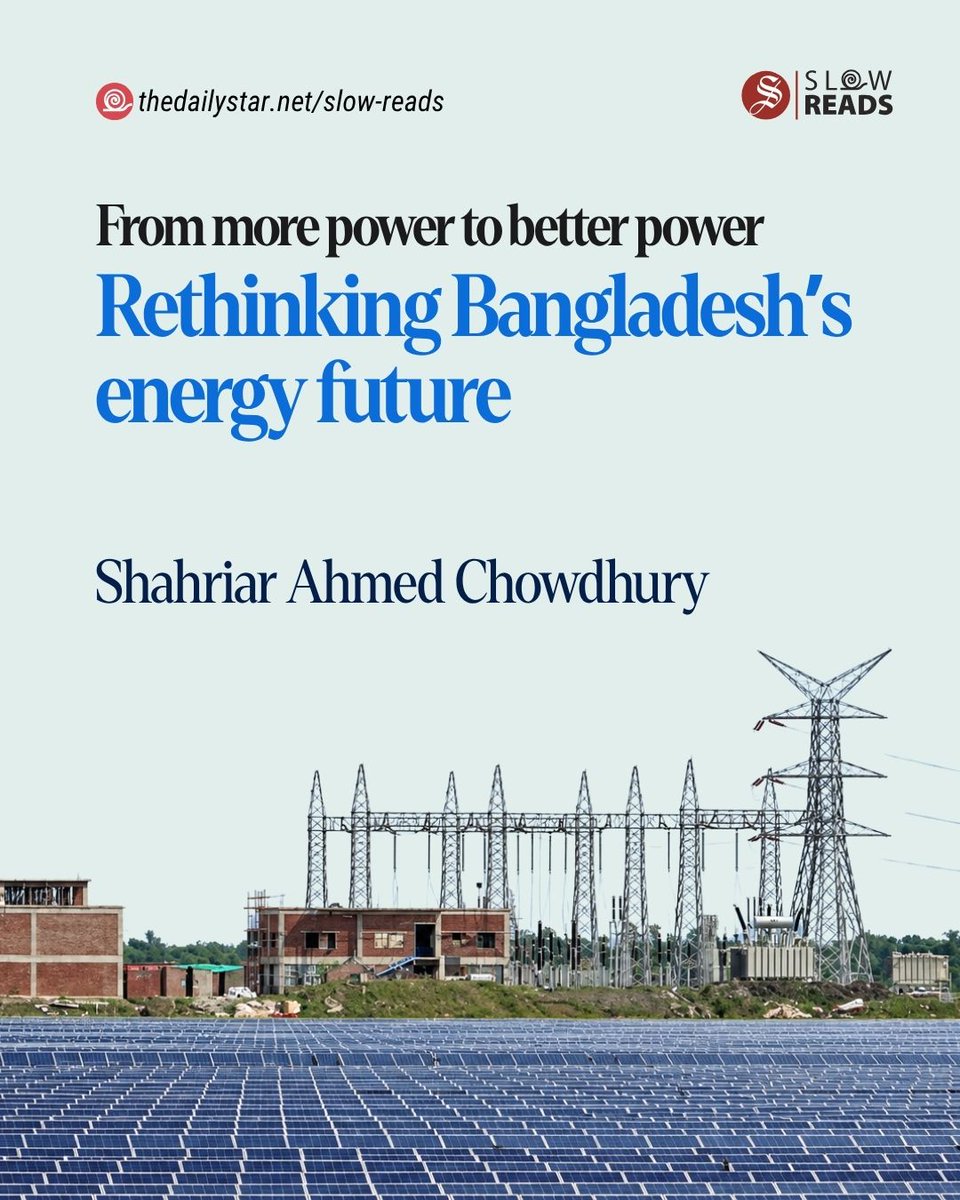
Bangladesh’s challenge is no longer, ‘How do we generate more electricity?’ It is, increasingly, ‘How do we generate the right electricity, transmit and distribute it efficiently, maintain grid stability, and provide it affordably, reliably and sustainably?’
This Slow Reads piece traces why the next phase of the nation's power sector transformation requires moving from a generation-centric model to a flexible, integrated, and renewable-driven electricity system.
Read the full article: https://t.co/R8f6YIv861
#TheDailyStar #SlowReads #EnergyTransition #RenewableEnergy #Bangladesh
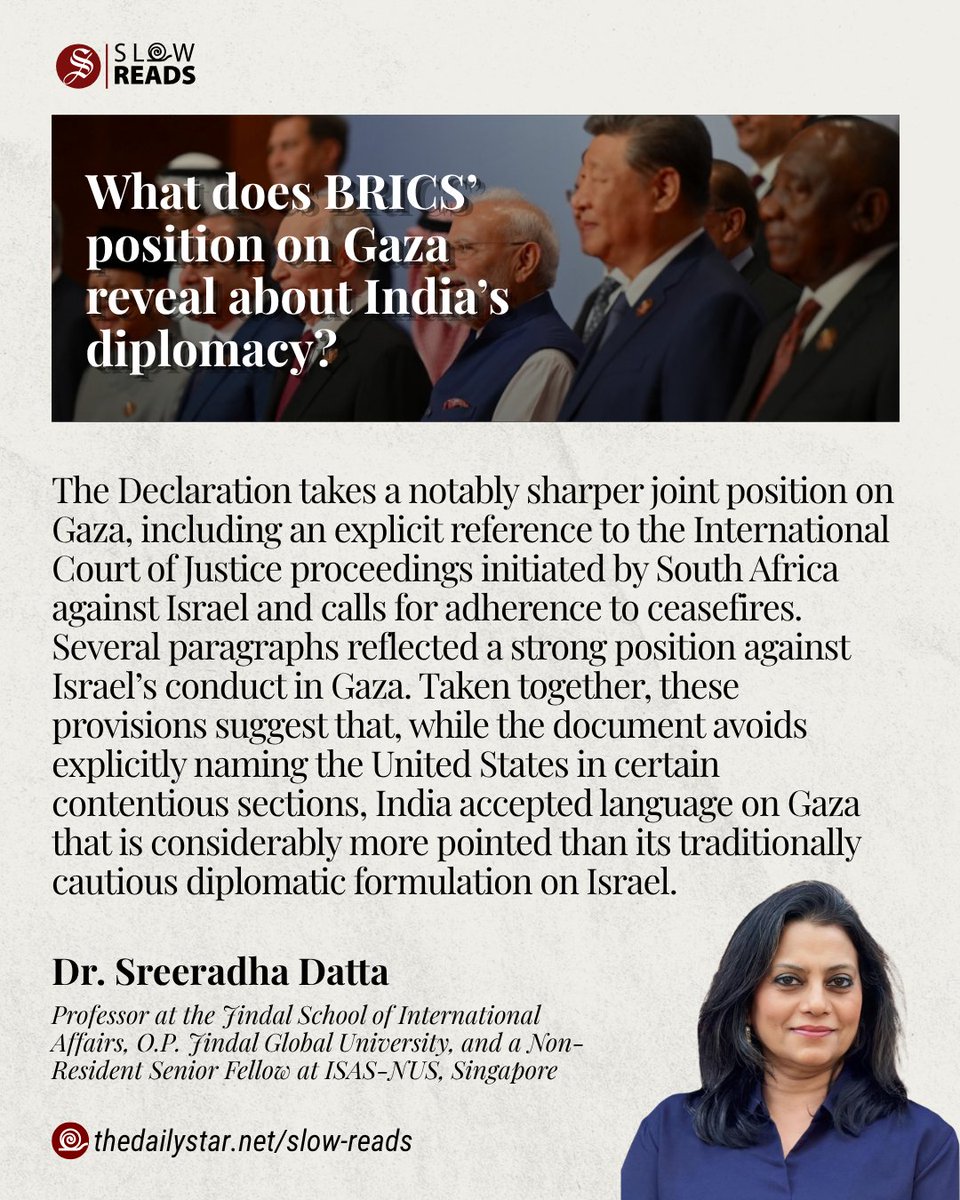
Some of these members, however, were not going to burn bridges with the USA, but most agreed to stand against unilateralism and exceptionalism and resist the bullying tendencies of the developed world. Indeed, the latest summit has given the issues of the Global South greater salience. Members are seeking greater representation in a more inclusive manner, something that appears to be missing in several of the multilateral organisations dominated by developed nations.
Read the full article here: https://t.co/jX2N3OrRXR
#SlowReads #BRICS #GlobalSouth #Geopolitics
Gandhi’s 1946 visit to Noakhali is remembered not only through political debates, but through the memories of people who witnessed his arrival. Villagers recalled crowds gathering for his prayer meetings, roads being repaired ahead of his journey, and an atmosphere of festivity surrounding his visit. Oral recollections also describe people who had been forcibly converted returning to their earlier faith, while some perpetrators of the riots went into hiding or apologised to Hindus. Decades later, these memories, along with Gandhi’s monument at Joyag, continue to shape how his visit and its legacy are remembered in Noakhali.
Read the full article here: https://t.co/gaSbEc89jI
#SlowReads #NoakhaliHistory #Gandhi
The Russian, Chinese and Cuban revolutions were witnessed by three American writers who happened to be in the right place at the right time: John Reed in Petrograd in 1917, Edgar Snow among Mao and the survivors of the Long March, and Herbert Matthews with Fidel Castro in Cuba. Their accounts offered firsthand insights into Lenin, Mao and Castro and the social upheavals that continue to shape history.
Read the full article here: https://t.co/ph6EwPPlzi
#SlowReads #History #Revolutions
A barrage or dam cannot create water. The water has to come from upstream. If we take the Teesta Barrage as a lesson, then a Ganges or Padma Barrage is not a sound decision unless we first know exactly how much water will come from India in each season, and unless that flow is guaranteed.
Read the full interview: https://t.co/CHdVyKLcql
.
.
.
.
.
#TheDailyStar #SlowReads #Ganges #Farakka #GangesBarrage
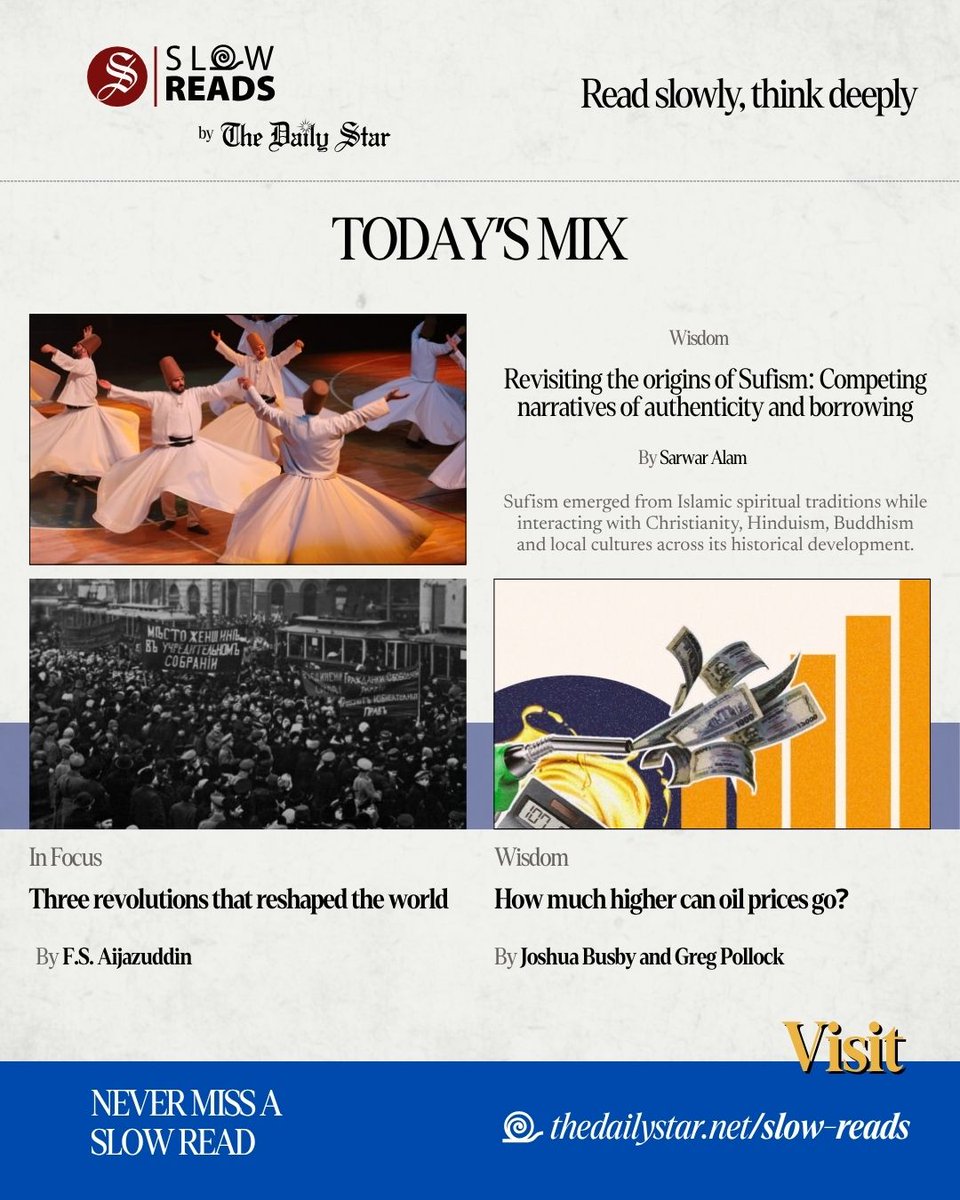
"Far from being dependent on or a derivative of Neoplatonism, Christianity, Buddhism, or Hindu yoga, Sufism is an original, comprehensive, and hence authentic form of knowledge."
This article explores the competing narratives surrounding the origins of Sufism and how Islamic mysticism intersects with, influences, and diverges from other global spiritual traditions.
Read the full article: https://t.co/56Qe6D1AvH
#TheDailyStar #SlowReads #Sufism #IslamicHistory #Mysticism
Sustained conflict in Iran – itself a major oil producer – continued disruptions of oil shipments in the Strait of Hormuz, and Iran-linked militias’ disruptions to shipping in the Red Sea could mean the reemergence of the nightmare scenarios analysts envisioned when the fighting began. It’s not clear if that would translate into simply much higher prices at the pump or turn into 1970s-style shortages, where there’s not enough fuel available at any price and lines stretch around the block at gas stations.
Read the full article: https://t.co/ha7MTnq3C6
#SlowReads #OilPrices #EnergyCrisis #StraitOfHormuz
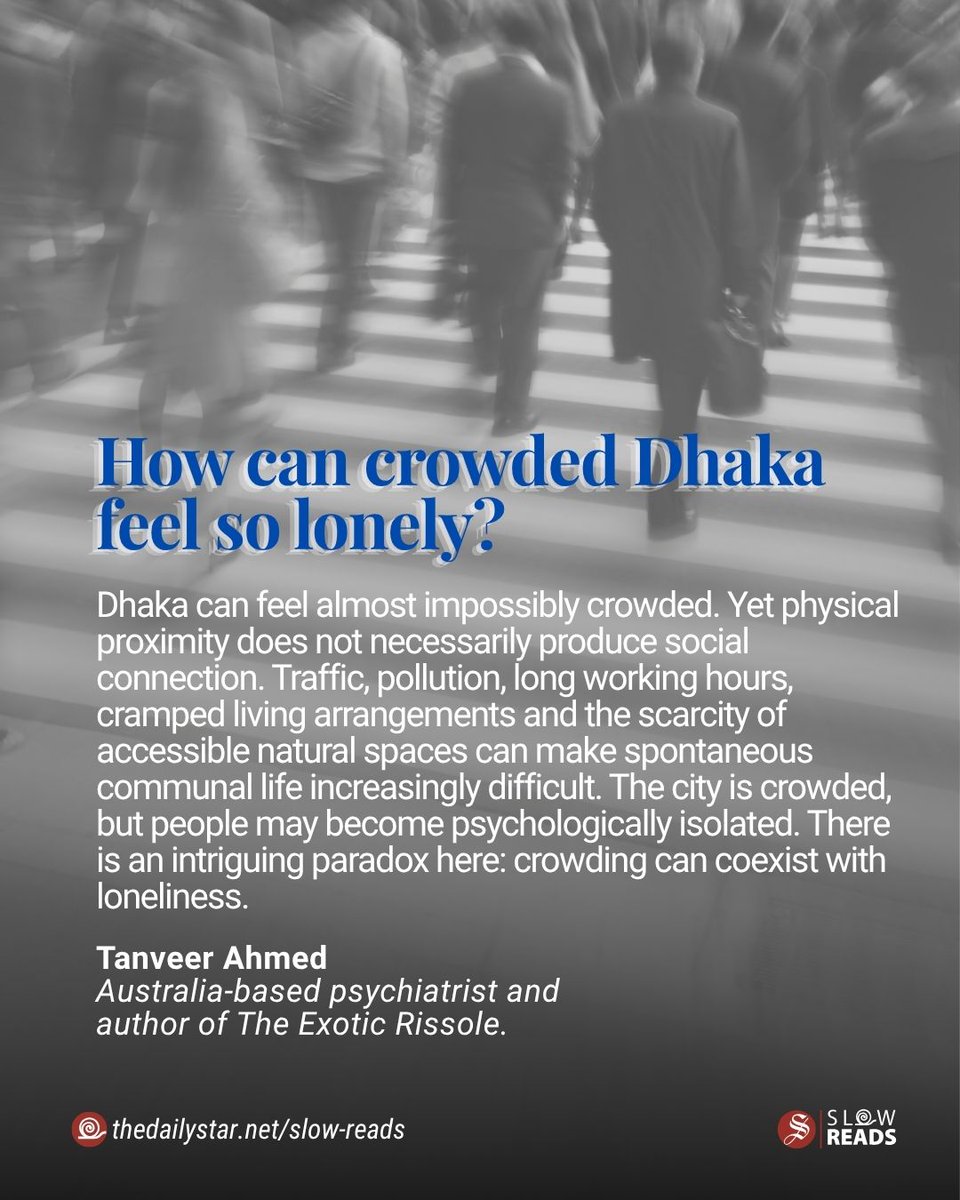
"Tension" is English, but it has been thoroughly absorbed into Bangladeshi Bengali. It is not quite the same as the English word "stress." In context, it can describe ordinary worry, physical discomfort, emotional suffering, social pressure and, at its extreme, something very close to what a psychiatrist would call major depression or an anxiety disorder.
In this essay for The Daily Star Slow Reads, psychiatrist Tanveer Ahmed explores how a single word provides a socially acceptable language for psychological distress, revealing how cultural expectations, family relationships, and social pressures shape mental health.
Read the full article: https://t.co/t2MtNzUR7z
#TheDailyStar #SlowReads #MentalHealth #Bangladesh #Psychology
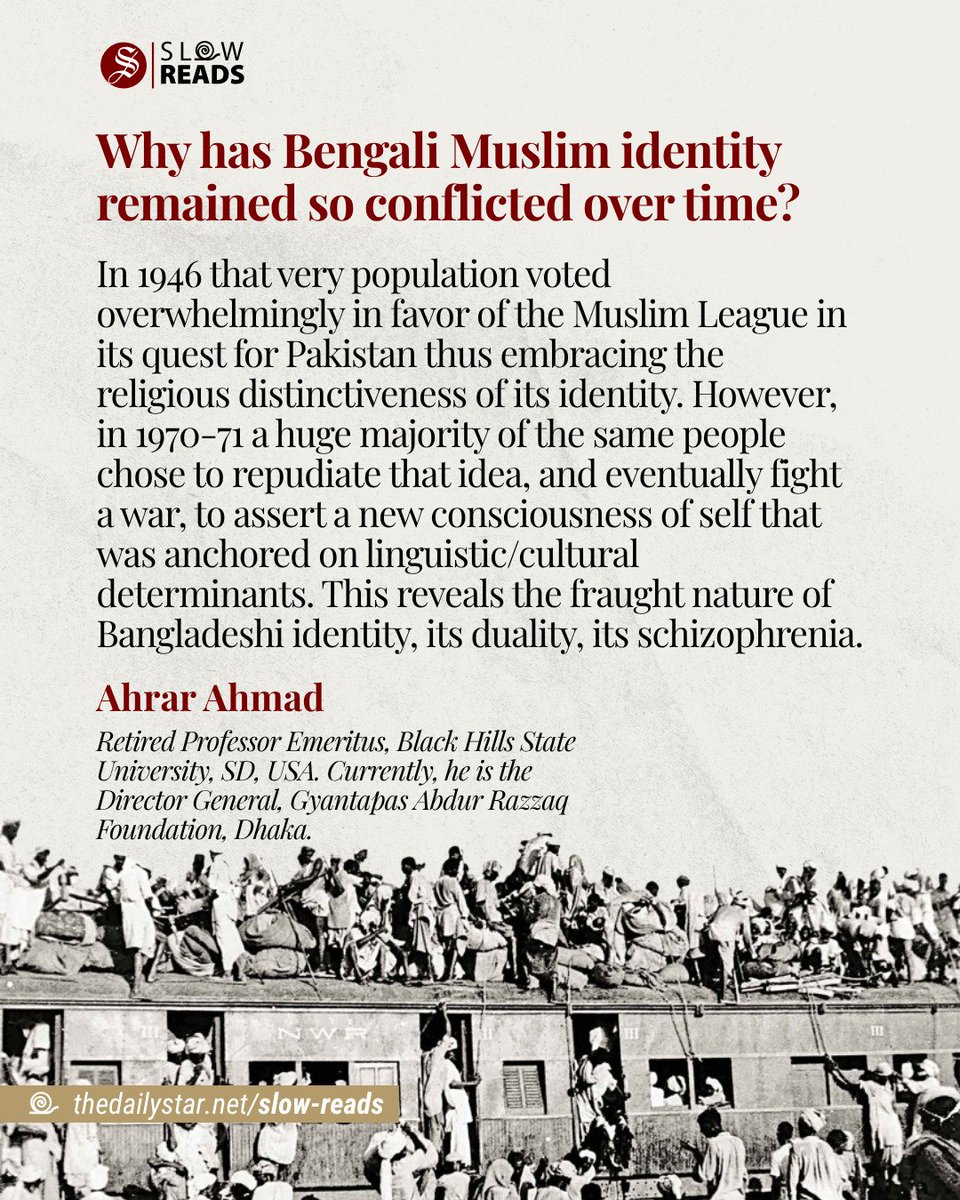
One of the grand paradoxes facing Bangladeshis is expressed in the negotiations and contestations on the simple question about who they are, particularly in the context of the strains caused by the Universalist claims of their religion on the one hand and the particularist demands of their ethnicity and culture on the other.
Explore the deep historical roots of this duality and how nineteenth-century colonial policies shaped the complex identity of Bengali Muslims today.
Read the full article: https://t.co/nU3s3bW5zf
.
.
.
.
.
#TheDailyStar #SlowReads #BengaliMuslims #BangladeshHistory #IdentityPolitics
At the very moment when sustained human reading appears to be losing cultural centrality, textual production is becoming virtually inexhaustible. The scarcity no longer pertains to text; it increasingly applies to attention.
This article explores how AI and digital media are reshaping our relationship with language—and why the true challenge of a post-literate society is preserving deep engagement in an age of endless content.
Read the full article: https://t.co/Zb4rPYvotB
#TheDailyStar #SlowReads #PostLiteracy #FutureOfReading #ArtificialIntelligence
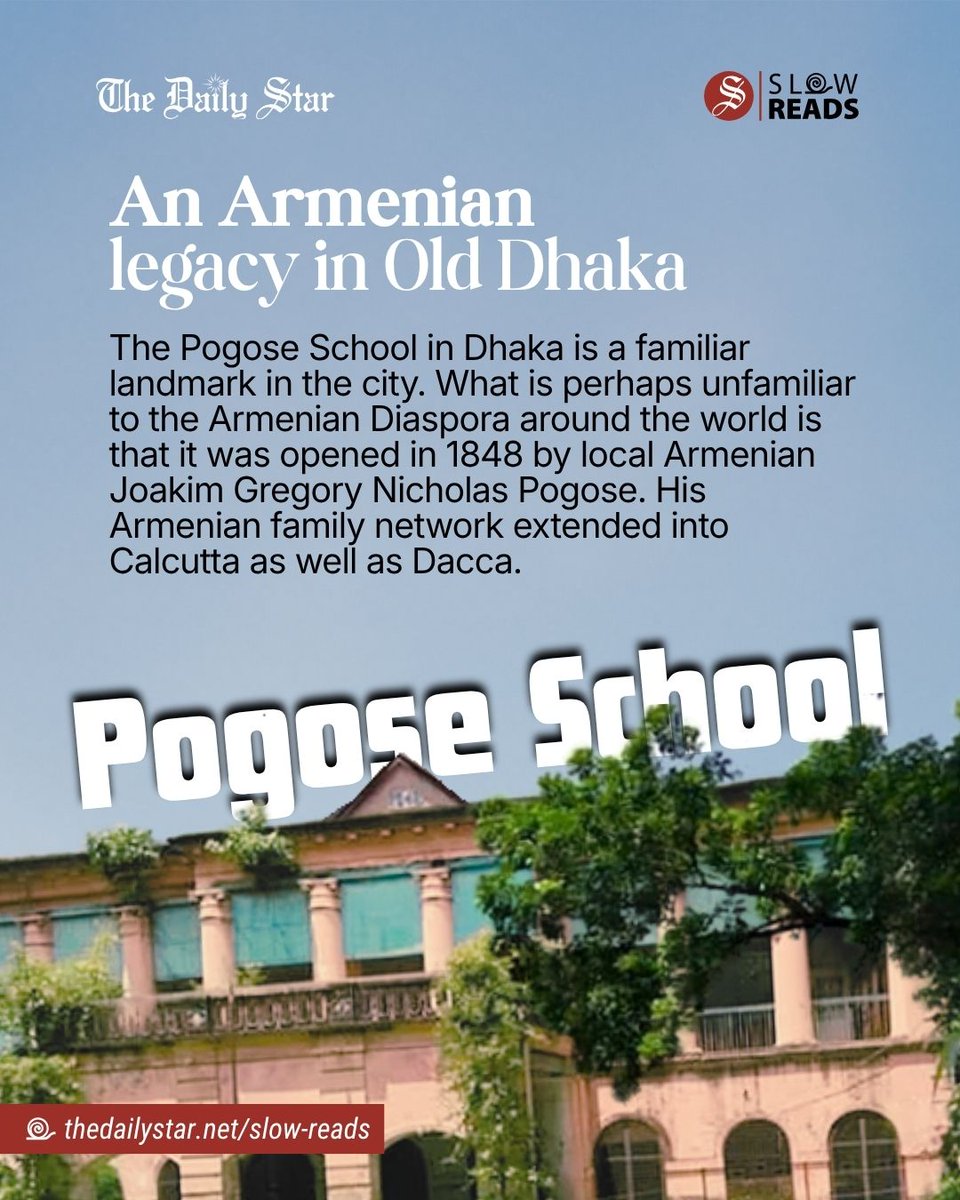
The Pogose School in Dhaka is a familiar landmark in the city. What is perhaps unfamiliar to the Armenian Diaspora around the world is that it was opened in 1848 by local Armenian Joakim Gregory Nicholas Pogose.
This Slow Reads piece traces the rich history of Old Dhaka and how one family's dedication to education left a lasting legacy that continues to thrive today.
Read the full article here: https://t.co/WItbBUdPWX
.
.
.
.
.
#TheDailyStar #SlowReads #OldDhaka #ArmenianHistory #Heritage
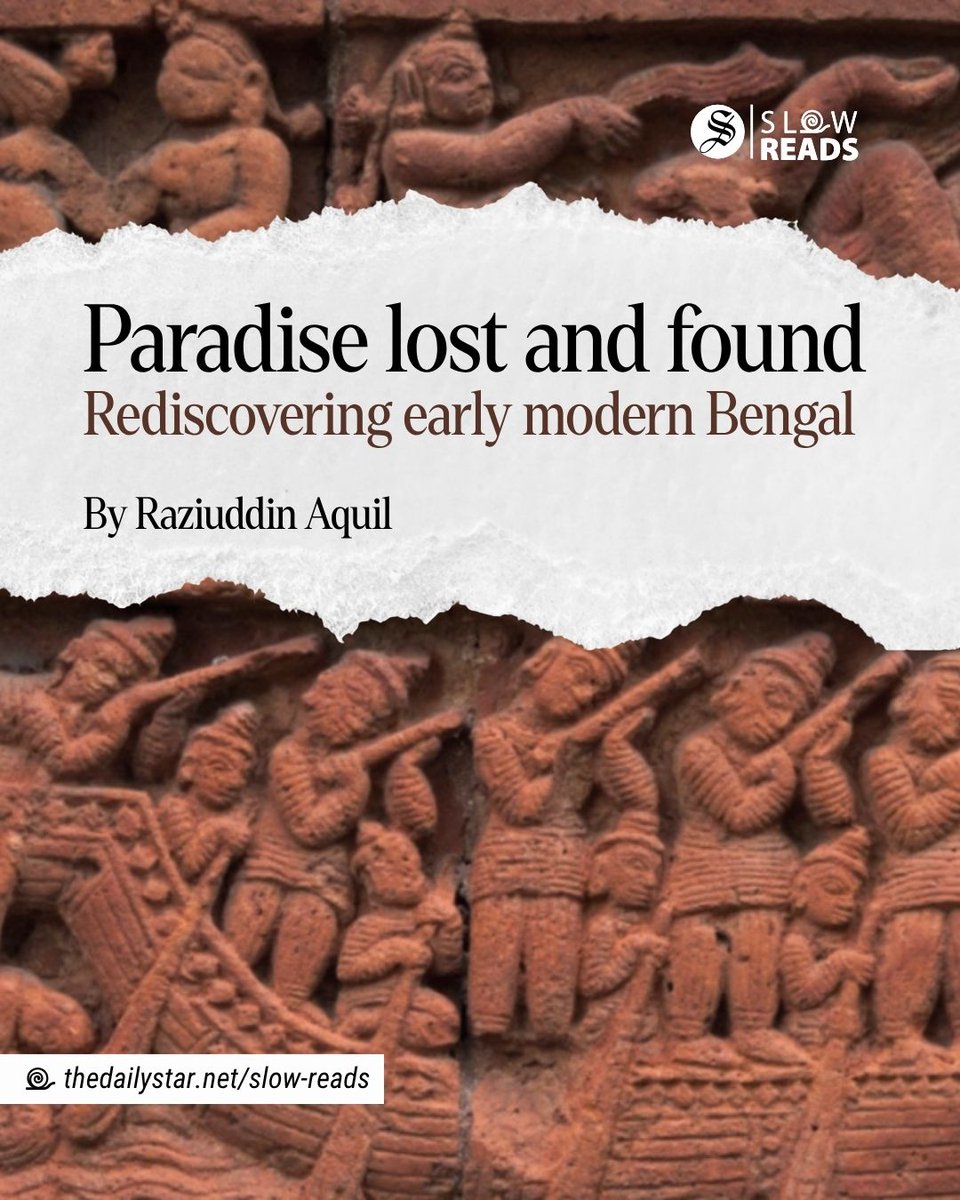
In eighteenth-century Bengal, markets, waterways and pilgrimage centres formed a closely connected commercial world. Hats, ganjs and bazars linked regional trade, while river fleets moved grain and salt, and places such as Gaya, Puri and Kalighat drew pilgrims, cash and foreign coin. Merchants, zamindars, fakirs, sanyasis and gossains were part of these networks, with some also working as lenders and traders in goods such as silk and coral.
Raziuddin Aquil explores Tilottama Mukherjee’s research into this dynamic economic and cultural landscape, and how indigenous enterprise and regional markets continued to function through early colonial disruptions.
Read the full article here: https://t.co/wDtRnRTeJt
.
.
#SlowReads #EarlyModernBengal
“South Korea seems to be largely an afterthought in the otherwise sound emerging ‘Bangladesh First’ strategy. Instead of being lumped into the ‘other regional actors’ category, the ROK should be a leading target in Bangladesh’s push to go beyond the ‘big three’.”
With Seoul unlikely to prioritise South Asia proactively, the burden of initiative lies partly with Dhaka, which needs to direct greater attention and effort towards South Korea.
Read the full article here: https://t.co/m0f5byURkX
#SlowReads #Bangladesh #SouthKorea #ForeignPolicy