Student Legal Services of Edmonton (SLS) is a student-run non-profit that helps low-income Edmontonians with legal issues. Tweets are not legal advice.
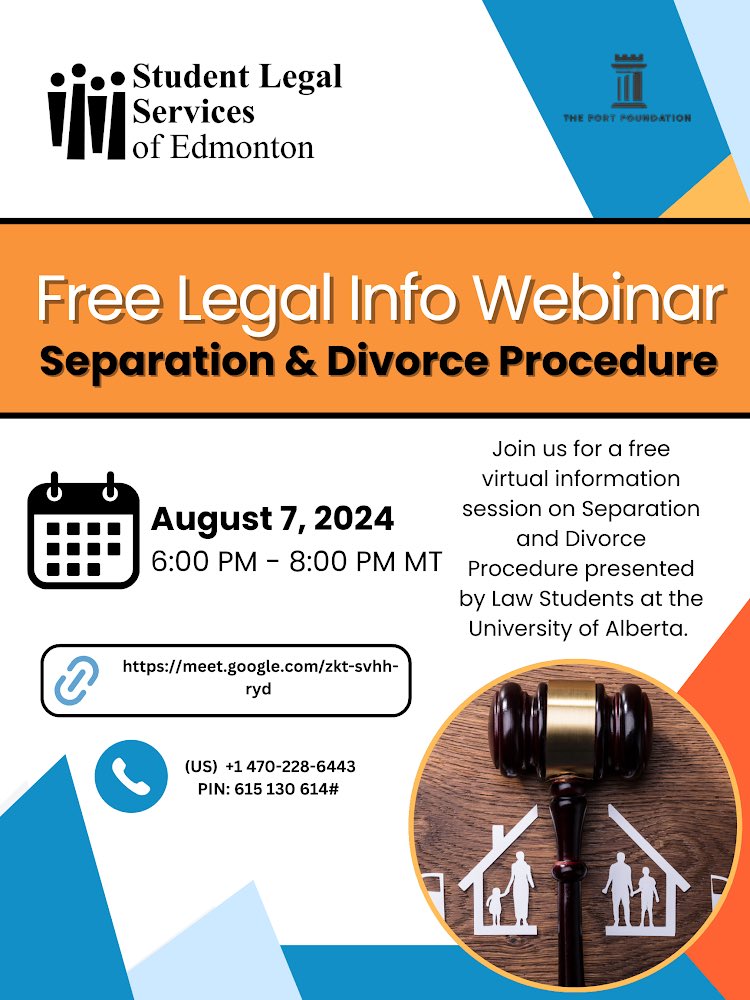
We are partnering with the Fort Foundation to bring you a FREE legal information session on Separation & Divorce Procedure in Alberta!
It takes place Wednesday, August 7th from 6:00 pm - 8:00 pm MT via Google Meets.
Video call link: https://t.co/eykMLIo3YE
NEW SERVICE ALERT: The Criminal Law Project at SLS can now assist low-income individuals with record suspension applications! Check out our website for more details: https://t.co/g6l48KoFV4
This data could also provide more transparency for prospective tenants, thus giving us the tools to bring Canada closer to realizing its recent declaration that adequate housing is a fundamental human right. (6/6)
The team within the Legal Education project at SLS is proud to release their latest reform project to the public: a report and recommendations to Edmonton City Council regarding the implementation of a residential rental licensing program. (1/6)
https://t.co/McssN95muc
and depend upon. The data collected through this type of program could also provide local officials with the information needed to better identify problems arising from the financialization of housing, such as money laundering and affordability concerns. (5/6)
🚨edmonton is asking the public what kind of behaviour is okay/not okay in public spaces like transit. This survey is a good opportunity to tell the city that unhoused folks shouldn’t get bans and tickets for loitering. Survey closes Sunday https://t.co/8z1VMM18KX #yeg#yegcc
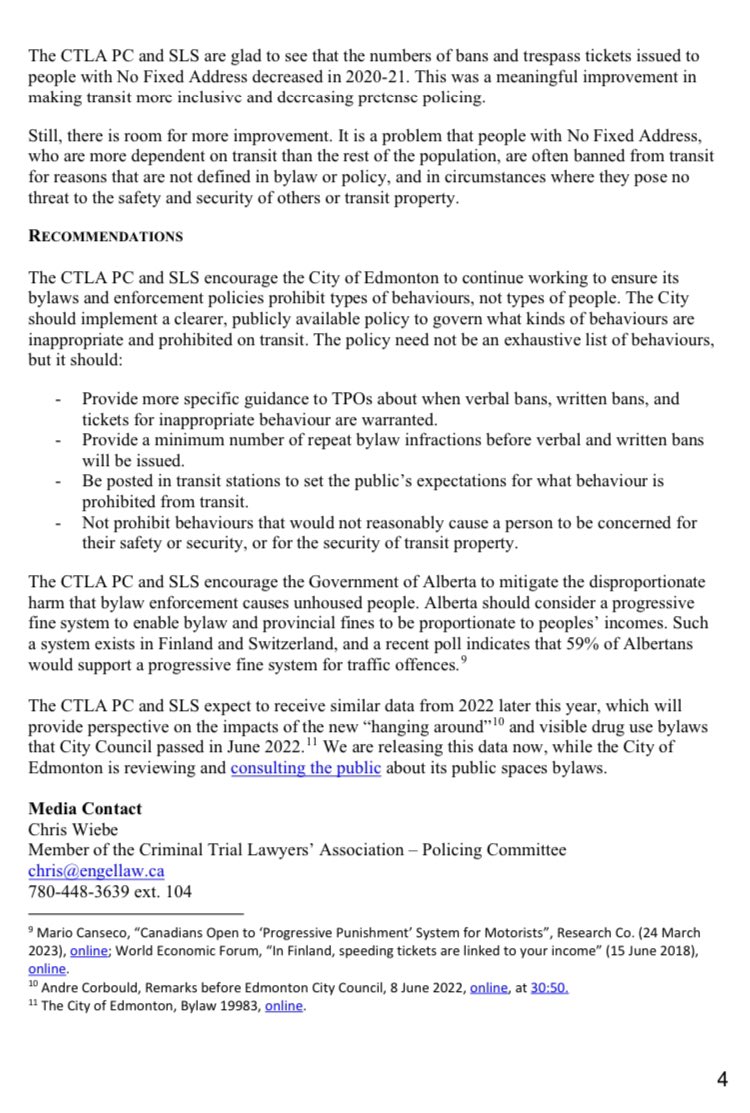
We continue to strongly encourage the @CityofEdmonton to find alternative measures of addressing safety and comfort concerns on public transit in a manner that doesn't perpetuate colonial violence and the criminalization of poverty.
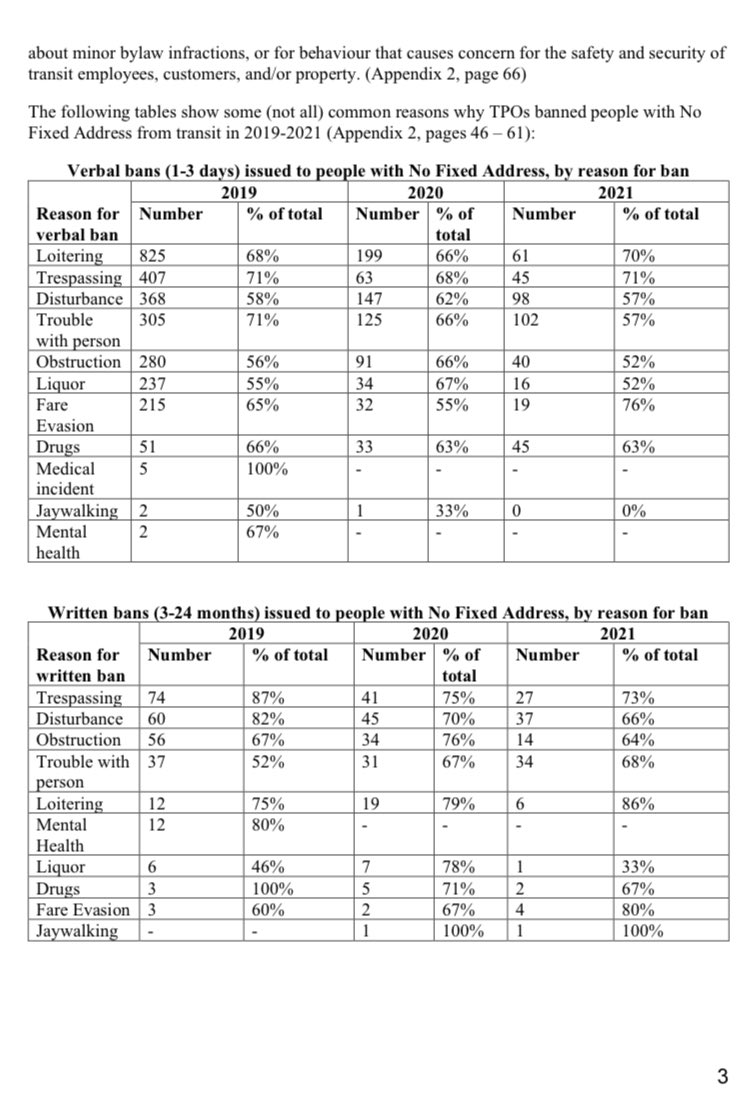
While we are glad to see that the overall number of tickets and bans issued to unhoused and Indigenous community members has decreased, those communities nevertheless remain disproportionately targeted by the @CityofEdmonton's transit bylaws.
https://t.co/a3L6MFYl3H
When the City Manager asked council to pass the “hanging around” bylaw in June 2022, he said often people hang around transit before they commit violent crime, so we need to prohibit hanging around to decrease violent crime. This data gives #yegcc reason to doubt that.
8/
another important note: this data does not cover 2022 and the new loitering (or “hanging around” in the city manager’s words) and visible drug use bylaws passed in June 2022.
7/
worth mentioning that, while other factors likely contributed, reports of drug use on transit increased after council repealed the loitering bylaw. Though that doesnt mean TPOs didn’t have lawful standing to ticket/ban people for drug use on transit without a loitering bylaw.
6/
We’re releasing this while the City is currently consulting the public about a potential revamp to its public places bylaws.
Please read the four-page media release, and complete the City’s survey: https://t.co/b3S4EuyMbB
5/
Here’s a link to the full release + data: https://t.co/nCszuio2Y1
Dr. Michelle Maroto of the U of A Sociology department offered some additional analysis: https://t.co/rg4cBmzapz
/4
The good:
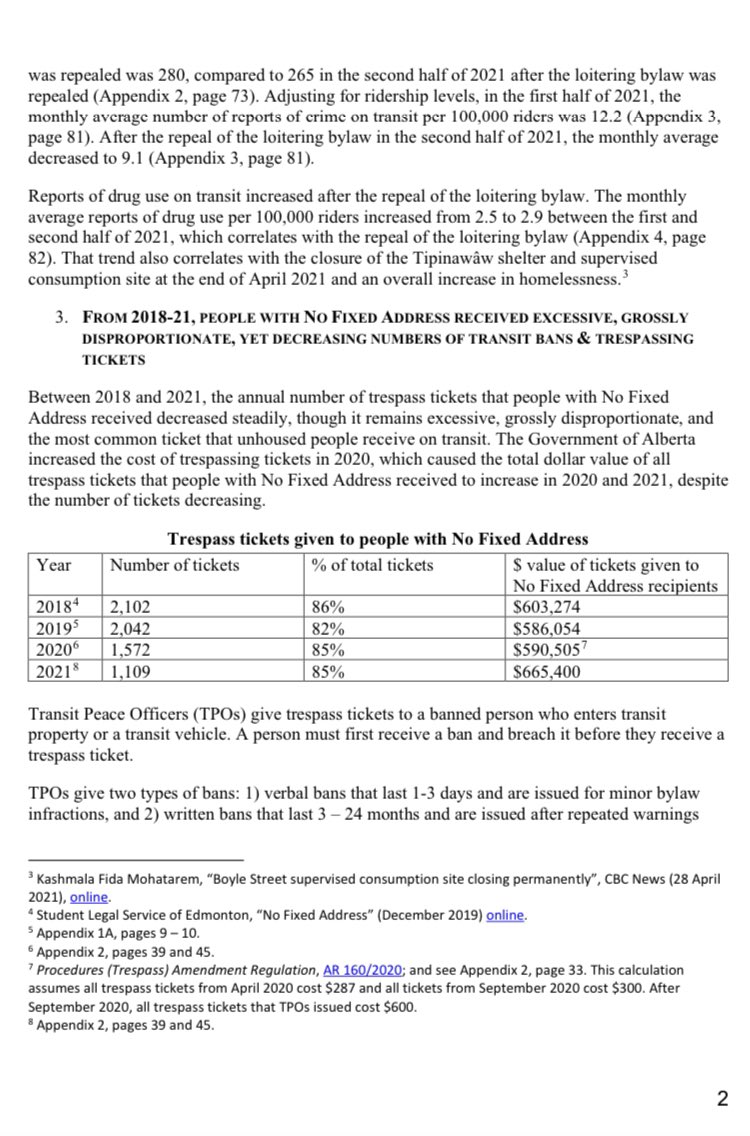
The numbers of tickets & bans that TPOs issued to Indigenous and unhoused folks decreased significantly 2019-21.
Crime on transit did not increase after council repealed the loitering bylaw.
3/
The bad:
Indigenous peoples received 58% of all transit tix in 2019-21.
Unhoused people received ~80% of trespassing tickets in 2019-21, resulting in ~$600k annually in fines against the unhoused.
1/
New data for 2019-21 from @CityofEdmonton obtained by @AlbertaCTLA & @slsedmonton show that 1) Indigenous & unhoused peoples continued to receive disproportionate share of transit tix, 2) the # of tix TPOs issued decreased, & 3) crime didn’t increase without a loitering bylaw 1/