I'm thinking about building a small group chat on Signal with like-minded small-state conservatives and libertarians. If you're interested, please DM me. It would be a place for people to share news, exchange opinions, recommendations, etc.
@RichardBentall@BenWigg31996683@LiamFox What's ridiculous is your denial.
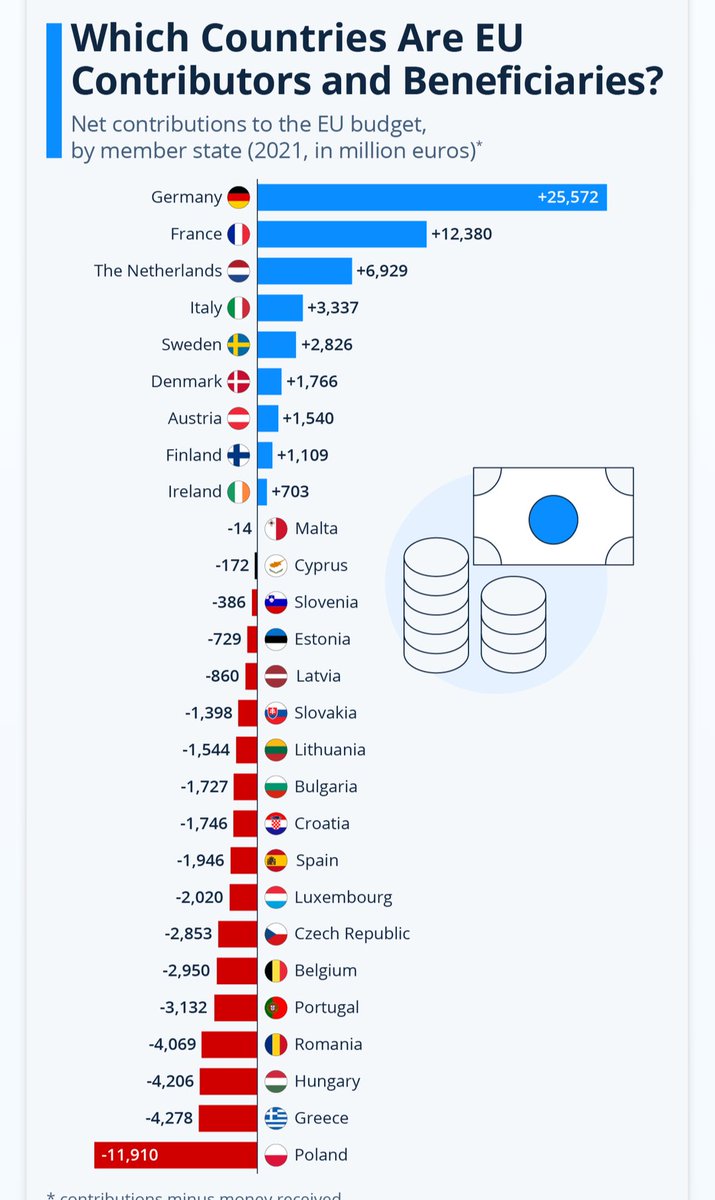
Check out this chart (and others, for every year) and you'll find interesting patterns between net receivers and growth rates.
Get out 🤣🤣🤣🤣
Since the date that Britain left the European Union (the single market and the customs union), the economies in the United States and the United Kingdom have grown by 19.2% and 15.7% respectively.
The two biggest EU economies — Germany and France — have grown by 4.5% and 10.5%.
Why would the Burnham Labour government want to tie us more closely again to the single market and the customs union? Britain’s exports to non-EU countries have risen to almost 60% of the total in the same period.
Before they crow about today’s growth figures, they might want to consider the utter stupidity of their own EU policy.
@BenWigg31996683@RichardBentall@LiamFox And for much of the duration of the chart, the UK was paying EU contributions that were fuelling growth in those countries.
If this was your fitness tracker you'd be looking for your GP's number!
When the state grows faster than the private sector on which it depends, it cannot end well.
h/t @Frencheconomics
To be completely honest this isn't a flex - the NHS is a money sink that is screaming for reform. But yes, Brexit allowed the UK to retain more of its money, obviously, and this is an undeniable benefit.
During the Brexit referendum in 2016, £350 million extra per week for the NHS was dismissed as absurd.
Since then, weekly health spending in England has actually increased by £1.75 billion (about £858 million in real terms).
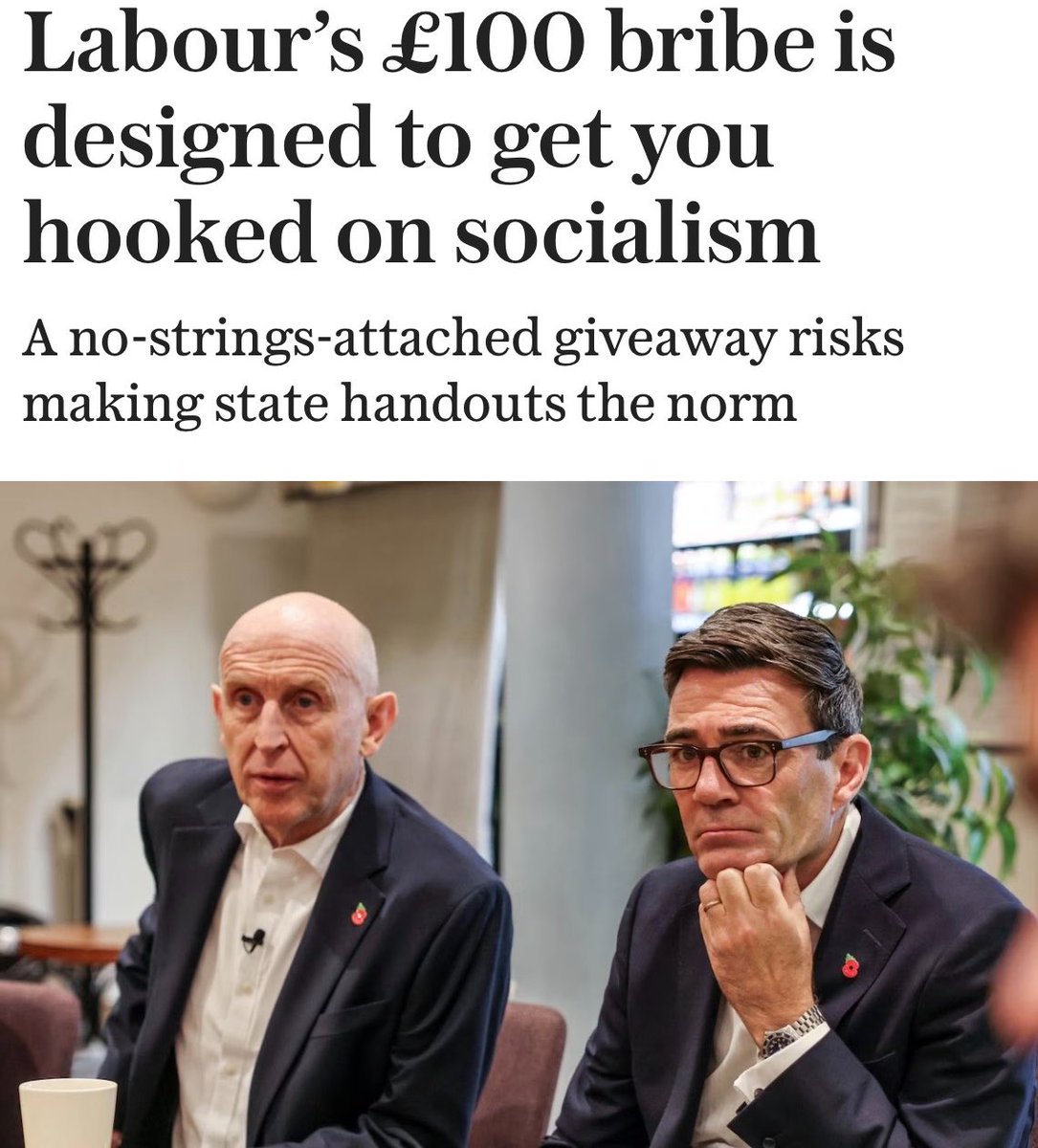
Greate piece once again by the @iealondon . @andyburnham
is forcing the UK back into the EU's control, and this will have consequences for businesses across the UK *regardless* of whether they trade with the EU. What's worse is that parliament isn't even being allowed to scrutinise this. @griffitha and @KemiBadenoch should commit to reversing this as soon as they get the chance. Freedom from EU rules is crucial for our growth. https://t.co/eV59ViIM61
Nothing the BBC does is unique or requires taxes. They could just run ads and provide their content for free. It's 2026, nothing the BBC does is so special that we should pay £15 a month or whatever the BBC tax is these days.
And the fact that the same argument can be made about public libraries relates in no way to the discussion we're having about the BBC.
@Thetidethatturn@ReemAmirIbrahim How about: the people who want to access 'amazing things' can pay for it without asking others to subsidise their access?
Possibly more important than the 0.7% GDP growth figure is the fact that real GDP *per head* also grew by 0.7% in Q3, up 1.7% compared with a year ago.
With the UK growing at 0.7% in the latest quarter compared to 0.2 for Germany, 0.1 for France, and 0% for Italy, it is not really clear why we need to move closer to the EU.
With reports that HMRC will start photographing people's homes to assess Mansion Tax liability one point is surely clear. A huge amount of money is going to be spent on a tax that will raise almost nothing. What's the point?
@12thPara@CilComLFC It does not look real. The website is empty. Someone registered the domain and dumped some very messy description on the home page and left every other page empty. https://t.co/yE5kIMOsMw
Government imposed policy costs make up 57% of the clearing price of a new flat in London and 42% of a new home in the Home Counties.
Despite a big housing shortage and positive planning reforms, new home starts in England are declining from 182,000 in 2022 to under 125,000 last year.
While the macroeconomic context has worsened with build cost inflation and high interest rates, the Government is imposing more burdens on new homes, not fewer.
Taxes, levies, planning, and mandates add over £440,000 to the cost of delivering a home in London and nearly £225,000 nearby, with several of these imposed recently like the Second Staircase, Future Homes Standard, Building Safety Levy, Biodiversity Net Gain and Residential Property Developer Tax.
Individually these may be justified, but together they are making new homes unviable.
As a result, large developers are buying less land and small builders are going out of business; nearly 4,000 construction firms went bust just last year.
If we want to build more homes, we should be easing the burdens on them, not adding more.
Making housebuilding viable again is the most important issue in housing policy and my co-author, Edward Donovan, has completed excellent modelling showing how big the challenge is.
Read the full report: https://t.co/NWS58oqbTx
And simulate what changing the policies does with Edward's modelling here: https://t.co/IVrLBax2pz