We're live. Shoutout to @SuperteamCAN
Most fleets pay for an ELD, a GPS login, a shop system, inspections, and a customer tracking page. Smart Fleet Sync is the shared record.
https://t.co/ju78ZSroi8
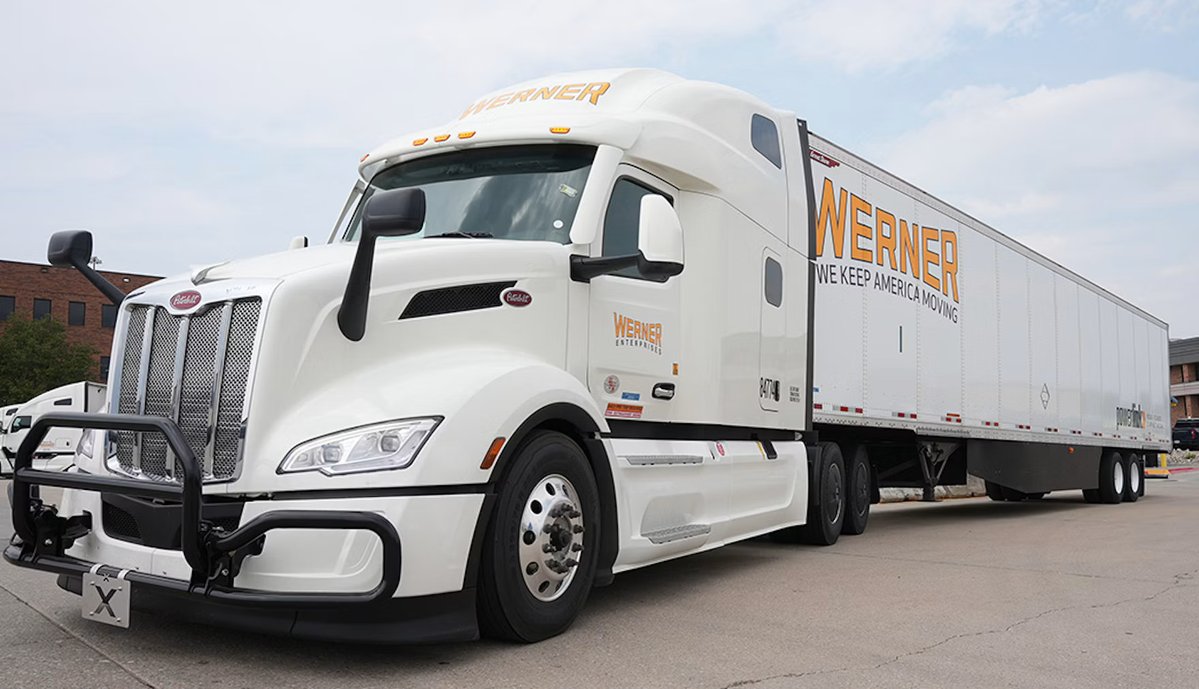
🚛 Werner Says Capacity Cuts Just Started.
Werner Enterprises CEO Derek Leathers estimated that 3–4% of trucking capacity has already exited, while roughly 15% was operating outside current regulations.
He said enforcement is expanding beyond drivers to CDL schools, license issuance, and B-1 visa cabotage violations, with the latter “only really just getting started.”
Leathers also cited industry data showing driver application rejection rates have climbed 170% since January, while trucking school enrollment has fallen 20–30%.
Higher insurance costs, stricter carrier vetting, and litigation risks are making it harder for new operators to enter the market. Leathers expects further capacity reductions and rising freight rates through year-end.
Image & News Source: Commercial Carrier Journal
C.H. Robinson and Landstar shares fell sharply after both carriers reported third-quarter results that were overshadowed by higher insurance costs. C.H. Robinson said SG&A rose 29.7% year over year, mainly due to higher claims expenses, while Landstar disclosed heavier insurance charges and rising claim severity. Investors also focused on broker liability exposure after recent legal developments, even as both companies said the business impact remains manageable.
https://t.co/PhJFleeqOP
This is entirely preventable with a pre/post trip inspection and eyes on maintenance. We aim to make this as easy as possible. 22% of conmerical trucks failing basic standards is terrifying.
22% of commercial trucks currently failing basic safety standards!
Matthew Leffler breaks down how deferred maintenance on brakes, lights, and tires combined with landmark liability rulings (like C.H. Robinson's Texas case) exposes freight brokers to major legal risks.
Enforcement operations across Arizona, California, North Dakota and Kentucky in October uncovered hundreds of commercial vehicle violations, ranging from inoperative brakes and falsified logbooks to CDL disqualifications and improper lane use. The findings serve as a reminder of the compliance risks carriers face on U.S. highways every day.
https://t.co/4qFCPRn3q7
"For fleet operators, the measure will be practical. Can it help keep equipment on the road? Can it make maintenance more effective? Can it help people respond sooner when something needs attention? Those are outcomes that matter every day."
We aim to check all those boxes!
Trucking’s diversity matters when considering AI, writes Penske Truck Leasing's Art Vallely. Fleets have different equipment, operating requirements, resources and customers.
Full article here: https://t.co/vIK8FaK0cn
We believe in personal data vs work data. If you get pulled over and need to show HOS logs, you have to enter your pin to get out of that mode so the only thing they see is what they are looking for. Your data is secured with us!
https://t.co/Ws4IFIqOmp
Showing an officer your permit shouldn’t mean opening up your whole phone.
A Pennsylvania bill would let oversize haulers use digital permits while limiting access to unrelated data. Another proposal tackles the work-zone mistakes truckers deal with.
🔗 https://t.co/dH6ZJ4OpU8
Last month I spoke on my passion as @WaggMe was working for @SuperteamCAN. This was never meant to be a @colosseum submission but here we are, with my dreams being visualized because someone believed in me. Working until literally the last minute! Win or lose, we are still committed. We believe that drivers should be able to save and not skimp on compliance, that DVIRs are the life blood of trucking, that maintenance keeps your profit flowing, visibility of seeing how much you've spent on your truck, the hours spent fixing it, one click ifta reports, and ELD all in one app, one small cost is essential to a market. Not only to a Fleet, but to an owner/op, a mechanic, a carrier. This is the passion, visualized.
Most fleet owners ask the wrong question. It’s not “How much does compliance cost?” It’s “How much does non-compliance cost and does the math justify skipping it?”
One serious non-compliance event can cost 5 digits, not include loss of direct freight. Don't know your maintenance schedule? An engine overhaul can be over $10,000 USD.
Don't take the chance. All available in one click.
https://t.co/jY1B91JIIR
Are you ready? Are you sure your compliant, all your DOTs and pretrip inspections done to address any faults? Are your hours of service correct? No need to second guess anymore, with one click all maintenence and repair history, along with reminders are available. Your HOS in a eight day week, alerts and work orders immediately sent. Don't wait to panic on blitz weeks, be confident every day with Smart Fleet Sync. Savings and data at your fingers tips. One click.
https://t.co/jY1B91JIIR
Tailgating. Cutoffs. Drivers glued to their phones. You deal with it all day every day.
A Northeast enforcement blitz will target risky driving this week. Drivers should know when and where officers will be stepping up patrols.
🔗 https://t.co/hVTVAASiqW
You're not in trucking so why should you care about our app? Your top food supply chains together account for 80% of everything you eat. If costs are reduced that continue to skyrocket with fuel repair costs, new laws pushing drivers out, insurance - you pay for it. Without reprieve, you absorb the cost.
https://t.co/jY1B91Kgyp
Tight capacity is concerning when the price gets passed to the driver, pressure on mechanics and in turn rising costs for any purchase. That's why we are building Smart Fleet Sync, leaving the power in their hands with guaranteed data, full visibility at cost effective prices. The industry needs to be retaining the drivers we have.
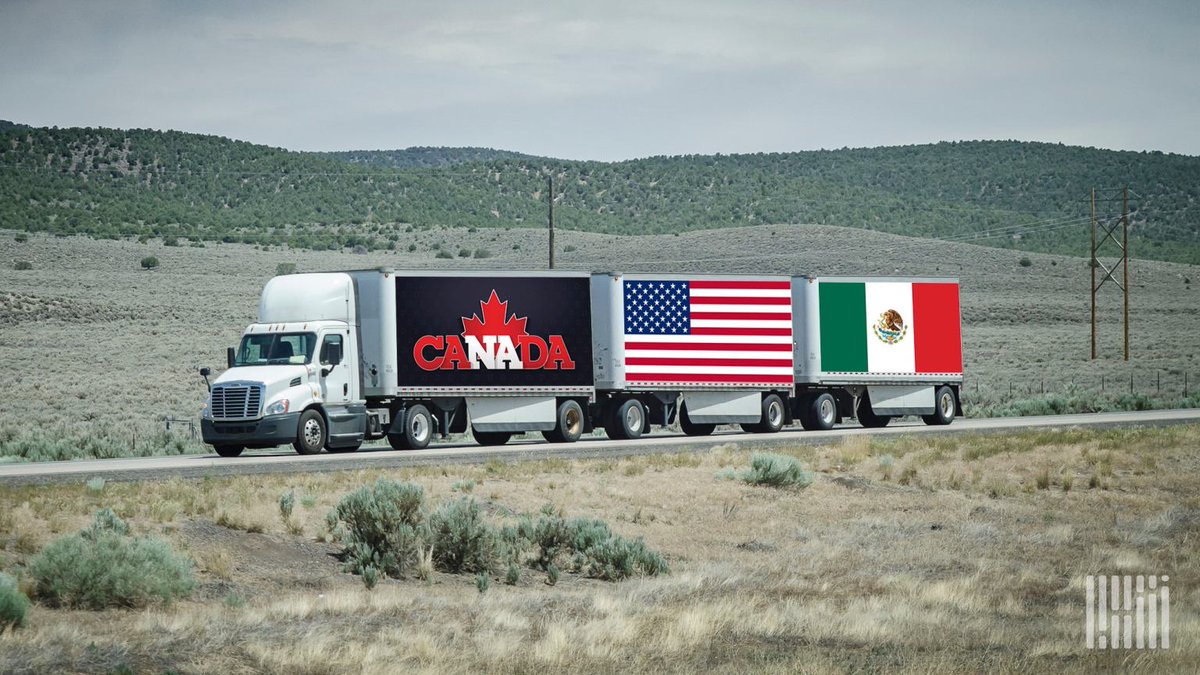
Cross-border trucking capacity between the U.S., Mexico and Canada is expected to stay tight well into 2027, according to executives at logistics provider TRAFFIX. Driver shortages, U.S. visa restrictions on Mexican truckers, freight imbalances on the Canadian border, and high financing costs are all working against any near-term relief.
https://t.co/EG5qv3W6EL
@freightwaves This is so true it hurts.
Any tech deployment will fail if drivers don’t understand and buy into the “why.”
You can force the install. You can mandate the login. But if the driver sees it as just another thing watching them or slowing them down, it dies on day one.
Netradyne’s Adam Kahn nailed it when you show drivers how safety savings actually turn into newer trucks and higher payouts, reluctance turns into ownership.
That’s the real gap most fleet software never closes.
At Smart Fleet Sync we obsess over this. One-click logging, inspections, and work orders only work if the driver feels the benefit, not just the requirement. Cleaner records should mean less hassle for them and clearer results for the people running the fleet.
Technology doesn’t create buy-in.
Clarity does.
https://t.co/xA8NE6Ux7h
Any tech deployment will fail if drivers don't understand and buy into the "why.”
Netradyne's Adam Kahn explains how showing drivers how safety savings directly lead to newer trucks and higher payouts turns reluctance into active participation.
FMCSA just shut the door on another ELD exemption request.
No blanket relief. No going back to paper. The mandate stands.
A lot of drivers and small fleets are frustrated and rightfully so. They��ve been told for years that ELDs would make things better, yet too many systems still feel like expensive handcuffs: clunky, disconnected, and focused only on catching mistakes instead of helping the people doing the work.
That’s exactly why Smart Fleet Sync exists.
If drivers are stuck with electronic logs, then those logs should be part of something that actually makes the job easier, not harder. One place for the log, the pre- and post-trip, the defect, the work order, the maintenance history, and the cost. So the carrier can see what’s happening and act before it becomes a bigger problem.
We’re not here to fight the regulation.
We’re here to make living with it less painful, more useful, and a hell of a lot cheaper.
Because compliance without support is just punishment.
https://t.co/xA8NE6V4WP
Fleet software adoption most often fails at the driver level.
When trip logging requires more than a few simple steps, it is frequently skipped under operational pressure, precisely when accurate records are most critical.
@TransportTopics The future workflow described at The AI Summit is exactly right:
Issues flagged before the truck hits the shop. Repair plan and parts already moving.
Technician starts the actual work instead of hunting for history.
That only works when the data is complete and continuous.
Smart Fleet Sync keeps the full record in one place: maintenance history, parts used, work orders, service reminders, invoicing, and inspection data, tied to every unit.
Defects and work orders flow in the moment a driver completes an inspection.
Clean data in. Faster planning out. Less time diagnosing, more time fixing.
https://t.co/xA8NE6Ux7h
Speakers described a future workflow in which vehicle issues are identified before a truck reaches the shop and repair planning begins in advance. @MichaelVFreeze reporting from The AI Summit in Pittsburgh. @TRUCKINGdotORG@TMC4Trucks
https://t.co/ErNfkYWSva