Liberia🇱🇷 has repatriated the first 17 of its citizens from South Africa🇿🇦 following anti-migrant protests.
A total of 263 Liberians🇱🇷 have applied to return home through the government's voluntary repatriation programme.
PSG 🆚 Stade Rennais
La Ligue 1 est enfin de retour au Parc des Princes. Pour cette première journée de championnat, les Rouge et Bleu reçoivent le Stade Rennais. Ne manquez pas la première rencontre de la saison ! 🔴🔵
Réservez vos places ! 🎟️ https://t.co/uIMxsAlW9j
🇨🇩🇺🇸 The U.S. Deadline Is Over, Rwandan Forces Are Still in Congo
In June, U.S. Secretary of State Marco Rubio said Washington hoped to see Rwandan troops withdraw from eastern DRC by mid-July.
That period has now arrived without a major publicly verified withdrawal.
The situation is becoming a test of American credibility: will Washington enforce the commitments it helped negotiate, or will continued violations go unanswered?
Swipe through for a clear explanation.
#DRC #Rwanda #MarcoRubio #EasternDRC
"Olaudah Equiano (1745 – 1797) was an 18th-century African writer and anti-slàvery campaigner. From an early age, Olaudah Equiano experienced the h0rrors of slàvery first hand. However, eventually, one of his Masters gave him his freedom. This enabled him to become a B.ritish citizen and he began writing about his experiences. His autobiography ‘The Interesting Narrative of the Life of Olaudah Equiano‘ played a pivotal role in turning public opinion in Britain against sàvery.
Olaudah Equiano writes that he was born in West Africa ( Nigeria) in the year 1745 – a member of the Igbo tribe. Aged 11, he was kidn@pped, along with sisters, by native slave-holders; after being s0ld to Eur0pean slàve traders, he was then packed into a slave ship and transferred across the Atlantic to Barbados. Equiano eventually ended up in the British colony of Virginia. As a slavè, he was given different names, including Gustavus Vassa.
Equiano later wrote about the mistrèatment of slàves on the Virginia plantations. His vivid descriptions of the various punishments and hùmiliations that slàves had to endure were the first published account of an autobiography of a slàve. Speaking of the Virginia overseers.
Equiano was able to give a first-hand testament about life as a slàve. This information was useful for those who were hoping to change the law and outlaw slàvery. His friends encouraged him to write down a book about his experiences. First published in 1789, the account was eagerly received by many people in B.ritain. It sold well and went through many editions. Many people who read about the sùffering of slaves were more inclined to support the abolitionist cause. The book received good reviews, and many were surprised and moved by the quality of writing and his ability to depict life as a slavè.
The book made Equiano a prominent figure in literary circles. In 1788, Equiano was able to personally petition the king for the end of slàvery. The book also helped to demystify many of the current miscònceptions about African people – this personal account and personality of Equiano was very influential in displaying the obvious humànity of Black Africans.
Although there is some controversy about the exact birthplace of Equiano – some historians believe he may have been born in North America rather than Africa, there is no doubt that Equiano played a pivotal figure in the anti-slàvery movement. His writing and speeches helped show people that there was a strong sense of shared humanity."
The East African Community (EAC) has set 2031 as the deadline for launching its single regional currency.
The original timeline was postponed due to the COVID-19 pandemic and broader economic challenges.
EAC officials say preparations are continuing, with a phased rollout likely once countries such as Kenya 🇰🇪, Uganda 🇺🇬, and Tanzania 🇹🇿 meet the required economic conditions.
The common currency is expected to make cross border trade easier and strengthen regional economic integration.
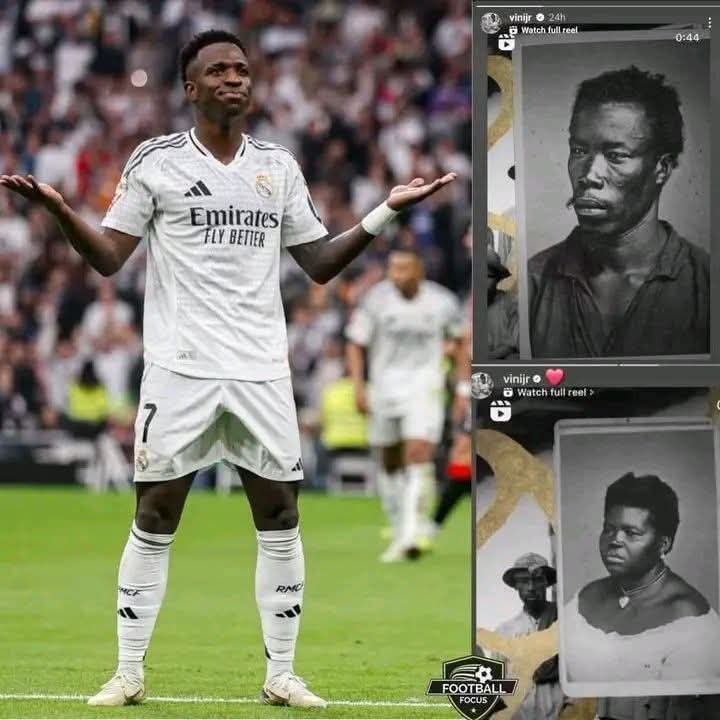
🎙️🗣️🇧🇷Vini Jr: “I’m proud to discover which part of Africa I come from. Our ancestors weren’t brought here—they were stolen. Our roots were erased, left behind without a trace. But deep roots can’t be destroyed; they grow again, deeper and stronger. They inspire the world and bring pride to our people.
Today, it’s you, Vini, who represents us all—standing strong despite every attack. You draw strength from your roots, roots that run across Brazil and beyond, reaching back to our ancestors. Vini, your roots rest in the Tikar Tribe of Cameroon.”
This heartfelt message was shared in a video by Vinícius Júnior on his latest Instagram story. He expressed his joy in discovering his African origins, learning that he is of Cameroonian descent. The football star plans to visit Cameroon to explore his ancestral roots. 🇨🇲
Cabo Verde 🇨🇻 is seeing a sharp rise in tourism interest after its historic run at the 2026 FIFA World Cup.
The West African island nation, with a population of about 550,000, became the smallest country ever to reach the World Cup knockout stage.
The team impressed fans by remaining unbeaten in regular time throughout the tournament, including a memorable draw against Spain 🇪🇸 in the group stage, before narrowly losing 3-2 to Argentina in the Round of 32.
In the United States, searches for "Cabo Verde vacation" rose by more than 5,000% from the previous year, while Expedia reported an increase of over 800%.
Tourism experts say the global exposure could generate billions in future tourism revenue.