Allahumma ajโal li min amri farajan wa makhrajan, warzuqni min haythu la ahtasib.
O Allah, make for me a way out of my difficulties and provide for me from where I do not expect๐คฒ๐คฒ๐คฒ
Thank you Mr President ๐
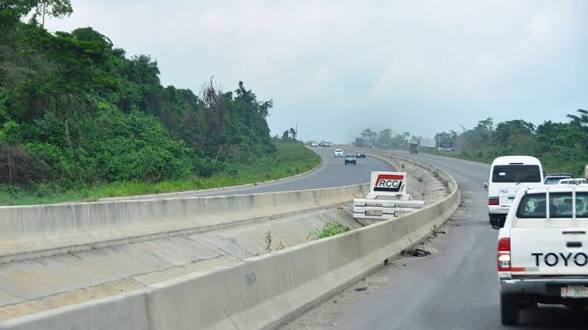
The LagosโIbadan Expressway deserves a permanent solution, not recurring repairs.
Concrete roads are built for the long haul.
Sos ๐, Please I am seeking assistance for apprenticeship for one of my Sons in the Engineering space
He has completed His college at Hull and has been struggling to get an Apprenticeship space
Please I need someone to Help me mentor Him and guide Him, I am open to online support too. I don't want Him to lose the enthusiasm for it, He is a very Brilliant Lad, Please Help!
I am clueless and we are struggling. I am not sure how best to navigate this, Please Help with any suggestions or referral. Thank you
These Police Officers just parked me at Bolade, Oshodi, pointed guns at me, and forced me to transfer N100,000 them. When my bank app showed "exceeded transfer limit", they dragged me to a nearby POS to do it with my card.
They initially demanded 150k each.
They were 4 in number.
These are the names I could copy:
Francis Adekunle
2087495551
Kuda
Friday Ikpe
9136237110
Okay
This is the phone number of the notorious Officer Friday Ikpe 09136237110. I got it from his opay
@PoliceNG@BenHundeyin@Princemoye1
Please my mutuals, if you see this on your TL, help repost or tag other relevant authorities until these criminals are apprehended.
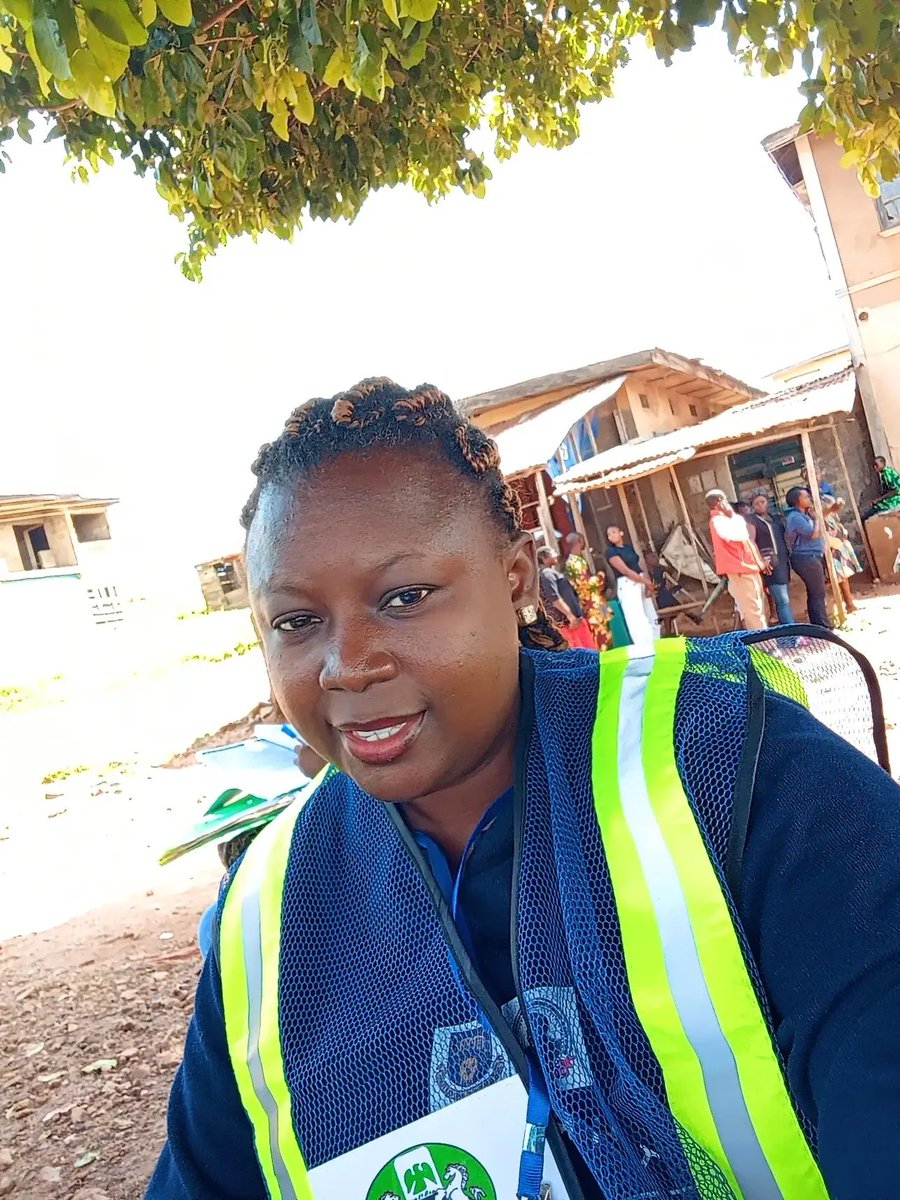
My Experience as an INEC Ad Hoc Staff in the Ekiti Election
A few people have asked me, "From your own perspective, was the election free and fair?"
Based on what I witnessed firsthand as one of the INEC ad hoc staff, my answer is yes, it was free and fair.
There was no rigging that I observed. There were no fights, no violence, and no atmosphere of fear. People moved around freely, and the entire process went smoothly.
One concern I noticed was the issue of vote-buying by some political actors. However, it is important to separate that from INEC's responsibility. If individuals choose to sell their votes, that is a societal challenge that we as citizens must address. From my observation, INEC put measures in place to ensure that the electoral process itself was transparent and credible.
One thing that particularly impressed me was how INEC made the voting process easier for registered voters. Many people believe that if they do not have their PVC with them, they cannot vote. However, at each polling unit, INEC printed and pasted the names of all registered voters on the wall for easy access.
This meant that a voter could simply go to the list, locate their name, and write down the last six digits of their PVC number. They would then proceed to the accreditation point, provide those six digits, and the BVAS would retrieve their details for verification. Once successfully accredited, they could proceed to vote.
I found this to be a very thoughtful innovation because it reduced the frustration of people who may have misplaced their PVC or forgotten to bring it along. As long as they were duly registered and their details could be verified, they were able to participate in the electoral process.
Another commendable aspect was the role of BVAS in preventing irregularities. The device electronically records the number of accredited voters. Therefore, if the number of votes counted exceeds the number of accredited voters captured by the BVAS, it is immediately identified as over-voting. This significantly reduces opportunities for manipulation and helps protect the integrity of the election.
I also observed that political parties and their agents understood the consequences of violence. Everyone knew that any polling unit affected by violence could have its results canceled. As a result, there was a conscious effort to maintain peace throughout the exercise.
Perhaps the most inspiring part of the day was the unity among the people at my polling unit. We had supporters and agents from APC, PDP, and ADC, yet they related like family. Even when we reminded them to remain peaceful, they simply laughed and said, "We are families; we cannot fight because of politics."
And they truly meant it.
Throughout the exercise, they joked with one another, played together, and maintained a friendly atmosphere. Even after the results were announced and APC emerged victorious in that polling unit, there was no hostility. They continued to laugh, tease one another, and go about their activities peacefully.
That experience reminded me of the kind of democracy we should strive for as a nation.
Politics should never make enemies out of family members, friends, neighbors, or community members. Political parties will come and go, but our relationships and our shared humanity should remain.
My experience gave me hope that peaceful elections are possible when institutions do their jobs and citizens choose peace over conflict.
Before we are members of any political party, we are first families, neighbors, and fellow Nigerians.
ยฉ Ritaro Peace.
In politics, there comes a point in your career where growth becomes nearly impossible ๐not due to a lack of competence, but because of limiting factors like age, ethnicity, religion, party affiliation, or zoning arrangements.
No matter how hard you try, progress remains elusive.
I used to subscribe to the school of thought that corruption is our nation's biggest setback.
Over time, I realized the bigger problem is weak institutions.
People are not born corrupt; weak institutions create the environment that breeds corruption.
We can't fight corruption through theatrics or by simply going hard on suspects.
We fight corruption by building strong institutions that make wrongdoing difficult and accountability inevitable.
No presidential candidate has ever demonstrated a genuine commitment to fixing the institutions.